Michigan’s first lighthouse fell down. The tower at Fort Gratiot, where Lake Huron pours into the St. Clair River, went up in 1825 and collapsed in 1828. Its replacement was finished in 1829, raised from 65 to 82 feet in the early 1860s, and still stands in Port Huron, where Port Huron Museums bills it as the state’s oldest. Most Michigan lighthouses have a story along those lines: built, rebuilt, automated, then rescued by a historical society, a township or a park. The practical result for a visitor is that every light keeps its own rules. Some you can climb for $8. Some open on summer weekends only. One is a bed-and-breakfast, more than a dozen take volunteer keepers, and a good number can only be seen from a boat or the end of a pier.
Short answer: the best towers to climb are Big Sable Point near Ludington, Grand Traverse at the tip of the Leelanau Peninsula, Au Sable inside Pictured Rocks (free, ranger-led) and the two Presque Isle lights on Lake Huron. Adult tickets run from $5 to $12 at the lights covered here, and most open somewhere between May and mid-October. For a night in one, Big Bay Point north of Marquette runs as a B&B, and Tawas Point takes paying volunteer keepers in teams of four.
The hours, fees and seasons below were checked November 24, 2026 against the operators’ and agencies’ own websites. Late November is the off-season: of the climbable lights here, only Grand Traverse (weekends in November) and Fort Gratiot (weekends to December 20) are open.
On this page: How many lighthouses, and why · The master table · Lake Superior · Lake Michigan · Lake Huron · Lights you can climb · Staying overnight · Lights you see from the water · Shipwrecks · Road trips · Winter · Planning · What to skip · FAQ · Sources
| If you want to… | Go to | Cost | Season |
|---|---|---|---|
| Climb a tall tower above a dune beach | Big Sable Point, Ludington State Park | $8 adults, $5 ages 17 and under; Recreation Passport for the park | May 4 to Oct. 24, 2027 |
| Climb for free | Au Sable Light Station, Pictured Rocks | Free ranger-led climbs; park pass $25 per vehicle for 7 days (2026) | June 7 to Oct. 15 in 2026 |
| Climb the tallest tower open to the public (its museum society’s claim) | New Presque Isle Lighthouse, north of Alpena | Museums free; tower climb was $6 adults, $4 children in 2025 | Late May to mid-October |
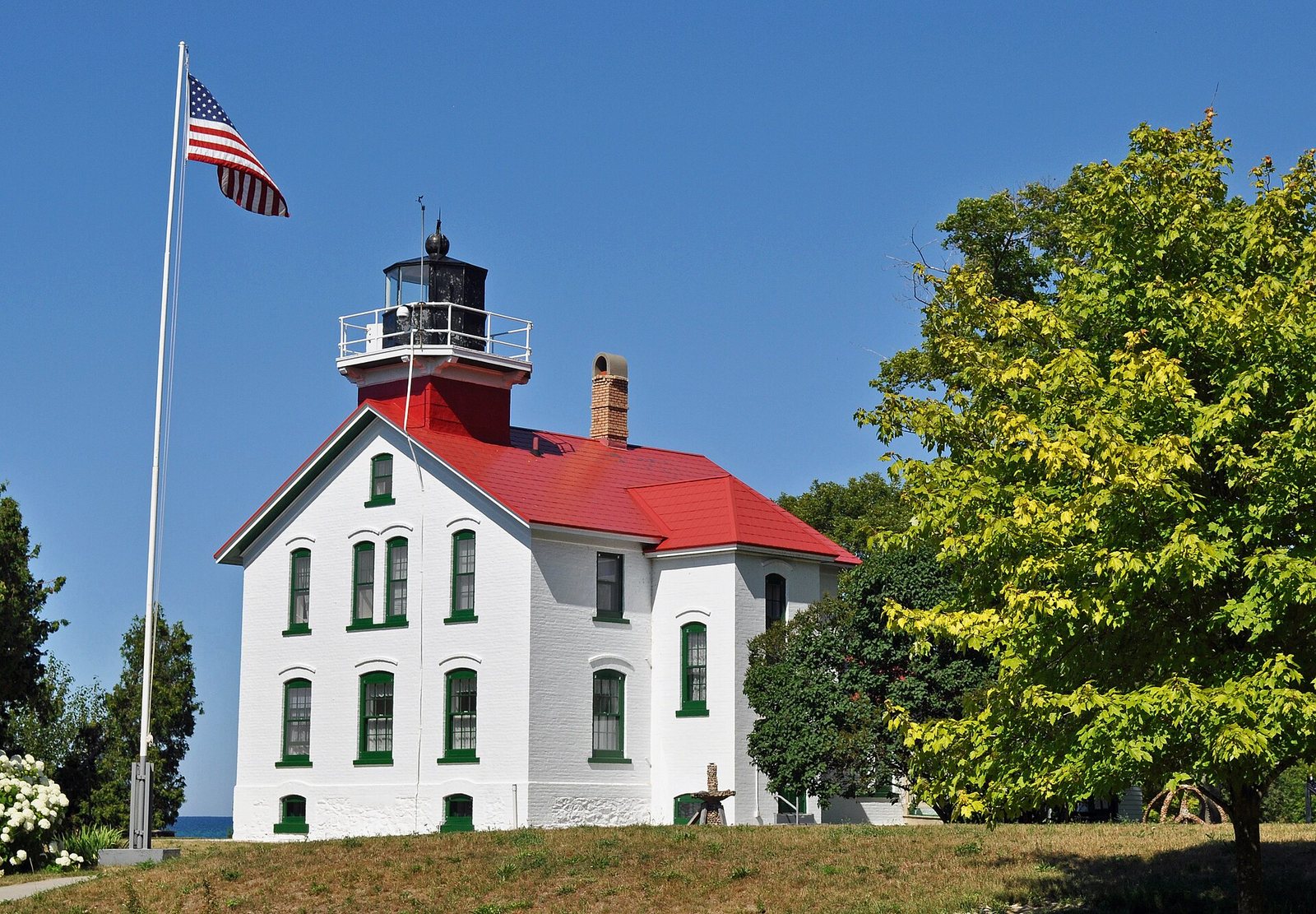
| Tour a keeper’s house and climb the tower | Grand Traverse Lighthouse, Northport | $8 adults, $3 students 6 to 13 (2026) | April 1 to Oct. 31, then November weekends (2026) |
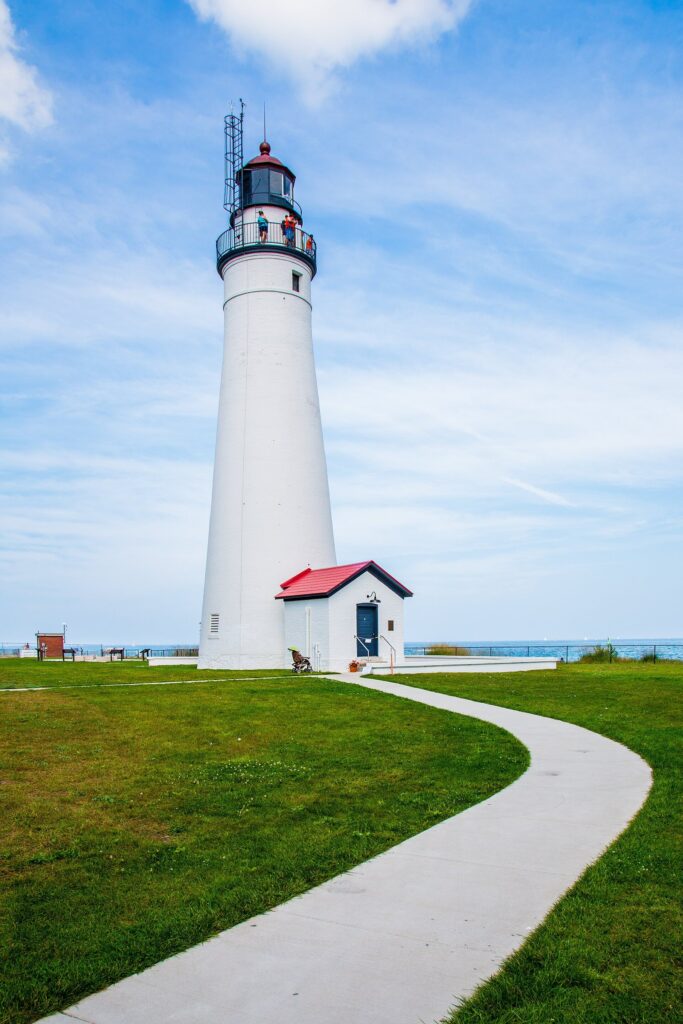
| See the oldest | Fort Gratiot, Port Huron | $12 adults, $30 family; climb on the guided tour (2026) | Weekends to Dec. 20, 2026; back in spring 2027 |
| Sleep in one | Big Bay Point Lighthouse B&B, north of Marquette | Book on the inn’s own website | Check the inn’s booking calendar |
| Be the keeper | Tawas Point, Lake Huron | $250 per person, teams of four adults (2026) | 2026 applications closed Feb. 28 |
| See shipwrecks without diving | Thunder Bay sanctuary, Alpena | Heritage center free; glass-bottom boat $43 adults (2026) | Center open all year; check the boat schedule |
How many lighthouses are in Michigan, and why so many?
More than any other state. The figure Guinness uses is about 130 current lighthouses, and you’ll see anything from “more than 120” to “nearly 130” quoted, because the count depends on what you include: pierhead lights, range lights that work in pairs, offshore cribs in the middle of shipping lanes, and towers that have gone dark but still stand. Wikipedia’s list of the state’s lights, which keeps some inactive ones, runs well past that.
The reason is geography. Michigan touches four of the five Great Lakes and has more than 3,200 miles of shoreline, and nineteenth-century Michigan shipped much of its copper, iron ore and lumber by water. Every narrow passage needed a light: the St. Clair and Detroit rivers between Lake Huron and Lake Erie, the Straits of Mackinac, the St. Marys River below Sault Ste. Marie, the gap between the mainland and Grand Island at Munising. River mouths that sheltered harbors got pierhead lights, which is why towns like Grand Haven, South Haven and St. Joseph each have their own.
Then the Coast Guard automated the lights, and the keepers left. At Au Sable, inside Pictured Rocks, the station was staffed continuously for 84 years until the Coast Guard pulled out in 1958, according to the National Park Service. Many towers passed to whoever would look after them. In 1999 Congress transferred the Eagle Harbor light station on the Keweenaw to the county historical society that had run museums there since 1982. Five lights between Manistee and Whitehall are now run by one nonprofit, Lakeshore Keepers. Port Huron’s museum system runs Fort Gratiot, the state’s history agency runs Tawas Point, and a township runs the Presque Isle pair. Each sets its own season, ticket price and climbing rules, which is the whole reason a master list is useful.
Which lake has the most?
Lake Michigan, comfortably. Its Michigan shore runs from New Buffalo to the Straits and on along the Upper Peninsula, and harbor towns sit every 20 to 30 miles down the west side of the state. In Wikipedia’s list of Michigan lights, sorted by waterway, Lake Michigan has the most entries, followed by Lake Superior and then Lake Huron, with the Detroit and St. Marys rivers adding a surprising number of their own. Lake Erie, which touches Michigan only for a short stretch south of Detroit, has just a couple.
Michigan lighthouses you can visit: the master table
This is the list sorted by what you can actually do at each light. “Climb” means the public can go up the tower. “Inside” means a museum or furnished keeper’s house. “Keeper” means a volunteer keeper program, and “View” means the grounds, a pier or a boat is as close as you get. The lights run coast by coast in driving order, so the table doubles as a rough route map. Fees are adult prices for the year shown; children pay less nearly everywhere.
| Light | Where | What you can do | Adult fee | Season |
|---|---|---|---|---|
| Lake Superior, east to west | ||||
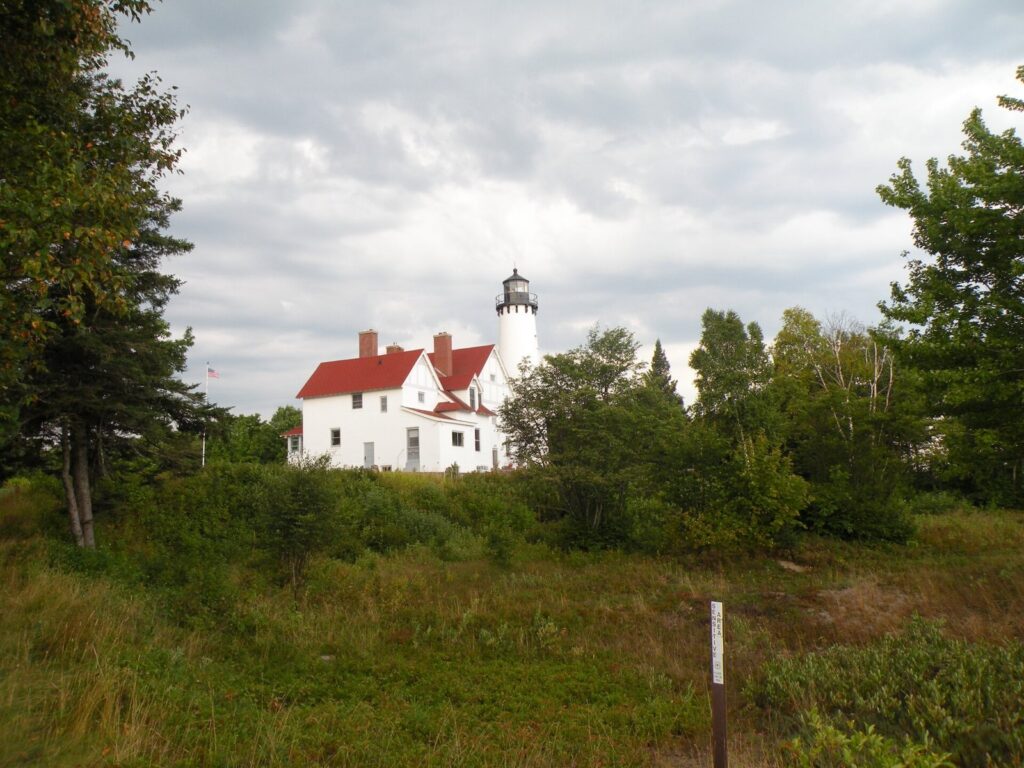
| Point Iroquois | Whitefish Bay, west of Sault Ste. Marie | Inside; tower in season | Check the Hiawatha National Forest page | Summer into fall |
| Whitefish Point | 11 miles north of Paradise | Inside (Great Lakes Shipwreck Museum) | Check the museum’s site | May 1 to Oct. 31, 2027 |
| Crisp Point | North of Newberry, end of Luce County Road 412 | View; lighthouse and visitor center when volunteers are on site; keeper | Check the society’s site | Grounds open (quiet hours 11 p.m. to 6 a.m.); road unplowed in winter |
| Au Sable | Pictured Rocks, west of Grand Marais | Climb (ranger-led); inside; keeper | Free; park pass $25 per vehicle | June 7 to Oct. 15, 2026 |
| Marquette Harbor | Marquette | Tours through the Marquette Maritime Museum | Check the museum | Closed for the 2026 season |
| Big Bay Point | 32 miles north of Marquette | Stay (B&B guests) | Book with the inn | Check the inn |
| Eagle Harbor | Keweenaw Peninsula, north shore | Inside (four museums); tower top closed | $8, under 16 free | June 20 to Oct. 10, 2027 |
| Copper Harbor | Fort Wilkins Historic State Park | View; boat tours from town (Noah’s Ark Charters) | Recreation Passport for the park | Check with the operator |
| Rock Harbor, Passage Island | Isle Royale National Park | View; reached by ferry or seaplane | Park entry $7 per person per day | Park closed Nov. 1 to April 15 |
| Lake Michigan, north to south | ||||
| Seul Choix Point | South of Gulliver, U.P. shore of Lake Michigan | View; check local hours | Check locally | Check locally |
| Old Mackinac Point | Mackinaw City, beside the bridge | Climb; inside | Mackinac State Historic Parks ticket | Check mackinacparks.com for 2027 |
| White Shoal, St. Helena Island | Offshore, west of the Straits | View from a boat; keeper | n/a | n/a |
| Grand Traverse | Leelanau State Park, 8 miles north of Northport | Climb; inside; keeper | $8 (2026); Recreation Passport for the park | April 1 to Oct. 31, plus November weekends (2026) |
| South Manitou Island | Sleeping Bear Dunes | Closed all of 2026 | n/a | Check nps.gov/slbe for 2027 |
| Manistee North Pierhead | Manistee | Climb | $8 | May 21 to Sept. 26, 2027 |
| Big Sable Point | Ludington State Park | Climb; inside; keeper | $8 | May 4 to Oct. 24, 2027 |
| Ludington North Breakwater | Ludington | Climb; keeper | $8 | May 18 to Sept. 26, 2027 |
| Little Sable Point | South of Pentwater | Climb; keeper | $8 | May 11 to Oct. 17, 2027 |
| White River Light Station | Whitehall | Climb; inside; keeper | $8 | May 14 to Oct. 24, 2027 |
| Grand Haven pier lights | Grand Haven | View from the pier | Free | Pier open in calm weather |
| Holland Harbor (“Big Red”) | Holland State Park channel | View across the channel | Recreation Passport for park parking | Year-round view |
| South Haven South Pier | South Haven | View from the pier | Free | Pier open in calm weather |
| St. Joseph North Pier lights | St. Joseph | View from the pier | Free | Pier open in calm weather |
| Lake Huron, south to north | ||||
| Fort Gratiot | Port Huron | Climb (guided tour); inside | $12 (2026) | Weekends Sept. 12 to Dec. 20, 2026; spring 2027 |
| Harbor Beach | Offshore breakwall, Harbor Beach | View from shore | Free | Year-round view |
| Pointe aux Barques | Port Hope, tip of the Thumb | Climb; inside; keeper | $8 museum and tower (2026) | May 22 to Sept. 27, 2026, Wednesday to Sunday |
| Tawas Point | Tawas Point State Park | Climb; inside; keeper | $5; Recreation Passport for the park | Closed for the 2026 season |
| Old and New Presque Isle | Presque Isle, north of Alpena | Climb both towers; inside | Museums free; tower fee ($6 in 2025) | Late May to mid-October |
| Forty Mile Point | North of Rogers City | Keeper (bring your own RV) | Check locally | Flexible |
Two caveats. Volunteer-run lights open when volunteers turn up, so a “season” is a target rather than a promise; Presque Isle’s museum society says outright that its 1905 Keeper’s House closes on days it is short of volunteers. And offshore lights are listed only where you can do something about them, either from a tour boat or as a volunteer keeper.
Lake Superior lighthouses: Whitefish Bay to the Keweenaw
Superior’s lights are the remote ones. Towns are far apart, cell service drops out for long stretches, and the lake that looks like the Caribbean on a still August afternoon turns into the water that sank the Edmund Fitzgerald by November. Driving the shore from Point Iroquois to Big Bay Point takes nearly seven hours of wheel time before you add a single stop, and Eagle Harbor, on the Keweenaw, is a further day’s trip beyond that. Plan for one or two lights a day and you’ll enjoy it; try for five and you’ll mostly see the inside of your car.
Point Iroquois
Point Iroquois sits on Whitefish Bay west of Sault Ste. Marie, about an hour’s drive from St. Ignace. The light station is part of the Hiawatha National Forest, and a local historical society uses the keepers’ house as a museum, with one apartment furnished the way a keeper’s family would have lived. The tower has been open to climb in summer. Hours change from year to year, so check the Hiawatha National Forest’s Point Iroquois page before you go. The beach in front is a good spot to watch freighters heading to and from the Soo Locks.
Whitefish Point and the shipwreck coast
Whitefish Point is 11 miles north of Paradise, about a 20-minute drive, and Paradise is the village that serves Tahquamenon Falls State Park, so most people do the falls and the point on the same day. The light station is home to the Great Lakes Shipwreck Museum, run by the Great Lakes Shipwreck Historical Society, which displays the bell recovered from the Edmund Fitzgerald. The museum closes for winter; its 2027 season runs May 1 to Oct. 31, 9 a.m. to 5 p.m. daily, and it says the site draws nearly 100,000 visitors each season. Check its website for 2027 admission prices before you go.
Crisp Point
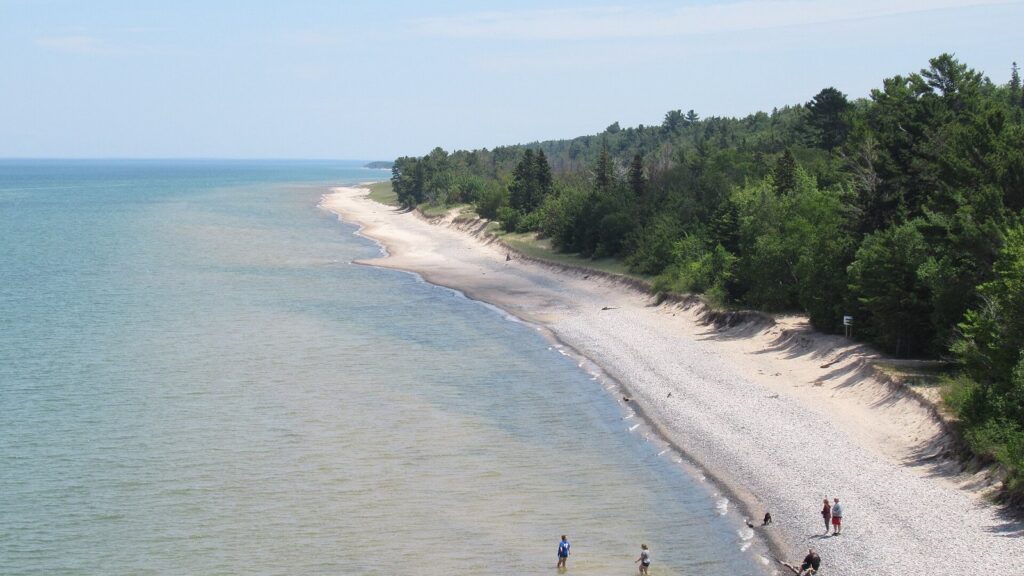
Crisp Point is the light people mean when they talk about earning a view. It stands alone on the Superior shore north of Newberry, at the end of Luce County Road 412, and the 34 miles from Whitefish Point take more than an hour because the last stretch is slow going. The last 7 miles of the county road aren’t plowed in winter. The Crisp Point Light Historical Society keeps the grounds open, with quiet hours from 11 p.m. to 6 a.m., and opens the lighthouse and visitor center when volunteers are on site, so times vary. The Great Lakes Lighthouse Keepers Association lists a volunteer keeper program here with no charge and no minimum stay.
Au Sable Light Station
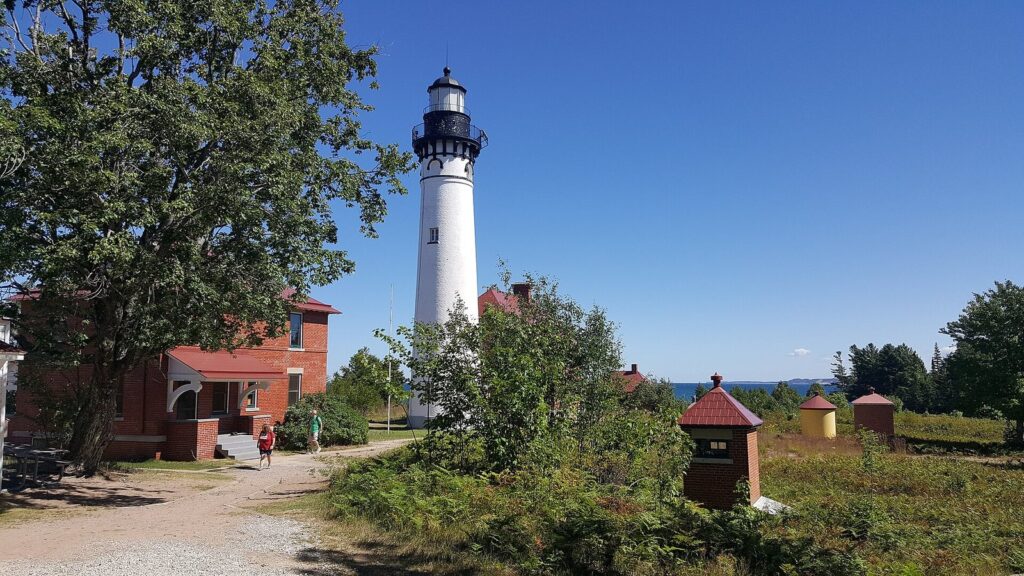
Au Sable is the best value on the lake: the climb is free. It sits inside Pictured Rocks National Lakeshore, 12 miles west of Grand Marais on Alger County Road H-58, and you reach it on foot. Park in the day-use lot at Hurricane River Campground and walk 1.5 miles each way along the old Coast Guard access road; signs and steps lead down to the beach, where the remains of old shipwrecks lie on the sand. The National Park Service runs free guided climbs from June 7 to Oct. 15 (2026 dates; check the park’s Au Sable page for 2027), at nine set times between 11 a.m. and 4 p.m., first come, first served. Each tour walks through the Assistant Keeper’s Quarters and then climbs the 98 steps to the top of the 86-foot tower for a view over Lake Superior and the Grand Sable Dunes.
The rules are firm: shoes with a heel strap, children over 42 inches tall, and anyone under 16 with an adult. Nobody gets carried up. The park adds a warning worth heeding: biting flies on the trail can be fierce in summer, so wear long pants. You’ll need the park’s vehicle pass, $25 for seven days in 2026, which also covers the rest of Pictured Rocks.
Grand Island and the Munising range lights
Munising has range lights on the mainland and more lights on Grand Island across the bay, including the East Channel Light, an old wooden tower on the island’s southeast shore. You see it from the water. The cruises, the island ferry and the glass-bottom shipwreck boats out of Munising are covered in our Pictured Rocks guide, which is the better place to plan that day.
Marquette Harbor and Big Bay Point
Marquette’s red lighthouse stands on a rocky point beside the harbor, and the Marquette Maritime Museum at 300 N. Lakeshore Blvd. runs tours of it in season. The museum and lighthouse had closed for the 2026 season by late November, so look at its site for the 2027 tour schedule. Big Bay Point, a red-brick light station 32 miles north of town (about 50 minutes), is a working bed-and-breakfast; it’s covered in the overnight section below.
Eagle Harbor and Copper Harbor
The Keweenaw’s lights are a long way from anywhere: Eagle Harbor is about 9 hours 40 minutes from Detroit and nearly 8 hours from Chicago. The first lighthouse here went up in 1851; the present red-brick light dates from 1871, with a fog signal added in 1895. The Keweenaw County Historical Society runs four museums at the station: the lighthouse itself, a maritime museum in the old fog signal building, a Keweenaw history museum in the old Coast Guard garage and a commercial fishing museum in an assistant keeper’s building. One $8 ticket covers the complex, and anyone under 16 gets in free. The Coast Guard still runs the light at the top of the tower, so the top isn’t open to visitors. The 2027 season runs June 20 to Oct. 10: noon to 5 p.m. in June, September and October, and in July and August 10 a.m. to 5 p.m. Monday through Saturday and noon to 5 p.m. on Sunday.
Copper Harbor’s lighthouse is across the harbor from town, one of two 1860s lights inside Fort Wilkins Historic State Park. The park’s own page names Noah’s Ark Charters as the operator of Copper Harbor Lighthouse boat tours, boarding at the Bella Vista Motel dock; check with the operator for its season before you plan around it. Fort Wilkins itself, a restored 1844 army post with a living history program, takes a Recreation Passport.
Isle Royale: Rock Harbor and Passage Island
Isle Royale’s lights are for people already going to the island. Rock Harbor Lighthouse stands near the Rock Harbor end of the park, and Passage Island’s light marks the channel off the island’s northeast tip. Getting there means the Ranger III from Houghton (about six hours), the Isle Royale Queen IV from Copper Harbor (about three and a half) or a seaplane. The park charges $7 per person per day and closes to all visitors from Nov. 1 to April 15.
Lake Michigan lighthouses: the Straits to St. Joseph
Lake Michigan is the easy coast. Harbor towns come every 20 to 30 miles, the pier lights are free to walk out to, and five of the best climbs share one operator and one set of rules. If you have a long weekend and live in Chicago or Grand Rapids, this is where to start.
The Straits: Old Mackinac Point, White Shoal and St. Helena
Old Mackinac Point Lighthouse stands right beside the Mackinac Bridge in Mackinaw City and belongs to Mackinac State Historic Parks, which sells tickets on its own site and lets you climb the tower for a view over the Straits. Its seven-day pass covers all the agency’s historic sites, including Colonial Michilimackinac next door and Fort Mackinac on the island. It closes for the winter, so look up the 2027 dates on mackinacparks.com. If you’re crossing to the island, our Mackinac Island trip planner has the ferry details.
West of the bridge, the lights stand offshore. White Shoal Light, out in the lake west of Mackinaw City, is the one Wikipedia calls the tallest lighthouse on the Great Lakes; you’ll only ever see it from a boat. St. Helena Island Light, closer in, is another. Shepler’s, one of the Mackinac ferry lines, lists lighthouse cruises on its website; check there for the 2027 schedule and fares. The more unusual way in is volunteering: the Great Lakes Lighthouse Keepers Association lists paid keeper sessions at both White Shoal and St. Helena.
Grand Traverse and the Leelanau shore
Grand Traverse Lighthouse is at the very tip of the Leelanau Peninsula, 8 miles north of Northport inside Leelanau State Park (Recreation Passport required), about 3 hours from Grand Rapids and nearly 5 from Detroit. It is the best keeper’s-house visit on this coast: you tour the dwelling and climb the tower on one ticket, $8 for adults and $3 for students aged 6 to 13 in 2026, free under 6. The 2026 hours ran 10 a.m. to 3 p.m. from April 1 to Memorial Day, 10 to 5 through Labor Day, 10 to 4 to Oct. 31, and then weekends only in November, 10 to 3, with December events listed on the lighthouse’s site. The Great Lakes Lighthouse Keepers Association lists a two-week volunteer keeper program here, for a fee.
On the way down the shore, Point Betsie stands on the beach north of Frankfort, south of Sleeping Bear Dunes. South Manitou Island’s lighthouse, in the national lakeshore, was closed for the whole of 2026 along with the rest of the island’s facilities, so check the Sleeping Bear Dunes park site before you plan a 2027 trip.
Lakeshore Keepers’ five lights: Manistee to Whitehall
Between Manistee and Whitehall, one nonprofit runs five lights: Manistee North Pierhead, Big Sable Point, Ludington North Breakwater, Little Sable Point and White River Light Station. The group was known for years as the Sable Points Lighthouse Keepers Association and now goes by Lakeshore Keepers. A tower climb costs $8 for adults and $5 for ages 17 and under, and active military and veterans climb free. Each light has a small gift shop and archival pieces on display.
The rules are the same at all five. Climbers must be at least 40 inches tall, nobody may be carried up the stairs, and shoes need heel straps; flip-flops are out, though you may climb barefoot everywhere except Manistee North Pierhead. For 2027 the group is open Tuesday to Sunday, 10 a.m. to 5 p.m., through Sept. 19, and Thursday to Sunday from Sept. 23. Opening and closing dates vary by light:
- Big Sable Point: May 4 to Oct. 24, 2027.
- Little Sable Point: May 11 to Oct. 17, 2027.
- White River Light Station: May 14 to Oct. 24, 2027.
- Ludington North Breakwater: May 18 to Sept. 26, 2027.
- Manistee North Pierhead: May 21 to Sept. 26, 2027.
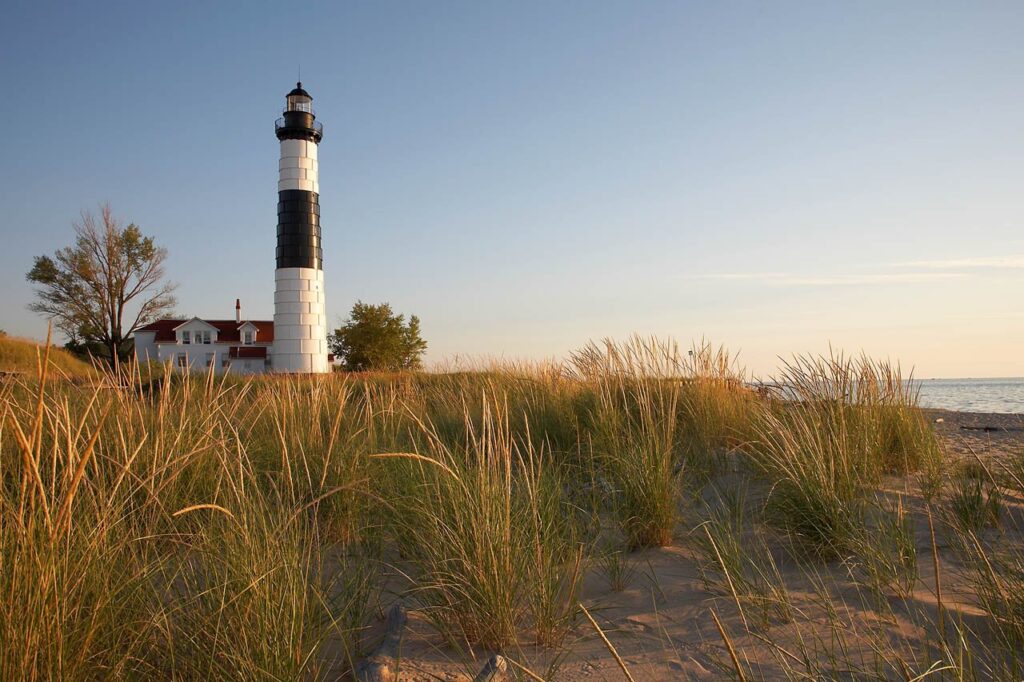
Big Sable Point is the one to pick if you only climb one. The black-and-white tower is about 112 feet tall and stands on open dunes inside Ludington State Park, and there’s no road to it: you walk or bike the 1.8-mile Lighthouse Path from the park (one way), which turns the visit into a half-day outing. Bring water. You’ll need a Recreation Passport to drive into the park. Lakeshore Keepers has a major restoration of Big Sable’s keepers’ quarters planned for 2027, so check what’s open before you make the walk.
White River Light Station at Whitehall is the opposite: it sits about 50 feet from a parking lot, with a museum inside, which makes it the easiest of the five for anyone who can’t manage a long walk. Little Sable Point, south of Pentwater, is a tall red-brick tower right on the beach. The two pier lights, at Ludington and Manistee, are short climbs with a long walk out over the water.
Drive times between them are short: Grand Haven to White River takes about 40 minutes, White River to Little Sable under an hour, Little Sable to Ludington about 45 minutes, and Ludington State Park to Manistee about 50. Two or three lights in a day is comfortable.
The pier lights: Grand Haven, Holland, South Haven and St. Joseph
South of Whitehall, the lights stand at the ends of piers, and you visit them by walking out. None of them charges anything. Grand Haven’s red lights at the end of the south pier, joined by an elevated catwalk, are the classic sunset shot on this coast. Holland’s Holland Harbor Light, the red one everyone calls Big Red, is half of what Holland is known for (tulips are the other half); you see it across the channel from Holland State Park. South Haven’s red pierhead light is a short walk from downtown. St. Joseph has two lights on its north pier, also linked by a catwalk, and in a cold January they ice over completely.
Pier walks are only for calm days. Waves that look modest from the beach wash over a pier with real force, and the concrete is slick. If the water is breaking over the end, admire the light from the beach.
Up on the Upper Peninsula side of the lake, Seul Choix Point south of Gulliver is a long detour, about 6 hours from Detroit, but UP Travel lists it among the central U.P.’s sights, and it pairs well with a US-2 drive along the north shore of Lake Michigan. Check its local hours before you turn off.
Lake Huron lighthouses: Port Huron to Presque Isle
Lake Huron’s lights get fewer visitors than the west side’s, which is part of the appeal. You can do Fort Gratiot as a day trip from Detroit, the Thumb in a weekend, and the run up the Sunrise Coast to Presque Isle in two or three days.
Fort Gratiot, Port Huron
Fort Gratiot is about an hour and 10 minutes from downtown Detroit, at 2802 Omar St. in Port Huron. Port Huron Museums runs guided tours, and the climb, 94 iron stairs to the top of the 82-foot tower, is part of the tour; you can’t go up on your own. Tickets are $12 for adults, $30 for a family of two adults and up to four children, free for children 4 and under, with 10% off for students and seniors (2026 prices). The fall schedule runs Saturdays and Sundays, 10 a.m. to 5 p.m., from Sept. 12 to Dec. 20, 2026, with the last tour at 4 p.m.; after that it closes until spring 2027.
The Thumb: Harbor Beach and Pointe aux Barques
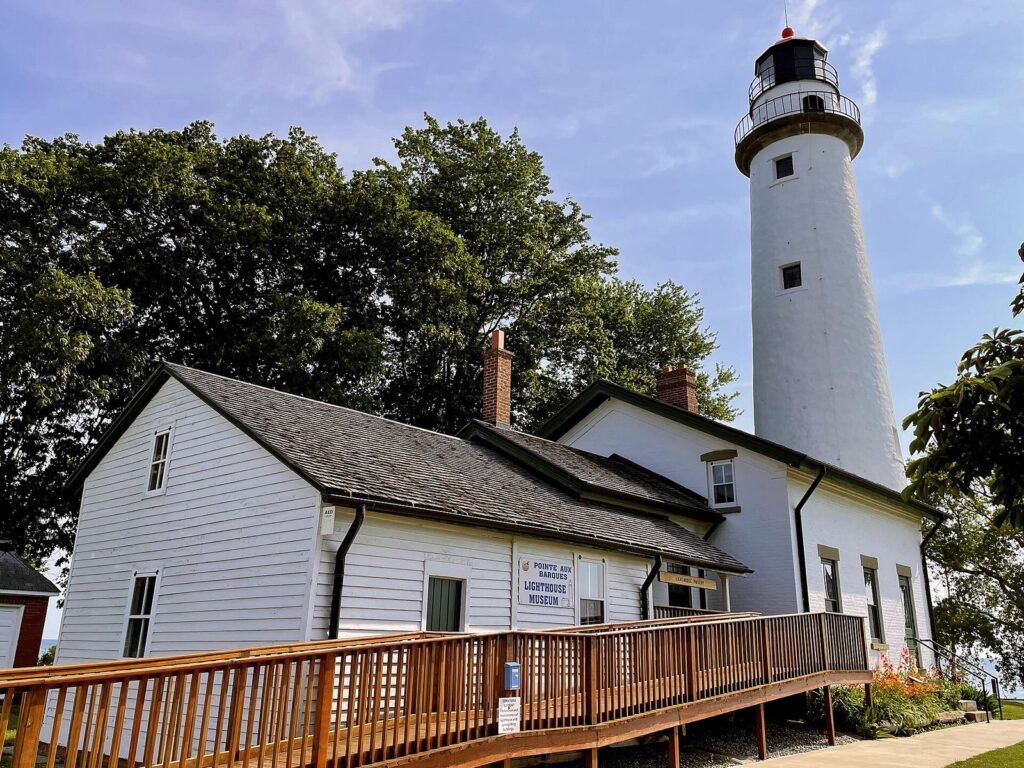
Follow M-25 north from Port Huron along the Thumb’s shore and you reach Harbor Beach in about an hour and 10 minutes. Its lighthouse stands offshore on the breakwall, so you see it from the waterfront rather than visit it. Fifteen miles on, about 20 minutes, Pointe aux Barques near Port Hope is the Thumb’s main light to visit. The Pointe aux Barques Maritime Museum (check its site for 2027 dates) opened for the 2026 season on May 22 and ran Wednesday through Sunday, 10 a.m. to 5 p.m., until Sept. 27. From 2026 the tower is open for self-guided climbing during normal hours. The museum alone is $5 for adults and $3 for children 12 and under; museum and tower together are $8 and $4. On some summer dates the old life-saving station opens too. The Great Lakes Lighthouse Keepers Association lists a keeper program here with a one-week minimum.
Tawas Point
Tawas Point Lighthouse is at the end of a sandy spit inside Tawas Point State Park, about 3 hours from Detroit and 3½ from Grand Rapids. The state’s history agency runs it: admission was $5 for adults 18 and over and $2 for ages 6 to 17, free for children 5 and under, and the tower is 85 steps. It had closed for the season by mid-November 2026. You’ll need a Recreation Passport for the park, and it’s worth allowing two hours, which is the agency’s own advice. Tawas Point is also where you can be the keeper; see the overnight section below.
Presque Isle and Forty Mile Point
Presque Isle, a peninsula north of Alpena (the name is French for “almost an island”), has two lighthouses plus a 1905 Keeper’s House. Presque Isle Township runs the Old (1840) and New (1870) lighthouses, the township’s museum society runs the Keeper’s House, and the society says the 1870 tower is the tallest in Michigan that the public can climb. You can climb both towers in season, which runs from late May to mid-October. The museums are free; the tower climb carried a small fee in 2025 ($6 adults, $4 children), and climbers must be at least 42 inches tall, with children under 12 accompanied by an adult. The Keeper’s House depends on volunteers, so call the gift shop in the New Lighthouse (989-595-9917) if you’re making a special trip. The walking trails in New Lighthouse Park stay open all year. Presque Isle is about 4½ hours from Detroit or Grand Rapids, and it makes a quieter alternative to the busier corners of Up North Michigan.
Farther up the shore, north of Rogers City, Forty Mile Point Lighthouse takes volunteer keepers with an unusual twist: you bring your own RV.
Which Michigan lighthouses can you climb?
The dozen-plus climbable towers on this page fall into three types. Lakeshore Keepers’ five lights on Lake Michigan are the most consistent: same fee, same rules, long seasons. Museum lights like Grand Traverse, Pointe aux Barques and Fort Gratiot bundle the climb with a house or museum tour. Then there are the park lights, Au Sable (federal) and Tawas Point (state), where you’ll pay a park entry as well.
| Tower | Climb facts | Adult fee | Rules worth knowing | Season |
|---|---|---|---|---|
| Big Sable Point | About 112 ft | $8 | 40 in minimum; heel-strap shoes; 1.8-mile walk each way | May 4 to Oct. 24, 2027 |
| Little Sable Point | Brick tower on the beach | $8 | 40 in minimum | May 11 to Oct. 17, 2027 |
| White River Light Station | Tower plus museum | $8 | About 50 ft from parking | May 14 to Oct. 24, 2027 |
| Ludington North Breakwater | Pier light | $8 | Walk out along the breakwater | May 18 to Sept. 26, 2027 |
| Manistee North Pierhead | Pier light | $8 | No bare feet | May 21 to Sept. 26, 2027 |
| Grand Traverse | Tower plus keeper’s dwelling | $8 (2026) | Students 6 to 13 pay $3 | April 1 to Oct. 31, plus November weekends (2026) |
| Au Sable | 98 steps, 86 ft tower | Free (park pass $25 per vehicle) | Ranger-led only; 42 in minimum; under 16 with an adult | June 7 to Oct. 15, 2026 |
| Fort Gratiot | 94 stairs, 82 ft tower | $12 (2026) | Climb only on the guided tour | Weekends Sept. 12 to Dec. 20, 2026 |
| Pointe aux Barques | Self-guided climb | $8 with museum (2026) | Open Wednesday to Sunday | May 22 to Sept. 27, 2026 |
| Tawas Point | 85 steps | $5 | Recreation Passport for the park | Closed for the 2026 season |
| Old and New Presque Isle | Two towers | $6 in 2025 | 42 in minimum; under 12 with an adult | Late May to mid-October |
| Old Mackinac Point | Tower over the Straits | Mackinac State Historic Parks ticket | Seven-day pass covers all its sites | Check mackinacparks.com |
Tips for the climb
- Shoes matter more than fitness. Lakeshore Keepers, Au Sable and others require shoes with a heel strap, and they mean it. Pack sneakers even on a beach day.
- Check the height rule before you promise the kids. It’s 40 inches at Lakeshore Keepers’ lights and 42 inches at Au Sable and Presque Isle, and staff won’t carry anyone up.
- Towers are narrow. Spiral iron stairs, one person wide in places, with people coming down past you. Weekday mornings are quieter than summer Saturday afternoons.
- Weather can close towers. Presque Isle’s climbs, for one, are weather permitting. Have a second plan for a stormy day.
- Collect the stamps. Lakeshore Keepers sells a Lighthouse Passport in its gift shops if you want a reason to see all five.
Can you stay overnight in a Michigan lighthouse?
Yes, two ways: as a paying guest or as a volunteer keeper. They’re very different trips.
As a guest: Big Bay Point
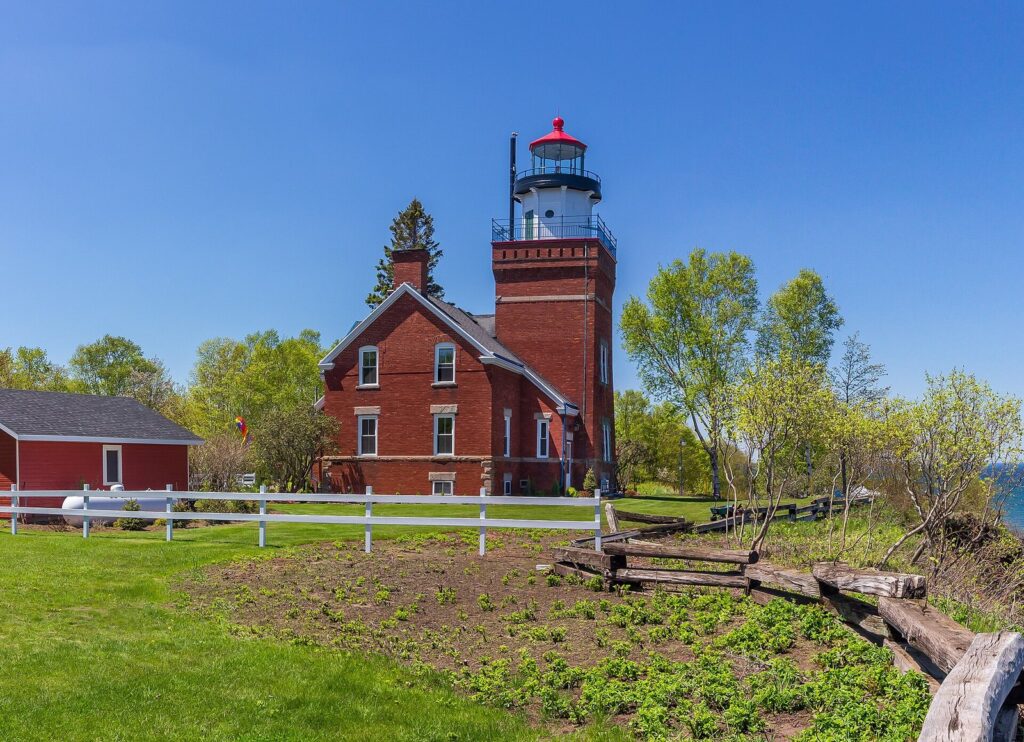
Big Bay Point Lighthouse, on Lake Superior 32 miles north of Marquette, has run as a bed-and-breakfast inn since 1986. The inn describes itself as a retreat for adults and as one of the few surviving resident lighthouse inns in the country, and the light station is on the National Register of Historic Places. Reservations go through the inn’s own website only, not by phone or in person, and cell service out there is patchy, so email if you need to arrange a call. Check rates and open dates on the inn’s site and book directly. From Marquette, the drive takes about 50 minutes.
As a keeper: volunteer programs
Volunteer keeper programs swap a fee and some work for living at a light. Tawas Point’s is the clearest deal: $250 per person in 2026 for a team of four adults aged 18 and over, who live in the historic keeper’s dwelling (two bedrooms sleeping four, a full kitchen, a bathroom with a shower, free parking). In return you put in about 30 hours a week greeting visitors, leading tours, answering questions and doing light upkeep, including a thorough clean of the quarters when you leave. The 2026 application deadline was Feb. 28, so look early in the year for the next round.
The Great Lakes Lighthouse Keepers Association keeps a list of volunteer programs around the lakes. The Michigan ones it lists:
| Light | Lake | Terms as listed |
|---|---|---|
| Au Sable | Superior | No fee; one-month duty period |
| Crisp Point | Superior | No charge; no minimum |
| Big Sable Point | Michigan | Fee; two-week minimum |
| Little Sable Point | Michigan | Fee; no minimum |
| Ludington North Breakwater | Michigan | Fee; no minimum |
| White River Light Station | Michigan | No fee; weekends and holidays only |
| Grand Traverse | Michigan | Fee; two-week duty period |
| South Manitou Island | Michigan | No fee; six-week minimum (island closed in 2026) |
| St. Helena Island | Michigan | Fee; three-day minimum |
| White Shoal | Michigan | Fee; multiple sessions |
| Mission Point | Michigan | Fee; one-week minimum |
| Cheboygan River Front Range Light | Huron (Straits) | Fee; three- to five-day minimum |
| DeTour Reef | Huron | Fee; three to seven days |
| Forty Mile Point | Huron | Fee; your own RV; flexible |
| Tawas Point | Huron | Fee; two-week duty period |
| Pointe aux Barques | Huron | Fee; one-week minimum |
Treat those terms as a starting point and confirm with each light’s own group, which sets the current fee and dates. A keeper stay is a working vacation in the full sense: you’ll answer “how many steps?” a few hundred times. If what you really want is a room with a lake view, our roundup of Michigan vacation resorts covers the lakeside places that don’t come with a gift-shop shift.
Lights you can only see from the water
Some of the state’s best lights stand on cribs and reefs well out from shore, and the only way to see them properly is from a boat.
- The Straits of Mackinac. Shepler’s lists lighthouse cruises on its website; check it for the 2027 schedule and prices. The ferries to Mackinac Island also pass Round Island Light on the way in.
- White Shoal. The offshore tower west of Mackinaw City that Wikipedia calls the tallest on the Great Lakes. Lighthouse cruises are the realistic way to see it, short of signing up as a volunteer keeper.
- Grand Island. The East Channel Light and the Grand Island lights off Munising are seen from the Pictured Rocks cruises and the island ferry.
- Copper Harbor. The lighthouse sits on the park’s shore across the harbor; the state park lists boat tours to it by Noah’s Ark Charters from the Bella Vista Motel dock.
- Harbor Beach. The light stands on the breakwall offshore; you see it from the town’s waterfront.
- Isle Royale. Passage Island Light, off the island’s northeast tip, is only reachable by boat once you’re on the island.
One small point that matters: lighthouse cruises run in the warm months, and a lake that’s too rough for comfort cancels them. Book a sailing early in your trip so you have a spare day if the weather turns.
Shipwrecks: Thunder Bay, Whitefish Point and glass-bottom boats
The lights were built because ships kept sinking, and Michigan keeps the evidence on display. You don’t need to dive to see it.
Thunder Bay National Marine Sanctuary, Alpena
NOAA’s Thunder Bay sanctuary protects nearly 100 historic shipwrecks in Lake Huron off Alpena. Start at the Great Lakes Maritime Heritage Center, 500 W. Fletcher St. in Alpena, which is open year-round with free admission and sells the glass-bottom boat tickets inside. Alpena Shipwreck Tours charged $43 for adults, $39 for military, $18 for children 6 to 12 and $1 for children 5 and under in 2026, and its kayak tours were $89. Boats run in the warm months; check the operator’s site for the 2027 schedule. The sanctuary’s dive moorings go in seasonally, May to September.
Whitefish Point
Whitefish Point is the other half of the story, on Superior. The Edmund Fitzgerald went down in Canadian waters northwest of the point in November 1975, and the Great Lakes Shipwreck Museum at the light station holds its recovered bell. The museum reopens May 1, 2027. Pair it with Tahquamenon Falls: Paradise is 11 miles south, and the falls are a short drive beyond.
Munising’s glass-bottom boats
Munising’s glass-bottom boats cruise over wrecks in the bay, and the Au Sable beach walk passes old wreck timbers on the sand. Both fit a day in the Pictured Rocks area, where we cover the tour operators in detail.
Three lighthouse road trips that work
The drive times below are free-flow estimates between lights, with no stops or traffic. Add at least an hour a day for walking out to towers, and more on summer weekends.
| Route | Lights in order | Driving between lights | Good bases |
|---|---|---|---|
| West Michigan piers and dunes (2 to 3 days) | St. Joseph, South Haven, Holland, Grand Haven, White River, Little Sable, Big Sable and Ludington, Manistee | About 4½ hours | South Haven or Holland, then Ludington |
| The Thumb and the Sunrise Coast (2 to 3 days) | Fort Gratiot, Harbor Beach, Pointe aux Barques, Tawas Point, Alpena, Presque Isle | About 6¼ hours | Port Austin or Harbor Beach, then Tawas or Alpena |
| The eastern U.P.’s Superior shore (3 to 4 days) | Point Iroquois, Whitefish Point, Crisp Point, Au Sable, Munising, Marquette, Big Bay Point | About 7¾ hours | Paradise or Newberry, then Munising, then Marquette |
Route 1: West Michigan piers and dunes
This is the Michigan side of the Lake Michigan Circle Tour, the signed route around the lake, and the lights come thick and fast. St. Joseph to South Haven takes about 30 minutes, South Haven to Holland about 30, Holland to Grand Haven under 30. Spend the first night on the south end and walk two piers at sunset. Day two runs north to White River (about 40 minutes from Grand Haven), Little Sable (just under an hour) and Ludington (about 45 minutes), where Big Sable deserves a whole afternoon. Finish at Manistee’s pier light. Chicago is about 1 hour 40 minutes from St. Joseph, so this works as a long weekend.
Route 2: the Thumb and the Sunrise Coast
Start at Fort Gratiot, follow M-25 up the Thumb to Harbor Beach (about 1 hour 10 minutes) and Pointe aux Barques (another 20 minutes), and stay near Port Austin. The next leg is the long one: Pointe aux Barques to Tawas Point is nearly three hours around Saginaw Bay. From Tawas, the Presque Isle lights are just under two hours north, with Alpena’s heritage center on the way. This is the quietest of the three routes, and the best one for a fall weekend.
Route 3: the eastern U.P.’s Superior shore
Cross the Mackinac Bridge ($4.00 per car in 2026) and head for Point Iroquois, about an hour from St. Ignace. Whitefish Point is about an hour and a quarter beyond, Crisp Point another hour-plus on slow roads, and Grand Marais about an hour and a half after that. From Grand Marais, the Au Sable trailhead is 12 miles west, Munising about an hour, Marquette 50 minutes more and Big Bay Point another 50. It’s the most remote and the most rewarding of the three, and our Tahquamenon Falls guide covers the first night’s base in Paradise.
Winter lighthouses: ice, piers and staying safe
Winter has its own lighthouse season, for photographers. When a cold snap follows a big blow, spray freezes onto the pier lights at St. Joseph and Grand Haven in thick layers, icicles hang from the catwalks, and the towers look like something from a freezer aisle.
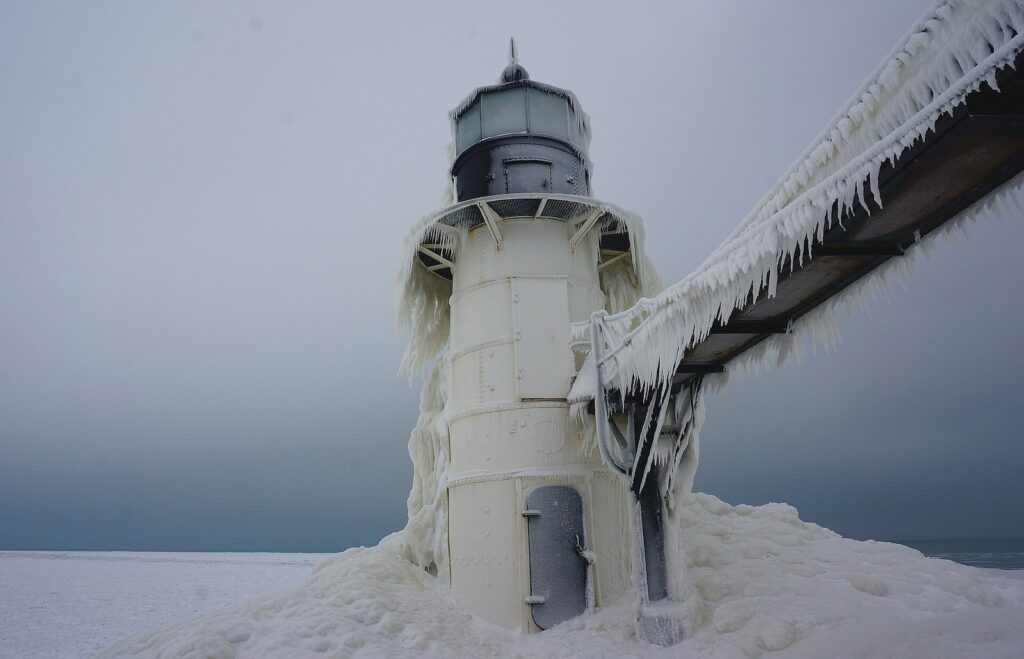
Shoot it from the shore. An iced pier is sheet glass with open water on both sides, and the shelf ice that builds out from the beach can look solid while hiding gaps and water underneath. Stay off both. The same goes for any pier in big waves at any time of year: if water is breaking over it, don’t walk it.
Most towers are shut in winter anyway. Lakeshore Keepers’ lights close by late October, Au Sable’s climbs end Oct. 15, the Whitefish Point museum reopens May 1, and the road to Crisp Point isn’t plowed for its last 7 miles. Fort Gratiot runs weekend tours into December, which makes it the best bet for a lighthouse climb in late fall.
Summer has its own water hazard. If you swim at a lighthouse beach, check the beach flags at the state parks and keep well away from piers and breakwalls, where currents run fast along the structure and out into the lake.
Planning: drive times, fees and when to go
Drive times to the main lighthouse areas
These are free-flow estimates; add time for summer weekend traffic Up North and at the Mackinac Bridge, and remember that drivers from Chicago lose an hour on the way in, because every light on this page is on Eastern time.
| Area (main light) | From Detroit | From Grand Rapids | From Chicago |
|---|---|---|---|
| Port Huron (Fort Gratiot) | About 1 hr 10 min | About 2 hr 45 min | About 5 hr 15 min |
| The Thumb (Pointe aux Barques) | About 2 hr 30 min | About 3 hr 45 min | About 6 hr 15 min |
| Tawas Point | About 3 hr | About 3 hr 30 min | About 6 hr 10 min |
| Alpena (Thunder Bay) | About 4 hr | About 4 hr 5 min | About 6 hr 50 min |
| St. Joseph (pier lights) | About 2 hr 50 min | About 1 hr 15 min | About 1 hr 40 min |
| Ludington (Big Sable) | About 3 hr 45 min | About 1 hr 30 min | About 4 hr |
| Northport (Grand Traverse) | About 4 hr 50 min | About 3 hr 5 min | About 5 hr 50 min |
| Mackinaw City (Old Mackinac Point) | About 4 hr 15 min | About 3 hr 35 min | About 6 hr 25 min |
| Paradise (Whitefish Point is 11 miles on) | About 5 hr 30 min | About 4 hr 50 min | About 7 hr 40 min |
| Munising (Pictured Rocks) | About 6 hr 25 min | About 5 hr 45 min | About 6 hr 25 min |
| Big Bay Point | About 8 hr | About 7 hr 25 min | About 7 hr 10 min |
| Eagle Harbor (Keweenaw) | About 9 hr 40 min | About 9 hr | About 7 hr 55 min |
Fees and passes that catch people out
- Recreation Passport. Needed to drive into the state parks at Big Sable Point, Grand Traverse, Tawas Point, Holland State Park and Copper Harbor’s Fort Wilkins. Michigan residents add it at plate renewal for $15 a year; non-residents pay $42 a year or $12 a day (2026 prices). Walk or bike in, and you don’t need one.
- Pictured Rocks vehicle pass. $25 for seven days in 2026, needed for Au Sable even though the climb is free.
- Mackinac Bridge. $4.00 per car in 2026, if your route crosses to the U.P.
- Isle Royale. $7 per person per day, on top of the ferry or seaplane.
- Mackinac State Historic Parks. If you’ll see Old Mackinac Point and the forts, the seven-day pass beats single tickets.
Where to stay
Base yourself in the harbor towns rather than chasing a different bed every night. On Lake Michigan, Ludington, South Haven and Grand Haven have the most choice, from chain motels on the highway to inns walking distance from the piers, and summer weekends book up early. For Grand Traverse, Traverse City or the Leelanau villages work. In the eastern U.P., Paradise and Newberry are small, so book ahead for Whitefish Point and Crisp Point; Munising and Marquette have more. On Lake Huron, Tawas City, Alpena and Port Austin each make a good night’s stop. Expect July and August, and fall-color weekends, to cost the most, and the shoulder weeks of June and September to be easier on both price and crowds.
When to go
June through September is the window when nearly everything is open. June has long evenings and lighter crowds before July 4; July and August bring the full schedules and the full parking lots; September is the sweet spot, with most towers still open, warm water and quieter weekends, although Lakeshore Keepers drops to Thursday to Sunday in the fall. October is beautiful and patchy: Au Sable’s climbs stop mid-month and many volunteer lights close around then. Come January and February only for the ice, and only to look from the shore.
What to skip, and what to do instead
Skip trying to see them all in one trip. The eastern U.P. route alone is nearly eight hours of driving between lights. Pick one coast and do it properly.
Skip Whitefish Point in winter if the museum is the reason. The shipwreck museum is closed until May 1, 2027. Go in summer and combine it with Tahquamenon Falls.
Skip Crisp Point in winter. The last 7 miles of the county road aren’t plowed. Even in summer it’s a slow drive, so give it a half day.
Skip any pier with waves breaking over it. The light will still be there tomorrow. Photograph it from the beach.
Skip planning around South Manitou Island for now. The island was closed for all of 2026; check the national lakeshore’s site for 2027 before you build a trip around it.
Worth it: Au Sable. The climb is free with the park pass, the walk passes shipwreck timbers, and the view over the Grand Sable Dunes is hard to beat.
Worth it: Big Sable Point. The 1.8-mile walk is the point. Go early on a weekday, bring water, and wear shoes with heel straps.
Worth the detour: Presque Isle. Two climbable towers, free museums and a fraction of the west coast’s crowds.
Frequently asked questions
How many lighthouses are in Michigan?
About 130, which is more than any other state. Guinness uses that figure for current lighthouses, and other sources say “more than 120”, because counts differ on whether to include range lights, offshore cribs and lights that no longer shine. Lists that include inactive lights run higher still. Whatever the exact number, more than a dozen towers open to climbers in summer, and many more can be viewed from piers, parks or boats.
What is the most famous lighthouse in Michigan?
There’s no official answer; it depends what you mean by famous. For a picture everyone recognizes, it’s Holland’s red pierhead light, Big Red. For history, Whitefish Point, where the Great Lakes Shipwreck Museum displays the Edmund Fitzgerald’s bell. For a climb, Big Sable Point near Ludington, a 112-foot black-and-white tower reached by a 1.8-mile walk through Ludington State Park. For a view of the Mackinac Bridge, Old Mackinac Point in Mackinaw City.
What is the tallest lighthouse in Michigan?
Wikipedia calls White Shoal Light, an offshore tower in northern Lake Michigan west of Mackinaw City, the tallest lighthouse on the Great Lakes; you can only see it from a boat. Among towers you can climb, the Presque Isle Township Museum Society says its New Presque Isle Lighthouse (1870) is the tallest in Michigan open to the public. Big Sable Point near Ludington stands about 112 feet, and Fort Gratiot is 82.
What is the oldest lighthouse in Michigan?
Fort Gratiot in Port Huron, which Port Huron Museums bills as Michigan’s oldest. The first tower there was built in 1825 and collapsed in 1828; the present tower dates from 1829 and was raised from 65 to 82 feet in the early 1860s. You can climb its 94 iron stairs on a guided tour, $12 for adults in 2026. Presque Isle’s 1840 lighthouse, on Lake Huron north of Alpena, is another early one you can climb.
Which Michigan lighthouses can you go inside?
Plenty. You can climb the towers at Big Sable Point, Little Sable Point, White River, Ludington and Manistee (Lakeshore Keepers, $8), Grand Traverse ($8), Au Sable (free, ranger-led), Fort Gratiot ($12), Pointe aux Barques ($8 with the museum), Tawas Point ($5), both Presque Isle lights and Old Mackinac Point. Eagle Harbor, Whitefish Point and Point Iroquois have museums inside. Fees are adult prices for 2026 or 2027.
Can you stay overnight in a Michigan lighthouse?
Yes. Big Bay Point Lighthouse, north of Marquette, has run as a bed-and-breakfast since 1986; book on the inn’s own website. Or volunteer as a keeper: Tawas Point charged $250 per person in 2026 for teams of four adults, who live in the keeper’s dwelling and work about 30 hours a week. The Great Lakes Lighthouse Keepers Association lists more than a dozen other Michigan programs, from no-fee stays at Au Sable to RV-based keeping at Forty Mile Point.
Which Great Lake has the most lighthouses?
Within Michigan, Lake Michigan. Its Michigan shore runs from the Indiana line to the Straits and along the U.P., with a harbor light every 20 to 30 miles down the west side. In Wikipedia’s list of the state’s lights sorted by waterway, Lake Michigan has the most, followed by Lake Superior and Lake Huron; Lake Erie, with only a short Michigan shoreline, has a couple. The Detroit and St. Marys rivers add more of their own.
When are Michigan lighthouses open to visitors?
Mostly from May or June to October. In 2027, Lakeshore Keepers’ lights open between May 4 and May 21 and close between late September and Oct. 24; Eagle Harbor runs June 20 to Oct. 10, and the Whitefish Point museum May 1 to Oct. 31. In 2026, Au Sable’s free climbs ran June 7 to Oct. 15. Grand Traverse opens weekends in November and Fort Gratiot weekends until Dec. 20, 2026. Pier lights can be viewed all year.
Related Michigan guides
- Pictured Rocks National Lakeshore: cruises, kayaking and the Au Sable area
- Tahquamenon Falls and Whitefish Point
- Mackinac Island and the Straits
- Lakeside resorts in Michigan
Sources and verification
Everything above was checked on November 24, 2026 against the organizations listed below. This guide is compiled from them and claims no first-hand visits.
- Lakeshore Keepers: Big Sable Point, Little Sable Point, White River, Ludington and Manistee lights
- National Park Service: Au Sable Light Station, Pictured Rocks National Lakeshore
- Port Huron Museums: Fort Gratiot Lighthouse
- Grand Traverse Lighthouse Museum: visitor information
- Michigan History Center: Tawas Point lighthouse keeper program
- NOAA Thunder Bay National Marine Sanctuary: Great Lakes Maritime Heritage Center
Also checked: the Keweenaw County Historical Society (Eagle Harbor), the Pointe aux Barques Maritime Museum, the Presque Isle Township Museum Society, the Great Lakes Shipwreck Historical Society, the Crisp Point Light Historical Society, the Marquette Maritime Museum, Big Bay Point Lighthouse B&B, Alpena Shipwreck Tours, Mackinac State Historic Parks, the Great Lakes Lighthouse Keepers Association, the Michigan DNR (Recreation Passport), the Mackinac Bridge Authority and the National Park Service (Pictured Rocks and Isle Royale fees). Drive times are free-flow estimates from OpenStreetMap routing.
Michigan Tourism Guide is an independent publication. It is not affiliated with Pure Michigan or any agency or business named here.
Photo credits
- Grand Traverse Lighthouse (featured image): photo by Rodney Campbell, Wikimedia Commons (CC BY 2.0)
- Fort Gratiot Lighthouse: photo by Nuggehalli2015, Wikimedia Commons (CC BY-SA 4.0)
- Point Iroquois Lighthouse: photo by ValerieWood, Wikimedia Commons (CC BY-SA 3.0)
- View east from Crisp Point Lighthouse: photo by Notorious4life (talk) (Uploads), Wikimedia Commons (CC0)
- Big Sable Point Lighthouse: photo by James Phelps from USA, Wikimedia Commons (CC BY 2.0)
- Pointe aux Barques Lighthouse: photo by Stickvaughn, Wikimedia Commons (CC0)
- Au Sable Light Station: photo by Joe Passe, Wikimedia Commons (CC BY-SA 2.0)
- Big Bay Point Lighthouse: photo by rossograph, Wikimedia Commons (CC BY-SA 4.0)
- St. Joseph North Pier outer light in ice (2014): photo by Rachel Kramer from Grandville, MI, United States, Wikimedia Commons (CC BY 2.0)