Ask a Michigander where they’re headed on a summer Friday and “up north” covers a lot of ground: a cottage on Higgins Lake, a canoe trip on the Au Sable, a motel in Tawas with Lake Huron across the road, a deer camp somewhere past Atlanta. Northern Michigan is a region, but it’s also a direction of travel, and the drive is part of it: north on I-75 or US-127, farm fields giving way to jack pine somewhere past Clare, billboards switching from injury lawyers to fudge and live bait.
The short answer: northern Michigan means the top of the Lower Peninsula, roughly everything north of M-55, the highway that crosses from Manistee to Tawas City; the Upper Peninsula is a separate region. For the interior and the Lake Huron side, base yourself in Grayling or Gaylord for rivers, elk and ski hills, at Houghton Lake, Higgins Lake or Cadillac for a lake week, or in Tawas or Alpena for the “Sunrise Coast.” Grayling is about 3 hours from Detroit, and Cadillac is about 1 hour 25 minutes from Grand Rapids and 4 hours 15 minutes from Chicago.
The details below were checked November 19, 2026 against the operators’ and agencies’ own websites, including the Michigan DNR’s elk and Recreation Passport pages, NOAA’s Thunder Bay sanctuary and the organizers’ 2027 event calendars.
On this page: At a glance · Where Up North starts · What it’s known for · Base towns compared · Elk country · The Au Sable · Inland lakes · The Sunrise Coast · Long-weekend plans · Cabins and cottages · Best time to go · Winter · Rainy days · Getting there · Passes and fees · Up North vs. the U.P. · What to skip · FAQ
Northern Michigan at a glance
| What you need to know | Details (checked November 19, 2026) |
|---|---|
| Where it is | The top of the Lower Peninsula, roughly north of M-55 (Manistee, Cadillac, Houghton Lake, Tawas City); not the Upper Peninsula |
| Main roads | I-75 up the middle (Grayling, Gaylord, Mackinaw City), US-127 from Lansing, US-131 from Grand Rapids to Cadillac, US-23 along Lake Huron |
| Drive times | Detroit to Grayling about 3 hours, to Gaylord about 3 hours 25 minutes, to Alpena about 4 hours; Grand Rapids to Cadillac about 1 hour 25 minutes; Chicago to Cadillac about 4 hours 15 minutes (free-flow; summer Fridays run longer) |
| Elk | About 1,000 elk in and around the Pigeon River Country State Forest, east of Vanderbilt; best at dawn and dusk in September and October |
| Inland lakes | Houghton Lake (a little over 20,000 acres), Higgins Lake (clear water, two state parks), Lake Cadillac and Lake Mitchell, Burt and Mullett lakes |
| River | The Au Sable, from Grayling to Lake Huron at Oscoda; the 2027 canoe marathon starts at 9 p.m. on Saturday, July 24 |
| Lake Huron coast | The US-23 Sunrise Coast byway: Tawas Point, Oscoda, Alpena’s shipwreck sanctuary, Rogers City, Cheboygan |
| State park entry (2026) | Recreation Passport: $15 a year for Michigan vehicles; non-residents $42 a year or $12 a day |
| Winter | Skiing at Treetops, Otsego Club, Hanson Hills and Caberfae Peaks; snowmobile trails; Tip-Up Town USA on Houghton Lake (check the chamber’s page for 2027 dates) |
| Best time | Late June to Labor Day for lakes; September and early October for elk and color; January and February for snow |
Where does Up North start in Michigan?
Nowhere official. No state map draws the line, and every family has its own marker: the Zilwaukee Bridge, the first fudge billboard, the moment the radio loses the Detroit stations. The two answers you’ll hear most are highways. Some people say Up North begins at US-10, which crosses the state through Clare and Midland. More hold out for M-55, a little farther north, which runs from Manistee on Lake Michigan through Cadillac and past Houghton Lake to Tawas City on Lake Huron. Cross M-55 heading north and nobody will argue with you.
Most published definitions take in the northernmost 21 counties of the Lower Peninsula. The state’s own planning maps split the same territory into a northwest region and a northeast region, and that split is also how the place travels:
- The northwest: the Lake Michigan side, with Traverse City, the Leelanau Peninsula, Sleeping Bear Dunes, Charlevoix, Petoskey and Harbor Springs. Dunes, wineries, cherries and the heaviest summer traffic. Each of those places has its own guide on this site.
- The interior: Grayling, Gaylord, Houghton Lake, Higgins Lake and Cadillac, strung along I-75, US-127 and US-131. Rivers, inland lakes, state forest, golf and ski hills.
- Elk country: the Pigeon River Country State Forest and the farm and forest land around Vanderbilt, Gaylord and Atlanta.
- The Sunrise Coast: US-23 along Lake Huron, from Tawas and Oscoda through Harrisville, Alpena and Rogers City to Cheboygan and Mackinaw City.
What northern Michigan doesn’t include, in local usage, is the Upper Peninsula. North of the Mackinac Bridge is “the U.P.,” and the people who live there call themselves Yoopers. To them, everyone below the bridge is a troll, because trolls live under bridges. The one thing that muddles search results is Northern Michigan University, which is in Marquette, in the U.P.
For Michiganders, “up north” is also a habit as much as a place: the family cottage, the hunting camp, the same lake every July. That explains the lodging you’ll find. There are more cottages, cabins, small motels and campgrounds than big hotels, and the best lakefront weeks go to families who booked them last winter.
What is northern Michigan known for?
Water, mostly, and the woods around it. Ask around and you’ll hear the same list:
- Inland lakes and cottages. Houghton Lake, Higgins Lake, Lake Cadillac, Burt and Mullett lakes and hundreds of smaller ones, ringed with cottages that have stayed in the same families for generations.
- Trout rivers. The Au Sable at Grayling is one of the Midwest’s best-known trout streams, and Trout Unlimited was founded on its banks in 1959.
- Elk. Michigan’s elk herd, about 1,000 animals by the DNR’s count, lives in and around the Pigeon River Country State Forest.
- Two coasts. Dunes, cherry orchards and wineries on the Lake Michigan side; quieter beaches, lighthouses and shipwrecks on Lake Huron.
- Winter. Ski hills at Gaylord, Grayling and Cadillac, snowmobile trails between towns, and ice-fishing festivals on frozen lakes.
- Fall color. Maples, oaks and aspens across the state forests in late September and October.
It’s not a nightlife region and it’s not a shopping region, outside of Traverse City and Petoskey. Most evenings end at a campfire, a supper club or a pontoon at sunset, which is the point.
Where to stay: the Up North base towns compared
Pick your base by what you want outside the door. The drive times below are free-flow estimates from downtown Detroit, Grand Rapids and Chicago; add time for summer Fridays heading north and Sundays heading home.
| Base | Water | Best for | Winter | From Detroit | From Grand Rapids | From Chicago |
|---|---|---|---|---|---|---|
| Gaylord | Otsego Lake and smaller lakes nearby | Golf, elk country, a central base | Treetops and Otsego Club ski hills | about 3 h 25 min | about 2 h 45 min | about 5 h 35 min |
| Grayling | Au Sable and upper Manistee rivers, Lake Margrethe | Paddling, trout fishing, Hartwick Pines | Hanson Hills skiing and tubing | about 3 h | about 2 h 30 min | about 5 h 15 min |
| Houghton Lake | Houghton Lake | Boating, fishing, a big-lake week | Ice fishing, Tip-Up Town | about 2 h 50 min | about 2 h 5 min | about 4 h 55 min |
| Higgins Lake (Roscommon) | Higgins Lake | Clear-water swimming, state park camping | Quiet | about 2 h 50 min | about 2 h 25 min | about 5 h 15 min |
| Cadillac | Lake Cadillac and Lake Mitchell | The shortest drive from Grand Rapids and Chicago | Caberfae Peaks | about 3 h 15 min | about 1 h 25 min | about 4 h 15 min |
| Tawas (East Tawas and Tawas City) | Lake Huron and Tawas Bay | Beaches, Tawas Point, the shortest drive to the Sunrise Coast from Detroit | Perchville on the bay (check dates) | about 2 h 45 min | about 3 h 15 min | about 6 h |
| Alpena | Lake Huron and Thunder Bay | Shipwrecks, museums, the quiet coast | Year-round maritime museum | about 4 h | about 4 h | about 6 h 50 min |
Gaylord: the crossroads
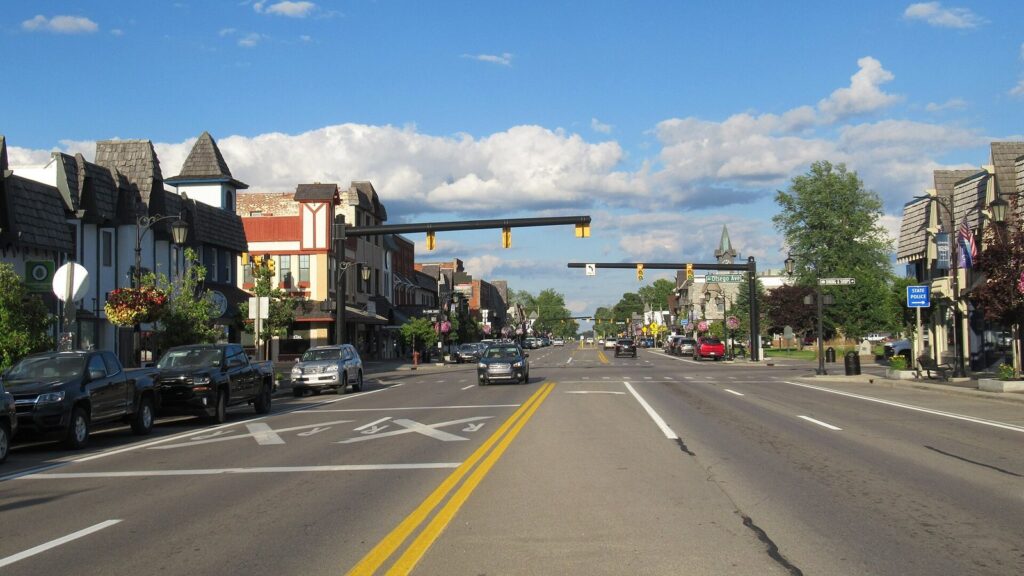
Gaylord sits on I-75 about half an hour north of Grayling, with Petoskey 40 minutes to the northwest and Vanderbilt, the doorway to elk country, 13 minutes up the interstate. The downtown wears an Alpine theme, with chalet-style storefronts and hanging flower baskets, and it hosts Alpenfest, a street festival that runs July 13 to 17 in 2027. Gaylord is more golf-and-ski town than lake town. Treetops and Otsego Club are the big resorts, both with golf in summer and downhill skiing in winter. Choose it if you want to split a trip between elk country, the northwest and the Straits: Traverse City is about 1 hour 10 minutes away and Cheboygan about 50 minutes.
Grayling: the river town
Grayling is built around the Au Sable, which runs through town on its way to Lake Huron, and the upper Manistee flows through the forest to the west. It’s the place for a canoe or kayak trip, for fly fishing, and for Hartwick Pines State Park just outside town, where 49 acres of old-growth pine and a logging museum show what the region looked like before the lumber era. US-127 meets I-75 just south of town, which makes Grayling the easiest interior base to reach: about 3 hours from Detroit and 2 hours 30 minutes from Grand Rapids. Our guide to Michigan state parks covers Hartwick Pines and the other big parks in detail.
Houghton Lake: the big lake
Houghton Lake is both the lake and the string of communities along its shore. At a little over 20,000 acres it’s usually listed as Michigan’s largest inland lake, and it’s broad and fairly shallow, which makes it a fishing and boating lake more than a swimming lake. Expect resorts, cottages, motels, marinas and bait shops rather than boutiques. It’s about 2 hours 50 minutes from Detroit and 2 hours 5 minutes from Grand Rapids, and in winter the lake turns into an ice-fishing town, home to the Tip-Up Town USA festival.
Higgins Lake: the clear one
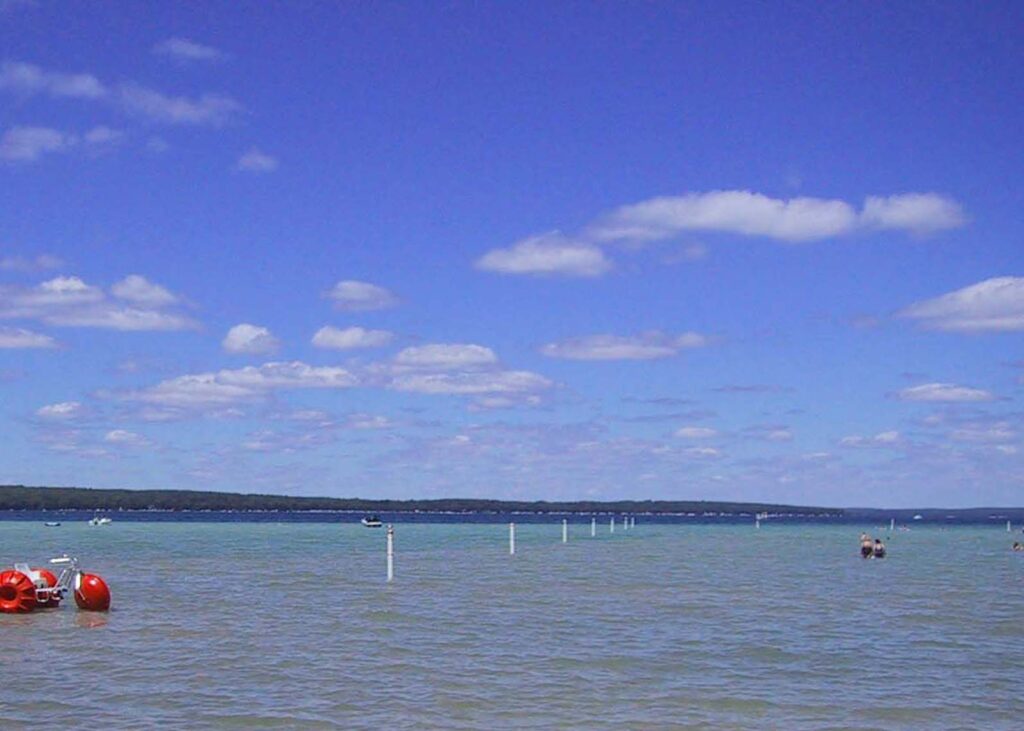
Higgins Lake, just west of Roscommon and I-75, is the lake Michiganders bring up when they argue about the prettiest water in the state. It’s deep and unusually clear, with sandy shallows that turn pale green on a sunny day. Two state parks sit on its shores, North Higgins Lake and South Higgins Lake, and most of the rest is cottages. Lodging is thinner than at Houghton Lake, 25 minutes away, so book early, or camp at one of the state parks and reserve as soon as your dates allow.
Cadillac: the short drive
Cadillac sits between two lakes, Lake Cadillac and Lake Mitchell, joined by a short canal with a state park campground along its banks. From Grand Rapids (about 1 hour 25 minutes) and Chicago (about 4 hours 15 minutes), it’s the nearest of these towns, and Traverse City is just under an hour away. In winter, Caberfae Peaks, the ski area west of town, has its own 42-room lodge.
Tawas: the Lake Huron beach base
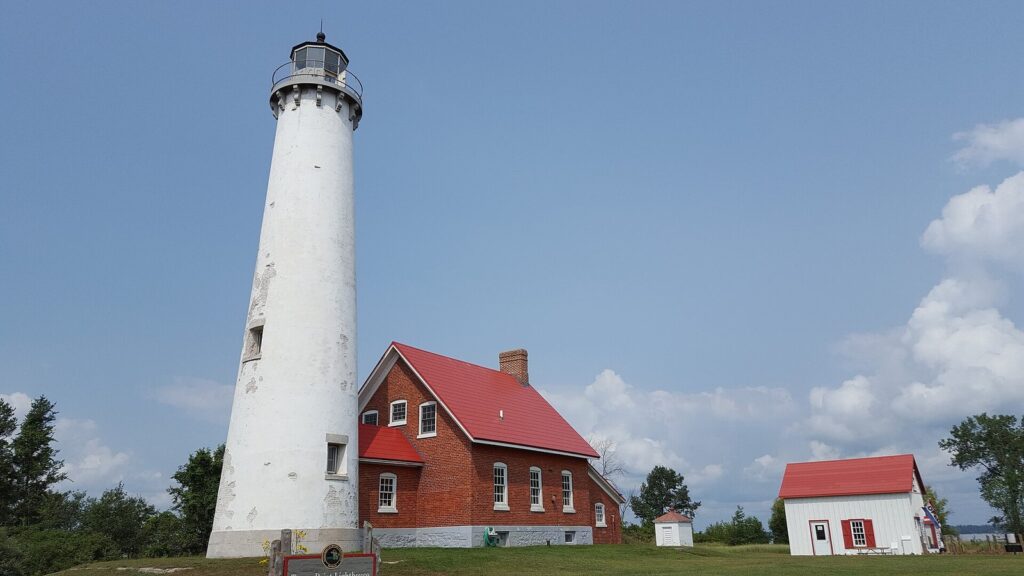
East Tawas and Tawas City face Tawas Bay, which is sheltered by Tawas Point, a curving sand spit with a state park and a lighthouse at its tip. The bay gives the towns calm water, while the Lake Huron side of the point takes the waves. Tawas is the closest Sunrise Coast base to Detroit, about 2 hours 45 minutes, and Oscoda is 20 minutes north. The towns are small, with a downtown along US-23, a state harbor, and a mix of motels, cottages and beach rentals.
Alpena: the shipwreck coast
Alpena is the main town on the northern Lake Huron shore and the base for the Thunder Bay National Marine Sanctuary, which protects nearly 100 historic shipwrecks. The sanctuary’s visitor center, the Great Lakes Maritime Heritage Center, is free and open daily all year, and the glass-bottom boat that tours the wrecks leaves from behind it. Alpena is about 4 hours from Detroit or Grand Rapids and nearly 7 from Chicago, which keeps its summer crowds modest.
Elk country: where to see elk in northern Michigan
Michigan’s elk live in one corner of the state. The DNR puts the herd at about 1,000 animals, spread across southern Cheboygan, Otsego and Montmorency counties, and calls the Pigeon River Country State Forest home to one of the largest free-roaming elk herds east of the Mississippi. The forest lies east of Vanderbilt, 13 minutes north of Gaylord on I-75. Atlanta, in Montmorency County, is about 35 minutes east of Gaylord and 45 minutes from Alpena, so elk country also works as a detour on the way to the Sunrise Coast.
When to go
September and October are the months. That’s the rut, when bulls bugle to gather cows and the herd spends more time out in the open. The DNR says viewing is best at dawn and dusk, and that holds the rest of the year too. In midsummer heat, elk tend to spend the middle of the day in the trees, and you’ll mostly see forest. A noon drive in July is a nice drive; it just isn’t an elk drive.
How to watch
- Drive the forest roads slowly around sunrise or in the last hour before dark, and scan the clearings and the edges of fields.
- When you spot elk, pull fully off the road. Don’t stop in the lane, even on a quiet back road.
- Stay at a distance, sit quietly and stay out of the fields. Those are the DNR’s rules of thumb, and they keep the elk where you can see them.
- Bring binoculars and a full tank. Services are thin once you leave Gaylord, Vanderbilt or Atlanta, and your phone signal may drop in the forest.
- Fall is also hunting season in the state forest. Wear something bright if you walk the trails.
The Pigeon River Country Discovery Center
The volunteer-run Pigeon River Country Discovery Center is a good first stop for the forest’s history and wildlife. It opens on weekends from the last weekend of April through the last weekend of October, Saturdays 10 a.m. to 4 p.m. and Sundays noon to 4 p.m., with a docent on hand. Outside those hours you’re on your own, which is most of the week, so treat it as a bonus rather than the plan.
The Au Sable River: canoes, trout and the River Road
If the region has a main street, it’s the Au Sable. The river runs from Grayling east through jack pine country to Lake Huron at Oscoda, and that course is also the route of the Au Sable River Canoe Marathon, a 120-mile, nonstop race from Grayling to Oscoda that starts at night. The 2027 race starts at 9 p.m. on Saturday, July 24; the 2026 race ran on July 25. Watching the start in Grayling, with hundreds of people lining the banks in the dark, is one of the odder and better summer nights in Michigan.
Paddling from Grayling
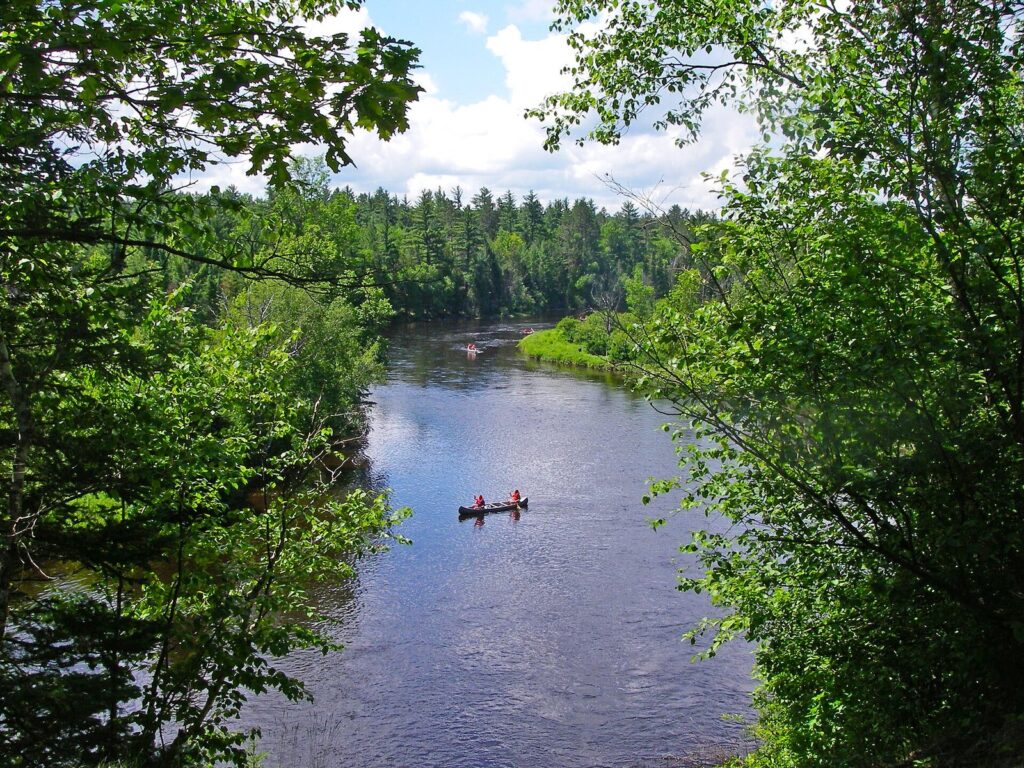
Grayling’s liveries rent canoes and kayaks and run the shuttle: you leave your car at the take-out or the livery, they drive you to the put-in, and you float back. Carlisle Canoe Livery, for example, runs day and overnight trips and will spot your car. Check with the livery before you go, since hours and services change with the season. The river near Grayling is cold, clear and fairly quick, with sweepers (downed trees) on the bends, so it suits paddlers who can steer. Summer weekends are busy on the water; weekday mornings are quiet.
Trout water
The Au Sable is one of the Midwest’s best-known trout rivers, and the stretches below Grayling are fly-fishing country, with fly shops and anglers’ lodges along the banks. Trout Unlimited, the national cold-water conservation group, was founded on the river near Grayling in 1959. You’ll need a Michigan fishing license, and parts of the river carry special gear and catch rules, so read the DNR’s current fishing guide before you wade in.
The River Road National Scenic Byway
Downstream, the Au Sable widens behind a chain of hydro dams, and the Forest Service’s River Road National Scenic Byway follows the high bank west from Oscoda. The stops are short walks from the car:
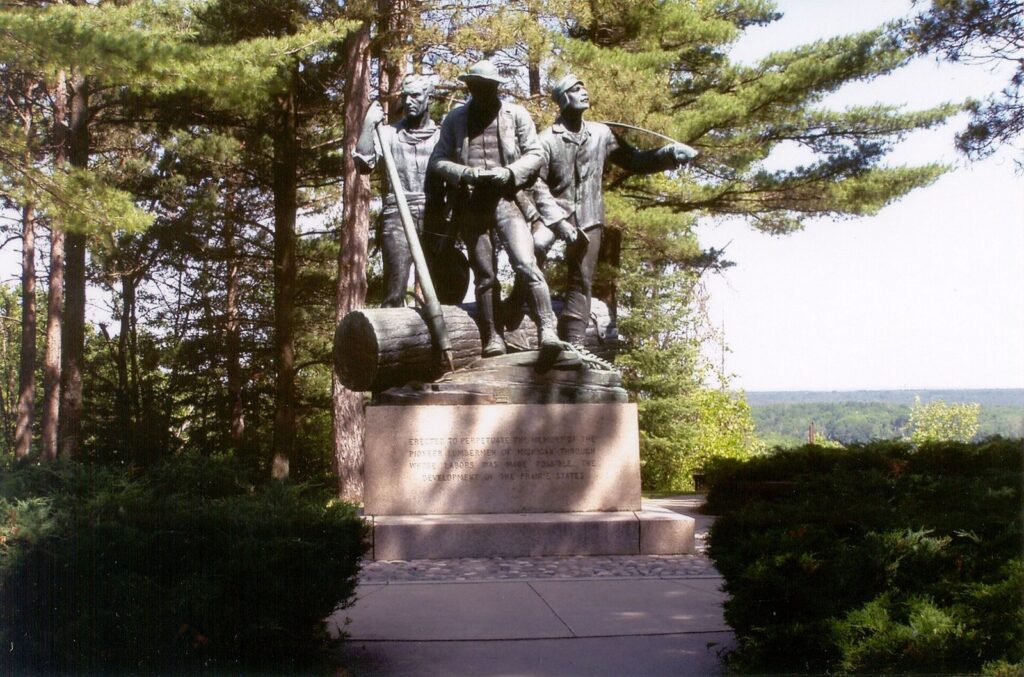
- Lumberman’s Monument: a bronze statue of three loggers on the bluff above the river valley, with a seasonal visitor center. Check the Huron-Manistee National Forest’s page for the visitor center’s season.
- Iargo Springs: springs at the foot of the bluff, reached by a long wooden staircase and boardwalks. Save some legs for the climb back up.
- The Canoer’s Memorial and the Kiwanis Monument: two more stops on the same road, both on the river.
Allow an hour or two for the drive with stops, more in October when the valley turns color. Oscoda, at the river mouth, has a Lake Huron beach for the end of the day.
The inland lakes: Houghton, Higgins, Cadillac and Mitchell
Northern Michigan’s inland lakes are the reason most families come, and they aren’t interchangeable. A shallow, warm fishing lake and a deep, clear swimming lake make for very different weeks, so it’s worth knowing which is which before you book.
Houghton Lake
Big, broad and shallow, at a little over 20,000 acres. It’s a boating and fishing lake first, with wide open water, marinas and launch ramps along a long shoreline, and in winter a small city of ice shanties. Because it’s shallow it warms up early in summer, and because it’s broad the wind can kick up a chop quickly, which pontoon captains learn about the hard way. Swimming is mostly off private frontage and small public beaches.
Higgins Lake
The opposite: deep, cold, sandy-bottomed and clear enough to see the bottom well offshore. Swim off the beaches at South Higgins Lake State Park or North Higgins Lake State Park (a Recreation Passport covers the car), or rent a cottage on the shore. North Higgins Lake State Park also holds the Civilian Conservation Corps Museum, about the 1930s work camps that replanted the region’s cut-over forests; check its hours before you go.
Lake Cadillac and Lake Mitchell
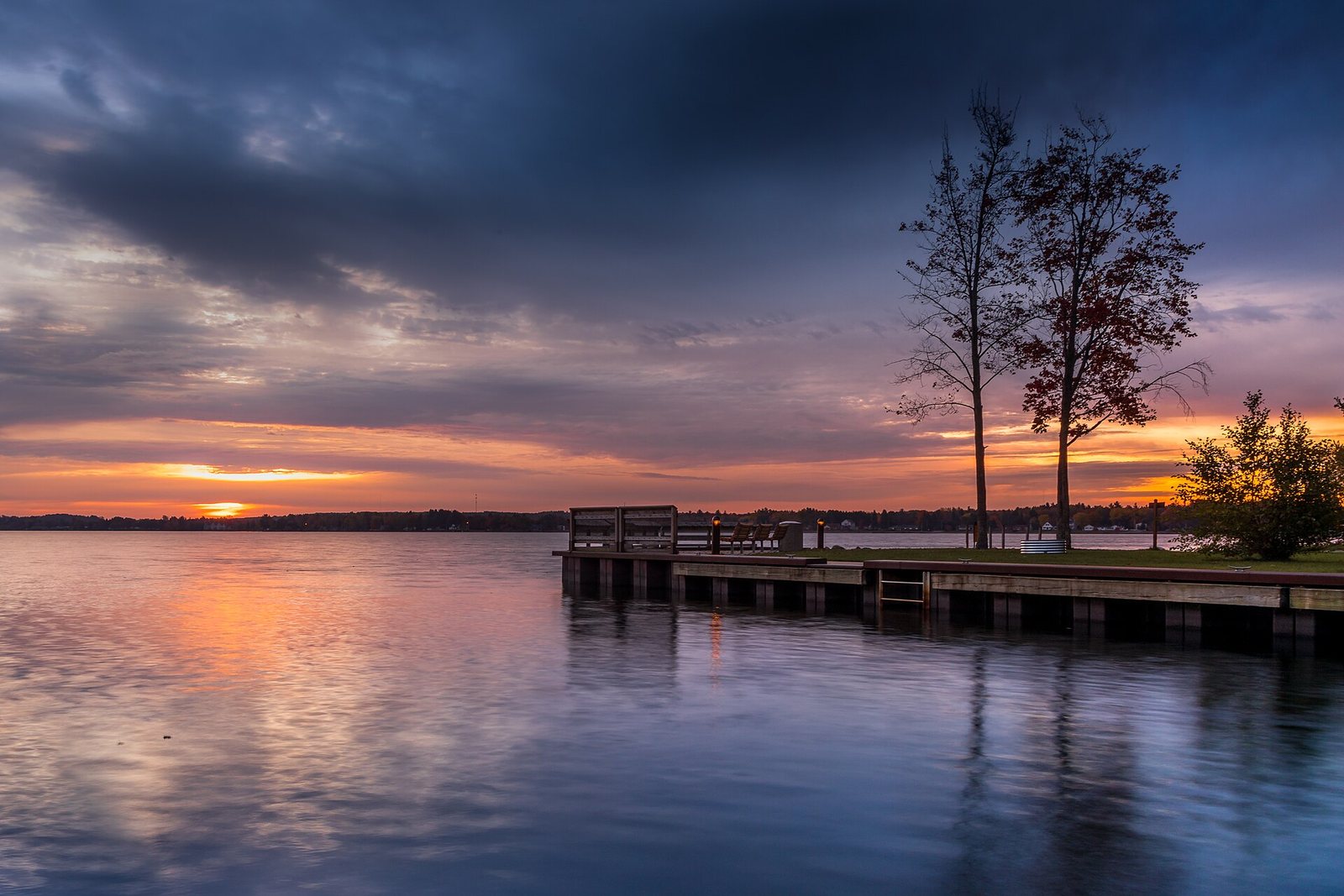
Two lakes on the edge of Cadillac, joined by the Clam Lake canal. Lake Cadillac wraps the town; Lake Mitchell, to the west, is more cottage country. William Mitchell State Park sits on the canal between them, with a campground and the fishing pier you’ll see in sunrise photos. It’s a good setup for a family with a boat: town for groceries and ice cream, lakes for everything else.
The Inland Waterway lakes
Up near Cheboygan, Mullett Lake and Burt Lake are two big lakes on the Inland Waterway, a 38-mile route of rivers and lakes that boats can run from Lake Huron at Cheboygan to Crooked Lake. They’re cottage and fishing lakes with more of a northwest feel, and you can boat to town for lunch.
Smaller lakes worth a look: Lake Margrethe outside Grayling, Otsego Lake just south of Gaylord, with a state park on its shore, and Hubbard Lake southwest of Alpena.
The Sunrise Coast: US-23 along Lake Huron
The Lake Huron side faces east, which is the whole idea behind the name: the sun comes up over the water. US-23 follows the shore most of the way, and the Sunrise Coast Pure Michigan Byway counts more than 200 miles of Lake Huron shoreline on its route. It’s quieter than the Lake Michigan side, with fewer wineries and boutiques and more state parks, lighthouses, fishing harbors and empty beach.
Lake Huron beaches are big water. Check the beach flags at state park beaches before you swim: red means high waves and strong currents, and double red means stay out of the water. If a current pulls you away from shore, don’t fight it head-on; float to catch your breath, then swim parallel to the beach until you’re out of it.
Tawas and Tawas Point
Tawas Point State Park covers the sand spit that curls around Tawas Bay, with a beach, a campground and the Tawas Point Lighthouse near the tip. The tower has 85 steps. In 2026, admission was $5 for adults, $2 for ages 6 to 17 and free for children 5 and under, and you need a Recreation Passport to drive into the park. The lighthouse closes for the winter, so check the Michigan History Center’s page for the 2027 season. Birders know the point as a spring stopover for migrating songbirds.
Oscoda and Harrisville
Twenty minutes north, Oscoda sits where the Au Sable meets Lake Huron, with a public beach park and the east end of the River Road byway. Older guides still list paddlewheel cruises on the AuSable River Queen; the boat sank at its dock in 2025, so don’t plan around it. Farther north, US-23 passes Harrisville, a small harbor town with a state park on the beach.
Alpena: shipwrecks you can see from a boat
The waters off Alpena are one of the Great Lakes’ wreck graveyards. The Thunder Bay National Marine Sanctuary protects nearly 100 historic shipwrecks, and some lie shallow enough to see from the surface. Start at the Great Lakes Maritime Heritage Center, 500 W. Fletcher St., the sanctuary’s visitor center: admission is free, it’s open daily 8 a.m. to 5 p.m. all year (it occasionally closes for events), and it has more than 10,000 square feet of exhibits.
Alpena Shipwreck Tours runs glass-bottom boat trips over the wrecks from behind the center, and sells tickets inside it. 2026 fares were $43 for adults, $39 for military, $18 for children 6 to 12 and $1 for children 5 and under. The company also runs guided kayak tours; check its site for the 2027 schedule and prices. Divers and snorkelers can use the sanctuary’s seasonal mooring buoys, available from May to September.
North of Alpena: Rockport, Presque Isle and Rogers City
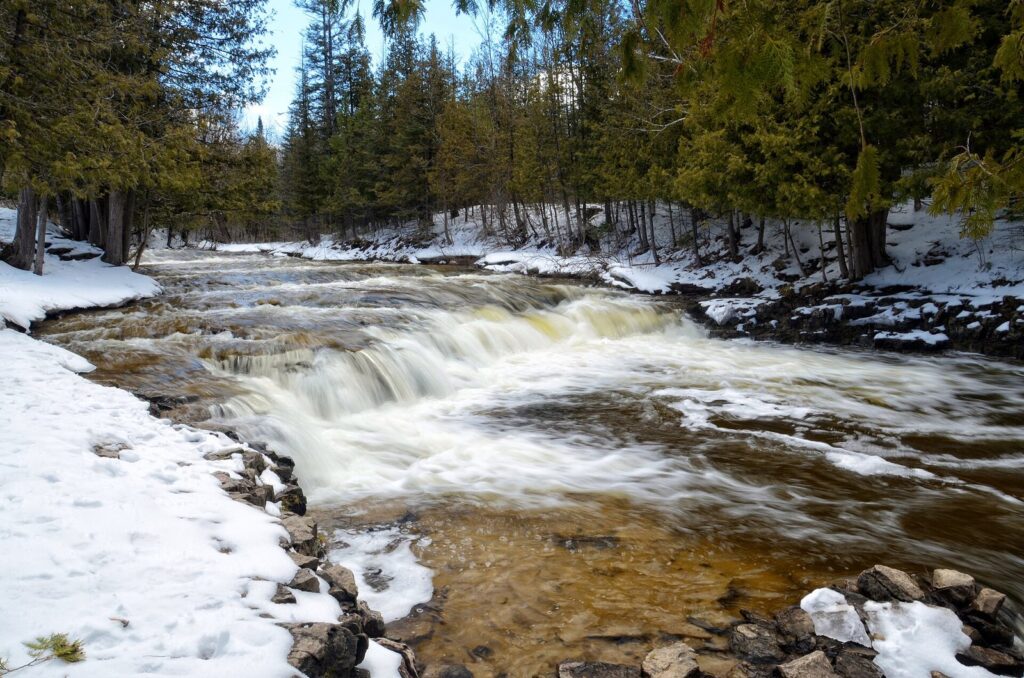
Rockport State Recreation Area, north of Alpena on the lake, is a former limestone quarry where people hunt for fossils. A little farther up, Presque Isle has two lighthouses, the old one and the new. Rogers City is a quiet harbor town with a lakefront park, and west of town Ocqueoc Falls drops over a series of low ledges in the woods. Waterfalls are scarce below the Straits, so this one gets its share of visitors.
Cheboygan and the North Eastern State Trail
Cheboygan, the last town before Mackinaw City (18 minutes on), is a working river town with an opera house downtown and the start of the Inland Waterway. The North Eastern State Trail, a 71-mile rail-trail between Alpena and Cheboygan, makes a good bike day: ride a section out and back, or arrange a shuttle and do a longer one-way stretch.
Two long-weekend plans
The interior: rivers, elk and a clear lake (3 days)
- Day 1, Grayling: paddle a half-day stretch of the Au Sable with a livery shuttle, then walk the old-growth pines at Hartwick Pines.
- Day 2, Gaylord and the Pigeon River Country: golf, a downtown lunch or an easy afternoon, then drive to the elk country east of Vanderbilt for the last two hours of daylight.
- Day 3, Higgins Lake: head back south on I-75 and spend the afternoon on the beach at South Higgins Lake State Park before the drive home.
The Sunrise Coast: Tawas to the Straits (3 to 4 days)
- Day 1, Tawas: Tawas Point State Park and the lighthouse (in season), then dinner in East Tawas.
- Day 2, Oscoda and the River Road: 20 minutes north to Oscoda, then the River Road byway for Lumberman’s Monument and Iargo Springs, and an afternoon on Oscoda’s beach.
- Day 3, Alpena: about 55 minutes up US-23. The Great Lakes Maritime Heritage Center in the morning, and the glass-bottom boat in the afternoon if it’s running.
- Day 4, north to the Straits: Rockport or the Presque Isle lighthouses, Rogers City (about 45 minutes from Alpena) and Ocqueoc Falls, then Cheboygan (another 45 minutes) and Mackinaw City, 18 minutes beyond.
Both plans work in reverse, and both pair well with a night in Mackinaw City if you’re continuing to the bridge.
Up North cabins and cottages: where to rent
Most up-north lodging is a cottage on a lake, rented by the week in summer. Where you rent matters more than which listing you click:
- For swimming: Higgins Lake, for its clear, sandy-bottomed water. There are fewer rentals, and they go early.
- For boating and fishing: Houghton Lake, Lake Cadillac and Lake Mitchell, and Burt and Mullett lakes on the Inland Waterway.
- For a Great Lakes beach: the Lake Huron shore around Tawas, Oscoda and Harrisville, where cottages sit across US-23 from the water or right on the sand.
- For a river: cabins along the Au Sable around Grayling and Mio, built for anglers and paddlers.
- For a central base: Otsego Lake near Gaylord, with golf and elk country close by and Petoskey 40 minutes away.
A few rules that save trouble:
- Book July and August early. Many lakefront cottages rent by the week, often Saturday to Saturday, and returning families take the best weeks.
- Ask what’s included: a dock, a boat or kayaks, linens, and whether the frontage is sand or weeds.
- June and September weeks are often cheaper and the lakes emptier, and inland lakes usually hold their summer warmth well into September.
- For a cabin without a host, look at the state’s own. The DNR rents rustic cabins in state parks and runs more than 140 state forest campgrounds, most of them first-come, first-served; reservable sites book through MiDNRReservations.com.
If you’d rather have a lodge with a pool, golf and a restaurant on site, our guide to Michigan vacation resorts compares the full-service options, Treetops near Gaylord among them.
When is the best time to visit northern Michigan?
Summer is the obvious answer and the right one for a lake week. But the region has four distinct seasons, and two of them beat summer for some trips.
| Season | Good for | Know before you go |
|---|---|---|
| Late June to Labor Day | Lakes, beaches, paddling and festivals: Alpenfest in Gaylord (July 13 to 17, 2027) and the canoe marathon from Grayling (starts July 24, 2027) | Peak prices and traffic; book cottages early; June can be buggy in the woods |
| September and October | The elk rut, fall color, quiet lakes, swimmable water into September | Seasonal places start closing; the Discovery Center’s season ends the last weekend of October; hunting seasons open in the state forests |
| November to March | Skiing, snowmobiling, ice fishing, Tip-Up Town on Houghton Lake, Perchville in East Tawas | November is firearm deer season, so expect hunters in the woods and motels; check ice and road conditions |
| April and May | The spring trout opener, morels, migrating birds at Tawas Point, empty trails | Mud season: some cottages, campgrounds and seasonal attractions don’t open until Memorial Day |
If you only get one trip, go in the first half of September. The lakes are still warm enough to swim, the summer crowds leave after Labor Day, the elk are starting to bugle and the color is a few weeks out. Fall color in the interior usually runs a little behind the U.P. and ahead of southern Michigan, so watch a fall color report before you pick a weekend.
Winter up north: ski hills, ice shanties and snowmobile towns
Winter is the interior’s second high season. Once the lakes freeze and the snow settles in, ski hills, snowmobile trails and ice-fishing festivals bring weekend crowds back to towns that go quiet after deer season.
Downhill and cross-country skiing
- Gaylord: Treetops and Otsego Club both run downhill skiing alongside their golf courses, with rooms on site.
- Grayling: Hanson Hills Recreation Area has downhill skiing, tubing and cross-country trails close to town.
- Cadillac: Caberfae Peaks, west of town, has its own 42-room lodge.
- Cross-country: Forbush Corner near Frederic is a dedicated Nordic center; check its own site for the 2026-27 season and trail conditions.
None of these are big mountains, and that’s fine: they’re family hills with short lift lines on weekdays, an easy drive from Detroit and Grand Rapids.
Snowmobiling
Gaylord, Grayling, Houghton Lake and the towns of the northeast sit on the state’s groomed snowmobile trail network, and some motels let you ride from the parking lot to the trail. You’ll need a Michigan snowmobile trail permit to ride the state’s trails, and the DNR’s trail maps show which routes are groomed. Ride the trails, not the lakes, unless locals tell you the ice is good.
Ice fishing and the winter festivals
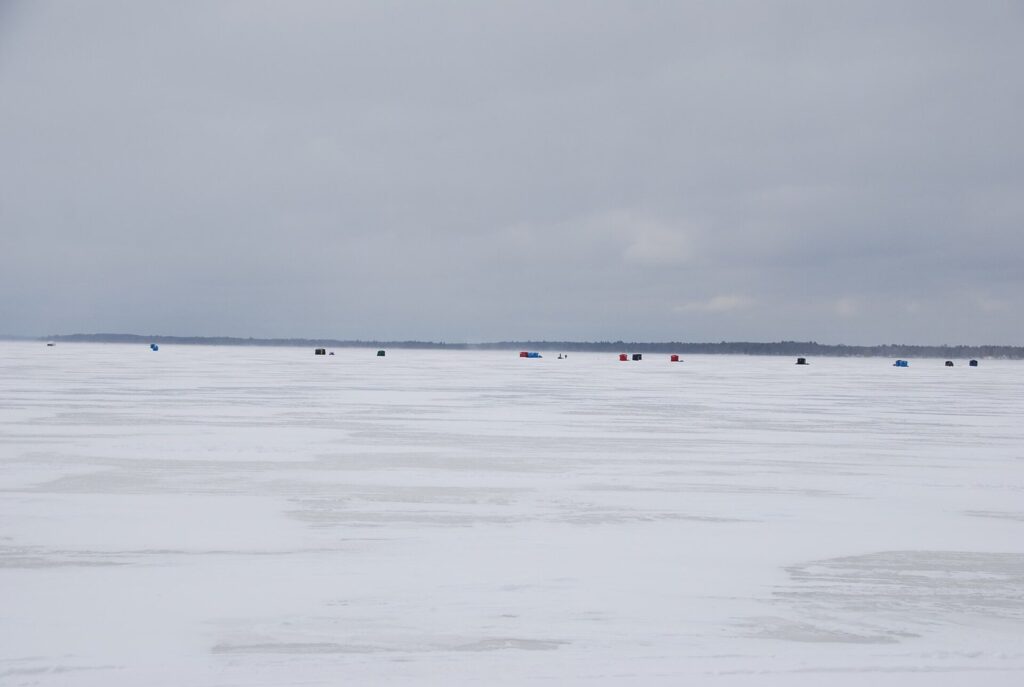
Tip-Up Town USA is Houghton Lake’s ice-fishing festival, with events on and around the frozen lake. The Houghton Lake Chamber of Commerce posts the schedule on its Tip-Up Town page; check it for the 2027 dates before you book a room. East Tawas holds Perchville USA on the frozen bay; the Tawas chamber’s calendar has the dates.
On the ice, no ice is safe ice. Ask at a bait shop about conditions, stay away from inlets, outlets and pressure cracks, and never drive onto a lake on your own judgment.
Rainy days up north
Northern Michigan isn’t built for rain. Most of what there is to do is outdoors, and a wet day in a small cottage can feel long. These are the indoor stops worth the drive:
- Great Lakes Maritime Heritage Center, Alpena: free, open daily 8 a.m. to 5 p.m. all year, with shipwreck exhibits and the sanctuary’s story.
- Hartwick Pines Logging Museum, Grayling: the lumber era, inside the state park (a Recreation Passport covers the car); check the park’s page for the museum’s season.
- Pigeon River Country Discovery Center: weekends from late April to late October; small, but a good introduction to the elk and the forest.
- Civilian Conservation Corps Museum, North Higgins Lake State Park: the story of the camps that replanted the north; check hours before you go.
- Cheboygan Opera House: check the calendar for concerts and touring shows.
If the forecast is grim all weekend, it can be worth driving to a city instead. Our list of what to do in Michigan covers the museums, zoos and big indoor attractions statewide.
Getting there and getting around
You’ll need a car. The interior hangs off a handful of highways:
- I-75 is the spine, north from Detroit through Flint and Saginaw to Grayling, Gaylord and Mackinaw City.
- US-127 runs north from Lansing through Clare and meets I-75 just south of Grayling.
- US-131 runs north from Grand Rapids to Cadillac and on toward Petoskey.
- US-23 leaves I-75 at Standish and follows the Lake Huron shore through Tawas, Oscoda and Alpena to Mackinaw City.
- Cross-routes: M-55 (Cadillac to Houghton Lake and Tawas City), M-72 (Traverse City through Grayling to Harrisville) and M-32 (Gaylord to Alpena).
Drive times on this page are free-flow estimates. Northbound Friday afternoons and southbound Sunday afternoons in summer can add a lot, especially on I-75 and US-127, so leave early or late. Watch for deer at dawn and dusk on two-lane roads, the same hours the elk come out.
Flying in, Traverse City’s Cherry Capital Airport (TVC) has flights on several major airlines, and Pellston Regional Airport (PLN) serves the Straits. From Traverse City, Cadillac is just under an hour’s drive and Gaylord about 1 hour 10 minutes. Rent a car at the airport; there’s no practical public transit between these towns.
Passes and fees (2026)
| Item | 2026 price | Notes |
|---|---|---|
| Recreation Passport, Michigan vehicles | $15 a year ($29 for two years; motorcycles $7) | Add it when you renew your plate; there’s a $5 convenience fee if you buy it elsewhere |
| Recreation Passport, non-resident vehicles | $42 a year, or $12 a day | Covers vehicle entry to state parks and recreation areas; camping is extra |
| Tawas Point Lighthouse | $5 adults, $2 ages 6 to 17, free 5 and under | Plus a Recreation Passport for the car; closed in winter |
| Glass-bottom shipwreck tour, Alpena | $43 adults, $18 ages 6 to 12 | Check the operator’s site for 2027 fares and dates |
| Great Lakes Maritime Heritage Center | Free | Open daily 8 a.m. to 5 p.m. |
Recreation Passport prices are adjusted each year for inflation, so check the DNR’s Recreation Passport page for 2027 rates before a trip next year.
Up North, the U.P. or the Lake Michigan shore?
For a first trip north, most people are choosing between three different vacations. Here’s how they compare.
The Lake Michigan shore, Traverse City to Petoskey: the postcard trip, with Sleeping Bear’s dunes, wineries, cherry stands and the best-known downtowns. It’s usually the busiest and priciest of the three in July, and the most rewarding for a first-timer.
The Upper Peninsula: waterfalls, Pictured Rocks, Lake Superior and long empty roads. Give it at least three days; the distances are bigger than they look.
The interior and the Sunrise Coast: the lake week, the river trip, elk in September and Lake Huron beaches without the crowds. It’s closer to Detroit than either of the others (Tawas is about 2 hours 45 minutes away, Houghton Lake under 3 hours) and easier on the budget.
Our pick: for a first trip, go northwest. For a second trip, or any trip built around a lake, a canoe or the elk, come here.
What to skip
Skip the midday elk drive. In July at noon you’ll see a lot of trees. Go at dawn or dusk, ideally in September or October.
Skip Houghton Lake if clear water is the point. It’s a fishing and boating lake. For swimming, Higgins Lake is a short drive north.
Skip pairing Tawas and Traverse City on one weekend. They’re on opposite sides of the peninsula. Pick one coast per trip.
Skip the paddlewheel cruise in old listings. The AuSable River Queen sank at its Oscoda dock in 2025. Paddle the river yourself instead.
Skip Gaylord as a summer lake base. It’s a golf and ski town. For a lake week, stay on Higgins, Houghton or the Cadillac lakes.
Skip shoulder-season trips that hinge on one attraction. The Tawas Point Lighthouse closes for the winter, the Discovery Center keeps weekend hours from late April to late October only, and many cottages and campgrounds don’t open before Memorial Day.
Northern Michigan FAQ
What is considered northern Michigan?
Northern Michigan, or Up North, usually means the top of the Lower Peninsula: roughly everything north of M-55, the highway from Manistee through Cadillac and Houghton Lake to Tawas City. Most published definitions count the northernmost 21 counties, from Traverse City and Petoskey on Lake Michigan to Alpena and Cheboygan on Lake Huron. The Upper Peninsula, across the Mackinac Bridge, is treated as its own region.
What is northern Michigan known for?
Lakes, rivers and woods. It’s cottage country, with big inland lakes such as Houghton and Higgins, trout water on the Au Sable, Michigan’s elk herd in the Pigeon River Country, dunes, cherries and wineries on the Lake Michigan side, and lighthouses and shipwrecks on Lake Huron. In winter it means ski hills, snowmobile trails and ice-fishing festivals; in fall, color across the state forests.
Where does Up North start in Michigan?
There’s no official line. Many Michiganders put it at US-10, which crosses the state through Clare and Midland; others hold out for M-55, which runs from Manistee to Tawas City. Most agree that by the time you reach Houghton Lake, Grayling or Cadillac you’re up north, and that anything past the Mackinac Bridge is the U.P., a different place altogether.
What is the prettiest town in northern Michigan?
It’s a matter of taste, but most votes go to the Lake Michigan side: Petoskey, Harbor Springs, Charlevoix and Glen Arbor. On the Lake Huron side, East Tawas, with its bayfront and Tawas Point nearby, and Rogers City, with its quiet harbor, get less attention than they deserve. For lake scenery rather than a downtown, Higgins Lake’s clear water is hard to beat.
When is the best time to visit northern Michigan?
Late June through August for lake weather and summer events such as Gaylord’s Alpenfest (July 13 to 17, 2027). September and October for the elk rut in the Pigeon River Country, fall color and thinner crowds. January and February for skiing, snowmobiling and ice fishing. April and May are muddy and quiet, and many seasonal businesses wait until Memorial Day to open.
Is northern Michigan the same as the Upper Peninsula?
No. In Michigan, northern Michigan (Up North) means the top of the Lower Peninsula, south of the Mackinac Bridge. The Upper Peninsula, north of the bridge, is called the U.P., and its residents call themselves Yoopers. Part of the confusion comes from Northern Michigan University, which is in Marquette, in the U.P., not in the northern Lower Peninsula.
Where can you see elk in northern Michigan?
In and around the Pigeon River Country State Forest, east of Vanderbilt and northeast of Gaylord, across southern Cheboygan, Otsego and Montmorency counties. The DNR puts the herd at about 1,000 elk. Go at dawn or dusk in September and October, when bulls bugle during the rut, and stay at a distance, keep quiet and stay out of the fields.
What is the Sunrise Coast in Michigan?
The Sunrise Coast is the Lake Huron shore of the northern Lower Peninsula, named for sunrises over the water. The US-23 Sunrise Coast byway covers more than 200 miles of shoreline through Tawas, Oscoda, Harrisville, Alpena, Rogers City and Cheboygan to Mackinaw City, with Tawas Point State Park, lighthouses and the Thunder Bay shipwreck sanctuary at Alpena along the way.
Related Michigan guides
Sources and verification
Everything on this page was checked on November 19, 2026 against the organizations listed below. The guide is compiled from their published information and claims no first-hand visits.
- Michigan DNR: elk viewing (herd size, range, viewing season and etiquette)
- Michigan DNR: Recreation Passport (2026 rates)
- NOAA Thunder Bay National Marine Sanctuary: Great Lakes Maritime Heritage Center (hours, admission, shipwrecks)
- Sunrise Coast Pure Michigan Byway (route, North Eastern State Trail, Inland Waterway)
- Pigeon River Country Discovery Center (season and hours)
- Au Sable River Canoe Marathon (2027 start)
We also used Gaylord’s tourism bureau for Alpenfest’s 2027 dates, the Houghton Lake Chamber of Commerce for Tip-Up Town, the Michigan History Center for Tawas Point Lighthouse admission, Alpena Shipwreck Tours for 2026 fares, the ski areas’ own sites for the 2026-27 season and OpenStreetMap-based routing for drive times.
Michigan Tourism Guide is an independent publication. It is not affiliated with Pure Michigan or any agency or business named here.
Photo credits
- Lake Cadillac at sunrise (featured image): photo by Christian Collins, Wikimedia Commons (CC BY-SA 2.0)
- Downtown Gaylord: photo by Notorious4life (talk) (Uploads), Wikimedia Commons (CC0)
- Au Sable River: photo by usfs_Eastern_Region, Wikimedia Commons (public domain)
- Lumberman's Monument: photo by Chris Light, Wikimedia Commons (CC BY-SA 4.0)
- Higgins Lake: photo by Hgjudd, Wikimedia Commons (CC BY-SA 3.0)
- Tawas Point Lighthouse: photo by Johnkan0301, Wikimedia Commons (CC BY-SA 4.0)
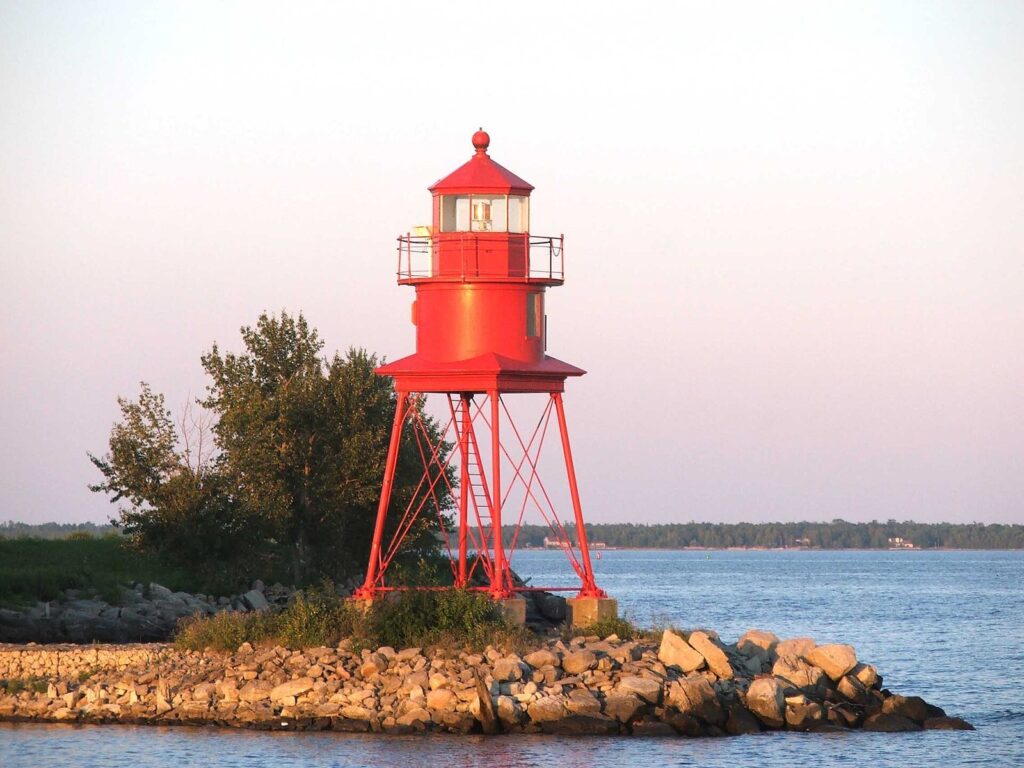
- Alpena harbor light: photo by by Dylan L. Tanner, Wikimedia Commons (CC BY-SA 2.5)
- Ocqueoc Falls: photo by Tony Faiola from Mid-Michigan, U.S.A., Wikimedia Commons (CC BY 2.0)
- Houghton Lake ice shanties: photo by Joe Ross from Lansing, Michigan, Wikimedia Commons (CC BY-SA 2.0)