Michigan is the only state made of two peninsulas, and the water around them decides where almost everything worth doing sits. The state touches four of the five Great Lakes, has more than 3,200 miles of Great Lakes shoreline and about 11,000 inland lakes, and the only road between its two halves inside the state is the five-mile Mackinac Bridge. That’s why the best things to do in Michigan are so spread out: the big dunes line the west coast of the Lower Peninsula, the sandstone cliffs and the tallest waterfalls are in the Upper Peninsula, and the museums, music and ballparks cluster in the southeast around Detroit.
The short answer: build a first trip around one of three anchors (Mackinac Island, Sleeping Bear Dunes or Pictured Rocks) and add Detroit’s museums, Traverse City’s wineries or a loop of Upper Peninsula waterfalls around it. Late June through August is the easy season for beaches and islands; late September to mid-October is the best one, if you can get away then. Give one peninsula a week and both of them ten days or more.
Every fee, fare, date and closure below was checked on September 23, 2026 against the operators’ and agencies’ own websites. Fares are 2026 rates unless marked otherwise, and event dates are for 2027. This page is about what to do and where; drive times, time zones and where to base yourself are in the logistics section near the end.
On this page: At a glance · The 12 best · By the numbers · Region by region · Season by season · Park fees · The islands · Food · 2027 festivals · Outdoors · Free and cheap · Logistics · What to skip · FAQ
Michigan’s top experiences at a glance
Twelve places carry most first trips. Drive times are from downtown Detroit without traffic (Grand Rapids and Chicago times are in the drive-time table), and every price is a 2026 rate.
| Experience | Region | Best time | From Detroit | Key cost (2026) |
|---|---|---|---|---|
| Mackinac Island | Straits of Mackinac, Lake Huron | May to October | About 4 h 15 min to the Mackinaw City docks | Ferry $37 (Arnold Transit) or $39 (Shepler’s basic), adult round trip |
| Sleeping Bear Dunes | Northwest Lower, Empire and Glen Arbor | June to mid-October | About 4 h 25 min | $25 per vehicle for 7 days |
| Pictured Rocks | Central U.P., Munising | June to mid-October | About 6 h 25 min | $25 per vehicle for 7 days; Classic Cruise $48 adult |
| Tahquamenon Falls | Eastern U.P., near Paradise | May for volume, early October for color | About 5 h 25 min | Recreation Passport (non-residents $42 a year or $12 a day) |
| The Henry Ford | Dearborn, metro Detroit | Year-round (Greenfield Village is seasonal) | Just west of downtown | Museum $34 to $36 adult; Village $37 to $39; parking $10 |
| Detroit | Southeast Michigan | Year-round | Here | DIA free for tri-county residents, $20 other adults; People Mover free |
| Traverse City | Northwest Lower, Grand Traverse Bay | July to October | About 4 h | 5% lodging assessment on rooms; wineries charge for tastings |
| Holland | West Michigan lakeshore | Tulip Time, April 30 to May 9, 2027 | About 2 h 45 min | Downtown free; Holland State Park needs a Recreation Passport |
| Frankenmuth | Mid-Michigan, south of Saginaw | September (Oktoberfest) and December | About 1 h 30 min | Free to wander; the chicken dinner is the big spend |
| Isle Royale | Lake Superior, off the Keweenaw | Mid-May to September | About 9 h to the Houghton ferry | $7 per person per day; Ranger III $80 one way adult |
| Porcupine Mountains | Western U.P., Silver City | Late September to early October | About 9 h 30 min | Recreation Passport |
| Lake Michigan beach towns | West Michigan and Northwest Lower | Late June to August | 2 h 45 min (Holland) to 3 h 45 min (Ludington) | Town beaches set their own parking fees; state park beaches need a Recreation Passport |
The 12 best things to do in Michigan
This is a ranking for a first visit, weighted toward places you won’t find anywhere else in the Midwest. The order changes with the calendar: in January the dunes and islands drop out, and the ski hills and snowbelt towns move up (the season-by-season section covers that).
1. Mackinac Island
Motor vehicles have been banned on Mackinac Island since 1898, so the island runs on bicycles, about 600 horses and your own feet. You reach it by ferry from Mackinaw City or St. Ignace, a 16- to 40-minute crossing depending on the boat. In 2026 an adult round trip cost $37 on Arnold Transit’s fast ferry and $39 on Shepler’s basic ticket; both lines now belong to the same company, and the old Star Line boats sail as Arnold Transit. Rent a bike for the 8.2-mile M-185 loop around the shore, walk up to Arch Rock, and pay $17.50 for Fort Mackinac if you want one ticketed sight. The day-trippers thin out after the late-afternoon boats, and a night on the island is the better visit. The season runs from early May to late October.
2. Sleeping Bear Dunes National Lakeshore
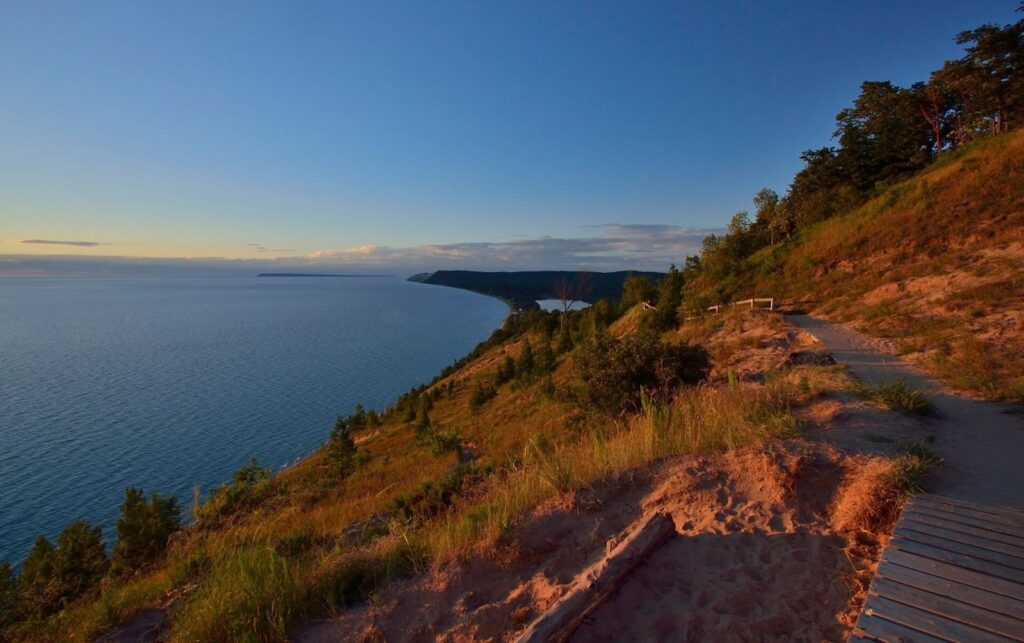
Sleeping Bear covers 71,318 acres and 65 miles of Lake Michigan shoreline west of Traverse City, and it counted just over 1.6 million recreation visits in 2025, most of them in June, July and August. The Dune Climb is the classic afternoon: a steep sand face you climb for the view and then run down. The Pierce Stocking Scenic Drive loops through beech and maple forest to overlooks about 450 feet above the lake, where signs warn that a rope rescue for people who go down the bluff and can’t climb back costs about $3,000. The Empire Bluff trail at the south end gives the best sunset view for the least effort. A private vehicle pass is $25 for seven days. One change for 2026: North and South Manitou islands are closed all season while the Park Service relocates their docks, and the Leland ferry isn’t running.
3. Pictured Rocks National Lakeshore
The cliffs east of Munising rise straight out of Lake Superior, streaked orange, green and white by minerals seeping through the sandstone, and the best view of them is from the water. Pictured Rocks Cruises’ Classic Cruise ran 2 hours 40 minutes for $48 an adult in 2026 and sailed through Labor Day; the shorter Spray Falls Cruise ($56) runs into October, with the last boats on October 18. On land, Miners Castle, Munising Falls and the Chapel Basin trails make a full day, and the vehicle pass is $25 for seven days. Paddling the cliffs yourself is for experienced sea kayakers only. The water stays cold all summer, the wind comes up fast, and there are long stretches of cliff with nowhere to land.
4. Tahquamenon Falls
The Upper Falls drops about 48 feet over a ledge more than 200 feet wide, and the water is the color of strong tea, stained by tannins from the cedar swamps upstream. Average flow is about 7,000 gallons a second; spring snowmelt can push it past 50,000. The Lower Falls, four miles downstream, is a series of smaller cascades split around an island. Both sit in Tahquamenon Falls State Park near Paradise, in the eastern U.P., which at 46,179 acres is Michigan’s second-largest state park, so a Recreation Passport is all you pay to get in. Come in May for the volume or in early October for the color, and bring bug spray in June.
5. The Henry Ford, Dearborn
The Henry Ford is three attractions on one campus in Dearborn, just west of Detroit. The Henry Ford Museum of American Innovation holds the Rosa Parks bus, a line of presidential limousines and a hall of steam engines; Greenfield Village is an open-air village of relocated historic buildings, including Thomas Edison’s Menlo Park laboratory; and the Ford Rouge Factory Tour takes you above the line where F-150 pickups are assembled. Online prices in 2026 were date-based: $34 to $36 for an adult museum ticket, $37 to $39 for the Village and $24 for the Rouge tour, plus $10 parking per order. Give the museum half a day and the Village the other half, and book the factory tour as its own outing.
6. Detroit
Detroit is the best value in the state for culture. The Detroit Institute of Arts, home of Diego Rivera’s Detroit Industry murals, is free for residents of Wayne, Oakland and Macomb counties and $20 for other adults, and the downtown People Mover loop and the QLINE streetcar on Woodward Avenue are both fare-free. Walk the RiverWalk, cross to Belle Isle for the free aquarium (Thursday to Sunday), eat your way through Eastern Market on a Saturday and catch a game: the Tigers, Lions, Red Wings and Pistons all play downtown. One current note: Motown Museum tours at Hitsville U.S.A. are paused until spring 2027. Our list of the best things to do in Detroit goes district by district.
7. Traverse City and its two peninsulas
Traverse City calls itself the Cherry Capital of the World, and the National Cherry Festival (its 101st edition runs July 3 to 10, 2027) is the loudest week of its year. The rest of the time it’s the base for the Grand Traverse region: tasting rooms on the Old Mission and Leelanau peninsulas, the paved TART trails, swimming beaches on both arms of Grand Traverse Bay and Sleeping Bear less than an hour west. Rooms in the area carry a 5 percent lodging assessment on top of state tax, and July weekends book out early. In fall, the drive up Old Mission Peninsula to the lighthouse at its tip is one of the easiest color routes in the state.
8. Holland and Tulip Time
Holland was founded in 1847 by Dutch settlers, and it leans into it: wooden shoes, a working Dutch windmill on Windmill Island and, every spring, Tulip Time, which runs April 30 to May 9, 2027. Outside festival season it’s one of the most likable small cities on the lake. The downtown sidewalks are kept clear by a snowmelt system billed as the largest municipal one in the country, and Big Red, the Holland Harbor Light, stands at the channel out to Lake Michigan. Holland State Park’s beach is the busy one and needs a Recreation Passport. Grand Rapids is about 35 minutes away and Chicago about two and a half hours.
9. Frankenmuth
Frankenmuth, “Michigan’s Little Bavaria,” sits about 90 miles north of Detroit off I-75, and it’s the easiest day trip from the southeast. Franconian Germans settled it (the name means “courage of the Franconians”), and today it’s Bavarian-style facades, a covered bridge over the Cass River, a year-round Christmas store that bills itself as the world’s largest and family-style chicken dinners served in heaping bowls. Oktoberfest (September 16 to 19, 2027) and the weeks before Christmas are the busy times; a weekday in May or early November is the quiet one. It’s about an hour and a half from Detroit and about two hours from Grand Rapids.
10. Isle Royale National Park
Isle Royale is a roadless island in Lake Superior, closer to Canada than to mainland Michigan, and it’s shut to all visitors from November 1 to April 15. The rest of the year you come by boat or seaplane: the Park Service’s Ranger III takes about six hours from Houghton ($80 one way per adult in 2026), the Isle Royale Queen IV about three and a half hours from Copper Harbor ($175 round trip), and seaplanes fly from Hubbell in about 40 minutes. Entry is $7 per person per day. Visitors backpack between the island’s campgrounds or stay at Rock Harbor Lodge, and since getting there takes most of a day, a single-day visit makes little sense unless you’re on the Queen IV.
11. Porcupine Mountains Wilderness State Park
The Porkies are 59,020 acres of old-growth hardwood forest, rivers and waterfalls on the Lake Superior shore of the far western U.P., protected as a state park since 1944. Most people come for one view, Lake of the Clouds from the escarpment overlook, and it earns the drive in late September or early October. Stay longer and you get rustic backcountry cabins, the Presque Isle River’s waterfalls and some of the emptiest hiking in the Midwest. It’s a long way from anywhere: Silver City, at the park’s east end, is about 9 hours 30 minutes from Detroit and about 7 hours from Chicago.
12. The Lake Michigan beach towns
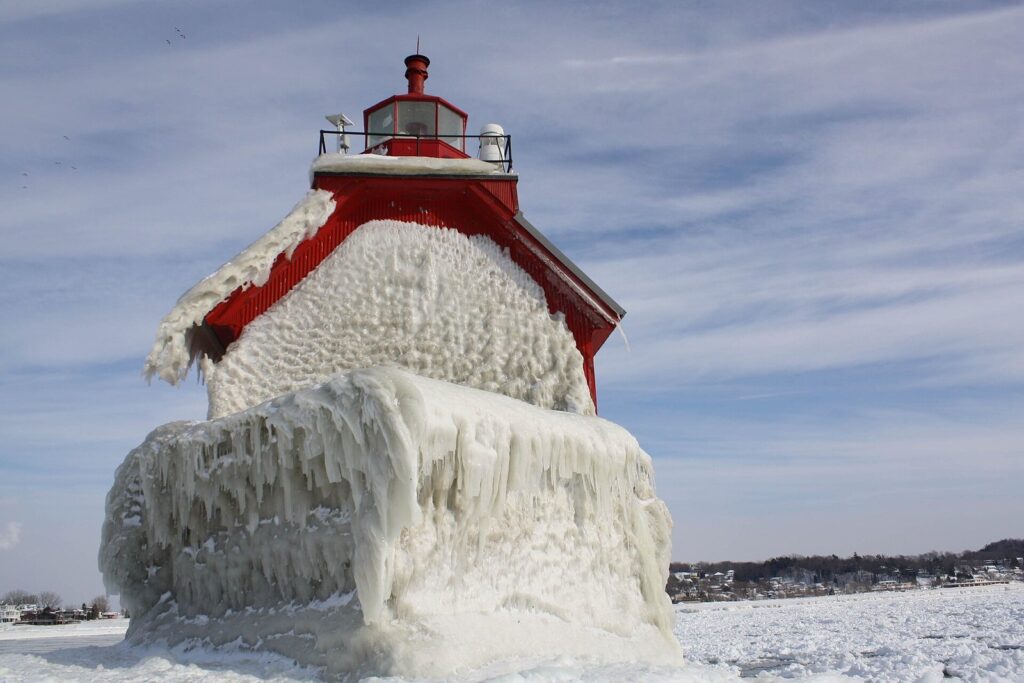
From New Buffalo near the Indiana line to Charlevoix in the north, the Lake Michigan shore is a string of harbor towns with a pier, a lighthouse and a public beach. Saugatuck and Douglas have the galleries and Oval Beach; South Haven has blueberries and a red pier light; Grand Haven has a boardwalk out to its two red lights; Ludington has a big state park and the SS Badger car ferry to Wisconsin (May 15 to October 11 in 2026); Frankfort, Glen Arbor and Charlevoix hold the northern end. The water is warmest in August and cold before July. Read the beach flags, learn how rip currents work (they drown swimmers on Lake Michigan every summer) and stay off the piers when waves break over them.
Michigan by the numbers
- 131.2 million visits to Michigan in 2024, day trips and overnight stays combined, with $30.7 billion in visitor spending. Those are the latest full-year figures.
- More than 3,200 miles of Great Lakes shoreline. NOAA’s figure is 3,224 miles; the state uses a slightly larger one.
- About 11,000 inland lakes, from Houghton Lake (the largest) to kettle ponds you can swim across.
- About 130 lighthouses, more than any other state.
- 103 state parks and recreation areas, plus more than 140 state forest campgrounds and nearly 1,000 boating access sites, all covered by the Recreation Passport.
- Four of the five Great Lakes touch the state. Only Lake Ontario doesn’t.
- Two time zones. Four western U.P. counties run on Central time.
Where to go: Michigan attractions region by region
Michiganders hold up a right hand, palm out, to show where they live in the mitten-shaped Lower Peninsula. The Upper Peninsula, the U.P., is the land north of the Mackinac Bridge: nearly a third of the state’s land and about 3 percent of its people. “Up North” means the northern half of the Lower Peninsula, roughly north of US-10, the road from Ludington through Clare to Bay City. “West Michigan” means Grand Rapids and the Lake Michigan shore. Here is what each part of the state does best.
Southeast Michigan: Detroit, Dearborn and Ann Arbor
The southeast corner holds Michigan’s cities, stadiums and big museums. Detroit’s core is compact: the RiverWalk, Campus Martius, the stadium district and Eastern Market sit within a couple of miles of each other, and the free People Mover and QLINE cover the middle of it. Spend a morning at the Detroit Institute of Arts in Midtown and an afternoon on Belle Isle, the island park in the Detroit River, where the aquarium is free Thursday to Sunday with a $5 donation encouraged. The Hudson’s Detroit tower downtown, with a Detroit EDITION hotel, is due to open in 2027. Our Detroit guide covers the neighborhoods, the museums and the food in detail.
Just west, Dearborn has The Henry Ford and one of the country’s largest Arab American communities, with the Arab American National Museum and a long run of bakeries and grills. Ann Arbor, about 45 minutes west of Detroit, is the University of Michigan’s town: Michigan Stadium on fall Saturdays, the Kerrytown market district and a downtown dense with restaurants. The calendar is what sets the southeast apart. The Auto Show fills Huntington Place in January, the NCAA men’s Final Four comes to Ford Field on April 3 and 5, 2027, Movement brings electronic music to Hart Plaza over Memorial Day weekend, the Grand Prix runs on downtown streets in early June (it left Belle Isle after 2022), and the free Detroit Jazz Festival closes the summer over Labor Day weekend.
Two things have changed this year. The Motown Museum’s Hitsville U.S.A. tours are paused until spring 2027 during a $75 million expansion, though the campus store stays open. And the Gordie Howe International Bridge to Windsor opened on July 27, 2026, with a car toll of US$5.75 (25 percent off with an electronic pass) and a free walking and cycling path. Walkers and cyclists still clear customs, so bring a passport or enhanced license.
West Michigan: Grand Rapids and the Lake Michigan shore
The things to do in West Michigan split into two trips: a city and a coastline. Grand Rapids, the state’s second-largest city, is about 2 hours 25 minutes from Detroit and just under 3 hours from Chicago. It has a deep bench of breweries, the Frederik Meijer Gardens & Sculpture Park on the northeast side, and the Gerald R. Ford Presidential Museum on the Grand River (Ford grew up here). The new 12,000-seat Acrisure Amphitheater opened on the river on May 15, 2026, and ArtPrize, the citywide art competition, ran September 18 to October 3 in 2026; check artprize.org for its 2027 dates.
The coast is the bigger draw. Holland is about 35 minutes west of Grand Rapids, Saugatuck and Douglas about 40, Grand Haven about 35, and South Haven just under an hour. Saugatuck is the art colony, with galleries, the long wooden staircase up Mount Baldhead and Oval Beach below the dunes. Grand Haven has the boardwalk and the pier lights; South Haven has the Michigan Maritime Museum’s harbor and summer blueberry farms. North of Muskegon, the Silver Lake Sand Dunes near Mears (about 1 hour 10 minutes from Grand Rapids) are one of the few places where you can drive your own dune buggy or ride with an operator on open sand, and Ludington (about 1 hour 30 minutes) has a state park between Lake Michigan and Hamlin Lake, the walk to Big Sable Point Lighthouse and the SS Badger, a coal-fired car ferry that crosses to Manitowoc, Wisconsin in about four hours.
The southwest corner, which locals call Harbor Country, is Chicago’s weekend beach: New Buffalo, Three Oaks and Sawyer, where Warren Dunes State Park is about 1 hour 25 minutes from the Loop. Inland, the Lake Michigan Shore wineries, the fruit belt around Berrien County and u-pick orchards fill the fall. Muskegon’s Michigan’s Adventure, the state’s largest amusement park, was sold by Six Flags in 2026 and ran as usual that summer; the new operator may change prices and branding for 2027.
Mid-Michigan: Lansing, Frankenmuth and the Saginaw Valley
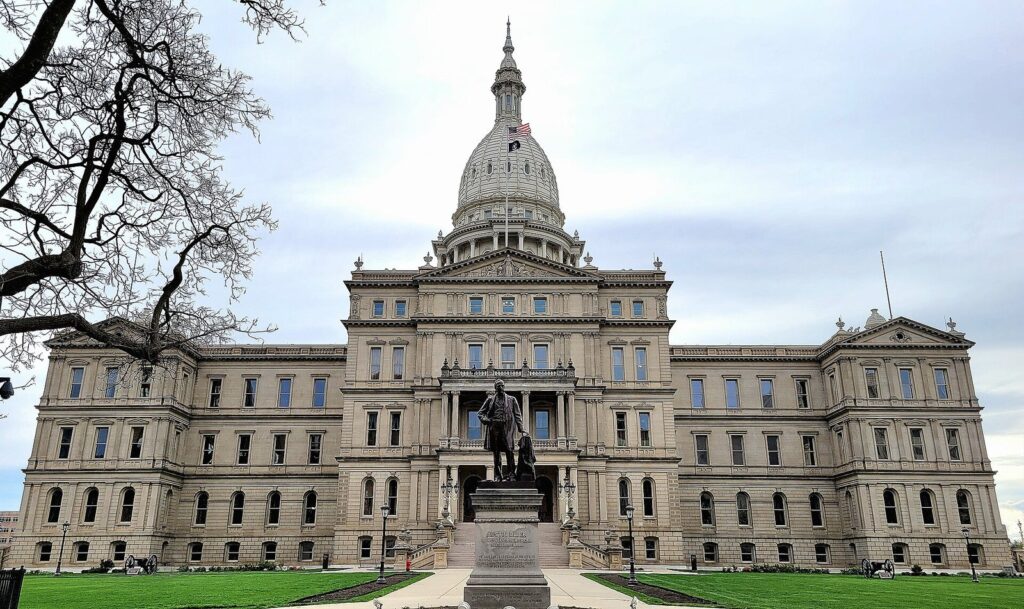
Lansing sits roughly halfway between Detroit and Grand Rapids on I-96, and it’s an easy half-day stop. The Michigan State Capitol offers free guided tours of about an hour on weekdays between 9 a.m. and 4 p.m. and on the first Saturday of each month from 10 a.m. to 3 p.m.; you enter through Heritage Hall on West Ottawa Street, and groups of ten or more book ahead. The restored interior, with its painted ceilings and glass-floored rotunda, is the reason to go. The Michigan History Museum is two blocks west. In East Lansing, Michigan State University’s campus holds the steel-and-glass Broad Art Museum, designed by Zaha Hadid, and Spartan Stadium.
North of Lansing, Uncle John’s Cider Mill in St. Johns was open for the 2026 season, with fall hours of 9 a.m. to 7 p.m. from September 2. Frankenmuth is about 1 hour 30 minutes north of Detroit and about 2 hours 5 minutes from Grand Rapids, and Saginaw and Bay City sit just beyond it on the Saginaw River, where spring walleye fishing on Saginaw Bay draws anglers from across the Midwest. Mid-Michigan is not where you come for scenery; it’s where you break up the drive north, and a Capitol tour or a Frankenmuth lunch does that better than a fast-food exit.
The Thumb and Port Huron
The Thumb is the peninsula between Saginaw Bay and Lake Huron, and it’s the part of the Lower Peninsula most visitors skip. That’s their loss if they like quiet: it’s farm country with a shoreline, cheaper and less crowded than the Lake Michigan side, and one to two and a half hours from Detroit. M-25 follows the shore the whole way around, from Port Huron north through Lexington, Port Sanilac and Harbor Beach to Port Austin at the tip, then west along Saginaw Bay through Caseville.
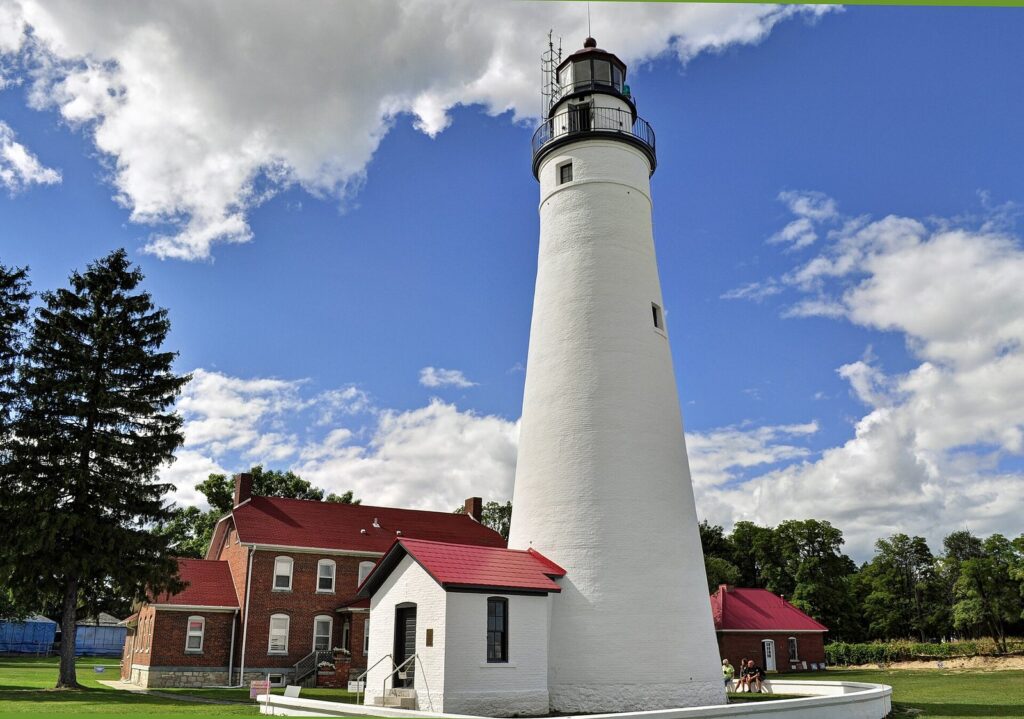
Port Huron, about an hour northeast of Detroit on I-94, is where Lake Huron pours into the St. Clair River under the Blue Water Bridge to Sarnia, Ontario. The things to do in Port Huron are mostly maritime. Freighters pass close enough to the riverfront parks to read their names. The Fort Gratiot Light Station is the oldest lighthouse in Michigan (the present tower dates from 1829), with guided tours in season, roughly May through December. The Huron Lightship, the last lightship to serve on the Great Lakes, sits on the riverbank, and the Thomas Edison Depot Museum marks the station where a young Edison worked the Grand Trunk trains as a news butcher from 1859 to 1863. The Port Huron Museum runs all of these plus the Carnegie Museum downtown, and one membership covers entry to every site. Check its site for the current season’s hours before you go. Each July the Bayview Mackinac Race starts here (July 10, 2027), and the town fills with sailors.
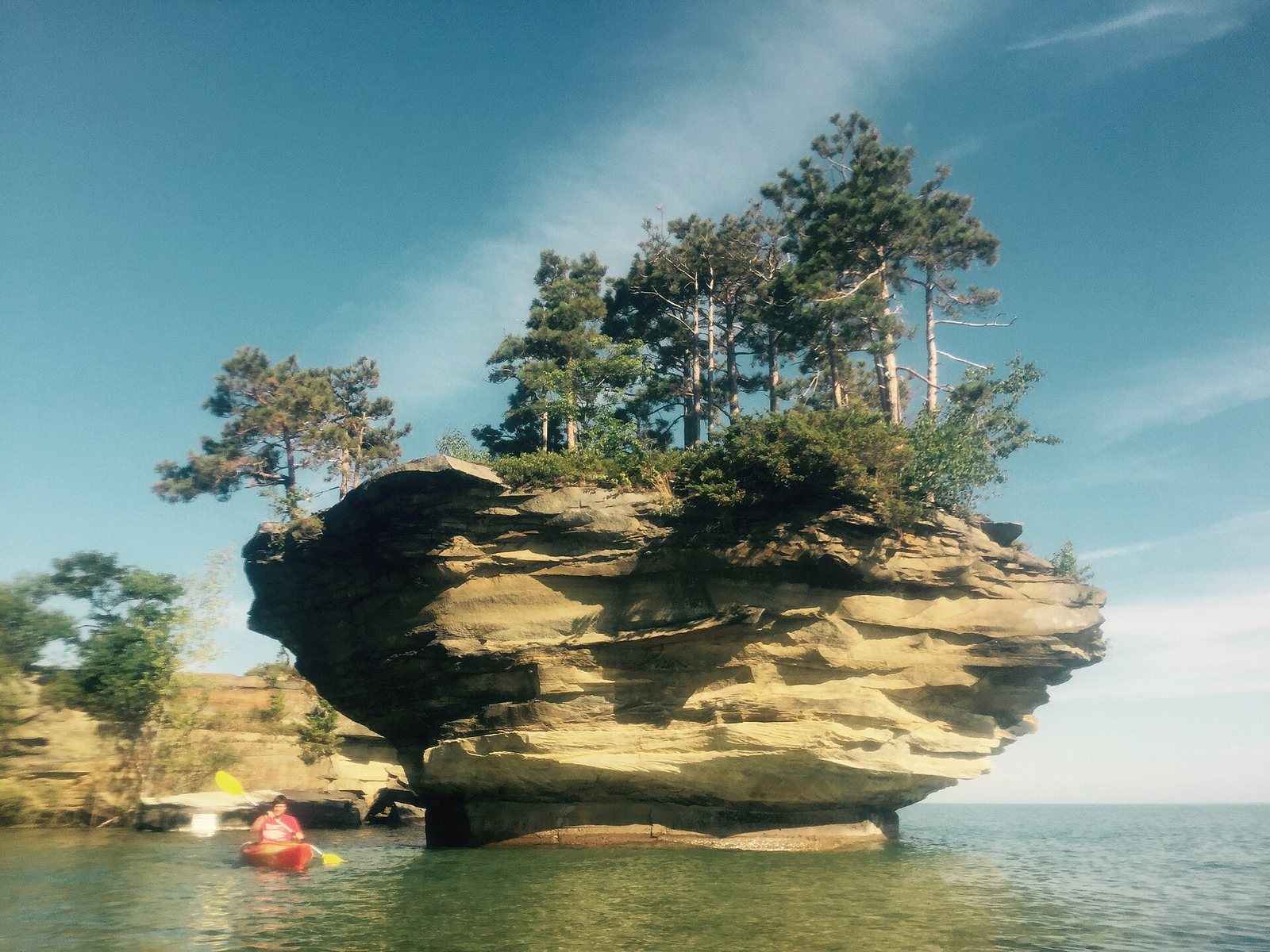
At the tip of the Thumb, Port Austin is the base for Turnip Rock, the tree-topped sea stack off Pointe aux Barques that shows up on every Michigan photo list. All the land around it is private, so the only legal way to see it is from the water: a round-trip paddle of about 7 miles on open Lake Huron, two to four hours depending on wind, with a rule that you stay in your boat and don’t land. Rent from an outfitter in town, go early before the wind builds, and skip it when there are whitecaps. Nearby, Port Crescent State Park has a beach on Saginaw Bay and is one of Michigan’s six state dark sky preserves, and the Pointe aux Barques Lighthouse stands farther down the coast toward Port Hope.
Northwest Lower Michigan: Traverse City to the Straits
This is the Michigan on postcards: turquoise bays, cherry orchards, sand bluffs and resort towns with century-old summer cottages. Traverse City (about 4 hours from Detroit and 2 hours 15 minutes from Grand Rapids) is the hub, with Sleeping Bear Dunes to the west and wineries on the Old Mission and Leelanau peninsulas. Leland’s Fishtown, a row of weathered fishing shanties on the Leland River, is worth a stop even while the Manitou ferry is out of service. Torch Lake, northeast of Traverse City, is the clear, blue-green lake behind many of the photos, and its sandbar is a summer boating scene.
Farther north, Charlevoix has Earl Young’s stone “mushroom houses,” a drawbridge over the channel into Round Lake and the ferry to Beaver Island. Petoskey and Harbor Springs face each other across Little Traverse Bay; walk the Petoskey beaches for Petoskey stones, the fossilized coral that is Michigan’s state stone. One warning for fall 2026: M-119, the Tunnel of Trees north of Harbor Springs, has two sections closed to through traffic after spring and summer washouts, with detours in place, every business still open and repairs expected to run into 2027. Check MDOT before you plan a drive on it. At the top of the mitten, Mackinaw City has Colonial Michilimackinac, the reconstructed 18th-century fort under the bridge ($17.50 adult in 2026), and the Headlands International Dark Sky Park, open 24 hours a day all year.
Northeast Michigan and the Sunrise Coast
The Lake Huron side of northern Michigan is quieter and cheaper than the Lake Michigan side, and it gets the sunrises. US-23 follows the shore from the Tawas area north through Oscoda (about 3 hours from Detroit), Harrisville, Alpena, Rogers City and Cheboygan to Mackinaw City. Tawas Point has a lighthouse at the end of a sandy spit, Oscoda sits at the mouth of the Au Sable River, and Alpena is the base for Thunder Bay National Marine Sanctuary, where cold, clear water has preserved dozens of shipwrecks; the sanctuary’s Great Lakes Maritime Heritage Center in Alpena tells their stories. The two Presque Isle lighthouses north of Alpena make a good short stop.
Inland, the Au Sable River is Michigan’s classic canoe-and-tube river, with liveries around Grayling and Mio. Houghton Lake and Higgins Lake are the big summer cottage lakes, and in winter Houghton Lake hosts Tip-Up Town USA. The Pigeon River Country State Forest, east of Vanderbilt, is the heart of the state’s wild elk range; September and October evenings, during the rut, are the best time to hear bulls bugle. Three of the six state dark sky preserves (Negwegon, Rockport and Thompson’s Harbor) are on this coast, which says something about how few lights there are.
The eastern and central U.P.
The U.P. starts at the Mackinac Bridge ($4 per car in 2026) and St. Ignace. East of there, Sault Ste. Marie has the Soo Locks, where you can watch freighters up to 1,000 feet long rise and drop between Lake Superior and the St. Marys River from a free viewing platform; a new Poe-sized lock is under construction for completion around 2030. Tahquamenon Falls lies west of the Soo, near Paradise, and Whitefish Point, north of Paradise, has the Great Lakes Shipwreck Museum, which displays the bell of the Edmund Fitzgerald. One closure to note: the Toonerville Trolley and riverboat trip to the falls closed after its 96th season, although many older roundups still list it.
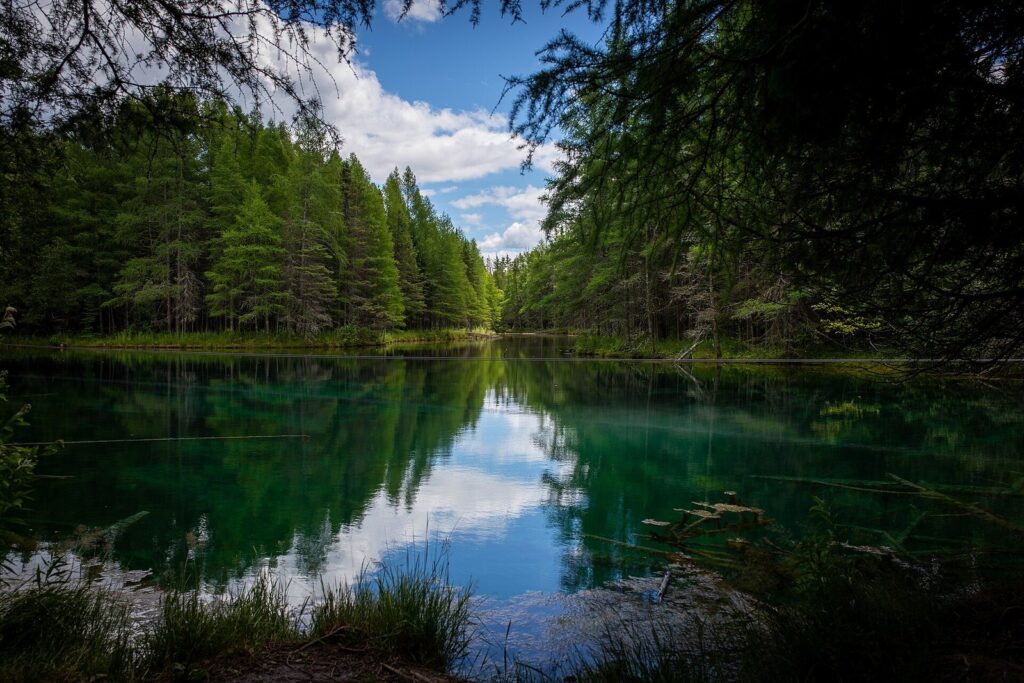
The central U.P. runs from Munising and Pictured Rocks (about 6 hours 25 minutes from Detroit) to Marquette, the U.P.’s largest city, where Presque Isle Park, the ore docks and the hike up Sugarloaf Mountain fill a day, and the UP200 sled dog race runs February 11 to 15, 2027. On the Lake Michigan side, near Manistique, Kitch-iti-kipi is Michigan’s largest freshwater spring: about 200 feet across and 40 feet deep, with more than 10,000 gallons a minute welling up at a constant 45°F. A self-propelled observation raft, moved by visitors turning a wheel, crosses it from 8 a.m. to dusk, and a Recreation Passport is the only fee. Fayette Historic State Park, on the Garden Peninsula, preserves a 19th-century iron-smelting town on a limestone harbor.
The western U.P. and the Keweenaw
The Keweenaw Peninsula, which hooks out into Lake Superior at the top of the state, is copper country. Keweenaw National Historical Park tells the mining story in Calumet and around the Quincy Mine shaft house above Hancock. Houghton, across the Portage Lake lift bridge, is home to Michigan Tech, whose Winter Carnival (February 3 to 6, 2027) fills the town with giant snow statues, and it’s where the Ranger III leaves for Isle Royale. Copper Harbor, at the very end of US-41 and about 8 hours 10 minutes from Chicago (9 hours 50 minutes from Detroit), has Brockway Mountain Drive, Fort Wilkins State Park, the Keweenaw Dark Sky Park at the Keweenaw Mountain Lodge and the Isle Royale Queen IV. The snow is the headline in winter: the Keweenaw County road commission’s roadside gauge shows a 48-year average of 240.9 inches and a record of 390.4 inches in the winter of 1978-79, and Mount Bohemia skis it ungroomed.
West of the Keweenaw, the Porcupine Mountains rise behind Silver City and Ontonagon. Farther west, Ironwood and Gogebic County sit on Central time, with the Big Powderhorn and Snowriver ski areas, the Copper Peak ski-flying hill, and the Black River Scenic Byway, a short road past a chain of waterfalls down to Lake Superior at Black River Harbor. Bond Falls, near Paulding, is one of the region’s most photographed waterfalls and a short walk from the parking area. Lake Gogebic straddles the time-zone line, so check which hour your dinner reservation is in.
What to do in Michigan in each season
Michigan’s seasons change what’s open, not just what you wear. Ferries, island hotels and national lakeshore cruises run roughly May to October; ski hills run December to March; and fall color moves south from the U.P. to the Ohio line over about a month.
| Season | Months | Best things to do | Where |
|---|---|---|---|
| Spring | April to early June | Tulip Time, waterfalls at peak flow, morel hunting, lilacs, first ferries | Holland, the U.P. falls, northern hardwood forests, Mackinac Island |
| Summer | Mid-June to August | Beaches, islands, cliff cruises, festivals, sailing races | Lake Michigan shore, Mackinac, Pictured Rocks, Traverse City, Detroit |
| Fall | Mid-September to October | Fall color, cider mills, Oktoberfest, harvest weekends | U.P. first, then northern Lower, then the south |
| Winter | December to March | Downhill and cross-country skiing, snowmobiling, winter carnivals, the Auto Show | Boyne and Harbor Springs area, the western U.P., the Keweenaw, Detroit |
Spring: tulips, waterfalls and the first ferries
Spring comes late and in a hurry. April is still cold and muddy Up North, but it’s when the U.P. waterfalls carry the most water: Tahquamenon can run at several times its summer flow on snowmelt. Holland’s Tulip Time runs April 30 to May 9, 2027, and it’s the busiest week in West Michigan, so book rooms months ahead. Mackinac Island’s hotels and attractions open in early May, the ten-day Lilac Festival there starts in early June, and morel hunters fill the northern hardwood forests in May. In Detroit, the NCAA men’s Final Four comes to Ford Field on April 3 and 5, 2027, the city’s biggest spring event.
Summer: beaches, islands and festivals
Summer is the peak for good reason: warm-ish water, long evenings (in late June the sun sets around 9:30 p.m. on the Lake Michigan shore) and everything open. It’s also when prices, crowds and traffic peak. The big dates in 2027 are Movement in Detroit over Memorial Day weekend (May 29 to 31), the Detroit Grand Prix (June 4 to 6), the National Cherry Festival in Traverse City (July 3 to 10), and the two sailing races to Mackinac Island: the Bayview race from Port Huron on July 10 and the Chicago Yacht Club race on July 17. Pictured Rocks cruises, Isle Royale ferries and the SS Badger all run their full schedules. If you can, go midweek; noon on a Saturday is Mackinac Island’s most crowded hour.
Fall: color, cider and the best weather
Fall is the best season in Michigan: fewer people, cheaper rooms after Labor Day, warm afternoons and the color. In the U.P., color typically begins in mid- to late September and peaks during the first three weeks of October, starting in the west and inland and spreading east and toward the shorelines; the northern Lower Peninsula follows, and the south peaks last, into late October. Cider mills and orchards open across the state, and Frankenmuth’s Oktoberfest (September 16 to 19, 2027) marks the start of the season. The color drives deserve a trip of their own; if yours includes the Tunnel of Trees, know that two sections are closed in fall 2026 and plan the detours.
Winter: skiing, snowmobiling and ice
Winter is long, and Michigan uses it. Skiresort.com lists 42 ski areas in the state: Boyne Mountain and The Highlands near Harbor Springs are on the Ikon Pass, Snowriver in the western U.P. joins Ikon for 2026-27 with seven days of access, and Mt. Brighton near Detroit is on Epic. The U.P. and the northern Lower Peninsula have thousands of miles of groomed snowmobile trails. The winter calendar for 2027 includes the Detroit Auto Show (public days January 16 to 24), Tip-Up Town USA on Houghton Lake (January 23, 24 and 30), Michigan Tech’s Winter Carnival (February 3 to 6), Zehnder’s Snowfest in Frankenmuth (February 3 to 7) and the UP200 sled dog race from Marquette (February 11 to 15).
Lake Superior’s shoreline builds ice formations, and the frozen waterfalls and ice curtains at Pictured Rocks and the ice caves near Eben draw photographers. Treat them with respect: never walk out on shelf ice along the Great Lakes shore, stay out from under hanging ice, wear traction cleats on the trails and check conditions with the park or land manager before you go. Iced-over piers along Lake Michigan are for looking at from the beach.
Park passes and entry fees (2026)
Most of Michigan’s outdoor highlights are state parks, covered by one Recreation Passport, or national park units that charge their own entry fees. Here’s what each costs this year.
| Pass or fee | What it covers | 2026 price |
|---|---|---|
| Recreation Passport, Michigan residents | 103 state parks and recreation areas, state forest campgrounds, state boat launches (camping fees extra) | $15 a vehicle a year, bought with your plate renewal; $5 convenience fee if bought separately |
| Recreation Passport, non-residents | Same | $42 a year (expires December 31) or $12 a day |
| Sleeping Bear Dunes | Private vehicle and passengers | $25 for 7 days; $45 annual park pass |
| Pictured Rocks | Private vehicle and passengers | $25 for 7 days; $45 annual park pass |
| Isle Royale | Per person, 16 and older | $7 a day; $60 season pass (holder plus three adults) |
| America the Beautiful pass | Entry to national parks and federal fee sites for a year | $80 for US residents; $250 for non-US residents; seniors $20 a year or $80 for life |
| Mackinac Bridge toll | Passenger vehicle, each crossing | $4.00 |
| Gordie Howe International Bridge toll | Car, Detroit to Windsor | US$5.75 (25% off with an electronic pass) |
Which should you buy? A visiting couple doing Sleeping Bear, Pictured Rocks and a few state parks in one summer week spends $50 on the two lakeshore passes plus $42 on a non-resident Recreation Passport. A US resident who adds three days on Isle Royale for two people ($42 in entry) is at $92 on the federal side alone, so the $80 America the Beautiful pass pays off. For non-US visitors, at $250, it rarely does. The daily $12 Recreation Passport makes sense only if you’ll visit state parks on three days or fewer.
Getting to the islands
Michigan’s islands are some of its best trips, and every one of them needs a boat or a plane. Book summer weekends ahead; everything else is flexible.
| Island | From | How | Adult fare (2026) | Season |
|---|---|---|---|---|
| Mackinac Island | Mackinaw City or St. Ignace | Arnold Transit or Shepler’s ferry, 16 to 40 min | $37 Arnold fast ferry, $39 Shepler’s basic, $59 Shepler’s Enhanced (round trip) | April 21 to October 31; limited Arnold winter service from St. Ignace, ice permitting |
| Isle Royale | Houghton, Copper Harbor or Hubbell (Michigan); Grand Portage (Minnesota) | Ranger III (6 h), Isle Royale Queen IV (3.5 h), seaplane (about 40 min) | $80 one way on Ranger III; $175 round trip on the Queen IV | Mid-May to September; park closed November 1 to April 15 |
| North and South Manitou | Leland | Ferry | Not running | Closed all of 2026 for dock relocation; no reopening date published |
Mackinac is the easy one: tickets on both lines are good on any departure in season, so you can just show up, although parking at the docks isn’t free: standard lots cost $10 to $15 for the day and $20 to $25 overnight in 2026, more for dockside spots, and they fill on summer Saturdays. Isle Royale is the committed one: book the boat before anything else. Beaver Island, Lake Michigan’s largest island, is reached by ferry from Charlevoix or by small plane; check the ferry line for current fares. It holds an International Dark Sky Sanctuary, and it’s the place to go if Mackinac’s crowds put you off. Drummond Island, off the eastern tip of the U.P., is a short car-ferry hop from DeTour Village.
What food is Michigan known for?
Michigan’s food is working-class and regional, and most of it is best eaten where it started. Look for these:
- Pasties. Hand pies of beef, potato, onion and rutabaga, brought to the U.P. by Cornish miners in the copper and iron country. Pasty shops are all over the U.P., and whether you add ketchup or gravy is a local argument.
- Fudge. Mackinac Island’s candy shops make it on marble slabs in their front windows, and in peak season the island takes in about 10 tons of sugar a week. Mackinaw City and St. Ignace sell it too.
- Tart cherries. Michigan grows most of the country’s tart cherries, around Traverse City and along the northwest shore. Have cherry pie, dried cherries or cherry salsa, and time a July trip for fresh fruit stands.
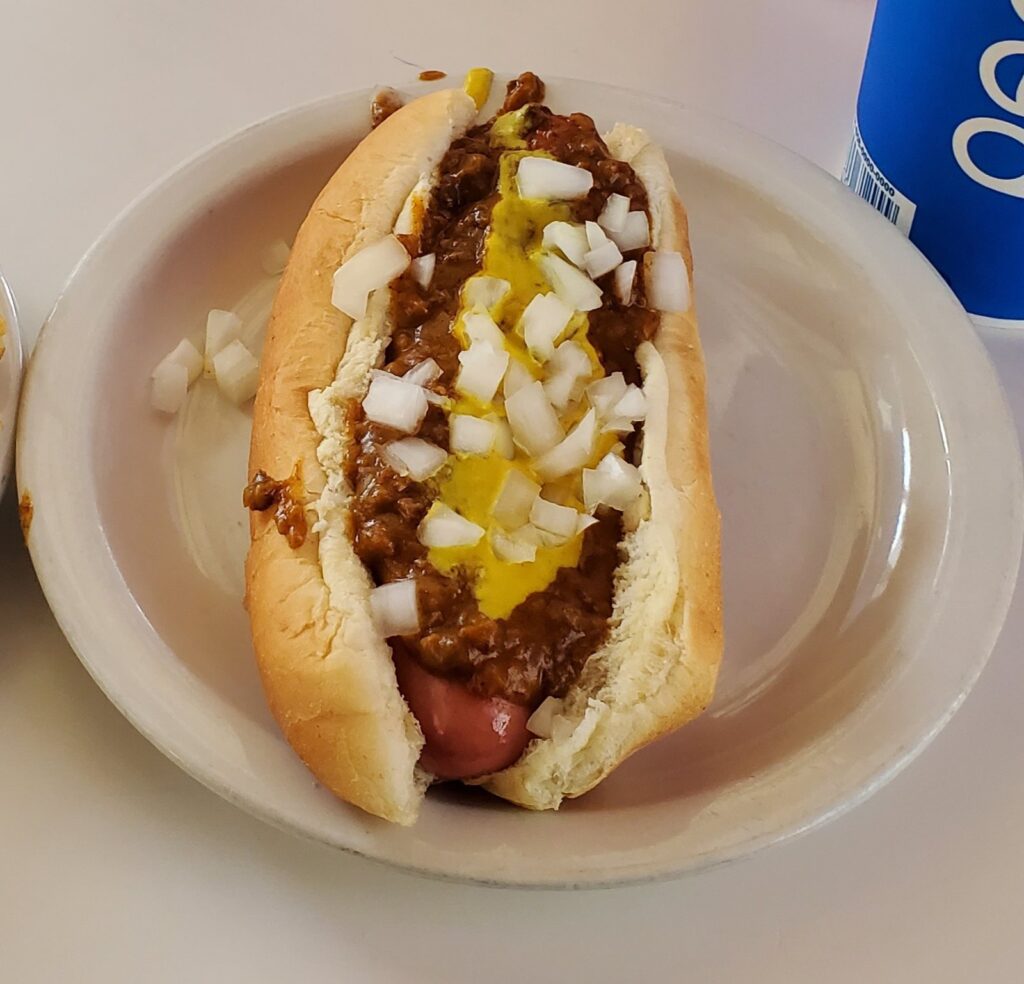
- Coney dogs. The Detroit coney is a natural-casing hot dog under beanless chili, yellow mustard and diced onion; Flint’s version uses a drier ground-beef topping. Coney Island diners are everywhere in the southeast.
- Detroit-style pizza. Square, thick and baked in steel pans, with cheese to the edges so it crisps, and the sauce on top. It was born in Detroit in the 1940s and is now sold nationally.
- Whitefish and smoked fish. Great Lakes whitefish is on menus all over the north, and smoked-fish shops in towns like Leland’s Fishtown and the U.P. fishing ports sell it by the pound.
- Cider and doughnuts. A fall ritual at cider mills statewide, from Uncle John’s north of Lansing to the orchards of the southeast.
- Paczki and Vernors. Filled Polish doughnuts on Fat Tuesday (Hamtramck is the center of it), and the Detroit ginger ale that locals drink for an upset stomach.
- Frankenmuth chicken. The family-style chicken dinner, with noodles, stuffing and sides passed around the table, has been Frankenmuth’s draw for generations.
Michigan also makes wine and beer worth building a trip around: the Old Mission and Leelanau peninsulas and the Lake Michigan Shore region for wine, and Grand Rapids, Detroit, Traverse City and Marquette for breweries.
Michigan festivals and events for 2027
These are the events worth building a trip around, with the 2027 dates the organizers had published by September 23, 2026. Book lodging for the festival weeks as soon as you know your dates; Holland, Traverse City and Mackinac Island fill first.
| Event | Where | 2027 dates |
|---|---|---|
| Detroit Auto Show | Huntington Place, Detroit | January 14 to 24 (public show January 16 to 24) |
| Tip-Up Town USA | Houghton Lake | January 23, 24 and 30 |
| Michigan Tech Winter Carnival | Houghton | February 3 to 6 |
| Zehnder’s Snowfest | Frankenmuth | February 3 to 7 |
| UP200 sled dog race | Marquette | February 11 to 15 |
| NCAA men’s Final Four | Ford Field, Detroit | April 3 and 5 |
| Tulip Time | Holland | April 30 to May 9 |
| Movement electronic music festival | Hart Plaza, Detroit | May 29 to 31 |
| Chevrolet Detroit Grand Prix | Downtown Detroit streets | June 4 to 6 |
| Lilac Festival | Mackinac Island | Ten days from early June |
| National Cherry Festival | Traverse City | July 3 to 10 |
| Bayview Mackinac Race start | Port Huron | July 10 |
| Chicago Yacht Club Race to Mackinac start | Chicago | July 17 |
| Detroit Jazz Festival | Downtown Detroit | September 3 to 6 |
| Frankenmuth Oktoberfest | Frankenmuth | September 16 to 19 |
Two big ones aren’t in the table. The Mackinac Bridge Walk is held on Labor Day morning each year (about 34,000 people walked it on September 7, 2026), and ArtPrize in Grand Rapids hadn’t announced its 2027 dates. Town-scale festivals, from Venetian nights to winter carnivals, are covered on the pages for the towns that hold them.
Outdoor adventures: hiking, paddling, fishing and dark skies
Michigan’s outdoors is its strongest card, and most of it costs little more than a park pass. Here’s where each activity is best.
Hiking
The best day hikes follow the Great Lakes shore. At Sleeping Bear, the park’s 105 miles of trail include Empire Bluff, Pyramid Point and the long Dune Climb route to Lake Michigan. At Pictured Rocks, the Chapel Basin loop links Chapel Falls, Chapel Rock and the cliff-top Lakeshore Trail. In the Porcupine Mountains, the Escarpment Trail runs along the ridge above Lake of the Clouds, and a short loop on the Presque Isle River passes three waterfalls. Mackinac Island’s state park has more than 70 miles of trails, most of them empty compared with Main Street. For multi-day trips, Isle Royale’s Greenstone Ridge and the North Country Trail across the U.P. are the big ones. Carry bug spray in June and early July; the black flies and mosquitoes Up North are serious.
Paddling rivers
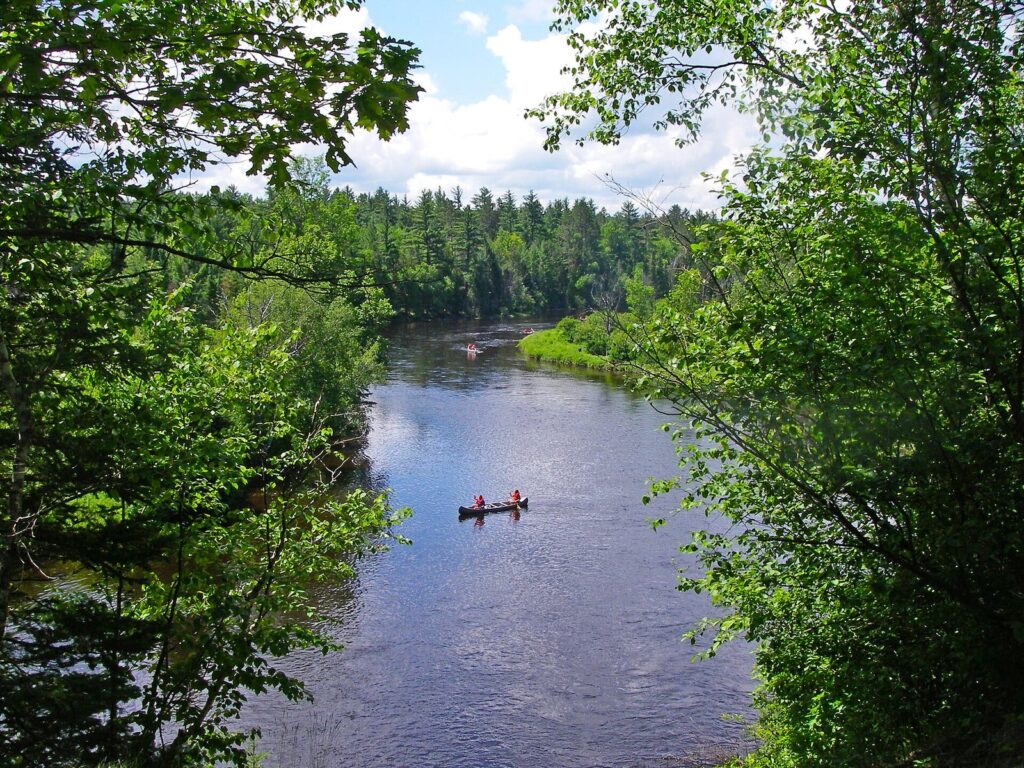
Michigan’s canoeing rivers are gentle, clear and lined with liveries that rent boats and shuttle you upstream. The Au Sable, from Grayling toward Oscoda, is the classic: cold, spring-fed and fast enough to keep you moving, with an overnight canoe marathon each summer. The Pere Marquette near Baldwin and the Pine near Wellston are federally designated wild and scenic rivers, the Manistee is long and quiet, and in the Sleeping Bear area the Platte and Crystal rivers are easy floats that end at or near Lake Michigan. In the U.P., the Two Hearted and the Sturgeon are wilder. Summer weekends on the Au Sable and the Platte get crowded with tubers; for quiet water, go early on a weekday or in September.
Fishing and charters
Michigan fishing splits into the Great Lakes and everything else. Charter boats out of Lake Michigan ports such as St. Joseph, Grand Haven, Ludington and Manistee troll for king and coho salmon and lake trout from spring into early fall; they price by the boat, so a group of four to six splits the cost. Lake Erie and the Detroit River are famous for the spring walleye run, Saginaw Bay for walleye and perch, and the northern rivers for steelhead in fall and spring. Anglers 17 and older need a Michigan license, which runs April 1 to March 31: the DNR’s 2026 figures are $76 for a non-resident all-species annual license and $10 for a 24-hour license, sold online. Read the season rules for trout and salmon streams before you go; they differ by river.
Dark skies and the northern lights
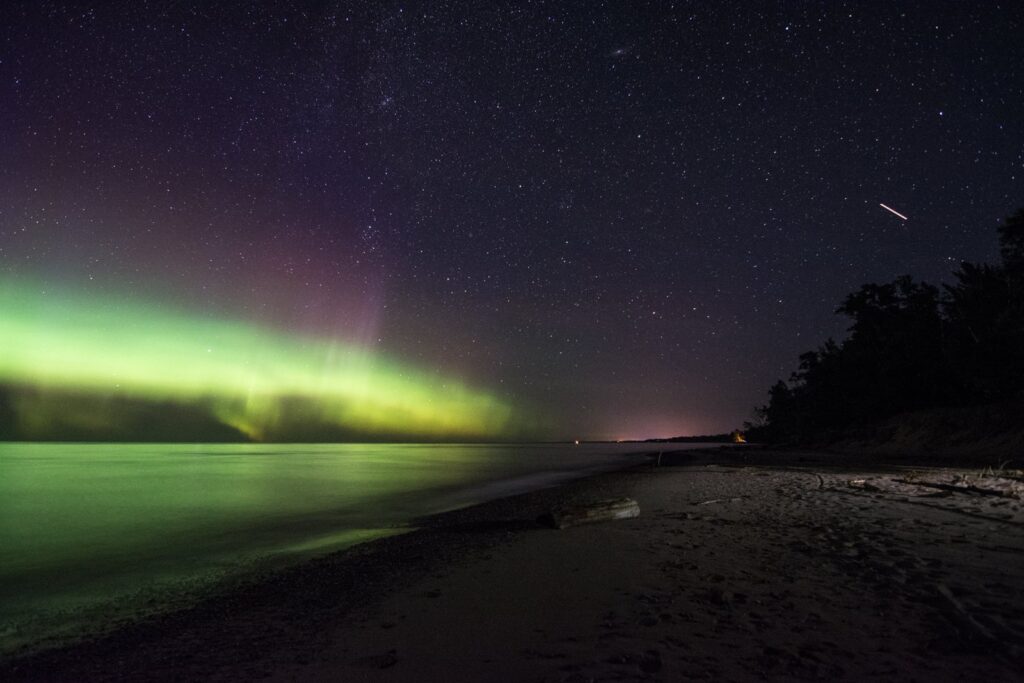
Michigan has some of the darkest skies east of the Mississippi, and it protects them. There are six state-designated dark sky preserves in state parks, open around the clock: Lake Hudson, Negwegon, Port Crescent, Rockport, Thompson’s Harbor and Wilderness State Park. There are also three International Dark Sky Parks: the Headlands near Mackinaw City, the Keweenaw Dark Sky Park near Copper Harbor and Dr. T.K. Lawless County Park in Cass County. Beaver Island has an International Dark Sky Sanctuary. For the northern lights, your odds improve the farther north you go and the clearer your view north over Lake Superior or Lake Huron. The strong solar storms of 2024 put auroras over the whole state, but most of the time you need an active geomagnetic forecast, a moonless sky and a dark north-facing shore in the U.P. or at the Straits.
Swimming safely in the Great Lakes
The Great Lakes behave like small oceans. Many public beaches fly colored flags (green for low hazard, yellow for moderate, red for high, and a double red when the water is closed), and when the waves build, rip currents form along piers, breakwalls and sandbars. If one catches you, float, don’t fight it, and swim parallel to shore before heading in. Lake Superior stays cold enough to cause cold shock even in August, and Lake Michigan can drop 20 degrees overnight when the wind turns offshore and cold water wells up. Swim near a lifeguard where there is one, and keep kids within arm’s reach.
Free and cheap things to do in Michigan
You can fill a week in Michigan without paying for much beyond gas, food and a park pass. The best free and nearly free options:
- Great Lakes beaches. Many town beaches are free, and state park beaches cost only the Recreation Passport ($12 a day for non-residents in 2026).
- Detroit on the cheap. The People Mover and the QLINE are fare-free, the RiverWalk and Belle Isle are free, the Belle Isle Aquarium is free with a suggested $5 donation, and the Detroit Institute of Arts is free if you live in Wayne, Oakland or Macomb County.
- The Capitol in Lansing. Free guided tours on weekdays and the first Saturday of each month.
- Dark sky parks. The Headlands near Mackinaw City is open 24 hours a day, every day, and the six state dark sky preserves are open around the clock with a Recreation Passport.
- The Soo Locks. Watching freighters from the viewing platform in Sault Ste. Marie costs nothing.
- Mackinac Island, once you’re there. Arch Rock, the M-185 shoreline road, Fort Holmes and 70-plus miles of trails are free after the ferry.
- Waterfalls and springs. Many U.P. falls are roadside or a short walk from a free pullout, and Kitch-iti-kipi’s raft ride comes with the Recreation Passport.
- Small towns on foot. Frankenmuth, Holland, Saugatuck, Petoskey and Charlevoix all cost nothing to walk.
Planning logistics: drive times, time zones and where to stay
Michigan is bigger than it looks: Detroit to Copper Harbor is farther than Detroit to Washington, D.C. Most visitors drive, and the drive shapes the trip.
Drive times from Detroit, Grand Rapids and Chicago
Times are without traffic. On summer Fridays, northbound I-75, US-131 and US-31 slow down from mid-afternoon, and the Mackinac Bridge can back up over holiday weekends, so add 30 to 60 minutes. From Chicago, the western U.P. is quicker through Wisconsin than via the bridge.
| Destination | From Detroit | From Grand Rapids | From Chicago |
|---|---|---|---|
| Frankenmuth | 1 h 30 | 2 h 05 | 4 h 40 |
| Port Austin (tip of the Thumb) | 2 h 25 | 3 h 30 | 6 h 05 |
| Grand Rapids | 2 h 25 | – | 2 h 55 |
| Holland | 2 h 45 | 0 h 35 | 2 h 30 |
| Saugatuck | 2 h 50 | 0 h 40 | 2 h 20 |
| Warren Dunes State Park (Sawyer) | 3 h 00 | 1 h 30 | 1 h 25 |
| Oscoda (Sunrise Coast) | 3 h 05 | 3 h 35 | 6 h 15 |
| Ludington | 3 h 45 | 1 h 30 | 3 h 55 |
| Traverse City | 4 h 00 | 2 h 15 | 5 h 05 |
| Petoskey | 4 h 05 | 2 h 55 | 5 h 45 |
| Mackinaw City (Mackinac ferries) | 4 h 15 | 3 h 35 | 6 h 25 |
| Sleeping Bear Dunes (Empire) | 4 h 25 | 2 h 35 | 5 h 20 |
| Sault Ste. Marie (Soo Locks) | 5 h 05 | 4 h 25 | 7 h 15 |
| Paradise (Tahquamenon Falls) | 5 h 25 | 4 h 50 | 7 h 40 |
| Munising (Pictured Rocks) | 6 h 25 | 5 h 45 | 6 h 25 |
| Marquette | 7 h 10 | 6 h 35 | 6 h 30 |
| Houghton (Isle Royale ferry) | 9 h 00 | 8 h 20 | 7 h 20 |
| Silver City (Porcupine Mountains) | 9 h 30 | 8 h 55 | 7 h 00 |
| Copper Harbor | 9 h 50 | 9 h 10 | 8 h 10 |
Two time zones
All of Michigan runs on Eastern time except four western U.P. counties on the Wisconsin line: Gogebic (Ironwood), Iron (Iron River and Crystal Falls), Dickinson (Iron Mountain) and Menominee. Drivers from Chicago stay on their own clock through those counties and lose an hour as soon as they cross into the rest of the U.P.; drivers from Detroit gain one. Ferry and tour times are always local, so check which zone a departure is in, and remember that Isle Royale’s ferries from Michigan run on Eastern time.
Flying in and crossing the lake
Detroit Metro is the main airport, and Grand Rapids is the easier airport for West Michigan and the northwest. Traverse City has the most useful regional airport for the northern Lower Peninsula, with more seasonal nonstops in summer. Marquette, Hancock, Sault Ste. Marie and Pellston have small airports with a handful of daily flights. From Wisconsin, two seasonal car ferries cross Lake Michigan: the SS Badger between Manitowoc and Ludington (May 15 to October 11 in 2026) and the Lake Express between Milwaukee and Muskegon (May 1 to October 19 in 2026). They save Wisconsin and Minnesota drivers the trip around Chicago.
Where to base yourself
Pick two or three bases rather than moving every night. For the southeast, stay downtown in Detroit or in Ann Arbor or Dearborn. For West Michigan, Holland, Saugatuck or Grand Haven for the beaches and Grand Rapids for the city. For the northwest, Traverse City for choice and Glen Arbor or Empire for Sleeping Bear. At the Straits, Mackinaw City or St. Ignace for price and Mackinac Island for the experience. In the U.P., Munising for Pictured Rocks, Paradise or Newberry for Tahquamenon, Marquette as a central hub, and Houghton or Copper Harbor for the Keweenaw.
We don’t quote nightly rates because they move too much, but the pattern is steady: summer weekends and festival weeks cost the most, island and waterfront rooms carry a premium, and rates drop after Labor Day everywhere except the fall-color weekends in October. Small U.P. towns have few rooms, so book Munising, Paradise and Copper Harbor well ahead for July, August and early October.
Best time to go
For beaches and islands, go from late June through August, midweek if you can. For color, cooler hiking and lower prices, go from mid-September to mid-October, starting in the U.P. and moving south. For snow, go in February, when the base is deepest and the winter carnivals run. The shoulder months of April and November are the quietest and the least reliable: many seasonal businesses in the north close from late October to early May.
What to skip, and what to do instead
Skip trying to see both peninsulas in a long weekend. Detroit to Pictured Rocks is six and a half hours each way. With three or four days, pick one region: the northwest (Traverse City and Sleeping Bear), the Straits (Mackinac Island and the bridge) or West Michigan’s beach towns.
Skip the Manitou Islands in 2026. The islands, docks and ferry are closed all season. Hike Pyramid Point or Empire Bluff on the mainland instead, and check the Park Service’s updates before you plan 2027.
Skip the Tunnel of Trees as a through drive this fall. Two sections are closed with detours. Drive the open stretches from Harbor Springs, or take Old Mission Peninsula or Brockway Mountain Drive for color.
Skip the Motown Museum tour until spring 2027. Tours are paused; the store is open. Spend the time at the Detroit Institute of Arts or The Henry Ford.
Skip Mackinac Island at noon on a July Saturday if you can help it. Take the first boat, or stay the night and have the island mostly to yourself once the last day boats leave.
Skip paddling Pictured Rocks or Turnip Rock on your own unless you’re an experienced sea kayaker who reads Great Lakes weather. Take the cruise, or go with a guide.
Skip old attraction lists. The Toonerville Trolley has closed, the old Star Line ferries now sail as Arnold Transit, and the Detroit Grand Prix no longer runs on Belle Isle. If a list gets those wrong, it’s out of date on prices too.
Frequently asked questions
What is the number one tourist attraction in Michigan?
There’s no official ranking, but by visitor count Sleeping Bear Dunes National Lakeshore is the biggest, with just over 1.6 million recreation visits in 2025. By reputation, Mackinac Island is the state’s signature trip: a car-free island reached by ferry, with a fort, a grand hotel and fudge shops. For a museum, The Henry Ford in Dearborn is the one to plan a day around.
What is Michigan best known for?
The Great Lakes, first: Michigan touches four of them and has more than 3,200 miles of shoreline and about 130 lighthouses. After that, cars (Detroit and the auto industry), Motown music, tart cherries, Mackinac Island fudge, the Upper Peninsula’s wilderness and waterfalls, and the sand dunes along Lake Michigan. Michiganders would add their habit of pointing at their hand to show you where they live.
What is the prettiest part of Michigan?
Most people would pick the northwest Lower Peninsula, where Sleeping Bear Dunes, Glen Arbor, the Leelanau Peninsula and Grand Traverse Bay combine sand bluffs, turquoise water and orchards. The Lake Superior shore of the U.P. is the wilder rival: the Pictured Rocks cliffs, the Keweenaw’s Brockway Mountain Drive and Lake of the Clouds in the Porcupine Mountains, especially in early October.
What are fun things to do in Michigan for free?
Swim at a town beach on Lake Michigan, watch freighters at the Soo Locks, ride Detroit’s fare-free People Mover and QLINE, walk the Detroit RiverWalk and Belle Isle, take a free guided tour of the State Capitol in Lansing, and stargaze at the Headlands International Dark Sky Park near Mackinaw City, which is open 24 hours. Residents of Wayne, Oakland and Macomb counties get into the Detroit Institute of Arts free.
Is the Upper Peninsula worth visiting?
Yes, if you can give it at least four days. The U.P. has Pictured Rocks, Tahquamenon Falls, the Porcupine Mountains, the Keweenaw and Isle Royale, and far fewer people than the Lower Peninsula. The catch is distance: Munising is about 6 hours 25 minutes from Detroit and Copper Harbor nearly 10 hours. From Chicago, the western U.P. is closer than it is from Detroit.
How many days do you need to see Michigan?
You can’t see all of it in one trip. A week covers one peninsula well: the northwest Lower plus Mackinac Island, for example, or Pictured Rocks, Tahquamenon and the Soo. Ten to fourteen days lets you loop both, with the Keweenaw added at the long end. A long weekend is best spent on one region, such as West Michigan’s beach towns or Detroit and Dearborn.
What is the best month to visit Michigan?
For most first-time visitors, the answer is late June through August, when the beaches, islands and cruises all run and the lakes are warm enough to swim. September is the best-value month: the weather is still warm, the crowds are gone and rooms are cheaper. Early October is best for fall color, peaking first in the U.P., and February is the month for snow.
What can you do in Michigan in one day?
From Detroit, spend a day at The Henry Ford in Dearborn or drive 1 hour 30 minutes to Frankenmuth. From Grand Rapids, do Holland and Saugatuck on the Lake Michigan shore. From Chicago, Warren Dunes State Park and the Harbor Country towns are under 90 minutes away. If you’re already Up North, Mackinac Island makes a full, easy day trip from the Mackinaw City docks.
Sources and verification
Everything on this page was checked on September 23, 2026 against the organizations listed here. This guide is compiled from those sources; it doesn’t claim first-hand visits.
- Michigan DNR: Recreation Passport, plus the DNR’s state parks, dark sky preserve and 2026 fishing license pages
- National Park Service: Sleeping Bear Dunes fees and passes, plus the park’s conditions and visitation pages
- National Park Service: Pictured Rocks fees and passes, plus Isle Royale’s fees and transportation pages
- Arnold Transit Company: 2026 summer ferry rates
- Shepler’s Mackinac Island Ferry: 2026 ticket options
- Michigan State Capitol: tours
Also checked: UP Travel’s regions and fall color report; The Henry Ford, the Detroit Institute of Arts, the Detroit People Mover, the Belle Isle Conservancy and the Motown Museum; the Port Huron Museum and the Port Austin chamber of commerce; Pictured Rocks Cruises; the Mackinac Bridge Authority and the Gordie Howe International Bridge; the organizers of Tulip Time, Movement, the National Cherry Festival, Frankenmuth Oktoberfest and the other events listed; MDOT and UpNorthLive reporting on M-119; Pure Michigan’s visitor research; and drive times from a mapping service.
Michigan Tourism Guide is an independent publication. It is not affiliated with Pure Michigan or any agency or business named here.
Photo credits
- Turnip Rock near Port Austin (featured image): photo by thumbwind, Wikimedia Commons (CC BY 2.0)
- Sleeping Bear Dunes from Empire Bluff: photo by NPS Photo, Wikimedia Commons (public domain)
- Michigan State Capitol, Lansing: photo by Mojnsen, Wikimedia Commons (CC BY-SA 4.0)
- Fort Gratiot Light, Port Huron: photo by Rodney Campbell, Wikimedia Commons (CC BY 2.0)
- Kitch-iti-kipi, Palms Book State Park: photo by Phillip L Hofmeister, Wikimedia Commons (CC BY-SA 4.0)
- Grand Haven outer pier light in winter: photo by Wayne Silver, Wikimedia Commons (CC BY 2.0)
- Detroit coney dog: photo by JJonahJackalope, Wikimedia Commons (CC BY-SA 4.0)
- Au Sable River, Huron-Manistee National Forest: photo by usfs_Eastern_Region, Wikimedia Commons (public domain)
- Northern lights over Lake Superior at Ontonagon: photo by RomanKahler, Wikimedia Commons (CC BY-SA 4.0)