The hardest part of planning a Michigan vacation is the map. The state is two peninsulas joined by a five-mile bridge, it’s bigger than it looks (Detroit to Copper Harbor is about ten hours of driving), and a trip that tries to see everything turns into a week in the car. Plan the other way around: pick one or two regions, match them to the season, decide how you’ll get there (plane, car, car ferry, train or even across the border from Canada), and budget for the passes, tolls and ferries that are the real extra costs here.
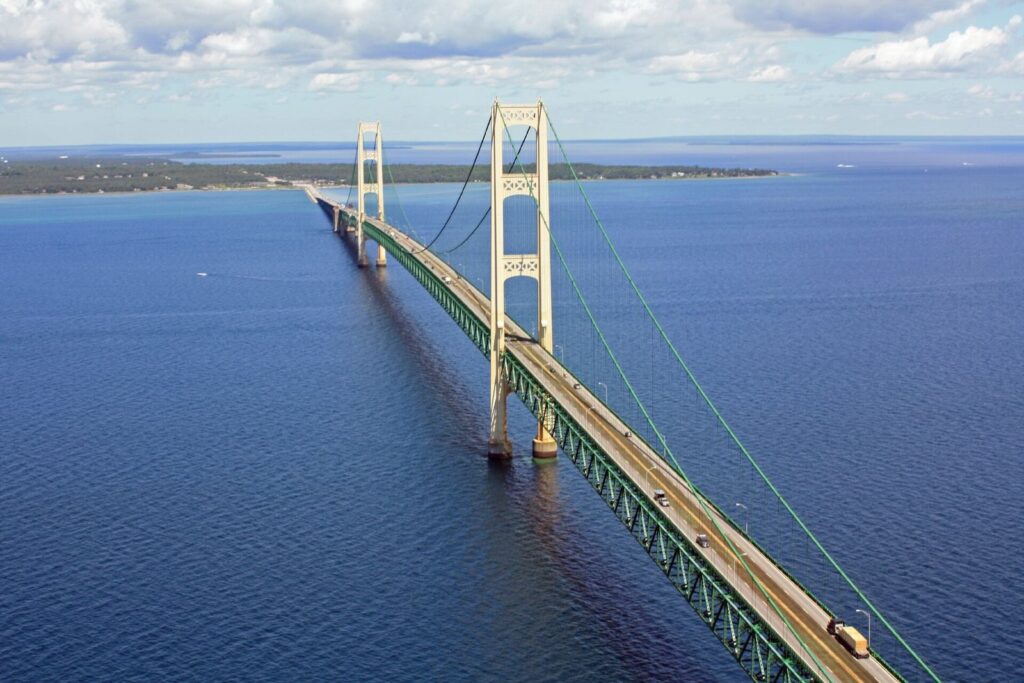
The short answer: go from late June through August for beaches and islands, or from mid-September to mid-October for color and lower prices. Spend a week on one peninsula, ten days or more for both. Fly into Detroit, Grand Rapids or Traverse City and rent a car; you’ll need one almost everywhere. Budget for a Recreation Passport (non-residents $42 a year or $12 a day in 2026), $25 national lakeshore passes, the $4 Mackinac Bridge toll and island ferries around $37 to $39 per adult round trip.
Every fare, toll, fee, schedule and statistic below was checked on September 23, 2026 against the operators’ and agencies’ own websites. For what to do once you’re here, see our guide to fun things to do in Michigan; this page is the logistics.
On this page: Planning cheat sheet · Pick your region · By traveler · When to go · Weather by month · How long to stay · Sample itineraries · Flying in · Driving · Car ferries · Amtrak · Canada crossings · Time zones · Do you need a car? · 2027 events · What it costs · When to book · Planning timeline · Bugs and packing · Safety · Dogs · Accessibility · What to skip · FAQ
Michigan vacation planning cheat sheet
| Question | Answer (checked September 2026) |
|---|---|
| Best months | Late June to August for beaches and islands; mid-September to mid-October for color and value; February for snow |
| Cheapest time | April to mid-May and November, when many seasonal places are closed |
| How long | A long weekend for one region; a week for one peninsula; 10 to 14 days for both |
| Main airports | Detroit Metro (33.4 million passengers in 2025), Grand Rapids (a record 4.3 million), Traverse City (a record 935,816) |
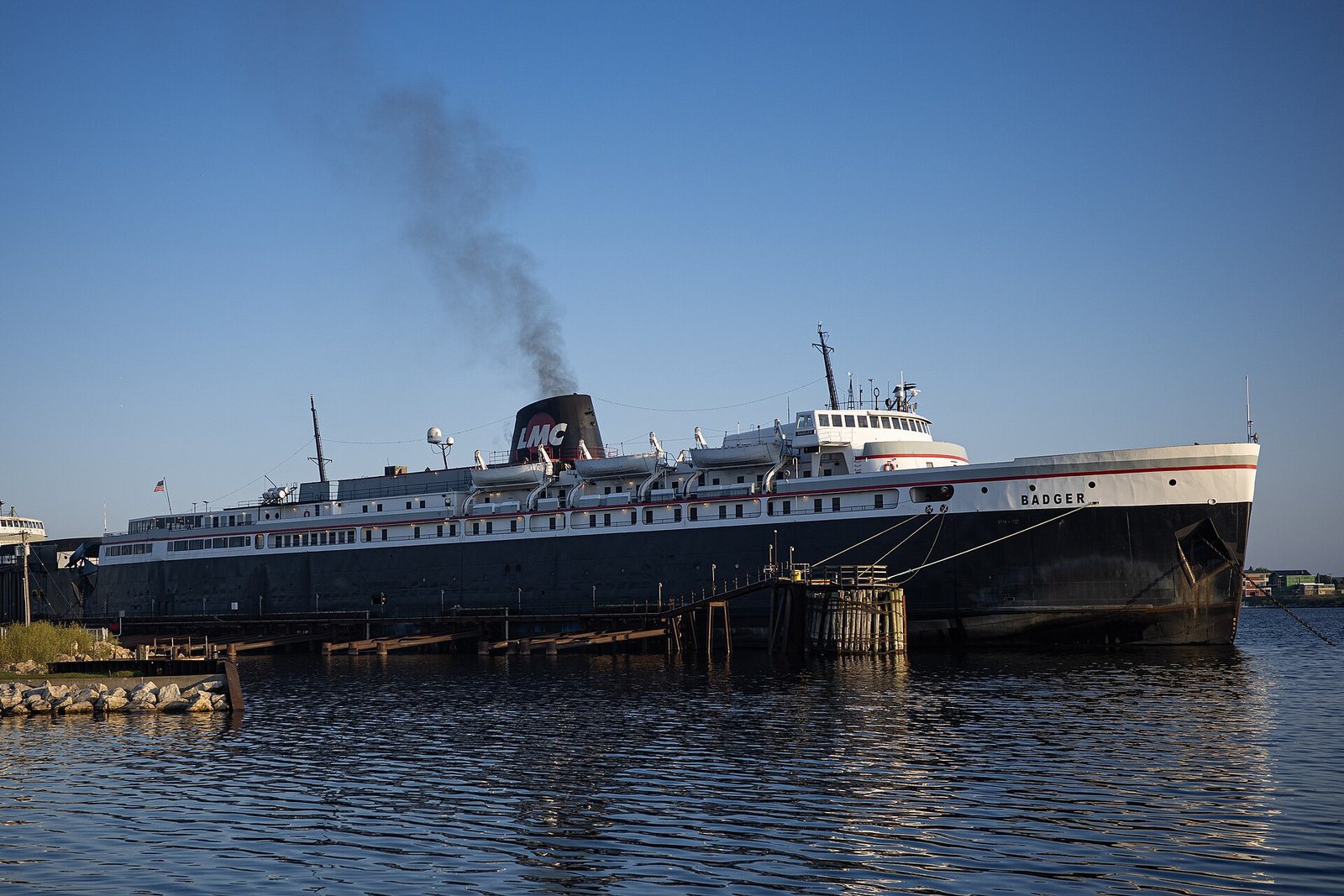
| Car ferries across Lake Michigan | SS Badger, Ludington to Manitowoc, May 15 to October 11, 2026; Lake Express, Muskegon to Milwaukee, May 1 to October 19, 2026 |
| Trains | Amtrak from Chicago to Detroit and Pontiac, Port Huron and Grand Rapids |
| Time zones | Eastern, except four western U.P. counties on Central time |
| State park pass | Recreation Passport: residents $15 a year; non-residents $12 a day or $42 a year (2026) |
| National lakeshores | Sleeping Bear Dunes and Pictured Rocks: $25 per vehicle for 7 days each |
| Mackinac Bridge | $4.00 per car each way |
| Mackinac Island ferry | Adult round trip $37 (Arnold Transit) or $39 (Shepler’s basic), 2026 |
| Canada | Five crossings, including the new Gordie Howe bridge (opened July 27, 2026; US$5.75 car toll); passport or other approved document required |
What part of Michigan is best for vacation? Pick your region
Michigan’s vacation regions are different trips, not just different towns. Start by choosing one.
| Region | Best for | From Detroit | From Chicago |
|---|---|---|---|
| Lake Michigan beach towns (Saugatuck, Holland, Grand Haven, South Haven, Ludington) | Beaches, dunes, small-town summers | About 2 h 45 to 3 h 45 | About 2 to 4 h |
| Northwest Lower (Traverse City, Sleeping Bear, Petoskey, Charlevoix) | Dunes, wine, bays, the classic “Up North” summer | About 4 to 4 h 30 | About 5 to 5 h 45 |
| Mackinac Island and the Straits | A car-free island, forts, fudge, the bridge | About 4 h 15 to the ferries | About 6 h 25 |
| Eastern U.P. (Tahquamenon, Whitefish Point, the Soo) | Waterfalls, shipwrecks, freighters | About 5 h 30 | About 7 h 40 |
| Central and western U.P. (Pictured Rocks, Marquette, the Keweenaw, Porcupine Mountains) | Lake Superior cliffs, wilderness, hiking | About 6 h 25 to 10 h | About 6 h 30 to 8 h |
| Detroit and the Southeast (Dearborn, Ann Arbor) | Museums, music, sports, food | Here | About 4 h 25 |
| Mid-Michigan and the Thumb (Frankenmuth, Lansing, Port Austin) | Short drives from Detroit, quiet Lake Huron shores | About 1 h 30 to 2 h 30 | About 3 h 30 to 6 h |
For a first visit
Most first-timers are happiest in the northwest Lower Peninsula: Traverse City, Sleeping Bear Dunes and Petoskey give you beaches, dunes, small towns and wine within an hour of each other, and Mackinac Island is 40 minutes north of Petoskey. From Chicago, the Lake Michigan beach towns are the easy weekend. For a city-and-culture trip, Detroit’s museums and music scene deserve three days; our guide to things to do in Detroit, Michigan covers them.
For the Upper Peninsula
The U.P. rewards a longer trip and a clear plan. The eastern end is the easiest: Tahquamenon Falls, Whitefish Point and the Soo Locks are all within about 90 minutes of the Mackinac Bridge. Pictured Rocks is another hour and a half west at Munising. The far west, the Keweenaw and Porcupine Mountains Wilderness State Park, is closer to Chicago, Minneapolis and Green Bay than to Detroit, and it needs at least four or five days to justify the drive.
Michigan vacation ideas by traveler type
- Couples: Mackinac Island for a night or two after the day-trippers leave, the Leelanau and Old Mission peninsulas for wine and water views, and Harbor Springs or Petoskey for quiet harbor towns.
- Families: the Lake Michigan beach towns, Sleeping Bear’s Dune Climb and warm North Bar Lake, Mackinac Island’s fort and bikes, and Tahquamenon’s boardwalks and rowboats. A lake cottage for the week often beats a hotel.
- Outdoor travelers: the U.P. Pictured Rocks’ cliffs and cruises, the Porcupine Mountains’ backcountry, the Keweenaw’s trails and Isle Royale, a roadless island national park in Lake Superior.
- City and culture: Detroit for art, music, sports and food; Grand Rapids for Meijer Gardens, museums and breweries; Ann Arbor for a college-town weekend.
- Budget travelers: state park campgrounds and cabins, the Sunrise Coast and the Thumb (cheaper than the Lake Michigan side), and September instead of July.
- Winter travelers: ski weekends at Boyne, Harbor Springs, Traverse City or the western U.P., snowmobiling from U.P. towns, and cabins with hot tubs.
What is the best month to vacation in Michigan?
For most people, it’s August: the warmest water of the year, long days and everything open. July is the busiest and most expensive month, and September is the best value, still warm, with the crowds gone after Labor Day. Here’s how the seasons play out.
Spring (April to early June)
Spring is short, late and quiet. April is often cold and muddy up north, and many seasonal businesses on the islands and in the U.P. don’t open until mid- to late May. The rewards are empty trails, waterfalls at full spring flow, morels in the northern forests, Holland’s Tulip Time (April 30 to May 9 in 2027) and the lowest prices of the year. Mackinac Island’s hotels and attractions open in early May.
Summer (mid-June to August)
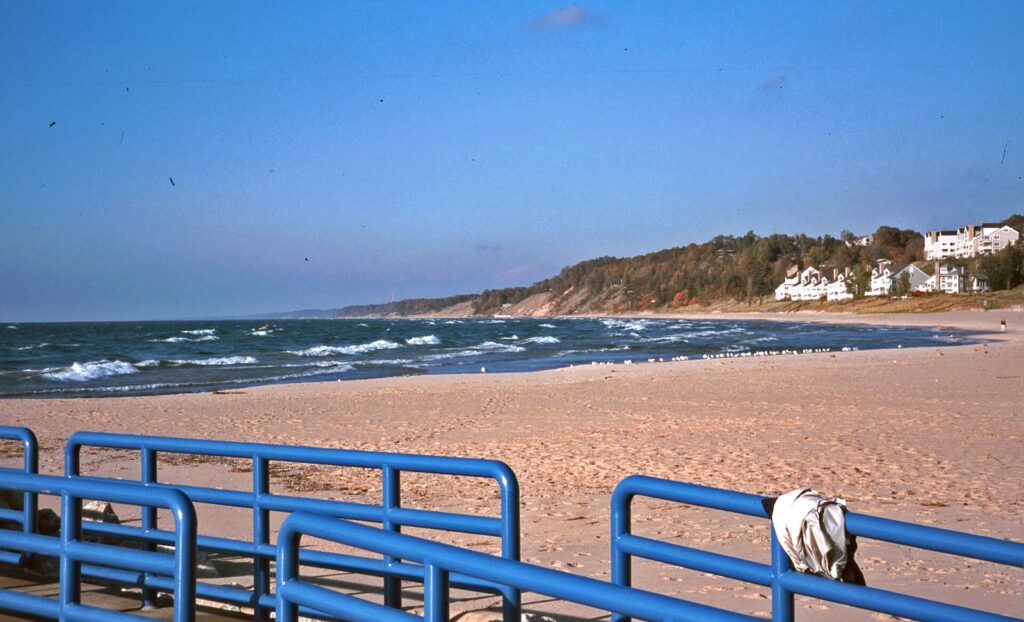
Summer is the Michigan vacation most people picture: beaches, islands, sunsets over Lake Michigan at 9:30 p.m., festivals and everything open. It’s also when prices, crowds and traffic peak, especially from the week before the Fourth of July through mid-August. The Great Lakes are coldest in June and warmest in August, and Lake Superior stays cold all year. Book lodging well ahead and plan beach days for weekdays if you can.
Fall (September to October)
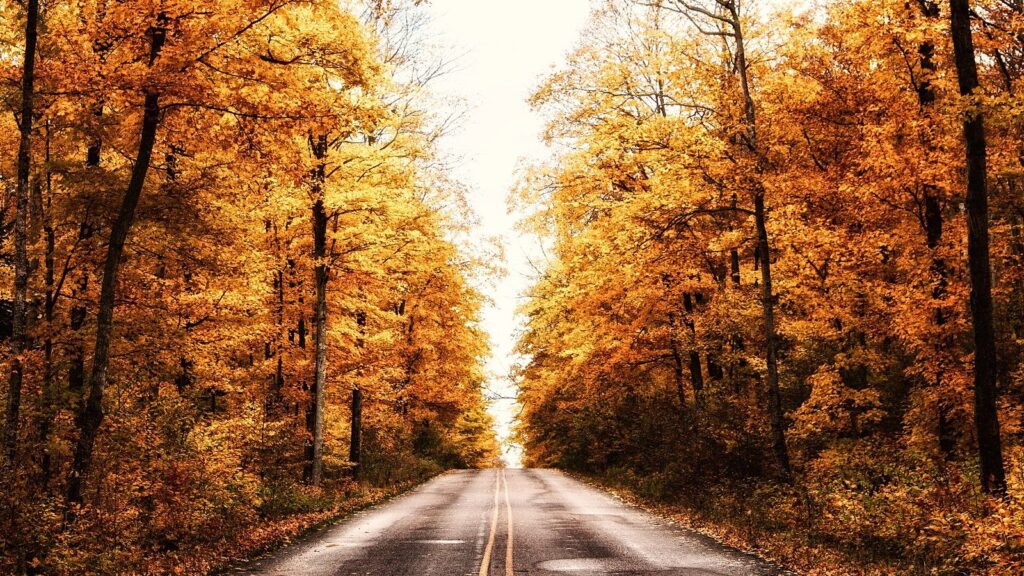
Fall is the best season for many travelers: warm September days, fewer people, lower midweek rates and some of the best color in the Midwest. The U.P. usually peaks first, from the last week of September into early October, the northern Lower Peninsula in the first half of October and the south later in the month. Our guide to Michigan fall colors peak timing has the region-by-region calendar and the drives. Many seasonal businesses close in late October.
Winter (December to March)
Winter is its own vacation: downhill and cross-country skiing, snowmobiling on thousands of miles of groomed trails, ice formations along Lake Superior, winter carnivals and cozy cabin weekends. The ski resorts around Boyne, Harbor Springs and Traverse City and in the western U.P. run from December into March; see our comparison of Michigan ski resorts compared by vertical, pass and price. Many summer towns and island attractions close for the season, and lake-effect snow can make driving slow.
Holiday weekends
Memorial Day, the Fourth of July and Labor Day are the three busiest weekends of the Michigan summer: expect full campgrounds, long lines at the Mackinac ferries and backups on northbound I-75 and US-131 on the Friday afternoon before. If your dates are flexible, travel the week after a holiday instead, or leave on Thursday and come home on Monday evening.
When people plan
Interest in Michigan vacations peaks in early May, when families lock in summer trips, with a second bump from December to February. That tells you when the best rooms go: book summer lakefront and island stays by early spring at the latest, and fall-color weekends by midsummer.
Michigan weather by month
Michigan’s weather varies a lot from the southern cities to the Lake Superior shore, and the Great Lakes moderate the coasts: lakeshore towns are cooler in summer and milder in early winter than inland. Traverse City’s official 1991-2020 normals give a good picture of the northern Lower Peninsula, and Mackinac Island’s tourism bureau puts its July average high at 76°F.
| Month | What to expect (northern Lower Peninsula) |
|---|---|
| January and February | Cold and snowy; Traverse City’s average high is about 27°F in January; lake-effect snow near the coasts |
| March | Still wintry; average highs around 40°F |
| April | Thaw and mud; average highs in the low 50s |
| May | Spring arrives; average highs in the upper 60s, cold nights, black flies later in the month |
| June | Warm days, cool lake water, the buggiest month in the woods |
| July | The warmest month: Traverse City averages about 81°F highs; Mackinac Island about 76°F |
| August | Still warm, with the warmest lake water |
| September | Warm days, cool nights, fewer people |
| October | Fall color, crisp days, first frosts; seasonal closures late in the month |
| November and December | Gray, cold and quiet until the snow and ski season settle in |
The U.P. runs several degrees cooler than this and gets far more snow; the Keweenaw’s roadside snow gauge averages more than 240 inches a winter. Detroit and the southern Lower Peninsula run a few degrees warmer. Whatever the month, pack a warm layer for evenings by the water.
How many days do you need for a Michigan vacation?
| Region | Minimum | Better |
|---|---|---|
| Lake Michigan beach towns | 2 nights | 3 to 4 nights |
| Traverse City and Sleeping Bear | 3 nights | 4 to 5 nights |
| Petoskey, Harbor Springs and Charlevoix | 2 nights | 3 nights |
| Mackinac Island | 1 night (or a long day trip) | 2 nights |
| Eastern U.P. loop | 2 nights | 3 nights |
| Pictured Rocks and Marquette | 2 nights | 3 to 4 nights |
| Keweenaw and Porcupine Mountains | 4 nights | 5 to 7 nights |
| Detroit and Dearborn | 2 nights | 3 nights |
The mistake to avoid is too many regions. Every change of base costs half a day, and the driving between Michigan’s regions is long; plan no more than one move every two or three nights.
Sample 3-, 5- and 7-day Michigan vacations
3 days
From Chicago: the Lake Michigan beach towns. Night one in Saugatuck (Oval Beach, the galleries, Mount Baldhead); day two in Holland and Grand Haven, with sunset on the Grand Haven pier; day three at Warren Dunes on the way home. From Detroit: Frankenmuth on the drive north, then two nights at Mackinac Island or in Petoskey.
5 days
The classic northwest loop. Two nights in Traverse City with a day at Sleeping Bear Dunes (the Dune Climb, Pierce Stocking Scenic Drive, Glen Haven) and an afternoon on Old Mission Peninsula; one night in Petoskey or Charlevoix; two nights on Mackinac Island or in Mackinaw City, with a day on the island.
7 days
Northwest Lower plus the eastern U.P. Two nights in Traverse City, one in Petoskey, one on Mackinac Island, then cross the bridge for two nights near Paradise (Tahquamenon Falls and Whitefish Point) and one in Munising for Pictured Rocks before heading home. From Chicago, reverse it and enter the U.P. through Wisconsin.
Where should I fly into for a Michigan vacation?
Michigan has one big hub and a string of smaller airports. The right one depends on your first region.
| Airport | Best for | Size |
|---|---|---|
| Detroit Metro (DTW) | Detroit, Ann Arbor, the Thumb, Frankenmuth; the most flights and lowest fares | 33,372,682 passengers in 2025 (up 1.2 percent); a Delta hub |
| Grand Rapids (GRR) | West Michigan, the Lake Michigan beach towns, the northwest | 4,303,696 passengers in 2025, a record |
| Traverse City (TVC) | Traverse City, Sleeping Bear, Petoskey | 935,816 passengers in 2025, a record, up 19 percent; Delta added a daily Boston nonstop in May 2026 |
| Flint, Lansing, Saginaw (MBS), Kalamazoo | Mid-Michigan and alternatives to DTW | Smaller; 92,510 to 285,088 boardings in 2024 |
| Pellston (PLN) | Petoskey, Harbor Springs, Mackinac Island | Daily Delta connections to Detroit; 31,060 boardings in 2024 |
| Marquette (SAW), Houghton (CMX), Sault Ste. Marie (CIU) | The U.P. | Small regional airports, 25,000 to 45,000 boardings each in 2024 |
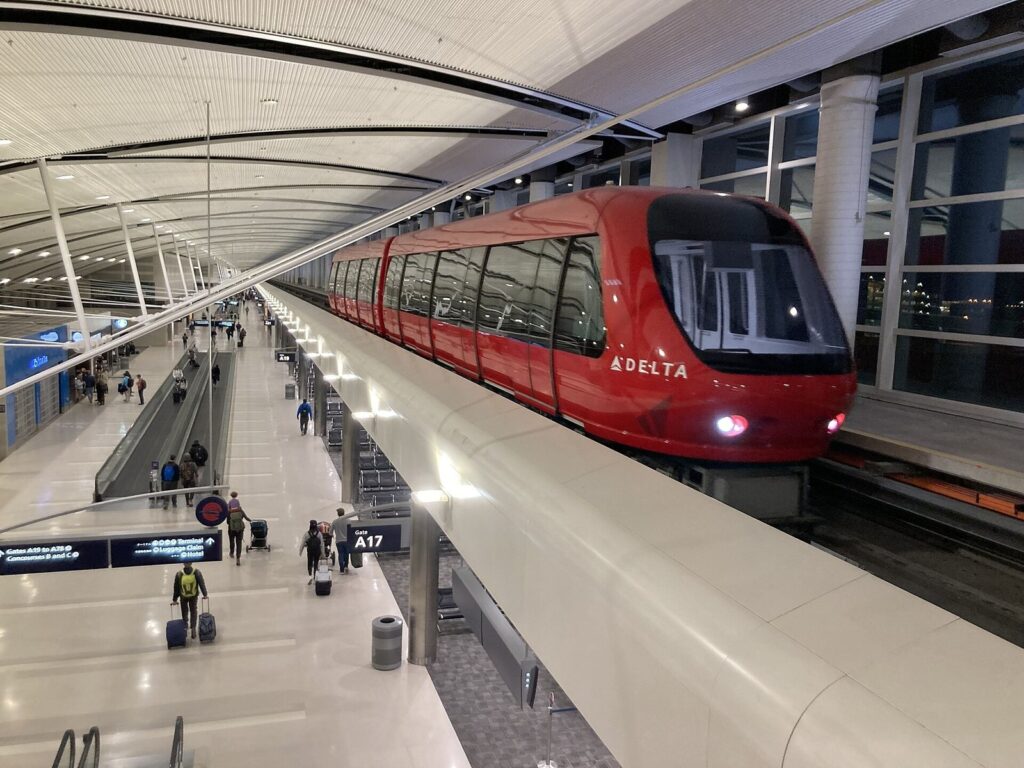
For most trips up north, the best combination is to compare a flight into Traverse City or Pellston with a cheaper flight into Detroit or Grand Rapids plus the drive. Fares into DTW are usually lowest, but the drive to Traverse City is about four hours, against about 2 hours 15 minutes from Grand Rapids. Rental cars are available at every commercial airport, and you’ll want one.
Driving to Michigan
Most visitors drive, and the distances are real. These are free-flow times without traffic; add 30 to 60 minutes on summer Fridays, holiday weekends and at the Mackinac Bridge.
| From | To Detroit | To Grand Rapids | To Traverse City | To Mackinaw City |
|---|---|---|---|---|
| Chicago | 4 h 25 | 2 h 55 | 5 h 05 | 6 h 25 |
| Toronto | 4 h 00 plus the border | 5 h 40 | 7 h 00 | 7 h 15 |
| Indianapolis | 4 h 35 | 4 h 15 | 6 h 25 | 7 h 15 |
| Columbus, Ohio | 3 h 25 | 5 h 05 | 6 h 50 | 7 h 05 |
| Cleveland | 2 h 40 | 4 h 35 | 6 h 20 | 6 h 30 |
From Minneapolis, the western U.P. is closer: about 4 hours 10 minutes to Ironwood and about 6 hours to Houghton. From Chicago, the U.P. is often quicker through Wisconsin than via the Mackinac Bridge.
Getting around once you’re here
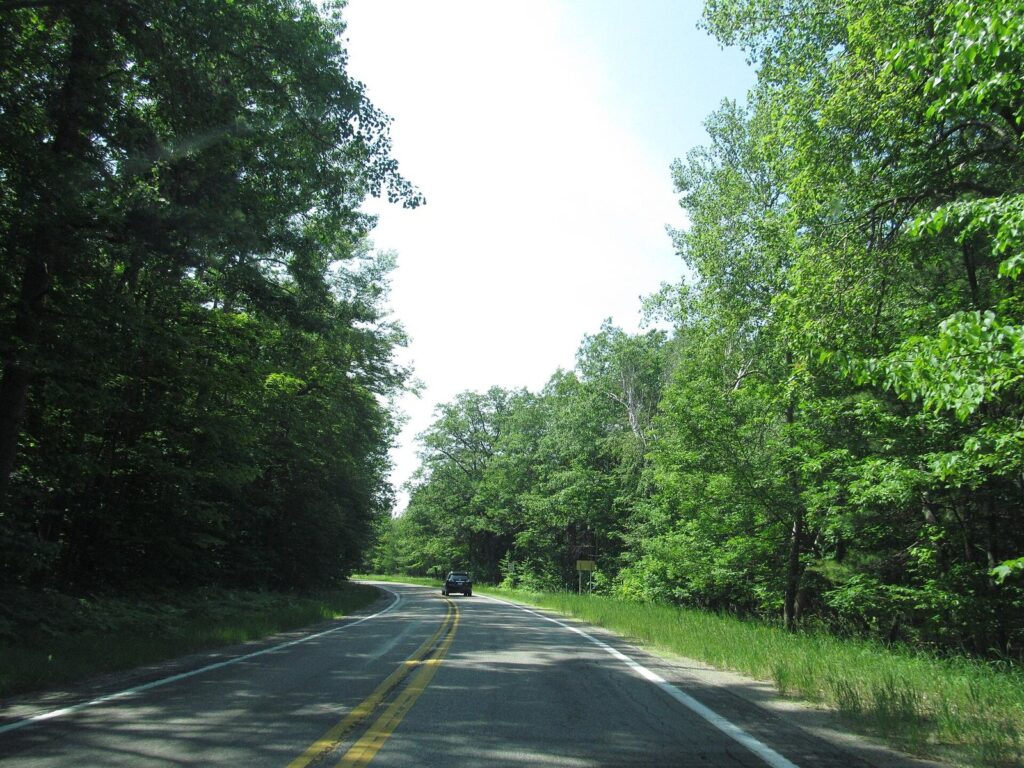
A handful of highways do most of the work. I-75 runs from Detroit north through Flint, Saginaw and Grayling to the Mackinac Bridge and on to Sault Ste. Marie; US-131 runs north from Kalamazoo through Grand Rapids to Petoskey; US-31 follows the Lake Michigan shore through the beach towns, Traverse City and Charlevoix to Mackinaw City; and in the U.P., US-2 and M-28 cross the peninsula east to west. The scenic drives, such as M-22 around the Leelanau Peninsula, M-119’s Tunnel of Trees and US-23 along the Sunrise Coast, are two-lane roads worth slowing down for.
Three things catch visitors out. Gas stations thin out in the U.P. and the northern forests, so fill up when you can. Deer, and in the U.P. the occasional moose, cross the roads at dawn and dusk, when most crashes happen. And in winter, lake-effect snow bands can turn a clear highway white within minutes, especially near the Lake Michigan and Lake Superior shores; slow down and give plows room.
The Lake Michigan car ferries
Two seasonal car ferries cross Lake Michigan between Wisconsin and Michigan, and for drivers from Wisconsin, Minnesota and the western states, they save the long drive around Chicago.
| SS Badger | Lake Express | |
|---|---|---|
| Route | Manitowoc, Wisconsin, to Ludington | Milwaukee to Muskegon |
| 2026 season | May 15 to October 11 | May 1 to October 19 |
| Crossing | About 4 hours; a 1950s coal-fired steamship | A high-speed catamaran, the faster crossing |
| 2026 adult fare, one way | $89 in summer, $78 in spring and fall | From $120.50, plus a $6 fuel surcharge and a $9 port and security fee |
| Standard car, one way | $102 | $130, plus the same surcharges |
| Good to know | Free parking; Ludington is on Eastern time, Manitowoc on Central | Milwaukee is on Central time, Muskegon on Eastern |
For a family with a car, the ferry isn’t cheap, but it’s a mini-cruise with deck space and views, and it saves hours of driving and a night on the road. Book ahead for summer weekends and remember the time change: you gain an hour sailing west and lose it sailing east.
Getting to the islands
Several of Michigan’s best trips are on islands, and each has its own logistics.
- Mackinac Island: Arnold Transit and Shepler’s ferries from Mackinaw City and St. Ignace, 16 to 40 minutes ($37 or $39 adult round trip in 2026), or an air taxi of about seven minutes from St. Ignace. No cars on the island; you walk, bike or ride a carriage.
- Beaver Island: a two-hour ferry from Charlevoix ($67 adult round trip in 2026), or a short flight.
- Isle Royale: the National Park Service’s Ranger III from Houghton (about six hours; $80 one way per adult in 2026), the Isle Royale Queen IV from Copper Harbor (about three and a half hours; $175 round trip) or a seaplane. The park is closed from November 1 to April 15.
- Drummond Island: a 10-minute car ferry from DeTour Village, running year-round ($20 round trip per car in 2026).
- North and South Manitou: closed for all of 2026, with no ferry.
Amtrak: Michigan without driving to Michigan
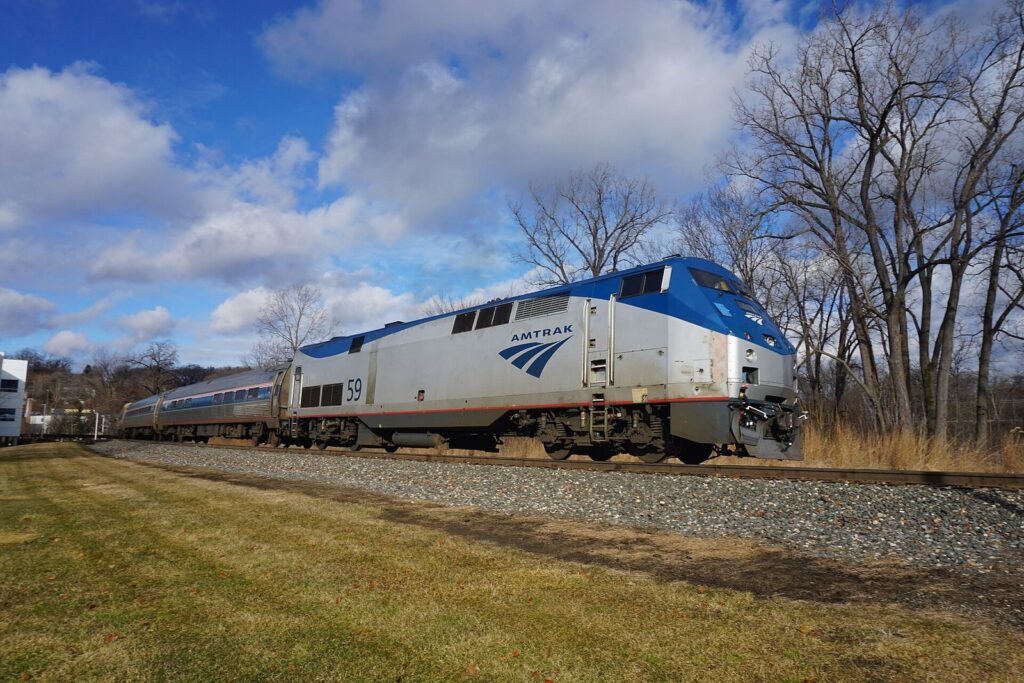
Amtrak’s three Michigan routes all start in Chicago. The Wolverine runs several times a day to Detroit and Pontiac via Kalamazoo and Ann Arbor, the Blue Water runs once a day to Port Huron via Kalamazoo, East Lansing and Flint, and the Pere Marquette runs once a day to Grand Rapids via St. Joseph and Holland. The trains are a good car-free way to reach Detroit, Ann Arbor or Grand Rapids for a city trip, and Holland and St. Joseph put you near Lake Michigan beaches, but beyond the cities you’ll need a rental car or a local ride to go much farther.
Crossing between Michigan and Canada
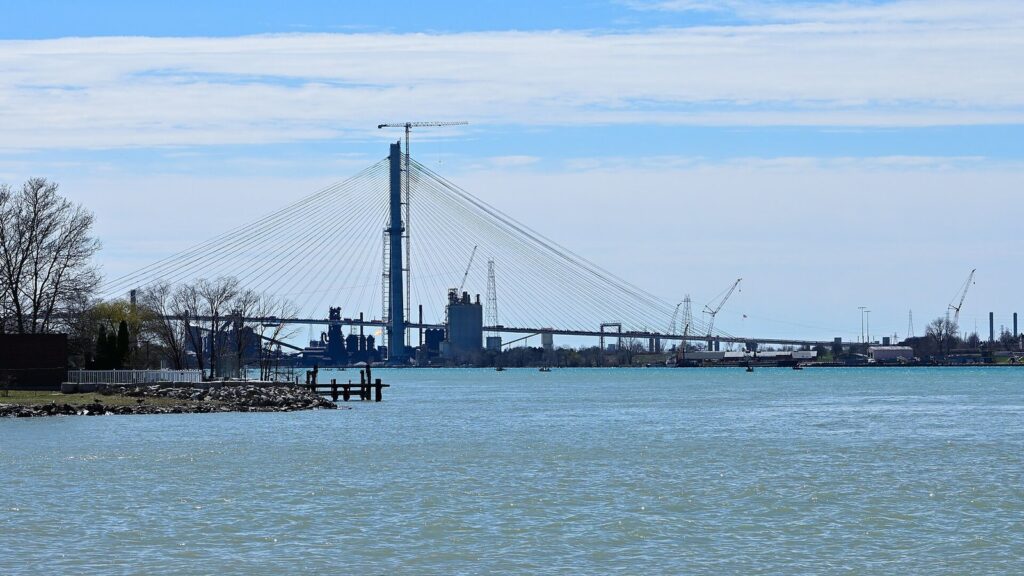
Michigan has five road crossings into Ontario, and many visitors combine a Michigan trip with Windsor, Sarnia or the Canadian Soo. You’ll need a passport, passport card, enhanced driver’s license or trusted-traveler card to return to the US by land, and children under 16 can usually use a birth certificate; check current rules before you go, and remember that rental-car contracts may restrict crossing.
| Crossing | Between | 2026 car toll |
|---|---|---|
| Gordie Howe International Bridge | Detroit and Windsor | US$5.75 (25 percent off with an electronic pass); opened July 27, 2026, with a free walking and cycling path |
| Ambassador Bridge | Detroit and Windsor | $10 (pre-paid program $5.50) |
| Detroit-Windsor Tunnel | Detroit and Windsor | $9 from Detroit to Windsor |
| Blue Water Bridge | Port Huron and Sarnia | C$7 for US-bound cars on the Canadian side (unchanged for 2026) |
| International Bridge | Sault Ste. Marie, Michigan and Ontario | US$4.50 / C$6.30 |
Visiting from Canada or overseas
Canadians are Michigan’s biggest foreign market, and Ontario drivers usually cross at Windsor, Sarnia or the Soo; Michigan ranked fourth among US states for Canadian overnight visitors arriving by land in 2024, although crossings fell in 2025. Travelers from farther away usually fly into Detroit Metro, a Delta hub with international flights, and drive from there. Prices are in US dollars, cards are accepted almost everywhere, and sales tax (6 percent) is added at the register rather than shown on the price tag.
Michigan’s two time zones
Almost all of Michigan runs on Eastern time. The exceptions are four western U.P. counties along the Wisconsin line: Gogebic (Ironwood), Iron (Iron River and Crystal Falls), Dickinson (Iron Mountain) and Menominee, which run on Central time like Chicago and Wisconsin. Chicago drivers lose an hour when they cross into Michigan’s Eastern-time counties and gain it back going home; drivers from Detroit gain an hour in those four counties. Ferry, tour and park schedules are always local, so check which zone a departure is in, especially around Lake Gogebic, which straddles the line.
Do you need a car in Michigan?
For almost every Michigan vacation, yes. Public transit between regions is thin, the national lakeshores and state parks have no shuttles from the towns, and the best parts of the trip are on two-lane roads between small towns. The exceptions are a city break in Detroit or Grand Rapids (walkable cores, free downtown transit in Detroit, Amtrak from Chicago) and Mackinac Island, where cars are banned and you’ll walk, bike or ride a carriage. Rent a car at the airport, and for winter trips, ask for all-wheel drive and good tires.
Events worth planning around in 2027
Big events fill hotels months ahead, so check the calendar before you pick dates, either to join the crowd or to avoid it.
- January: the Detroit Auto Show (January 14 to 24; public days 16 to 24) and Tip-Up Town USA on Houghton Lake (January 23, 24 and 30).
- February: Michigan Tech’s Winter Carnival in Houghton (February 3 to 6) and the UP200 sled dog race from Marquette (February 11 to 15).
- April and May: the NCAA men’s Final Four at Ford Field in Detroit (April 3 and 5), Tulip Time in Holland (April 30 to May 9) and Movement in Detroit over Memorial Day weekend (May 29 to 31).
- June and July: the Detroit Grand Prix (June 4 to 6), the Mackinac Island Lilac Festival in early June, the National Cherry Festival in Traverse City (July 3 to 10) and the sailing races to Mackinac Island (July 10 from Port Huron and July 17 from Chicago).
- September: the Detroit Jazz Festival over Labor Day weekend (September 3 to 6), the Mackinac Bridge Walk on Labor Day, and Frankenmuth’s Oktoberfest (September 16 to 19).
Is Michigan expensive to visit? What a vacation costs
Michigan is mid-priced by US vacation standards: cheaper than the coasts, pricier than you’d expect in peak season at the famous spots. Lodging is the biggest cost and swings the most, and a handful of fixed fees add up fast. Here are the ones to budget for.
| Item | 2026 cost |
|---|---|
| Recreation Passport (state parks) | Residents $15 a year; non-residents $12 a day or $42 a year |
| Sleeping Bear Dunes or Pictured Rocks | $25 per vehicle for 7 days (or $45 annual per park); the $80 America the Beautiful pass covers both for US residents |
| Mackinac Bridge | $4.00 per car each way |
| Mackinac Island ferry, adult round trip | $37 Arnold Transit fast ferry; $39 Shepler’s basic ($59 Enhanced); children 5-12 $27 on Shepler’s basic |
| Ferry parking at the Straits | About $10 to $15 a day in standard lots; $20 to $25 overnight |
| Lake Michigan car ferry, one way | SS Badger $89 adult plus $102 per car in summer; Lake Express from $120.50 plus $130 per car and surcharges |
| Lodging taxes | 6 percent state tax, plus local assessments in resort areas (5 percent around Traverse City, 4 percent on Mackinac Island) |
A worked example: a family of four (two adults, two children 5-12) from out of state on a one-week summer loop through Sleeping Bear, Mackinac Island and Pictured Rocks would pay $42 for the annual Recreation Passport, $50 for the two lakeshore passes, $8 in bridge tolls and $132 for Shepler’s basic round trips, about $232 in fixed fees before parking, lodging, food and gas. Lodging rates vary by property and date, but the pattern holds: July weekends on Mackinac Island, in Traverse City and at the Lake Michigan beach towns cost the most, and rooms fall sharply after Labor Day and in the shoulder seasons.
Where the rest of the money goes
After lodging, the big variable costs are gas (the distances are long, and a loop through both peninsulas can top 1,000 miles), food and a few paid attractions. Typical 2026 adult tickets: Fort Mackinac $17.50, a Pictured Rocks Classic Cruise $48, The Henry Ford’s museum $34 to $36 (plus $10 parking per order), and a Grand Hotel porch visit $14 for non-guests. Many of the best experiences, including beaches, waterfalls, dunes, lighthouses from the outside and scenic drives, cost only a park pass or nothing at all, so a trip built around the outdoors is far cheaper than one built around resorts and tours.
What is the cheapest time to visit Michigan?
April to mid-May and November are the cheapest months, but many seasonal businesses, ferries and attractions in the north are closed or on short hours. The best value is September and the first half of June: nearly everything is open, the weather is usually good and rates are well below July and August. Midweek stays are cheaper year-round, and state park campgrounds and cabins are the budget way to stay in the most scenic spots.
When to book
- State park campsites, cabins and yurts: they open for reservations six months to the day ahead, at 8 a.m. on weekdays and 9 a.m. on weekends, on MiDNRReservations.com or by phone; there’s a non-refundable $8 online or $10 phone reservation fee, and bookings can’t be changed or canceled more than five months before arrival. Popular summer weekends go the morning they open.
- Mackinac Island and Traverse City peak weekends: six months to a year ahead for July and August, and earlier for the National Cherry Festival (July 3 to 10, 2027).
- Holland’s Tulip Time (April 30 to May 9, 2027): six months or more.
- Fall-color weekends: two to four months ahead, especially in the U.P. and around Traverse City and Petoskey.
- Ski holiday weeks: by early fall.
- Car ferries: reserve summer crossings with a car well ahead.
A planning timeline
- Six months out: book state park campsites, cabins and yurts the day the window opens, and lock in peak-season lodging on Mackinac Island, in Traverse City and in the beach towns.
- Three months out: reserve car ferry crossings with a vehicle, fall-color lodging and any guided trips, such as Pictured Rocks cruises for a specific sailing.
- One month out: buy a non-resident Recreation Passport online if you’ll use state parks on four or more days, and check the national lakeshores’ alerts for closures.
- The week before: check current conditions: road work (the Tunnel of Trees has closures in fall 2026), ferry schedules, fall-color reports or snow reports, and the forecast.
- The day before: download offline maps, confirm reservations, and plan fuel stops for the U.P.
Bug season and what to pack
Michigan’s bugs are the thing nobody warns you about. Black flies come out in the northern woods in late May and June, mosquitoes peak in June and early July, and biting stable flies can plague some Lake Michigan beaches on hot days when the wind blows off the land. Deer ticks are spreading north; check for them after hikes. By August the woods are much better, and September is nearly bug-free.
| Season | Pack |
|---|---|
| Spring | Warm layers, rain gear, waterproof boots, bug spray from late May |
| Summer | Swimsuit, sunscreen, water shoes for stony beaches, a sweatshirt for evenings, bug spray and a head net for the woods |
| Fall | Layers from T-shirt to fleece, a warm hat for evenings, rain gear |
| Winter | Insulated boots, a real winter coat, traction cleats, a car emergency kit |
Year-round, bring a paper map or download offline maps: cell service fades in much of the U.P. and the northern forests. And pack for the Great Lakes, not the calendar: it can be 85°F in town and 65°F on a windy beach.
Staying safe on a Michigan vacation
- Great Lakes swimming: watch the beach flags at state parks, where double red flags close the water and entering is against the law; learn how rip currents work (flip, float and follow the shore out of the pull); and stay off piers when waves break over them.
- Cold water: Lake Superior stays cold enough to cause cold shock even in August, and Lake Michigan can turn cold overnight when the wind shifts.
- Wildlife: black bears live across the northern Lower Peninsula and the U.P.; keep food out of tents and cabins. Check for ticks after hikes.
- Signal: cell coverage is patchy in the U.P. and the northern forests; download maps and tell someone your route before a hike.
- Winter: carry a winter kit in the car, wear traction on icy paths, and never walk out onto shelf ice along the Great Lakes shore.
Traveling with a dog
Michigan is a good dog state with a few rules to know. In state parks, leashed dogs (6-foot leash) are welcome in campgrounds, on trails and at boat launches, but not on designated swim beaches; a few parks set aside pet beaches, including Warren Dunes north of the swim buoys and Young State Park on Lake Charlevoix. Sleeping Bear allows leashed dogs on designated trails and beaches, with some beaches closed in spring and summer for nesting piping plovers. Both Mackinac Island ferry lines carry leashed, well-behaved dogs, and many cabins and a growing number of hotels take pets for a fee.
Accessible highlights
Several of Michigan’s headline sights are accessible. Tahquamenon Falls has a new 1,100-foot accessible boardwalk to the brink of the Upper Falls plus accessible platforms at both falls, and it lends a track chair free. The Lake of the Clouds overlook in the Porcupine Mountains has an accessible walkway and platform. Detroit’s museums and its fare-free People Mover and QLINE are accessible, and on car-free Mackinac Island, riders with a mobility disability can apply to the city for an e-bike permit. Ask each operator about ferries, tours and older historic buildings before you go.
What to skip, and what to do instead
Skip trying to do both peninsulas in a long weekend. Pick one region and do it properly.
Skip July if you can go in September. Same beaches, warm water, half the crowds and lower rates.
Skip planning around the Manitou Islands in 2026. They’re closed all season; Sleeping Bear’s mainland is open.
Skip the Motown Museum tour until spring 2027, when its expansion finishes, and skip driving the Tunnel of Trees end to end this fall, when two sections are closed.
Skip booking your lodging last. In summer, the room decides the trip; lock in lodging, ferries and campsites first, then plan the days.
Frequently asked questions
What is the best month to vacation in Michigan?
August is the best all-round month: the warmest lake water, long days and everything open. July is just as good but busier and more expensive. September is the best value, still warm with fewer people after Labor Day, and early October is best for fall color, especially in the U.P. and the northern Lower Peninsula. February is best for skiing and snow.
How many days do you need for a Michigan vacation?
Plan a week for one peninsula, for example Traverse City, Sleeping Bear and Mackinac Island, or the eastern U.P. with Pictured Rocks. Plan ten to fourteen days to see both peninsulas without rushing. A long weekend is enough for one region close to home, such as the Lake Michigan beach towns from Chicago or Frankenmuth and Mackinac from Detroit.
What part of Michigan is best for vacation?
For a first visit, the northwest Lower Peninsula: Traverse City, Sleeping Bear Dunes, Petoskey and Mackinac Island are close together and cover beaches, dunes, towns and history. The Lake Michigan beach towns are best for Chicago weekends, the U.P. for wilderness and waterfalls, and Detroit for museums, music and food. Pick one region per week rather than trying to see them all, and match it to the season.
Is Michigan expensive to visit?
Michigan is mid-priced: cheaper than most coastal destinations, but lodging on Mackinac Island, in Traverse City and in the beach towns is expensive in July and August. The other costs are modest but add up: a $42 non-resident Recreation Passport, $25 lakeshore passes, the $4 bridge toll and ferries around $37 to $39 per adult. September and June are the best value.
What is the cheapest time to visit Michigan?
April to mid-May and November have the lowest prices, but many northern attractions, ferries and restaurants are closed or on short hours. For value with everything open, go in September or the first half of June, stay midweek, and consider state park cabins and campgrounds, which book six months ahead. Winter is cheap in the cities but not at the ski resorts, where holiday weeks cost the most.
Where should I fly into for a Michigan vacation?
Detroit Metro has the most flights and usually the lowest fares, and it’s best for Detroit and the east. Grand Rapids is best for West Michigan and saves close to two hours of driving to the northwest, and its airport set a passenger record in 2025. Traverse City is best for Traverse City, Sleeping Bear and Petoskey, and Pellston for Mackinac Island and Harbor Springs. U.P. trips can use Marquette, Houghton or the Soo.
Do you need a car in Michigan?
Almost always. Beyond Detroit and Grand Rapids, public transit is limited, and the parks, lakeshores and small towns are spread out along two-lane roads. The exceptions are a city break reached by Amtrak from Chicago, and Mackinac Island, where cars are banned. Rent at the airport, and in winter ask for all-wheel drive. Gas stations are far apart in parts of the U.P., so fill up often.
Sources and verification
Everything on this page was checked on September 23, 2026 against the organizations listed here. This guide is compiled from those sources; it doesn’t claim first-hand visits.
- SS Badger: 2026 schedule, plus its 2026 fares
- Lake Express: schedule, plus its rates page
- Mackinac Bridge Authority: fare schedule
- National Park Service: Sleeping Bear Dunes fees, plus Pictured Rocks’ fees
- Michigan DNR: reservation policies, plus the Recreation Passport page
- Amtrak: Michigan Services
Also checked: the Detroit, Grand Rapids and Traverse City airports’ 2025 passenger reports and the FAA’s 2024 boarding counts; the Ambassador Bridge, Detroit-Windsor Tunnel, Blue Water Bridge and International Bridge toll schedules; the Gordie Howe International Bridge; Shepler’s and Arnold Transit’s 2026 fares; NOAA climate normals for Traverse City; and drive times from a routing service.
Michigan Tourism Guide is an independent publication. It is not affiliated with Pure Michigan or any agency or business named here.
Photo credits
- SS Badger at Ludington, May 2026 (featured image): photo by WMrapids, Wikimedia Commons (CC0)
- Lake Michigan beach: photo by qwesy qwesy, Wikimedia Commons (CC BY 3.0)
- Fall road in the Upper Peninsula: photo by Stevenliuyi, Wikimedia Commons (CC BY-SA 4.0)
- Mackinac Bridge: photo by Justin Billau, Wikimedia Commons (CC BY 2.0)
- Detroit Metro Airport, Concourse A: photo by Mattsjc, Wikimedia Commons (CC BY-SA 4.0)
- M-22, Leelanau Peninsula: photo by Dougtone, Wikimedia Commons (CC BY-SA 2.0)
- Amtrak Wolverine at Ann Arbor: photo by Michael Barera, Wikimedia Commons (CC BY-SA 4.0)
- Gordie Howe International Bridge under construction (2024): photo by AHeneen, Wikimedia Commons (CC BY 4.0)