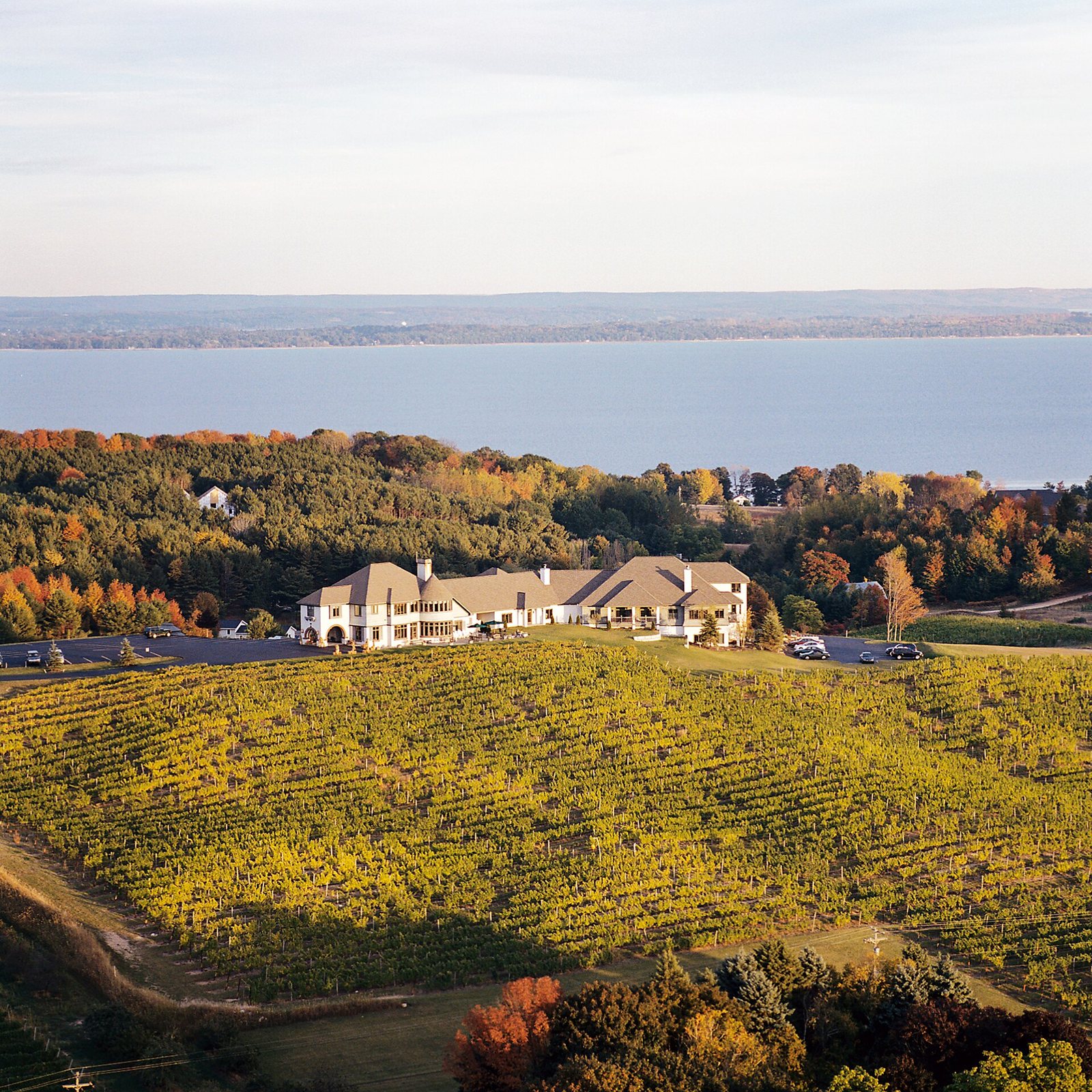
Drive north out of Traverse City on M-37 and the city gives out fast: a few miles on, the road climbs onto the spine of the Old Mission Peninsula, there’s bay water on both sides of you, and the hillsides are striped with vines. Most Michigan wineries sit in places like this, close enough to Lake Michigan that the water takes the edge off spring frosts and keeps fall mild enough to ripen grapes at a latitude where you’d expect apples and potatoes.
The short answer: Michigan’s wine country runs along Lake Michigan in two main clusters: the Old Mission and Leelanau peninsulas around Traverse City, whose two trails list 33 wineries between them, and the Lake Michigan Shore in the southwest, about 1 hour 40 minutes from Chicago. Come for Riesling, Chardonnay, Pinot Noir, Cabernet Franc and sparkling wine, reserve tastings for fall weekends, and settle the driving before the first pour.
The details below were checked November 19, 2026 against the wineries’, wine trails’ and brewers’ guild’s own websites, plus the federal register of American Viticultural Areas.
On this page: At a glance · Where wine country is · Why grapes grow here · A short history · The five regions compared · Wineries map · Old Mission Peninsula · Leelanau Peninsula · Old Mission or Leelanau? · Southwest Michigan · Tip of the Mitt · What to drink · Reading the label · Reservations and fees · When to go · Where to stay · Cideries · Breweries · Distilleries · Wine weekends · Which trail is best · What to skip · FAQ
Michigan wine country at a glance
| What you need to know | Details (checked November 19, 2026) |
|---|---|
| Wine regions | Five federal American Viticultural Areas: Fennville (1981), Leelanau Peninsula (1982), Lake Michigan Shore (1983), Old Mission Peninsula (1987) and Tip of the Mitt (2016) |
| Wineries on the trails | Old Mission Peninsula Wine Trail 10; Leelanau Peninsula Wine Trail 23; Lake Michigan Shore Wine Trail 14; Petoskey Wine Region 14 |
| Statewide | 279 wine producers, according to WineAmerica’s 2025 economic report; not all have tasting rooms |
| What to drink | Riesling, Chardonnay, Pinot Gris, Pinot Noir, Cabernet Franc, sparkling wine and, in cold years, ice wine; cold-hardy hybrid grapes in the far north |
| Drive times | Traverse City: about 4 hours from Detroit, 2 hours 15 minutes from Grand Rapids, 5 hours from Chicago. Baroda (Lake Michigan Shore): about 1 hour 40 minutes from Chicago, 3 hours from Detroit |
| Tasting fees | Vary by winery; Mari Vineyards’ guided five-wine tasting was $24 a person in 2026 |
| Reservations | Recommended on fall weekends and for groups; Brys Estate books parties of up to 6 online, while Black Star Farms takes walk-ins |
| Winter | Many tasting rooms stay open year-round on shorter hours; the Leelanau trail runs winter weekends on January 22 to 24 and February 19 to 21, 2027 |
| Beyond wine | More than 400 breweries statewide in 2026, about 240 of them Michigan Brewers Guild members, plus cideries and craft distilleries |
Where is Michigan wine country?
Almost all of it hugs the Lake Michigan side of the state, in four clusters you can treat as separate trips:
- The Traverse City peninsulas. The Old Mission Peninsula splits Grand Traverse Bay just north of town, and the larger Leelanau Peninsula forms the bay’s west side. Between them they hold the state’s best-known tasting rooms and most of its winery inns. Traverse City, Michigan is the base for both.
- The Lake Michigan Shore. The southwest corner of the state, from the Indiana line up through Berrien and Van Buren counties toward Kalamazoo and Allegan, with wineries scattered among orchards and farm stands. It’s Michigan’s wine country for Chicago.
- Fennville. A small region of its own near Saugatuck and Holland, inland from the Lake Michigan beaches.
- The Tip of the Mitt. The newest region, around Petoskey, Charlevoix and Harbor Springs and stretching east toward Lake Huron, with a younger crop of wineries.
There are wineries elsewhere, in the Thumb, around Detroit and Ann Arbor and in the Upper Peninsula, but these four areas are where a wine trip makes sense: tasting rooms close enough together to visit three or four in an afternoon, with somewhere good to sleep at the end of it.
Why grapes grow this far north
Michigan sits at the latitude of New England and Ontario’s Niagara Peninsula, and its winters are hard. Wine grapes survive here because of Lake Michigan. The prevailing winds blow west to east across the lake, so the shoreline counties on the Michigan side get the lake’s moderating effect:
- In spring, the cold lake keeps the air cool, which holds back bud break until the worst frost risk has passed.
- In fall, the lake gives back its summer warmth, which stretches the growing season and lets grapes hang longer on the vine.
- In winter, lake-effect snow blankets the vines and insulates them, and the hills near the water drain cold air away from the vineyards.
That’s why vineyards crowd the slopes nearest the water. Old Mission and Leelanau sit around the 45th parallel, halfway between the equator and the North Pole. The Lake Michigan Shore trail places its region around the 42nd parallel and says it contains 90% of Michigan’s vineyards, the trail’s own figure, which doesn’t separate juice grapes from wine grapes. Farther from the lake, and in the colder far north, growers lean on cold-hardy hybrid grapes bred to survive deep freezes.
A short history of Michigan wine
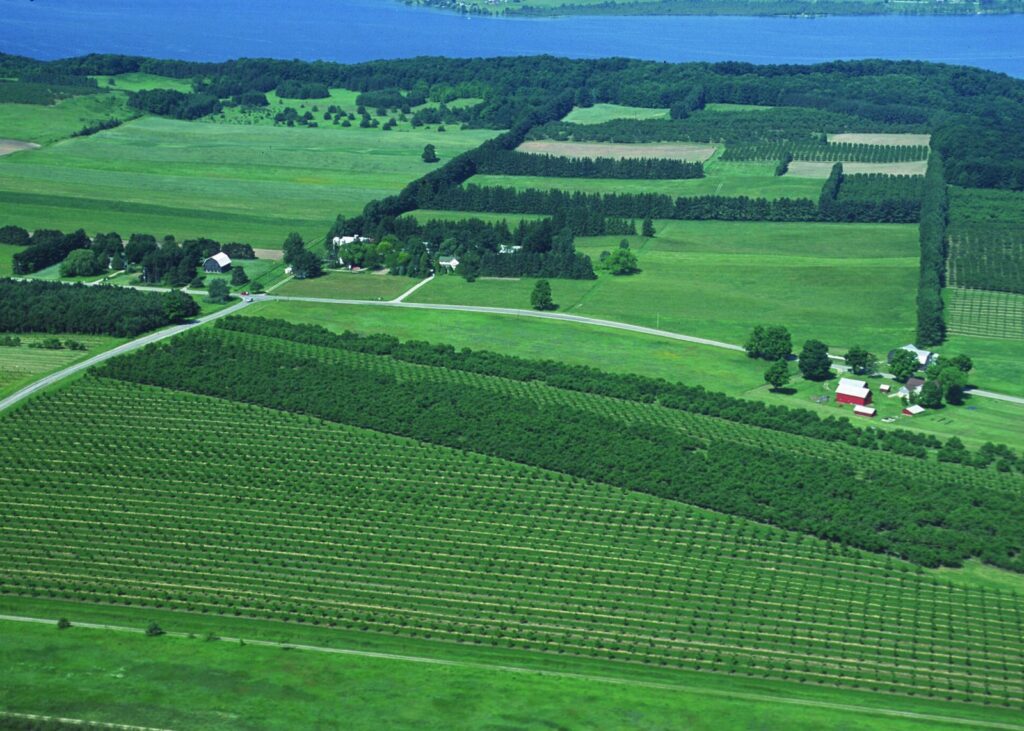
Michigan’s modern wine story is younger than most people expect. One of its longest-standing names, St. Julian, started in 1921 as the Border City Winery in Ontario, during American Prohibition. After repeal it crossed to Detroit in 1934 and moved to Paw Paw in 1936, as Michigan’s 23rd winery, and in 1949 it opened the state’s first tasting room. For decades, much of what southwest Michigan’s vineyards produced went into juice, sweet wines and fruit wines rather than the dry European varieties the state is now known for.
The turn came in the 1980s, when growers on both sides of the state proved that vinifera grapes such as Riesling and Chardonnay could survive near the lake. The federal government recognized Michigan’s first wine regions in quick succession: Fennville in 1981, the Leelanau Peninsula in 1982, the Lake Michigan Shore in 1983 and the Old Mission Peninsula in 1987. The Tip of the Mitt followed in 2016, as cold-hardy hybrid grapes opened up land farther north.
Today WineAmerica’s 2025 report puts the number of wine producers statewide at 279. Many are small, family-run and only a decade or two old, which is part of the appeal: the person pouring your flight may well have planted the vines.
Michigan’s five wine regions compared
An American Viticultural Area (AVA) is a federally defined grape-growing region, and a wine label can name one when most of its grapes come from there. Michigan has five. The tasting-room counts come from each trail’s own member list, so they’re the practical number for planning.
| Region | Established | Size (approx.) | Wineries on the trail | Base town | Drive from Detroit / Grand Rapids / Chicago |
|---|---|---|---|---|---|
| Old Mission Peninsula | 1987 | 19,200 acres | 10 (Old Mission Peninsula Wine Trail) | Traverse City | about 4 h 20 min / 2 h 30 min / 5 h 20 min to Old Mission village |
| Leelanau Peninsula | 1982 | 210,000 acres | 23 (Leelanau Peninsula Wine Trail) | Suttons Bay or Traverse City | about 4 h 20 min / 2 h 30 min / 5 h 20 min to Suttons Bay |
| Lake Michigan Shore | 1983 | 1.28 million acres | 14 (Lake Michigan Shore Wine Trail) | St. Joseph, Paw Paw or South Haven | about 3 h / 1 h 30 min / 1 h 40 min to Baroda |
| Fennville | 1981 | 75,000 acres | Fenn Valley Vineyards (on the Lake Michigan Shore trail) | Saugatuck or Holland | about 2 h 50 min / 50 min / 2 h 20 min to Fennville |
| Tip of the Mitt | 2016 | 1.77 million acres | 14 (Petoskey Wine Region) | Petoskey | about 4 h / 3 h / 5 h 45 min to Petoskey |
Drive times are free-flow estimates; summer Fridays heading north run longer. Chicago is on Central time and all of Michigan’s wine regions are on Eastern, so add an hour to the clock when you cross the state line.
A Michigan wineries map, by drive time
The wine regions are far apart, so treat them as separate trips rather than stops on one route. Traverse City to Petoskey is about 1 hour 15 minutes, but Traverse City to the Lake Michigan Shore means driving most of the length of the Lower Peninsula. Inside each region, though, the distances are short, which is what makes a wine weekend work:
| Region | Hub | Drive times inside the region |
|---|---|---|
| Old Mission Peninsula | Traverse City | Traverse City to Old Mission village, near the tip: about 25 minutes along M-37 |
| Leelanau Peninsula | Suttons Bay or Traverse City | Traverse City to Suttons Bay about 20 minutes, to Lake Leelanau about 25, to Leland about 30 and to Northport about 35; Suttons Bay to Leland about 10 minutes and to Northport about 15 |
| Lake Michigan Shore | Baroda or St. Joseph | Baroda to Berrien Springs about 15 minutes, to St. Joseph about 20, to Buchanan about 25, to Three Oaks about 25 and to Paw Paw about 45; Paw Paw to Kalamazoo about 25 |
| Fennville | Saugatuck | Fennville to Saugatuck about 15 minutes, to Paw Paw about 45 and to Baroda about an hour |
| Tip of the Mitt | Petoskey | Petoskey to Harbor Springs about 12 minutes, to Boyne City and Charlevoix about 20; Traverse City to Petoskey about 1 hour 15 minutes |
Two combinations work well. In the north, the two Traverse City peninsulas and the Petoskey wineries make a four- or five-day loop, with a night or two in each area and Bellaire, home of Short’s Brewing, about 50 minutes from Traverse City on the way. In the southwest, Fennville and the Lake Michigan Shore pair over a long weekend: base yourself in Saugatuck for Fenn Valley and the beaches, then move to St. Joseph for the Baroda and Berrien Springs wineries. From Chicago, the southwest is the realistic choice for a weekend; the Traverse City peninsulas are a five-hour drive each way and deserve three nights.
Old Mission Peninsula Wine Trail
Old Mission is the compact one: a narrow peninsula running north from Traverse City, with M-37 (Center Road) down the middle and ten wineries on the trail. The views are the draw. Most tasting rooms sit high enough to look over East Bay or West Bay, or both, and the drive itself, through orchards and vineyards to the lighthouse at the tip, is half the outing. Because it’s small, it’s the easiest trail for a first visit: four or five stops make a full day without long drives between them.
The ten trail members are Black Star Farms Old Mission, Bowers Harbor Vineyards, Brys Estate, Chateau Chantal, Chateau Grand Traverse, Hawthorne Vineyards, Mari Vineyards, Peninsula Cellars, Tabone Vineyards and 2 Lads Winery. A few notes from their own sites:
- Chateau Grand Traverse, on M-37, has an inn on the property. Winter hours, November 1 to May 1, are 11 a.m. to 5 p.m. Sunday through Thursday and 11 a.m. to 6 p.m. Friday and Saturday.
- Chateau Chantal is a winery and a bed-and-breakfast on a hilltop with views down to the bay.
- Brys Estate describes itself as the largest contiguous winery estate on the peninsula. It strongly recommends online reservations, which cover parties of up to 6; larger groups use the outdoor Lawn Bar, which takes no reservations, or ask the host. Its Wine Wagon tour runs about two hours on Saturdays from late spring to October; check its site for the 2027 schedule. November and December hours in 2026 are 11 a.m. to 6 p.m. Friday and Saturday and noon to 5 p.m. Sunday through Thursday, closed Thanksgiving, Christmas Eve and Christmas Day.
- Mari Vineyards doesn’t require tasting-room reservations. In 2026 a guided tasting of five wines was $24 a person, a drop-in tour of its caves and production area $20, and its Estate Tour and Tasting $75 plus a 20% gratuity, by reservation. Parties of 10 or more are asked to book.
- Hawthorne Vineyards pours wine by the glass and tasting flights; reservations are encouraged, but walk-ins are accommodated.
- Black Star Farms Old Mission is the peninsula outpost of the Leelanau winery, at 360 McKinley Road East, with the same walk-in policy.
For Bowers Harbor, 2 Lads, Peninsula Cellars and Tabone, check each winery’s own site for current hours before you go, especially from November through April.
How to do it: drive up M-37 in the morning, stop at two or three tasting rooms on the way north, have lunch, and come back down Peninsula Drive along the bay for the rest. The trail starts just north of Traverse City, so it also works as an afternoon from town.
Leelanau Peninsula Wine Trail
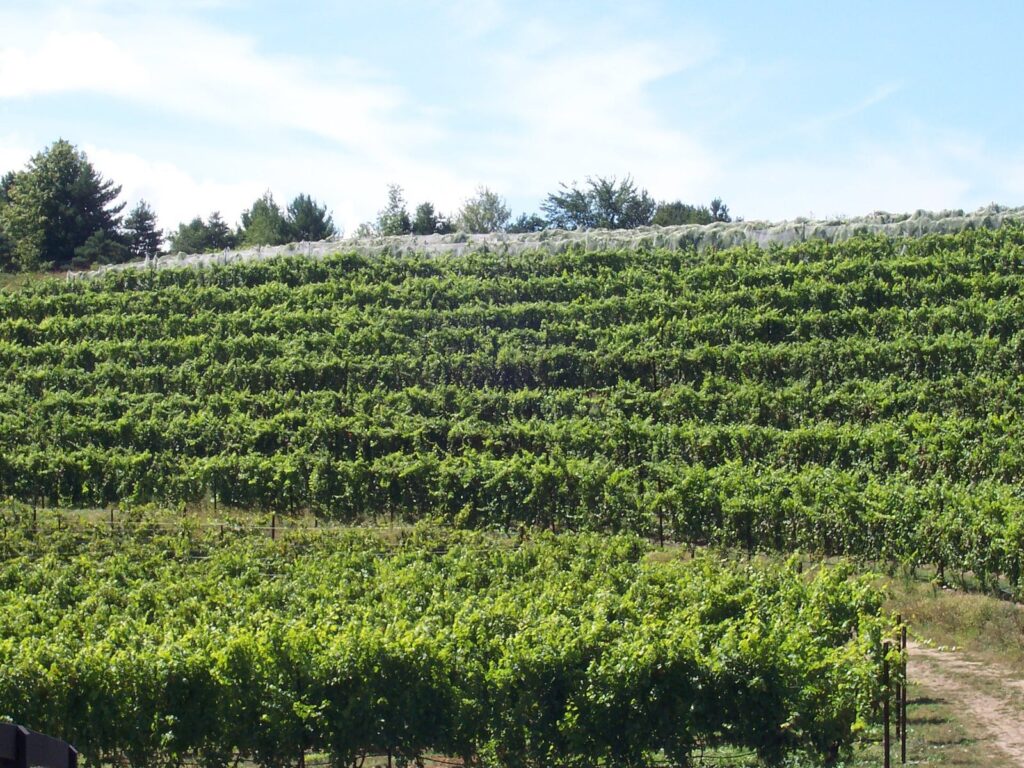
Leelanau is the big one: 23 wineries on the trail, spread across a wine region of about 330 square miles, with small towns (Suttons Bay, Leland, Northport, Lake Leelanau) between them. It takes more driving than Old Mission and rewards it with variety, from estate wineries with long tasting bars to small farm operations. It also pairs naturally with the rest of the peninsula: Leland’s Fishtown, the lighthouse at the peninsula’s tip and, on the west side, Sleeping Bear Dunes.
The trail’s current members are 45 North, Amoritas, Aurora Cellars, Bel Lago, Black Star Farms, Blustone, Boathouse, Chateau Fontaine, Ciccone, Dune Bird, French Valley, Gilchrist, Good Harbor, Green Bird Organic Cellars, Laurentide, Leelanau Cellars, Nathaniel Rose, Rove Winery at the Gallagher Estate, Shady Lane, Silver Leaf, Soul Squeeze, Two K Farms and Verterra. A few anchors:
- Black Star Farms‘ flagship estate at 10844 East Revold Road, near Suttons Bay, is a full-service winery stop, with a tasting room, an inn and a 160-acre farm. Tasting-room hours are 11 a.m. to 5:30 p.m. Sunday through Thursday and 11 a.m. to 6 p.m. Friday and Saturday, and walk-ins are welcome without a reservation.
- Good Harbor Vineyards, at 34 South Manitou Trail in Lake Leelanau, is near the middle of the peninsula and can take larger parties.
- Rove Winery, on the Gallagher Estate, runs tastings, live music and a happy hour in season; check its site for current hours.
- Shady Lane Cellars went back on the market in September 2026 and remains on the trail’s list; check its site for hours, since ownership may change.
The trail also runs ticketed winter weekends. For 2027, Sips & Soups is January 22 to 24, Snow on the Vines is February 19 to 21, and the Mystery Vines Wine Hunt runs through March. Check lpwines.com for tickets and participating wineries.
How to do it: split the peninsula. Spend one day on the east side, around Suttons Bay and up toward Northport, and another in the middle and west, around Lake Leelanau and Leland. Trying to cover all of it in a day means more time in the car than at the bar.
Old Mission or Leelanau?
The two Traverse City trails get compared constantly, and they suit different trips.
| Old Mission Peninsula | Leelanau Peninsula | |
|---|---|---|
| Wineries on the trail | 10 | 23 |
| Size of the wine region | About 19,200 acres | About 330 square miles |
| From Traverse City | About 25 minutes to the village near the tip | About 20 minutes to Suttons Bay, 30 to Leland, 35 to Northport |
| Layout | One main road, M-37, plus Peninsula Drive along the bay | A web of county roads between small towns |
| Best for | A first visit, a half day, bay views | A full day or two, variety, pairing with Leland and Sleeping Bear |
| Stay at a winery | Chateau Chantal, Chateau Grand Traverse, Brys Estate’s guesthouse | Black Star Farms Inn |
With one day, do Old Mission: it’s close, compact and hard to get wrong. With two, do Old Mission first and Leelanau second, when you’ve got your bearings and can pick a side of the peninsula. With three or more, add a beach day at Sleeping Bear or a morning in Leland’s Fishtown, and you’ll go home having seen the region rather than just its tasting bars.
Southwest Michigan: the Lake Michigan Shore and Fennville
The southwest is the wine country closest to Chicago: Baroda is about 1 hour 40 minutes from downtown Chicago, Paw Paw about 2 hours 10 minutes and Fennville about 2 hours 20 minutes. It’s a different landscape from the north, rolling farm country with orchards, vineyards and fruit stands rather than bay views, and the wineries are spread across a larger area, so plan a loop rather than a single road.
It also pairs naturally with the beach towns. St. Joseph is about 20 minutes from Baroda and about 1 hour 45 minutes from Chicago, South Haven about 2 hours 5 minutes from Chicago, and Saugatuck about 2 hours 20 minutes, so you can swim in the morning and taste in the afternoon. Harbor Country, the string of small towns between the Indiana line and St. Joseph, adds galleries, antique shops and Journeyman’s distillery to the mix.
The Lake Michigan Shore Wine Trail
The trail’s 14 members are 12 Corners, Baroda Founders Wine Cellar, Cody Kresta, Contessa, Domaine Berrien, Fenn Valley, Filkins, Golden Muse, Hickory Creek, Lake Michigan Vintners, Lawton Ridge, Lemon Creek, Solasta and White Pine. Many of them cluster around Baroda and Berrien Springs, a short drive inland from St. Joseph. Lemon Creek Winery keeps tasting-room hours of 11 a.m. to 6 p.m. Monday through Friday, 10 a.m. to 6 p.m. Saturday and noon to 6 p.m. Sunday.
St. Julian, Tabor Hill and Round Barn
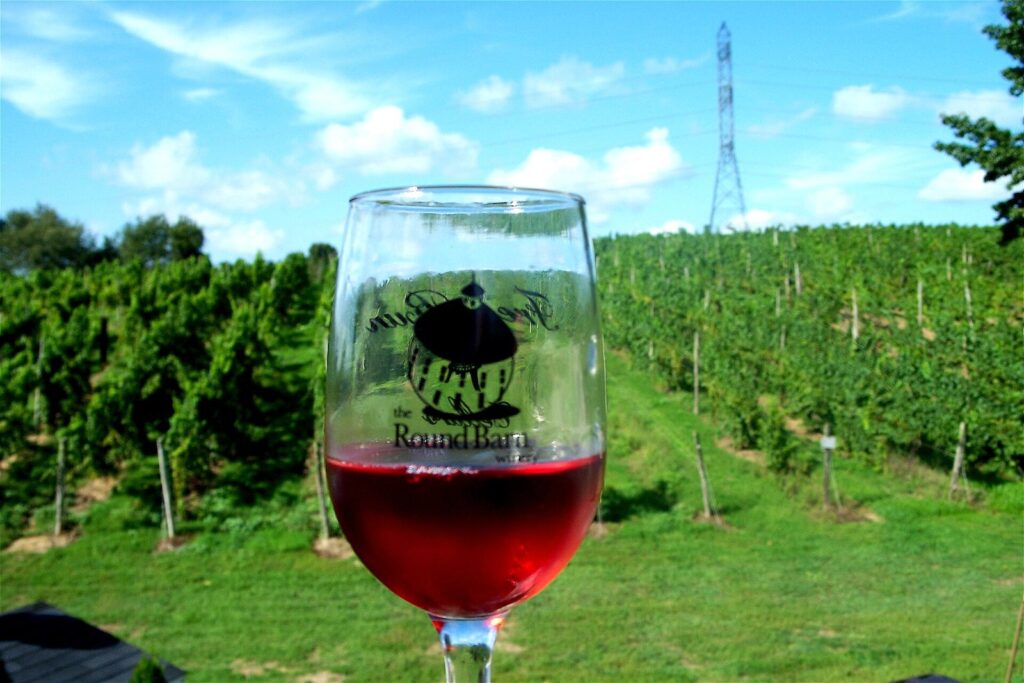
Some of the best-known names in the southwest aren’t on the trail. St. Julian Winery has made wine in Paw Paw since 1936; it traces its roots to a winery founded in Ontario in 1921, opened its first Michigan tasting room in 1949 and now runs seven tasting rooms around the state. Tabor Hill, near Buchanan, released two new estate wines in 2026, and Round Barn, in Baroda, is known for its historic round barn tasting room. Check each winery’s own site for current hours.
Fennville
Fennville was Michigan’s first AVA, in 1981, and Fenn Valley Vineyards is its best-known winery. It’s open year-round, 11 a.m. to 5 p.m. daily, for tastings and wine by the glass, with tours and group experiences for up to 10 people. Fennville sits a short drive inland from Saugatuck, so it fits neatly into a beach weekend.
Tip of the Mitt: Petoskey’s wine region
The Tip of the Mitt became Michigan’s fifth AVA in 2016, and at about 2,760 square miles it’s also the largest, covering Antrim, Charlevoix, Cheboygan, Emmet, Presque Isle and Alpena counties. The tasting rooms are concentrated around Petoskey and Little Traverse Bay, where the Petoskey Wine Region counts 14 wineries: Crooked Vine, Seasons of the North, Maple Moon, Petoskey Farms, Mackinaw Trail, Boyne Valley, Resort Pike, Walloon Lake, Rudbeckia, Spare Key, Blue Dot Farm, The Cellars at Royal Farms, Cellar 1914 and Vanderbilt Vines. Mackinaw Trail pours beer as well as wine.
The region sells a wine passport, with a deal at each participating winery; it doesn’t expire and you can buy it online or at the wineries. Many of its wineries are young and work with cold-hardy hybrid grapes, which makes this the trail for curious drinkers rather than collectors, and an easy add-on to a Petoskey or Harbor Springs weekend.
How to do it: stay in Petoskey or Harbor Springs, 12 minutes apart, and take the wineries in two or three short loops rather than one long one. Boyne City and Charlevoix are each about 20 minutes from Petoskey, and Traverse City is about 1 hour 15 minutes away, so the region also works as the last stop on a longer northern trip. Fall color and the late-summer weekends are the busiest times here, as they are farther south.
What Michigan wine tastes like
Think cool climate: bright acidity, moderate alcohol and fruit that tastes of apples, citrus and cherries rather than jam. The grapes and styles to look for:
- Riesling is the one Michigan is best known for, made everywhere from bone-dry to dessert-sweet. Ask for the dry ones if you think you don’t like Riesling.
- Chardonnay and Pinot Gris show up on almost every list, often unoaked or lightly oaked.
- Pinot Noir and Cabernet Franc are the reds that do best this far north: lighter, peppery and good with food. Big, heavy reds are not the state’s strength.
- Sparkling wine suits the climate, since grapes for bubbly are picked early with high acidity, and several northern wineries make it.
- Ice wine is made in the colder years from grapes left to freeze on the vine; it’s sweet, expensive and sold in small bottles.
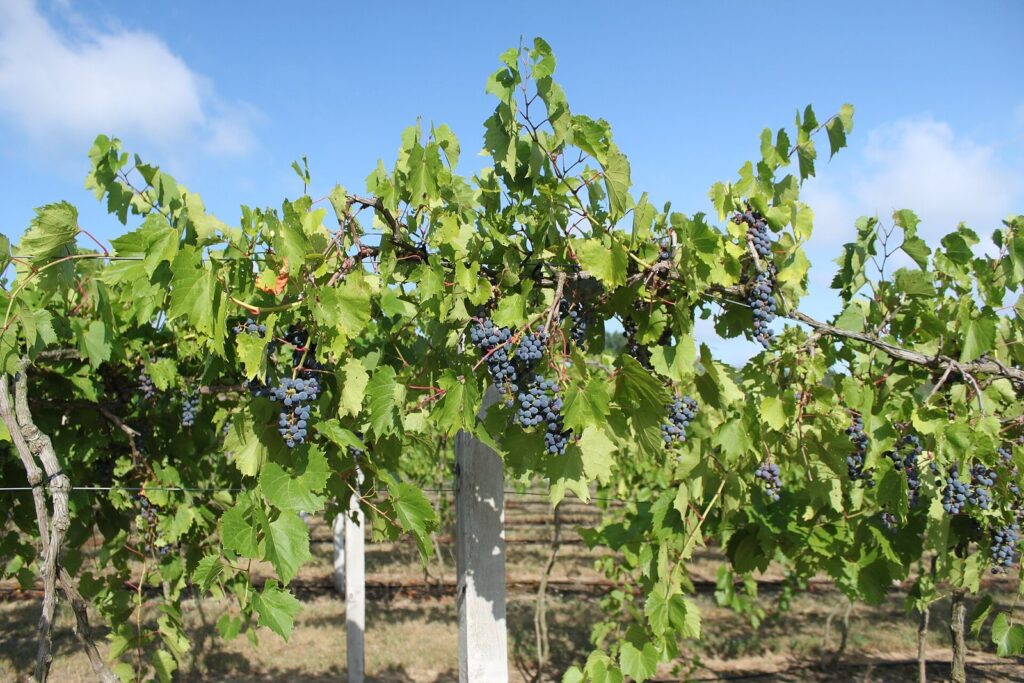
- Cold-hardy hybrids such as Frontenac and Marquette, bred for harsh winters, carry the newer wineries away from the lake and in the far north.
- Cherry and fruit wines are a northern Michigan specialty, from the same orchards that grow the state’s tart cherries.
How to read a Michigan wine label
Not every bottle sold at a Michigan winery is made only from Michigan grapes, and the label tells you which is which. Under federal labeling rules, a wine named for an AVA, such as Old Mission Peninsula or Lake Michigan Shore, must come at least 85% from grapes grown in that region. A wine labeled simply “Michigan” must be at least 75% Michigan-grown. Some wineries also bottle wines made partly from grapes or juice bought from other states, which is legal and common, and fruit wines made from cherries or apples follow their own rules.
If you want to taste the place, look for an AVA name or a single vineyard on the label, and ask in the tasting room which wines come from the winery’s own vines. Most staff are happy to walk you through it, and it’s the quickest way to understand why a Riesling from the Old Mission Peninsula tastes different from one grown near Lake Michigan’s southern shore.
Do Michigan wineries require reservations? Tasting-room know-how
Most don’t for two to four people on a weekday, but the rules tighten on fall weekends and for groups. A few wineries’ own policies show how much they vary:
- Reservations: Brys Estate strongly recommends booking online; Hawthorne encourages reservations but takes walk-ins; Mari Vineyards doesn’t require them; Black Star Farms welcomes walk-ins.
- Group size: Brys books up to 6 online and sends larger groups to its Lawn Bar; Mari asks parties of 10 or more to reserve; Fenn Valley’s tours and group experiences take up to 10 people. If you’re coming as a bachelorette party or on a bus, call each winery first.
- Fees: expect a charge per tasting or flight. Mari’s guided five-wine tasting was $24 a person in 2026; other wineries price their flights differently, so check each one’s site.
- Kids and non-drinkers: policies vary. Brys welcomes guests under 21; ask before you bring children or a designated driver to a busy weekend tasting.
- Getting around: the tasting rooms are on rural roads, and an afternoon of flights adds up. Pick a designated driver or book a tour. Brys runs a seasonal Wine Wagon tour of about two hours (check its site for 2027 dates), and Traverse City and southwest Michigan both have shuttle and tour operators; book with one that shows its current schedule and prices on its own site.
A practical pace is three or four wineries in a day, with lunch in the middle. Buy bottles as you go if you like something; many small producers sell only at the winery.
What a tasting day costs depends on how many stops you make and whether you buy. At Mari Vineyards’ 2026 prices, a five-wine guided tasting for two came to $48 before bottles, and a production tour added $20 a person. Multiply by three or four wineries, add lunch, and a driver or tour if you aren’t designating one of your own, and you have a realistic budget. Policies on crediting the tasting fee against bottle purchases differ, so ask at the counter.
When is the best time to visit Michigan wineries?
| Season | What it’s like | Plan for |
|---|---|---|
| Late June to August | Longest hours, patios open, lake weather; a busy season around Traverse City | Weekend crowds; book lodging early, especially around the Fourth of July |
| September and October | Harvest and fall color; among the most popular wine-country weekends | Reservations on Saturdays; weekdays are noticeably calmer |
| November to April | Quiet tasting rooms, winter hours, snow on the vines, ticketed trail weekends on the Leelanau Peninsula | Shorter hours and holiday closures; check each winery before you drive |
| May and early June | Bud break and blossoms, the trails before the summer crowds | Some seasonal hours still in effect |
If you can pick any time, go midweek in September: the harvest is on, the color is starting, the summer crowds have gone home, and you can walk into most tasting rooms without a booking.
Are Michigan wineries open in winter?
Many are, on shorter hours. Chateau Grand Traverse keeps winter hours from November 1 to May 1, Fenn Valley is open daily year-round, and Brys posts its holiday-season hours on its site. Winter is when the Leelanau trail runs its ticketed weekends (January 22 to 24 and February 19 to 21, 2027), and a snowy afternoon in a warm tasting room is a good way to see the peninsulas without summer traffic. Some wineries add fire pits or heated outdoor seating in winter; ask before you go rather than counting on it.
Where to stay among the vines
Several wineries rent rooms, which solves the driving question neatly:
- Black Star Farms Inn, on the 160-acre Suttons Bay estate.
- Chateau Chantal, a hilltop winery and bed-and-breakfast on Old Mission.
- Chateau Grand Traverse, with an inn on its Old Mission property.
- Brys Estate, which rents a guesthouse.
Otherwise, Traverse City is the base for both peninsulas, with every kind of lodging from bayfront motels to resorts, and in the southwest, St. Joseph, South Haven and Saugatuck put you on the beach and within a short drive of the wineries. For a romantic trip, our guide to Michigan resorts for couples covers the inns and lodges with spas and fine dining.
Flying in, Traverse City’s Cherry Capital Airport is the gateway to the northern wine country, with flights on several major airlines. From town, Suttons Bay is about 20 minutes and Old Mission village about 25, so a long weekend can work without a long drive at either end. For the southwest, most visitors drive from Chicago or Detroit.
Michigan cideries
Michigan grows a lot of apples, and hard cider has become a trail of its own. Two operating cideries worth the stop:
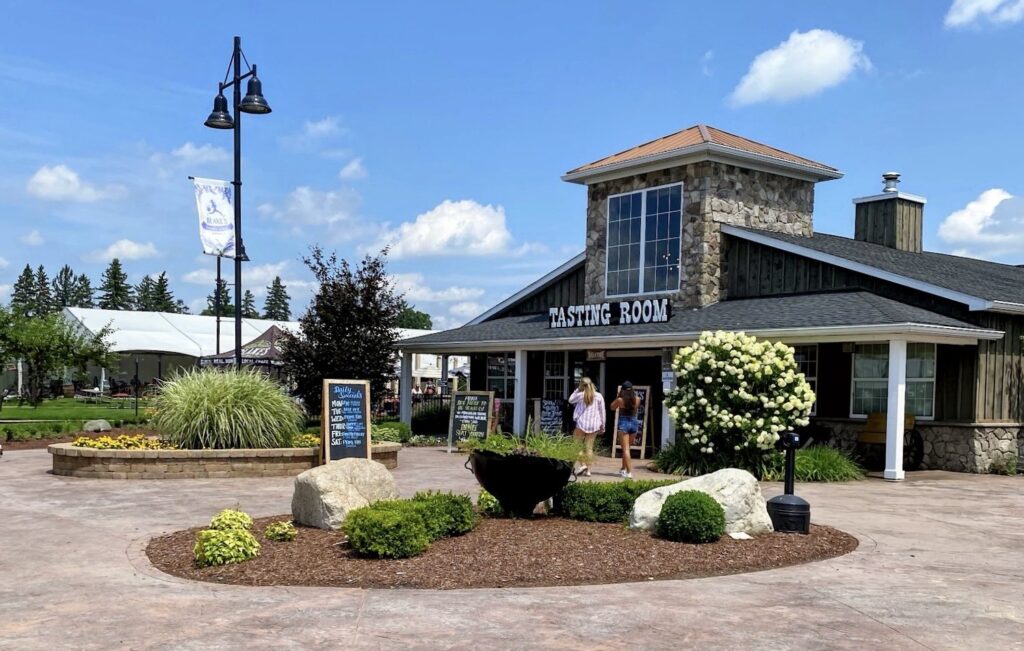
- Blake’s Hard Cider, at Blake’s Orchard & Cider Mill in Armada, north of Detroit, released a new cider in fall 2026.
- Tandem Ciders, near Suttons Bay on the Leelanau Peninsula, which fits easily into a wine day.
One change to note: Virtue Cider sold its Fennville farm and closed the tasting room there in April 2026, though its ciders are still sold in stores. Cider mills that press sweet cider and fry doughnuts in the fall are a separate Michigan tradition.
Michigan breweries, including the U.P.
Michigan is a beer state first. A 2026 regional report put the count at more than 400 breweries statewide, with about 240 Michigan Brewers Guild members. A few names that anchor a beer trip:
- Bell’s Brewery, with its Eccentric Cafe in downtown Kalamazoo and its production brewery in Comstock.
- Short’s Brewing in Bellaire, north of Traverse City, which won a silver medal at the 2026 Great American Beer Festival.
- Grand Rapids, which has enough breweries for a weekend on its own; see our guide to things to do in Grand Rapids.
Upper Peninsula breweries
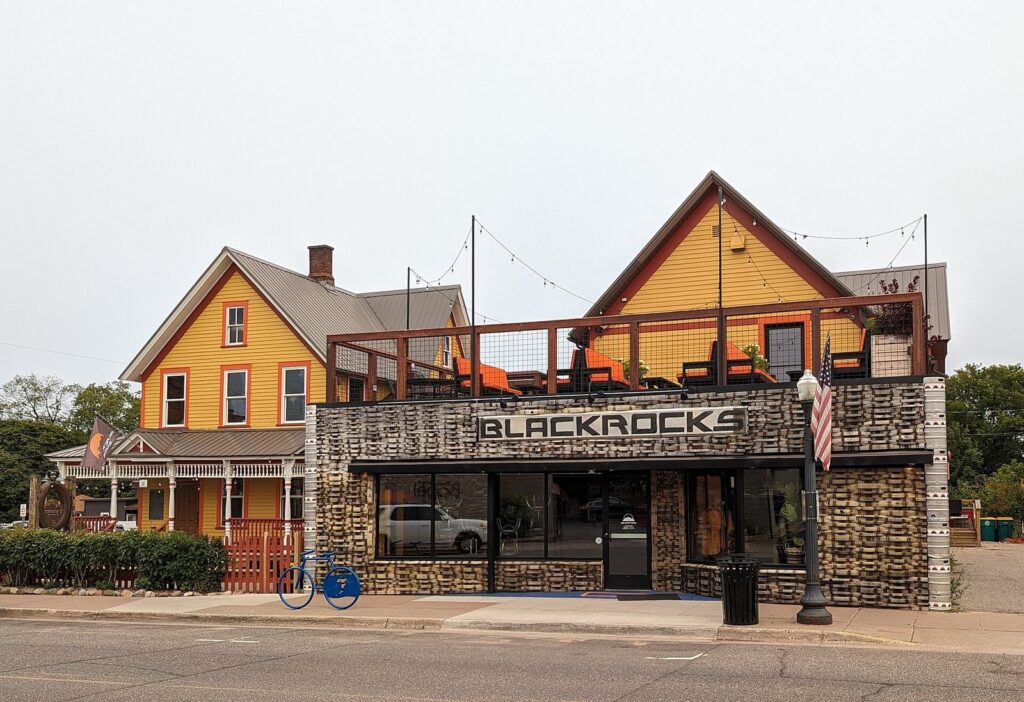
The U.P. has a small, loyal brewing scene built around its college and harbor towns. In Marquette, Blackrocks Brewery pours from a pair of converted houses, and Ore Dock Brewing, at 114 West Spring Street, runs a busy events calendar. In Houghton, Keweenaw Brewing Company has its taproom downtown, near the lift bridge.
The guild’s biggest winter event, the Winter Beer Festival, is on February 27, 2027; check mibeer.com for the location and tickets.
Beer also fits neatly around a wine trip. Bell’s Eccentric Cafe in Kalamazoo is about 25 minutes from Paw Paw and St. Julian, Short’s taproom in Bellaire is about 50 minutes from Traverse City, and Marquette’s breweries make an easy evening on an Upper Peninsula road trip. Traverse City itself has enough breweries and taprooms to fill a night after a day on the peninsulas.
Michigan distilleries
Craft distilling has grown alongside the wineries, and several distillers run tasting rooms worth adding to a wine weekend:
- Grand Traverse Distillery in Traverse City makes vodkas and whiskeys and runs tasting rooms.
- Journeyman Distillery in Three Oaks, in southwest Michigan’s Harbor Country, is housed in the old Featherbone Factory, where it also hosts markets and events through the year.
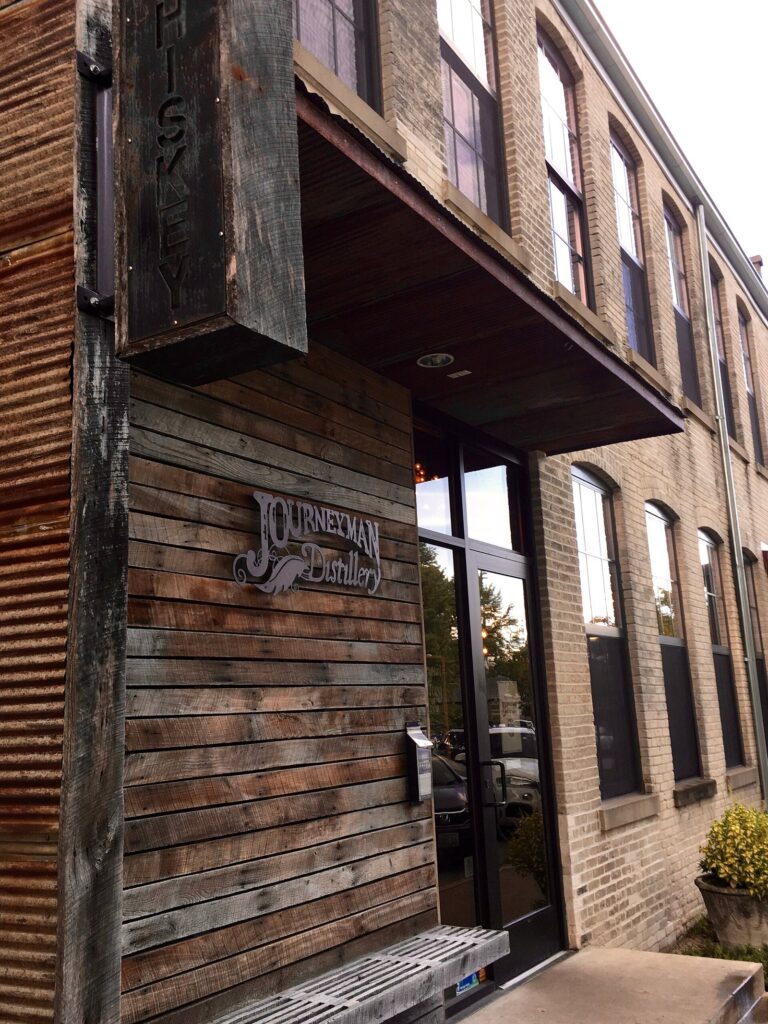
Three Oaks, in Harbor Country near the Indiana line, is well placed for the southwest wine trail, so a Saturday of wineries around Baroda can end with a cocktail at the distillery.
Three wine-country weekends
Traverse City: two peninsulas, two days
- Day 1, Old Mission: up M-37 to Chateau Grand Traverse and Brys, lunch on the peninsula, then Mari or Chateau Chantal and down Peninsula Drive along the bay.
- Day 2, Leelanau: Black Star Farms near Suttons Bay, a lunch stop in Suttons Bay, then Good Harbor or Rove, and sunset in Leland.
From Chicago: the Lake Michigan Shore
- Day 1: drive to Baroda (about 1 hour 40 minutes, plus an hour on the clock), with three trail wineries around Baroda and Berrien Springs, then dinner in St. Joseph.
- Day 2: Lemon Creek and the fruit stands, then St. Julian in Paw Paw, or Journeyman in Three Oaks on the way back toward Chicago.
Petoskey with a passport
- One or two days: buy the Petoskey Wine Region passport and work through the wineries around Little Traverse Bay, with a night in Petoskey or Harbor Springs.
Which Michigan wine trail is best?
For a first trip: Old Mission. Ten wineries along one road, bay views from most of them and Traverse City at the peninsula’s base.
For variety and a long weekend: Leelanau. Twenty-three wineries, small towns between them and Sleeping Bear next door.
From Chicago: the Lake Michigan Shore. The shortest drive, and an easy pairing with a southwest Michigan beach weekend.
For something different: the Tip of the Mitt. Young wineries, hybrid grapes and a passport that rewards a slow pace around Petoskey.
What to skip
Skip driving yourself between tastings. Rural roads, deer at dusk and four flights in an afternoon don’t mix. Use a designated driver, a tour or a winery inn.
Skip fall Saturdays without a plan. Late September and October weekends are among the busiest days of the year. Reserve, or go on a weekday.
Skip both peninsulas in one day. Old Mission and Leelanau are each a day. Rushing both means more time in traffic in Traverse City than in tasting rooms.
Skip the Fennville cider farm in older lists. Virtue Cider’s tasting room there closed in April 2026.
Skip counting on winter extras. Igloos and fire pits come and go from year to year. Ask the winery before you plan a trip around one.
Michigan wineries FAQ
Where is Michigan wine country?
Mostly along Lake Michigan. The two best-known areas are the Old Mission and Leelanau peninsulas around Traverse City, with 10 and 23 wineries on their trails, and the Lake Michigan Shore in the southwest, around Baroda, Berrien Springs and Paw Paw, with 14 on its trail. Smaller clusters sit around Fennville near Saugatuck and around Petoskey in the Tip of the Mitt region.
How many wineries are in Michigan?
WineAmerica’s 2025 economic report counts 279 wine producers in Michigan, though not all of them run tasting rooms. For trip planning, the trail lists are more useful: the Old Mission trail lists 10 wineries, Leelanau 23, the Lake Michigan Shore 14 and the Petoskey Wine Region 14, which adds up to about 60 tasting rooms in the main wine areas.
What wine is Michigan known for?
Riesling, above all, in styles from bone-dry to sweet. Michigan also makes good Chardonnay, Pinot Gris, sparkling wine and lighter reds such as Pinot Noir and Cabernet Franc, plus ice wine in cold years. In the far north and away from the lake, wineries rely more on cold-hardy hybrid grapes such as Frontenac and Marquette, and cherry wines are a northern specialty.
Which Michigan wine trail is best?
For a first trip, the Old Mission Peninsula: ten wineries along one road, bay views and Traverse City close by. Leelanau has more variety, with 23 wineries and small towns between them, but needs more driving. From Chicago, the Lake Michigan Shore trail is the shortest trip, and the Petoskey Wine Region suits a slower, more casual weekend up north.
Do Michigan wineries require reservations?
Policies vary by winery. Many take walk-ins for small groups on weekdays, but reservations are recommended on fall weekends and for groups. Brys Estate books parties of up to 6 online, Mari Vineyards asks groups of 10 or more to reserve, and Black Star Farms welcomes walk-ins. If you’re traveling in a large group or by bus, call each winery first.
What is the best time of year to visit Michigan wineries?
September and October bring the harvest and fall color, but also the busiest weekends, so go midweek if you can. Summer has the longest hours and patio weather. Winter is quiet, with shorter hours and ticketed trail weekends on the Leelanau Peninsula, and late spring is pleasant before the summer crowds arrive.
Are Michigan wineries open in winter?
Many are, on reduced hours. Chateau Grand Traverse keeps winter hours from November 1 to May 1, and Fenn Valley in Fennville is open daily all year. The Leelanau Peninsula Wine Trail runs winter weekends on January 22 to 24 and February 19 to 21, 2027. Check each winery’s hours before you drive, since some close for holidays or midweek in the off-season.
Related Michigan guides
Sources and verification
Everything on this page was checked on November 19, 2026 against the organizations listed below. The guide is compiled from their published information and claims no first-hand visits.
- Old Mission Peninsula Wine Trail (member wineries)
- Leelanau Peninsula Wine Trail (member wineries and 2027 events)
- Lake Michigan Shore Wine Trail (member wineries)
- Petoskey Wine Region (Tip of the Mitt wineries and passport)
- Code of Federal Regulations, 27 CFR part 9 (American Viticultural Areas)
- Michigan Brewers Guild (2027 Winter Beer Festival and brewery map)
We also used the wineries’ own sites for hours, fees and reservation rules (Brys Estate, Mari Vineyards, Chateau Grand Traverse, Black Star Farms, Hawthorne, Good Harbor, Fenn Valley, Lemon Creek and St. Julian), WineAmerica’s 2025 Michigan economic report, the Alcohol and Tobacco Tax and Trade Bureau’s AVA list, and OpenStreetMap-based routing for drive times.
Michigan Tourism Guide is an independent publication. It is not affiliated with Pure Michigan or any agency or business named here.
Photo credits
- Old Mission Peninsula vineyard (featured image): photo by Mcdalese, Wikimedia Commons (CC BY-SA 4.0)
- Grand Traverse County orchards and vineyards: photo by Photo by Lynn Betts, USDA Natural Resources Conservation Service., Wikimedia Commons (public domain)
- Leelanau Peninsula vineyard: photo by Iulus Ascanius at English Wikipedia, Wikimedia Commons (public domain)
- Round Barn, Baroda: photo by Joe M500, Wikimedia Commons (CC BY 2.0)
- Frontenac grapes: photo by Dwight Burdette, Wikimedia Commons (CC BY 3.0)
- Blake's Hard Cider, Armada: photo by DUBYA18, Wikimedia Commons (CC BY-SA 4.0)
- Blackrocks Brewery, Marquette: photo by The ed17, Wikimedia Commons (CC BY-SA 4.0)
- Journeyman Distillery, Three Oaks: photo by Kefacho, Wikimedia Commons (CC BY-SA 4.0)