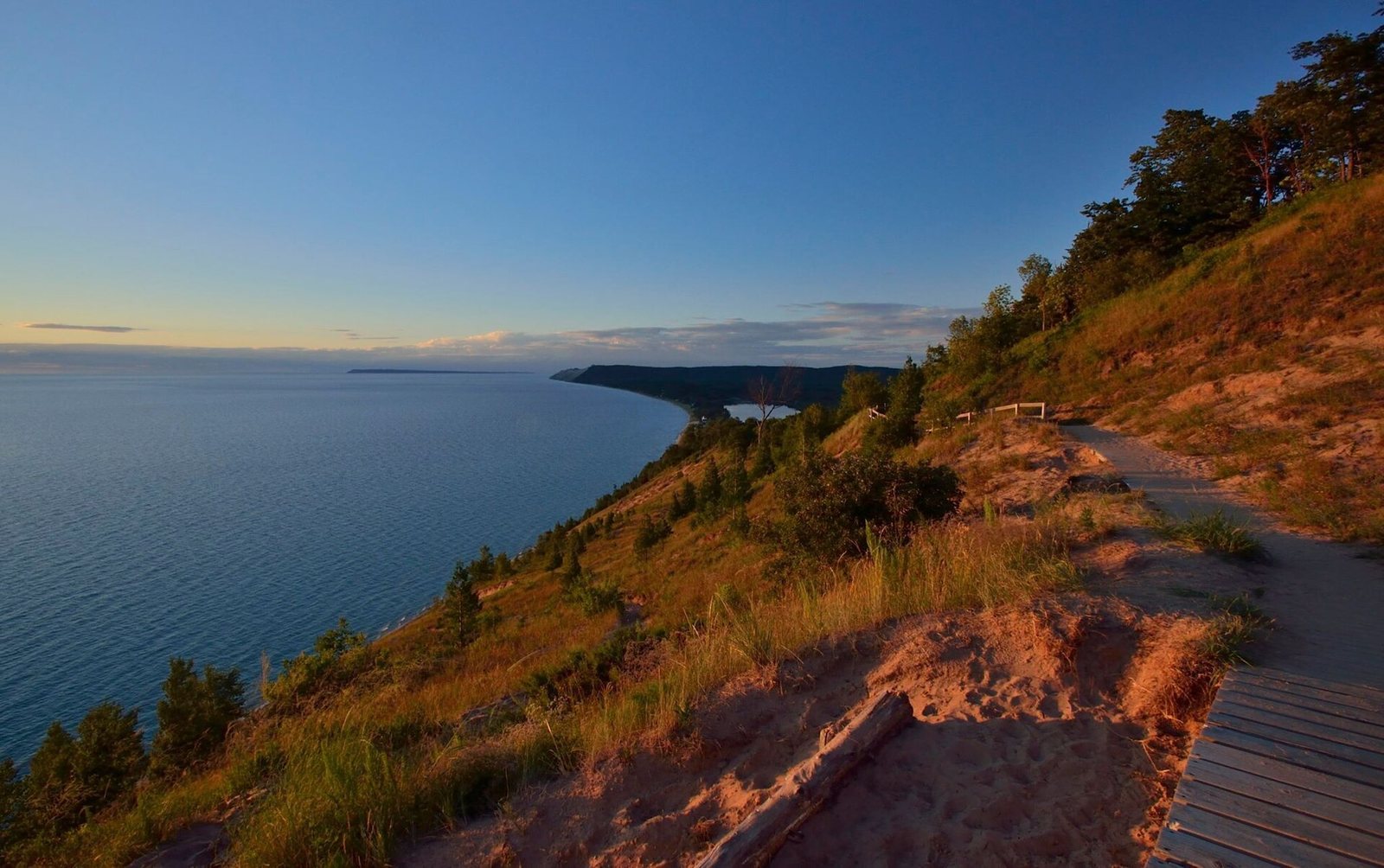
At stop 9 on the Pierce Stocking Scenic Drive, a wooden platform hangs over a slope of sand that falls about 450 feet to Lake Michigan, and a sign warns visitors not to get stuck at the bottom, because rescues cost $3,000. It’s the most famous warning at Sleeping Bear Dunes, and a fair introduction to the place: the scale is bigger than people expect, the sand is harder going than it looks, and the reward for respecting both is some of the best scenery in the Midwest.
Sleeping Bear Dunes National Lakeshore covers 71,318 acres along the northwest coast of Michigan’s Lower Peninsula, west of Traverse City: 65 miles of Lake Michigan shoreline, including 35 on the mainland, with perched dunes on glacial bluffs, beaches, inland lakes, hardwood forest and two offshore islands, North and South Manitou, which are closed to visitors in 2026.
The short answer: buy a $25 vehicle pass, good for seven days and paid by card only (2026), then do the three essentials: the Dune Climb, the Pierce Stocking Scenic Drive and a bluff hike such as Empire Bluff. Plan on two days for the park and three to add the Leelanau and Benzie towns. In summer, arrive before 10 a.m.; about 72% of the park’s 1.6 million annual visits come in June, July and August.
The details below were checked September 23, 2026 against the operators’ and agencies’ own websites, including National Park Service fees, pet rules and current closures.
On this page: At a glance · Is it a national park? · Fees and passes · The Dune Climb · Pierce Stocking Scenic Drive · When to go · Best hikes · Beaches and swimming · Dogs · Camping · Heritage Trail · With kids · Manitou Islands · Dunes, forests and wildlife · Glen Haven and Port Oneida · Leelanau and Benzie towns · Where to stay · Getting there · Practical tips · Winter · How many days · What to skip · FAQ
Sleeping Bear Dunes at a glance
| What you need to know | Details (checked September 23, 2026) |
|---|---|
| What it is | A national lakeshore managed by the National Park Service since 1970: 71,318 acres, 65 miles of Lake Michigan shoreline (35 mainland), about 105 miles of trails |
| Where | Leelanau and Benzie counties, northwest Lower Peninsula; the Philip A. Hart Visitor Center is in Empire, under an hour west of Traverse City |
| Entry fee (2026) | $25 per private vehicle for 7 days; $20 per motorcycle; $15 per person on foot or bike (16 and older); $45 annual park pass; card only at in-park locations |
| Visitors | 1,601,747 recreation visits in 2025; 72% in June, July and August |
| The essentials | The Dune Climb, the 7.4-mile Pierce Stocking Scenic Drive, Empire Bluff Trail, Glen Haven, a Lake Michigan beach |
| Camping | 9 campgrounds with 357 sites in all; the main drive-in campgrounds are D.H. Day (81 sites) and Platte River (179 sites), reservable up to six months ahead |
| Closed in 2026 | North and South Manitou Islands (all facilities, docks and utilities); the Glen Haven Cannery Boat Museum |
| Drive to Empire | About 2 h 35 min from Grand Rapids, 4 h 25 min from Detroit, 5 h 20 min from Chicago |
| Time needed | 2 days for the park; 3 to 4 with the Leelanau and Benzie towns |
Is Sleeping Bear Dunes a national park?
Not technically, though it works like one. Sleeping Bear Dunes is a national lakeshore, a unit of the National Park System managed by the National Park Service, with rangers, a visitor center, entrance fees and the same federal passes you’d use at Yellowstone. The difference is the designation: Congress created national lakeshores, like national seashores, to protect stretches of coast that often include private land, villages and roads. Michigan’s only national park proper is Isle Royale, in Lake Superior.
So when people search for a “Michigan dunes national park,” this is almost always the place they mean. It has earned the attention: viewers of ABC’s Good Morning America voted it the Most Beautiful Place in America in 2011, and it draws more than 1.6 million recreation visits a year.
The lakeshore was established in 1970 after a long local fight over how much private land it should include, and its visitor center in Empire carries the name of Philip A. Hart, the Michigan senator who championed the park in Congress. That history explains the patchwork you’ll notice on a map: villages, farms and private cottages sit inside and alongside the park boundary, which is part of the area’s appeal.
How much does it cost to get into Sleeping Bear Dunes?
| Pass (2026) | Price | Good for |
|---|---|---|
| Private vehicle | $25 | 7 days, everyone in the car |
| Motorcycle | $20 | 7 days |
| Per person (walking or biking in, 16 and older) | $15 | 7 days |
| Sleeping Bear Dunes annual pass | $45 | 12 months, this park only |
| America the Beautiful annual pass | $80 for U.S. residents, $250 for non-residents | All federal fee areas for a year |
Payment is cashless: in-park locations take cards only, and you can also buy passes online through Recreation.gov before you arrive. Keep the pass on your dashboard. It covers the Dune Climb, the Pierce Stocking Scenic Drive, the beaches, trailheads and Glen Haven; camping is charged separately. If you’re also going to Pictured Rocks or another federal site in the same year, the America the Beautiful pass can pay for itself. The park service changed its fee-free days in 2026, so check the current list if you’re hoping to visit free.
What a Sleeping Bear trip costs
The park itself is cheap for what you get: one $25 vehicle pass covers a carload for a week of dunes, beaches, trails and the scenic drive (2026). The bigger costs are the ones around it. Campsites are priced per night on Recreation.gov; tube and kayak rentals on the Platte and Crystal rivers, bike rentals in Glen Arbor and ferry-free island plans (none in 2026) come on top; and lodging in Glen Arbor, Empire and the Leelanau villages is priced for summer demand. A family that camps, packs picnics and sticks to the free trails and beaches can have a very inexpensive week. The same family in a Glen Arbor cottage in July is budgeting for one of the pricier weeks of their summer.
The Dune Climb: how hard is it, and how long does it take?
The Dune Climb, off M-109 between Glen Arbor and Glen Haven, is the park’s signature experience: a steep face of loose sand that you climb on hands and feet if you have to, with Glen Lake spread out behind you. Most people reach the top of the first pitch in 10 to 30 minutes, depending on fitness, age and how often they stop to laugh at each other. Running back down takes about a minute and is the best part.
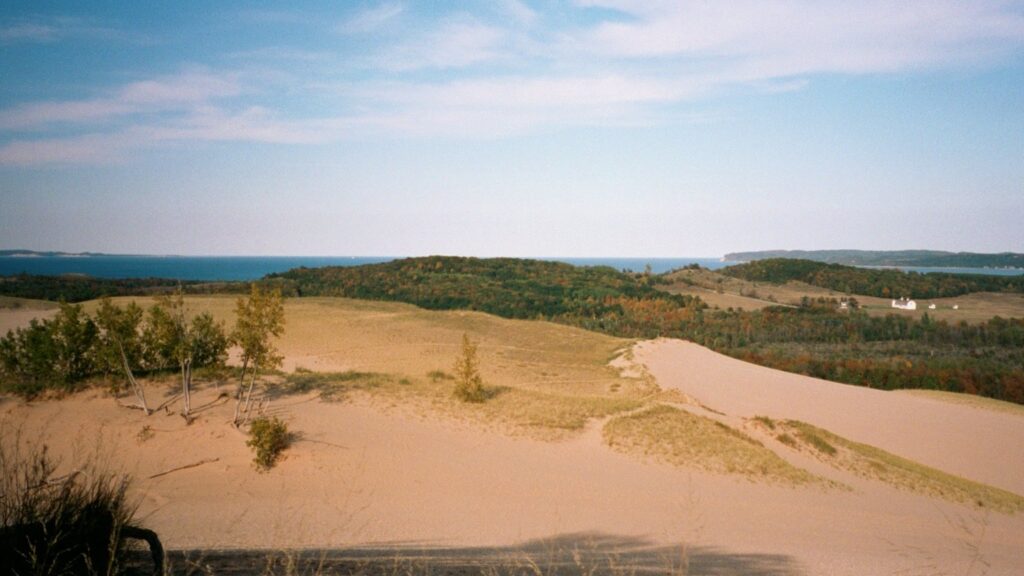
What catches people out is that the top of the climb isn’t the lake. From the crest, the Dunes Trail continues over a series of rolling dunes to Lake Michigan and back, about 3.5 miles round trip through open sand with no shade and no water. It takes most hikers three to four hours, and in July heat it’s a genuinely hard walk. Carry plenty of water, wear shoes (the sand can burn bare feet by midday), and turn around early if anyone in your group is flagging.
The rescue-cost question
The famous $3,000 figure doesn’t come from the Dune Climb. It comes from the Lake Michigan Overlook, stop 9 on the Pierce Stocking Scenic Drive, where people slide down the 450-foot bluff to the water and then can’t climb back. The Glen Lake Fire Department, which handles those calls, charges about $3,000 for the rope rescues needed to haul people back up, and signs at the overlook say so. After the signs went up, reported rescue calls fell from 31 in 2017 to 11 in the summer of 2023. The simple rule: don’t go down the bluffs at the scenic drive overlooks. At the Dune Climb, the danger is heat and exhaustion on the long trail to the lake, so turn back before you run out of water or energy.
Tips for the Dune Climb
- Go early or late. Before 10 a.m. or after 5 p.m. the sand is cooler, the light is better and the parking lot has space.
- Leave the dog at home. Pets aren’t allowed on the face of the Dune Climb.
- Bring more water than you think. There’s none beyond the parking area.
- Protect your gear. Blowing sand gets into cameras and phones; a zip-top bag helps.
The Pierce Stocking Scenic Drive
The Pierce Stocking Scenic Drive, named for the lumberman who built it in the 1960s, is a 7.4-mile paved loop off M-109 with a dozen numbered stops. It’s the easiest way to see the park’s big views without a long hike, and many visitors rank it above the Dune Climb.
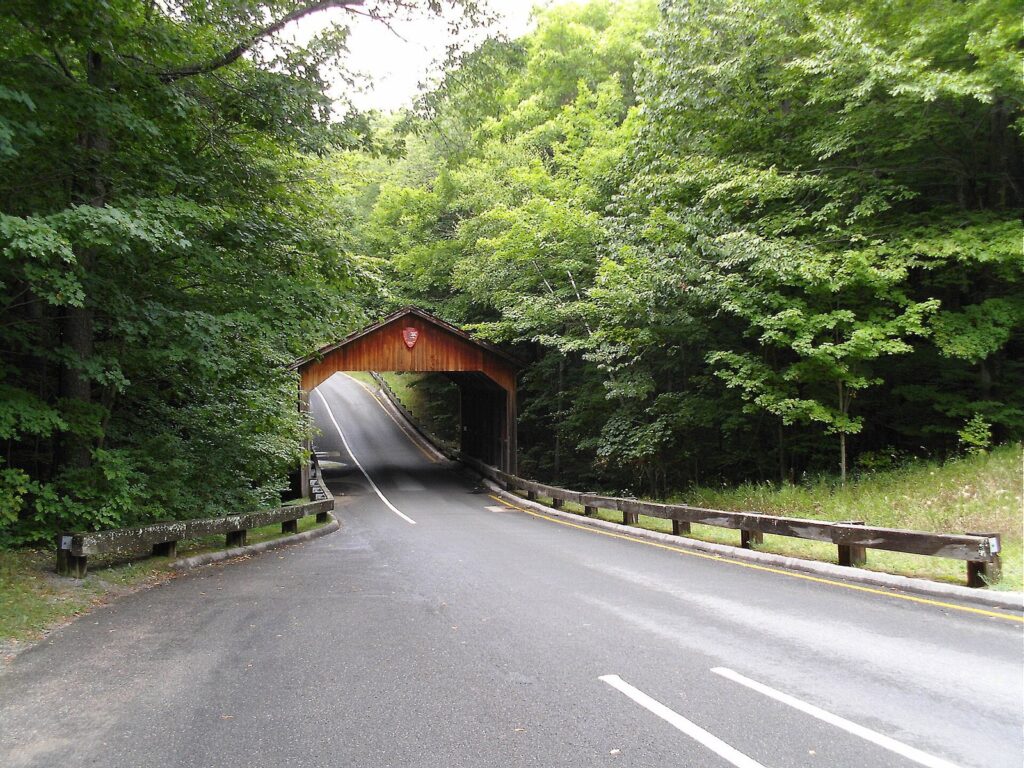
- The covered bridge and forest stretch: the first part of the loop winds through beech-maple forest.
- The Glen Lake overlooks: early stops look east over Glen Lake and the countryside around it.
- The Cottonwood Trail: a 1.5-mile loop through open dunes, the best short dune walk on the drive, with leashed dogs allowed.
- The Lake Michigan Overlook (stop 9): the platform 450 feet above the lake, the view on most postcards and the site of the rescue warnings. Stay on the platform.
- The Sleeping Bear Dune Overlook (stop 10): a short walk to the view of the remnant of the dune that gave the park its name.
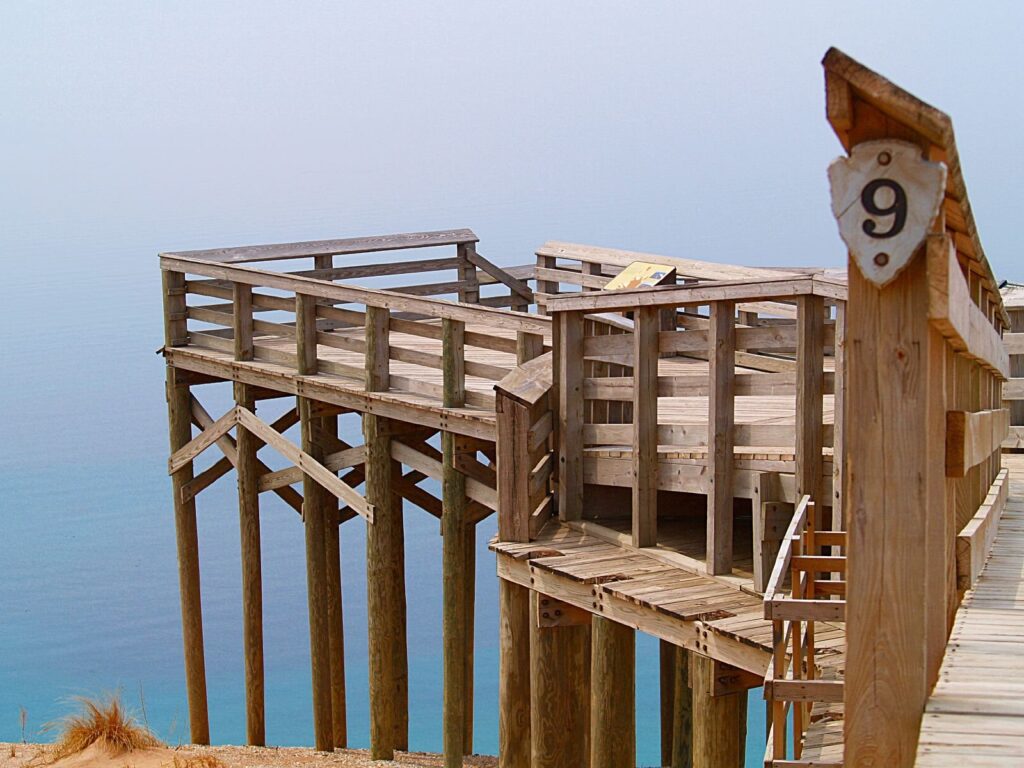
Allow at least an hour with stops, and more at sunset, when the Lake Michigan Overlook is at its best. The drive is popular with cyclists, so watch for bikes on the hills. It closes to cars for the winter, when it becomes a route for cross-country skiers and snowshoers.
When to go, and how to beat the crowds
Sleeping Bear had 1,601,747 recreation visits in 2025, and 72% of them came in June, July and August. National search interest peaks in early August, around August 2-8, which matches what the parking lots tell you. The rest of the year is quieter than you’d expect.
| Season | What it’s like | Crowds |
|---|---|---|
| Late June to August | Warm days, swimmable (if cold) Lake Michigan water, everything open | Heavy; lots fill by late morning |
| September | Warm days, cool nights, the lake still swimmable early in the month | Moderate, easing after Labor Day |
| October | Fall color along M-22 and around Glen Lake, usually best around mid-month | Busy on color weekends |
| November to March | Snow, cross-country skiing and snowshoeing; the scenic drive closed to cars | Light |
| April to May | Spring wildflowers in the forests, cold water, quiet trails | Light |
In summer, the fix is timing. Do the Dune Climb and the scenic drive before 10 a.m., spend midday on a beach or in Glen Arbor, and come back to the overlooks for sunset. Weekdays are noticeably calmer than weekends, and the southern end of the park, around the Platte River, is quieter than the Glen Arbor side.
Fall color on M-22 and around Glen Lake
October is Sleeping Bear’s second season. The hardwood forests on the bluffs and around Glen Lake usually peak around the middle of the month, often a little later than inland areas because the lake keeps the shore mild. M-22 through Glen Arbor and up the Leelanau Peninsula, the Pierce Stocking Scenic Drive’s forest stretch and the Alligator Hill and Empire Bluff trails are the obvious ways to see it. Weekdays are quiet; color weekends bring a second rush of visitors, and farm stands along the way sell apples, cider and pumpkins.
The best hikes at Sleeping Bear Dunes
| Trail | Distance | What you get | Dogs |
|---|---|---|---|
| Empire Bluff | About 1.5 miles round trip | A forest walk to a boardwalk on a high bluff above Lake Michigan; the best short hike in the park | Leashed dogs allowed |
| Pyramid Point | About 2.7 miles as a loop | A climb to a bluff-top lookout over Lake Michigan and the Manitou Passage | Leashed dogs allowed |
| Sleeping Bear Point | About 2.8 miles as a loop | Open dunes, ghost forests and beach near Glen Haven | No pets April 15 to August 15 |
| Cottonwood Trail | 1.5-mile loop | A short dune walk off the scenic drive | Leashed dogs allowed; no winter access |
| Dunes Trail | About 3.5 miles round trip | From the Dune Climb over open dunes to Lake Michigan; hot and strenuous | No pets on the Dune Climb |
| Alligator Hill | Longer loops | Hardwood forest and overlooks of Glen Lake and the Manitou Islands | Check current rules |
For a first visit, Empire Bluff is the one not to miss: short, mostly shaded and ending at one of the best views on the Great Lakes. Pyramid Point is the pick for a slightly longer walk with fewer people. Sleeping Bear Point gives you the dune experience without the Dune Climb crowds. Whatever you choose, carry water, stay on marked trails on the dunes, and keep back from bluff edges, which are sand and can give way.
Beaches and swimming at Sleeping Bear Dunes
Yes, you can swim, and the beaches are one of the park’s great pleasures: long, sandy and backed by bluffs and dunes. The water is Lake Michigan’s, which means cool into July and clear on calm days. The most popular choices:
- North Bar Lake: a shallow, warmer inland lake separated from Lake Michigan by a strip of sand, so you can swim in calm water and walk a few steps to the big lake. A family favorite. No pets.
- Glen Haven Beach: next to the historic village, with views of Sleeping Bear Bay.
- Esch Road Beach: a quieter stretch south of Empire near Otter Creek.
- Platte Point Beach: where the Platte River meets Lake Michigan, with shallow river water that’s a hit with small children. Floating the lower Platte in a tube or kayak is a summer classic.
- Good Harbor Bay: a long, sandy bay at the north end of the park, quieter than the Glen Arbor side.
- Empire’s village beach: a public beach in town on a strip of land between Lake Michigan and South Bar Lake, handy for an evening swim close to the visitor center.
Swimming safety
There are no lifeguards on the park’s beaches. Lake Michigan builds big waves when the wind blows onshore, and rip currents can form on any Great Lakes beach, especially near river mouths, sandbars and piers. Check posted beach flags and forecasts where they’re available, stay out of the water when waves are high, keep children within arm’s reach, and if you’re caught in a current, swim parallel to shore before heading in. Cold water is its own hazard early in the season; get in slowly.
Paddling the Platte and Crystal rivers
Two gentle rivers give families an easy way onto the water. The lower Platte River, at the south end of the park, is a slow, shallow float through woods and marsh to Lake Michigan at Platte Point, one of the classic summer outings in northern Michigan; outfitters near Honor rent tubes, kayaks and canoes and run shuttles. The Crystal River, near Glen Arbor, winds from Glen Lake toward Lake Michigan through cedar and dune country and is popular with kayakers. Both are calm enough for beginners in normal summer conditions, but take life jackets, watch for low branches and check water levels after heavy rain. Paddling on open Lake Michigan is a different matter: wind and waves build quickly, so leave it to experienced sea kayakers on calm days.
Are dogs allowed at Sleeping Bear Dunes?
Yes, in specific places, and the rules are detailed enough to check before you go. Pets must be on a leash no longer than six feet and under control at all times.
- Allowed year-round: the Empire Bluff, Pyramid Point and Cottonwood trails (Cottonwood has no winter access), and set stretches of beach: from Esch Road Beach north to the park boundary in Empire; Empire Beach north to the south end of North Bar Lake; Glen Haven Beach east to the boundary in Glen Arbor; from the boundary north of Glen Arbor around Pyramid Point to Bohemian Road; and from Good Harbor Trail Road to the park’s northern boundary.
- Never allowed: the face of the Dune Climb, the North Bar Lake access, the Maritime Museum grounds and its beach access, and several other beach stretches.
- Seasonal closures (April 15 to August 15): the southern beaches from Esch Road south, Glen Haven Beach west to the Maritime Museum, and the Sleeping Bear Point Trail and its beach access, largely to protect nesting shorebirds.
In practice, Empire Bluff and Pyramid Point are the best dog hikes, and the beaches around Empire and north of Glen Arbor are the best dog beaches. Bring water for the dog, too; hot sand and long dune walks are hard on paws.
Camping at Sleeping Bear Dunes
The park has nine campgrounds with 357 sites in all, but most campers use the two drive-in campgrounds on the mainland.
- D.H. Day Campground: 81 wooded sites near Glen Arbor, a short walk from Lake Michigan. It’s the rustic option, with reservations required from May 15 to October 15; campers can use the showers at Platte River.
- Platte River Campground: 179 sites near the southern end of the park, about 17 miles south of D.H. Day on M-22, with flush toilets and hot showers. It’s the better choice for families who want more facilities.
Reservations open on Recreation.gov (or by phone at 1-877-444-6777) up to six months ahead for arrivals from May 1 to October 15, and summer weekends fill quickly, so book the day your window opens. Your park entrance pass is separate from the camping fee. The mainland also has hike-in backcountry sites for backpackers, with a permit. Camping on the Manitou Islands, normally a big draw, isn’t possible in 2026.
Biking the Sleeping Bear Heritage Trail
The Sleeping Bear Heritage Trail is a paved and crushed-stone path of about 22 miles that runs from Empire north through the park, past the Dune Climb, Glen Haven, Glen Arbor and the farms of Port Oneida, to Bohemian Road. It’s mostly gentle, with a few hills, and it’s the best way to see the park without fighting for parking. Families often ride the stretch between Glen Arbor and Glen Haven, which has cafes and ice cream at one end and a beach and museum at the other. Bike rentals are available in Glen Arbor and nearby towns in summer. A planned final extension north toward Good Harbor Bay hasn’t been built.
Sleeping Bear Dunes with kids
Few places in Michigan work better for children. The Dune Climb is a giant sandbox with a view, North Bar Lake and Platte Point have warm, shallow water, and the Heritage Trail is flat enough for young cyclists. A few tips make it smoother:
- Do the Dune Climb first thing. Young kids love the climb and the run down, but the sand gets hot by late morning. Treat the top of the first pitch as the goal; the 3.5-mile round trip to Lake Michigan is too much for most small children in summer heat.
- Pick the right beach. North Bar Lake and Platte Point Beach have calm, shallow water. On big-wave days, skip the open Lake Michigan beaches for swimming.
- Try the Junior Ranger program. Ask at the Philip A. Hart Visitor Center in Empire about the park’s Junior Ranger activities, which give kids a reason to explore and a badge at the end.
- Visit Glen Haven. The blacksmith shop, the maritime museum and the General Store make a good hour between beach sessions (open daily through October 12 in 2026).
- Float the Platte. A tube or kayak trip on the lower Platte is gentle enough for families with school-age children.
- Keep hikes short. The Cottonwood Trail and Empire Bluff are the right length for little legs.
The Manitou Islands in 2026
North and South Manitou, the two islands offshore, are normally the wild side of Sleeping Bear: South Manitou with its lighthouse, dunes and shipwreck, North Manitou with its backcountry camping. For the entire 2026 season, both are closed. The National Park Service is relocating the docks on both islands and repairing damage from storms and high water, and all facilities, docks and utilities are closed, including the South Manitou Island visitor center and lighthouse complex. The ferry from Leland isn’t running, and no reopening date had been published as of September 2026. If the islands are on your list, check the park’s news page before planning a 2027 trip.
Dunes, ghost forests and piping plovers: the nature behind the views
Sleeping Bear’s dunes aren’t the kind that rise straight from a beach. Most of them are perched dunes: sand blown up onto the tops of high glacial bluffs, left behind when the ice sheets retreated, so the dunes sit hundreds of feet above the water. That’s why the views are so high and why the slopes down to the lake are so steep. The wind is still moving sand today, burying trees in some places and uncovering old ones in others; on the Sleeping Bear Point Trail you can walk past “ghost forests” of bleached, dead trunks that the dunes buried long ago and have since exposed.
Behind the dunes, the park turns into beech-maple forest, inland lakes and marsh, which is where the fall color and spring wildflowers are. On the beaches, the park protects nesting piping plovers, small, endangered shorebirds that lay their eggs in the open sand in spring and early summer. The seasonal beach closures and pet restrictions from April 15 to August 15 exist largely for them; give fenced nesting areas a wide berth. On any walk, stay on marked trails through the dunes, where plants like marram grass hold the sand in place, and check for ticks after walking through grass and woods.
Glen Haven, Port Oneida and the story of the Sleeping Bear
The park’s name comes from an Anishinaabe legend. A mother bear and her two cubs swam across Lake Michigan to escape a forest fire on the western shore; the cubs fell behind and drowned and became the Manitou Islands, and the mother lay down on the bluff to wait for them, becoming the Sleeping Bear. The dune that looked like a resting bear has since worn away to a small remnant, which you can see from stop 10 on the scenic drive.
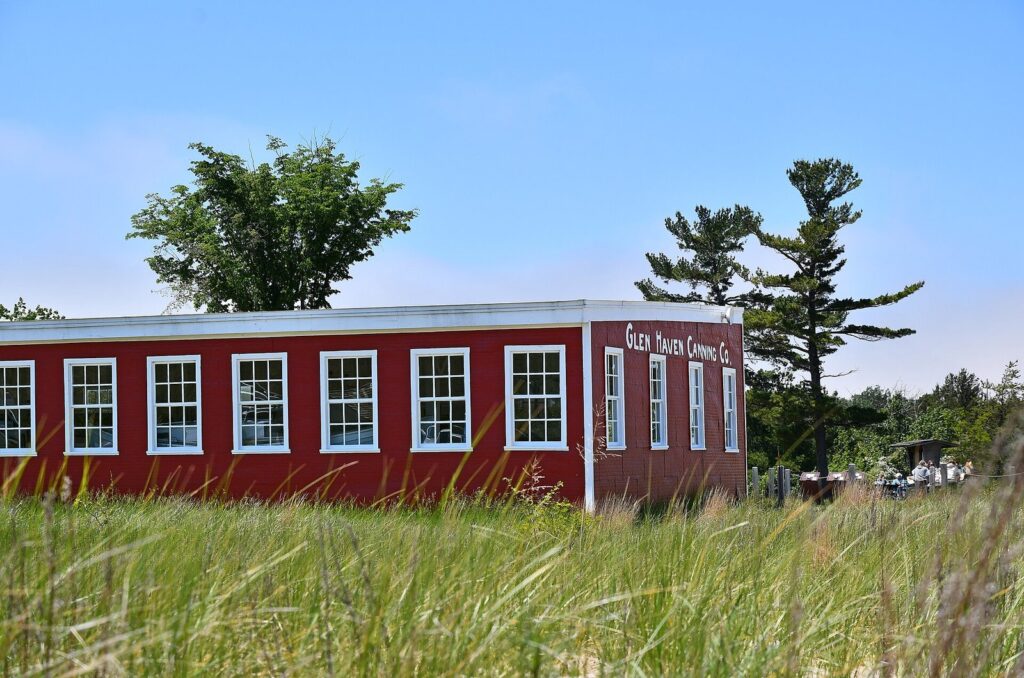
The human history is more recent and very visible. Glen Haven, at the foot of the bluffs, was a lumber and shipping village built around the business of D.H. Day, and the park keeps it as a historic village. In 2026, its Maritime Museum in the old lifesaving station, the Maritime Boathouse and the Blacksmith Shop are open daily from 11 a.m. to 5 p.m. through October 12, and the General Store is open; the Cannery Boat Museum is closed. North of Glen Arbor, the Port Oneida Rural Historic District preserves farmhouses and barns from the settlers who farmed these hills, and its Port Oneida Farms Heritage Center is open.
The Leelanau and Benzie towns: Glen Arbor, Leland, Frankfort and M-22
The national lakeshore is stitched into two counties full of small towns, and the best Sleeping Bear trips treat them as part of the visit. M-22 ties them together, following the Lake Michigan shore for more than 100 miles from Manistee north around the Leelanau Peninsula to Traverse City, and it’s the most famous road in this part of Michigan.
Glen Arbor and Glen Lake
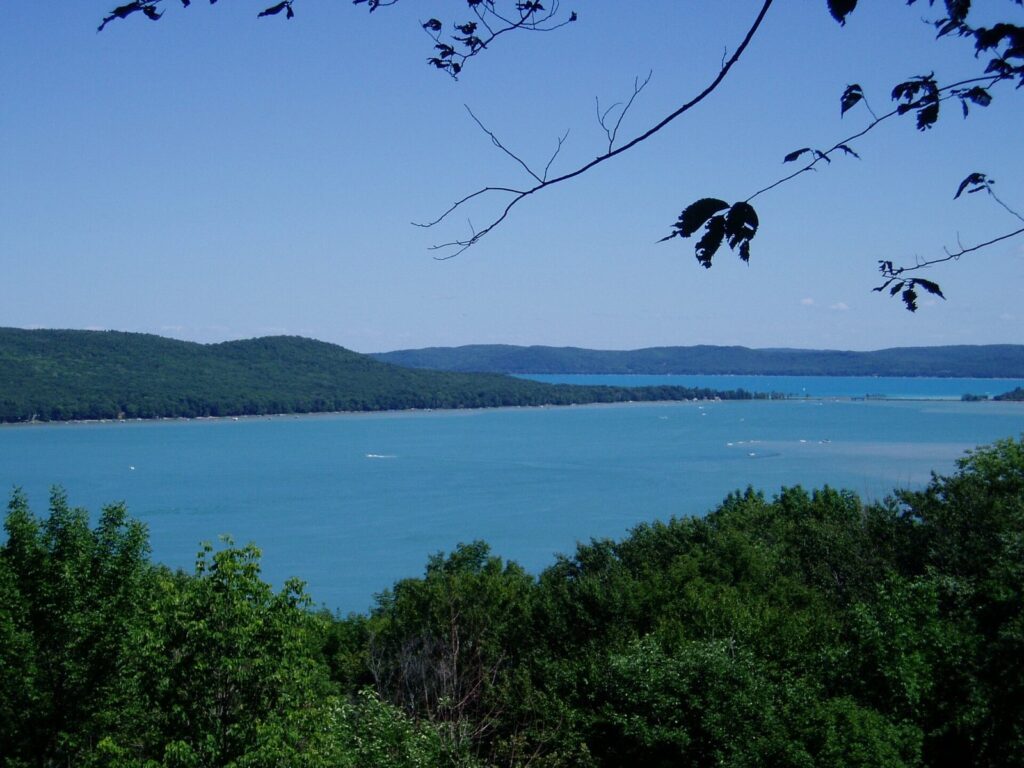
Glen Arbor sits on the thin strip of land between Lake Michigan and Glen Lake, in the middle of the park, and it’s the natural base for a Sleeping Bear trip: restaurants, bike rentals, shops, the Heritage Trail through town and the Dune Climb a few minutes away. Glen Lake, split into Big and Little Glen, is known for its clear, blue water and is best seen from the scenic drive’s early overlooks and the Alligator Hill trail.
Empire
Empire, at the south end of the Glen Arbor stretch, is home to the Philip A. Hart Visitor Center, the park’s main information stop, plus a village beach, the Empire Bluff trailhead just south of town and the southern start of the Heritage Trail. It’s small and quiet, and a good base for early starts.
Leland and Fishtown
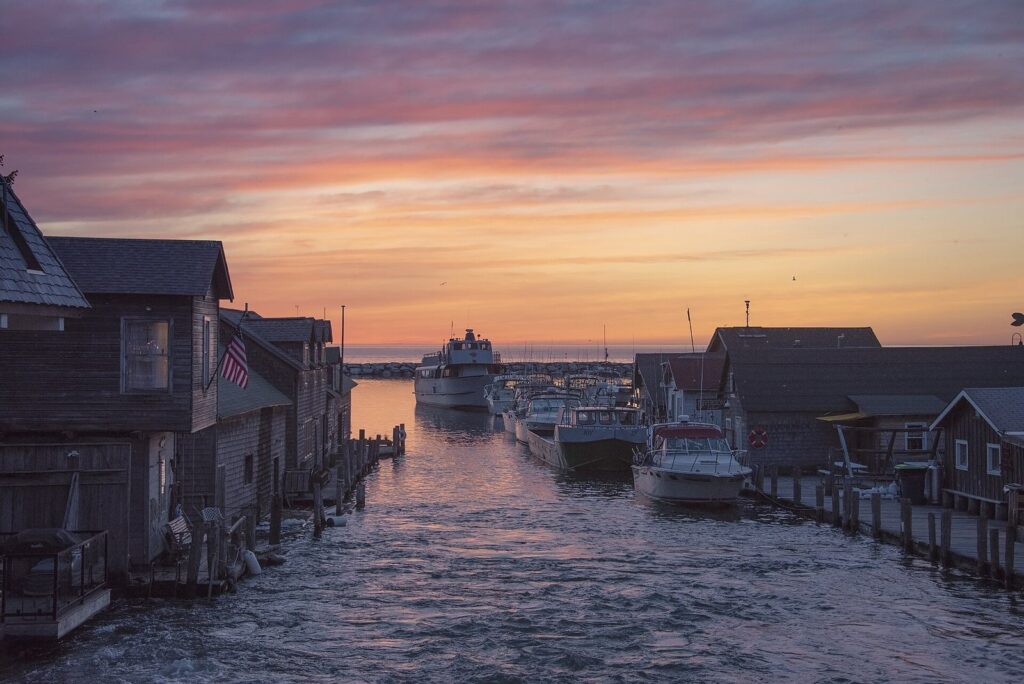
Leland, north of the park on the Lake Michigan side of the Leelanau Peninsula, is known for Fishtown, a cluster of weathered fishing shanties and smokehouses along the Leland River that still serve as fish markets, shops and working docks. It’s normally the departure point for the Manitou Islands ferry, which isn’t running in 2026.
Suttons Bay and Northport
On the Grand Traverse Bay side of the peninsula, Suttons Bay is a walkable village with a small beach and marina, and Northport sits near the tip, close to Leelanau State Park and the Grand Traverse Lighthouse. A loop from Glen Arbor through Leland, Northport and Suttons Bay makes a full, easy day, with farm stands and tasting rooms along the way.
Frankfort, Point Betsie and Crystal Lake
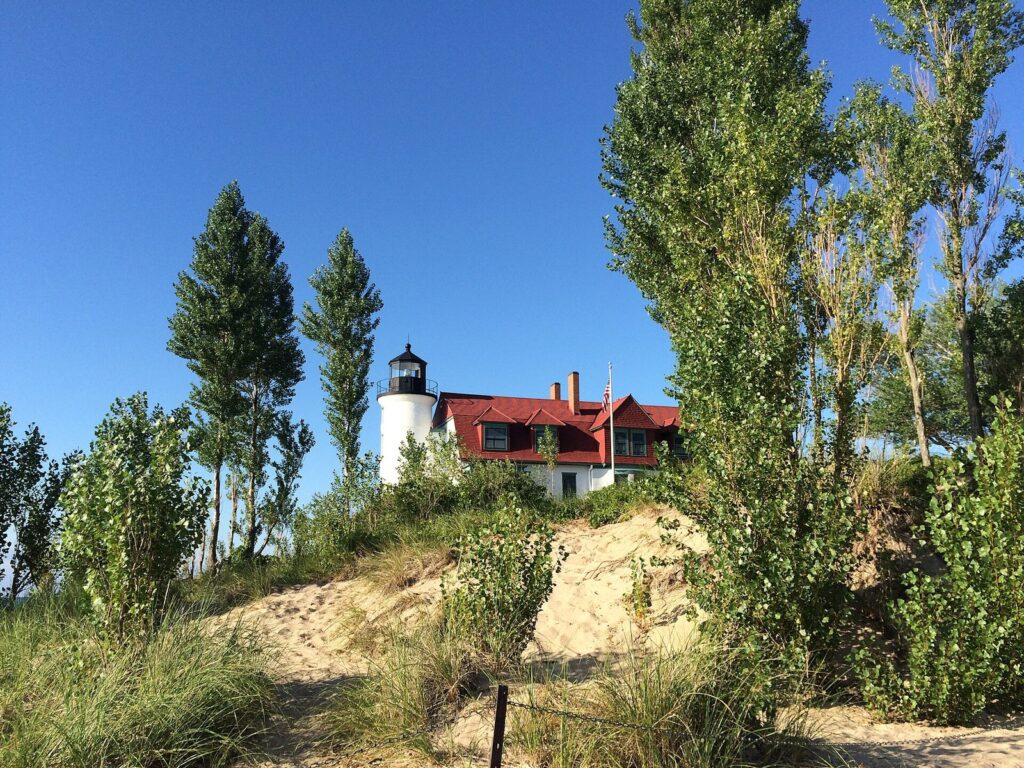
South of the park in Benzie County, Frankfort has a harbor, a big public beach and a pier with a lighthouse at the end; stay off the pier when waves are high, because they break over it. North of town, Point Betsie Lighthouse stands on the dunes, and inland, Crystal Lake is known for its clear water and sandy shallows. Honor, near the Platte River, is the gateway to the park’s quieter southern end.
A day on M-22: a suggested loop
For a first drive, loop north from the park. Start in Empire, drive M-22 north past the Dune Climb turnoff to Glen Arbor, and continue up the Lake Michigan side past Port Oneida and Good Harbor Bay to Leland for lunch in Fishtown. Carry on to Northport and the Grand Traverse Lighthouse near the tip, then come down the Grand Traverse Bay side through Suttons Bay. Return to Traverse City or cut back across the peninsula to Glen Arbor. With stops, it fills a day. A shorter southern loop takes in the Platte River, Point Betsie, Frankfort and Crystal Lake. Drive either one early in the day or midweek in summer, when M-22’s two lanes carry less traffic, and use the pullouts rather than stopping on the road for photos.
Sleeping Bear vs. Michigan’s other big dunes
Michigan’s Lake Michigan shore has several famous dune areas, and they suit different trips. Sleeping Bear is the one for scenery and hiking: the highest views, the national park setting and no vehicles on the dunes. Silver Lake, farther south near Mears, is the one for dune buggies and off-road vehicles, which Sleeping Bear doesn’t allow. Warren Dunes, in the far southwest corner of the state, is the closest big dune park to Chicago, about an hour and a half away. And in the Upper Peninsula, the Grand Sable Dunes at Pictured Rocks offer perched dunes over Lake Superior with a fraction of the crowds. If you can only see one, make it Sleeping Bear.
Where to stay near Sleeping Bear Dunes
| Base | Why stay there | Trade-offs |
|---|---|---|
| Glen Arbor | In the middle of the park, near the Dune Climb, the scenic drive and the Heritage Trail | Limited lodging that books out early for summer; higher prices |
| Empire | Quiet, close to the visitor center, Empire Bluff and the south end of the Heritage Trail | Very few rooms; few restaurants |
| Leland and Suttons Bay | Village atmosphere, Fishtown, the Leelanau Peninsula loop | 20 to 35 minutes from the Dune Climb |
| Frankfort, Beulah and Honor | The quieter southern end, the Platte River, Crystal Lake and Point Betsie | Farther from the Glen Arbor side |
| Traverse City | The most hotels, restaurants and flights in the region | A commute of under an hour each way |
For a first trip of three or more days, Glen Arbor or Empire saves the most time. For more choice and better value, especially at short notice, base yourself in Traverse City and drive over; it’s under an hour to Empire. Cottages and vacation rentals dominate in summer and often run Saturday to Saturday. Prices peak from late June through August and on October color weekends, and drop sharply from late October through spring. Campers should aim for D.H. Day or Platte River as soon as the six-month booking window opens.
Getting to Sleeping Bear Dunes
| From | Distance to Empire | Typical drive |
|---|---|---|
| Grand Rapids | 155 miles | about 2 h 35 min |
| Detroit | 269 miles | about 4 h 25 min |
| Chicago | 316 miles | about 5 h 20 min |
| Indianapolis | 401 miles | about 6 h 40 min |
| Cleveland | 420 miles | about 6 h 45 min |
| Columbus, Ohio | 442 miles | about 7 h 15 min |
| Toronto | 451 miles | about 7 h 25 min, plus the border |
These are free-flowing times; summer Friday and Sunday traffic on the two-lane roads into the area can add 30 minutes or more. Most drivers come through Traverse City and take M-72 west to Empire. The nearest airport is Cherry Capital Airport (TVC) in Traverse City, which handled a record 935,816 passengers in 2025; rent a car there. BATA, the Traverse City area’s transit authority, runs Village Loop buses to some Leelanau villages, but reaching the dunes themselves without a car is hard, so for most visitors a car is essential. Glen Arbor is about 4 hours 30 minutes from Detroit and 2 hours 45 minutes from Grand Rapids.
Practical tips: food, getting around, photos and accessibility
Food and supplies
There are no restaurants inside the park itself, so plan meals around Glen Arbor, Empire, Leland and Frankfort, which have cafes, casual restaurants, ice cream and small markets; Traverse City has the big grocery stores. The Glen Haven General Store is open in season. Pack a cooler and picnic lunch for long beach and hiking days, and pick up fruit from the farm stands along M-22 in summer and fall. In Leland, Fishtown’s smoked fish is a local specialty.
Getting around the park
The lakeshore stretches along the coast, with sites spread along M-22 and M-109, so plan on driving between them. The Dune Climb, Glen Haven, the scenic drive and Glen Arbor sit close together in the middle of the park; Empire, the Platte River and Point Betsie are to the south, and Pyramid Point, Port Oneida and Good Harbor Bay to the north. In summer, the Heritage Trail is the best way to move between the central sites without hunting for parking. Cell coverage is patchy in places, so download maps before you go.
Photography and drones
The classic sunset spots are Empire Bluff, the Lake Michigan Overlook on the scenic drive, Glen Haven Beach and Point Betsie. For the famous view of Lake Michigan from the dunes, late afternoon light is warmer and softer than midday glare. Drones are prohibited throughout the park.
Accessibility
Several of the big views are reachable without a hike. The Philip A. Hart Visitor Center, Glen Haven’s historic village and many of the Pierce Stocking Scenic Drive overlooks are close to parking, and paved sections of the Heritage Trail offer smooth, gentle riding and walking. The Dune Climb, the Dunes Trail and most beach access involve loose sand and slopes. Ask at the visitor center about the most accessible viewpoints and beach access points for your group.
A rainy-day plan
Rain doesn’t have to waste a day. Start at the Philip A. Hart Visitor Center in Empire for the exhibits and trail advice, spend an hour in Glen Haven’s maritime museum and blacksmith shop (open through October 12 in 2026), and visit the Port Oneida Farms Heritage Center. Leland’s Fishtown and the shops in Glen Arbor and Suttons Bay fill an afternoon, and Traverse City has museums and plenty of indoor options. A drive along M-22 in light rain or fog has its own moody beauty, and the forest trails at Empire Bluff and Alligator Hill stay pleasant in a drizzle.
Weather through the year
Summer days are usually warm rather than hot, with cool evenings and a steady breeze off the lake, which is welcome on the dunes but chilly at sunset. Lake Michigan stays cool into July and is at its warmest in August. Fall brings crisp, clear days and the first frosts, and winter brings lake-effect snow, gray skies and short days. Spring arrives late along the shore, with cold water and cool air well into May. Whatever the month, pack a layer for the wind.
A short packing list
- Your park pass, or a card to buy one; fee points are cashless.
- More water than you think, especially for the Dune Climb and bluff hikes.
- Shoes that can handle hot sand, plus sandals or water shoes for rivers.
- Sunscreen, sunglasses and a hat; there’s no shade on the dunes.
- Layers and a windbreaker; the lake wind turns cool quickly, even in summer.
- Insect repellent for evenings and forest trails.
- A zip-top bag for phones and cameras on the dunes.
Sleeping Bear Dunes in winter
Winter strips the crowds away and covers the dunes in snow, and it’s a fine time for a quiet visit if you’re dressed for it. The Pierce Stocking Scenic Drive closes to cars and becomes a snowy route for cross-country skiers and snowshoers, several trails are popular for skiing, and the views from Empire Bluff over an icy Lake Michigan are worth the cold. The main roads, M-22 and M-109, are plowed, and the visitor center in Empire is the place to ask about trail conditions and any ranger-led snowshoe hikes.
Know what you’re giving up. Glen Haven’s buildings close for the season in October, the campgrounds are closed, and many restaurants and shops in Glen Arbor and the Leelanau villages cut their hours or close until spring. Stay off shore ice on Lake Michigan: it forms, breaks and shifts with the wind and waves, and it can break away without warning. And bring traction devices for icy trails and bluff tops.
How many days do you need at Sleeping Bear Dunes?
One day
- Early morning: the Dune Climb, before the heat and the crowds.
- Late morning: the Pierce Stocking Scenic Drive, including the Cottonwood Trail and the Lake Michigan Overlook.
- Afternoon: lunch in Glen Arbor, then Glen Haven and a swim at North Bar Lake or Glen Haven Beach.
- Evening: Empire Bluff at sunset.
Two days
- Day 1: as above.
- Day 2: Pyramid Point or Sleeping Bear Point in the morning, the Heritage Trail by bike, Port Oneida, and an afternoon at the beach.
Three or four days
- Day 3: the Leelanau loop: Leland and Fishtown, Northport and the Grand Traverse Lighthouse, Suttons Bay.
- Day 4: the southern end: a float on the Platte River, Platte Point Beach, Point Betsie and Frankfort, with a swim in Crystal Lake.
What to skip
Skip going down the bluff at the Lake Michigan Overlook. It’s a 450-foot slope, the climb back is brutal, and a rope rescue can cost about $3,000.
Skip the Dune Climb at midday in July. Hot sand, full lots and heat exhaustion on the trail to the lake. Go early or late.
Skip Manitou Islands plans in 2026. Both islands are closed all season, and the Leland ferry isn’t running.
Skip bringing the dog to the Dune Climb or North Bar Lake. Pets aren’t allowed at either. Take them to Empire Bluff or Pyramid Point instead.
Skip swimming on big-wave days and near piers. There are no lifeguards, and rip currents are real.
Skip M-22 on summer Saturday afternoons. Drive it early in the day, midweek or in October.
Skip paying cash. Park fee locations are card only; buy online if you prefer.
Frequently asked questions
How much does it cost to get into Sleeping Bear Dunes?
In 2026, a private vehicle pass costs $25 and is good for seven days for everyone in the car. Motorcycles pay $20, people on foot or bike aged 16 and older pay $15, and a Sleeping Bear annual pass costs $45. Payment is card only at in-park locations, or buy online through Recreation.gov. The federal America the Beautiful pass is also accepted.
Is Sleeping Bear Dunes a national park?
Not officially. It’s Sleeping Bear Dunes National Lakeshore, a unit of the National Park System run by the National Park Service since 1970, with the same rangers, fees and federal passes as a national park. Michigan’s only national park proper is Isle Royale in Lake Superior. For most visitors, the distinction makes no practical difference.
How long does it take to climb Sleeping Bear Dunes?
The first steep pitch of the Dune Climb takes most people 10 to 30 minutes. Continuing over the dunes to Lake Michigan on the Dunes Trail is about 3.5 miles round trip and takes three to four hours through open, shadeless sand. Go early in the day, carry plenty of water and wear shoes, because the sand gets hot by midday in summer.
What is the best time to visit Sleeping Bear Dunes?
Late June through August for beaches and swimming, with early mornings to beat the crowds, since 72% of visits come in those three months. September is the best balance of warm weather and thinner crowds. Mid-October brings fall color along M-22 and around Glen Lake. Winter is quiet, with snowshoeing and cross-country skiing on the closed scenic drive.
Are dogs allowed at Sleeping Bear Dunes?
Yes, on a leash no longer than six feet, in set places: the Empire Bluff, Pyramid Point and Cottonwood trails and certain beaches around Empire, Glen Haven and north of Glen Arbor. Dogs are never allowed on the face of the Dune Climb or at North Bar Lake, and some beaches and the Sleeping Bear Point Trail close to pets from April 15 to August 15.
How many days do you need at Sleeping Bear Dunes?
One full day covers the Dune Climb, the Pierce Stocking Scenic Drive, Glen Haven and a sunset at Empire Bluff. Two days let you add a longer hike, a bike ride on the Heritage Trail and more beach time. Three or four days leave room for the Leelanau villages, the Platte River, Point Betsie and Frankfort.
Can you swim at Sleeping Bear Dunes?
Yes. The park has miles of Lake Michigan beach, plus North Bar Lake, a shallow, warmer inland lake beside the big lake. There are no lifeguards, the water is cool into July, and waves and rip currents build on windy days, so check conditions, stay out when waves are high and keep children close. Platte Point Beach and North Bar Lake suit families best.
Where do you stay near Sleeping Bear Dunes?
Glen Arbor and Empire put you in the middle of the park but have limited lodging that books out early. Leland, Suttons Bay, Frankfort and Beulah are good village bases, and Traverse City, under an hour away, has the most hotels and restaurants. Campers can book D.H. Day or Platte River campgrounds up to six months ahead on Recreation.gov.
Sources and verification
Everything on this page was checked on September 23, 2026 against the organizations listed below. The guide is compiled from their published information and claims no first-hand visits.
- National Park Service: Sleeping Bear Dunes fees and passes (2026 entrance fees and cashless payment)
- National Park Service: Sleeping Bear Dunes current conditions (Manitou Islands and Glen Haven status, open facilities)
- National Park Service: pets at Sleeping Bear Dunes (where dogs are and aren’t allowed)
- Recreation.gov: D.H. Day Campground (sites and reservation windows)
We also used NPS visitor use statistics for 2025, NPS fee tables for America the Beautiful pass prices, local news reports on the Glen Lake Fire Department’s rescue charges, and Cherry Capital Airport’s 2025 passenger record.
Michigan Tourism Guide is an independent publication. It is not affiliated with Pure Michigan or any agency or business named here.
Photo credits
- Empire Bluff overlook (featured image): photo by NPS Photo, Wikimedia Commons (public domain)
- Top of the Dune Climb: photo by Jabagnasco, Wikimedia Commons (CC BY-SA 4.0)
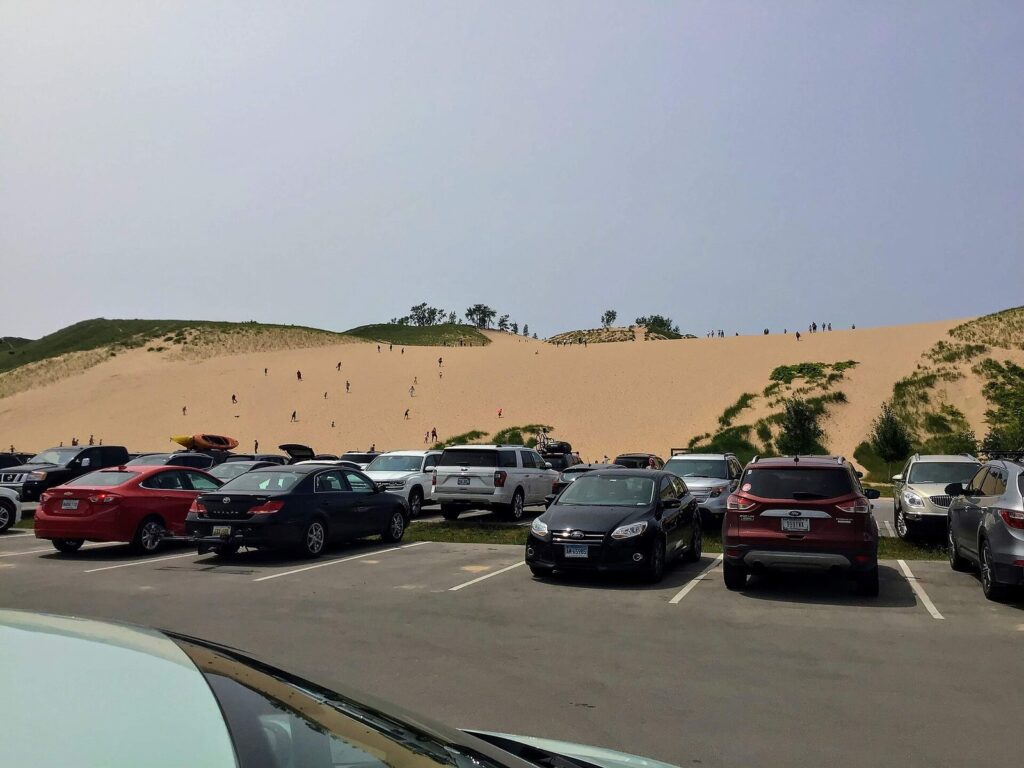
- Dune Climb parking lot: photo by ZFT, Wikimedia Commons (CC BY-SA 4.0)
- Pierce Stocking Scenic Drive covered bridge: photo by Kim2137 / Kim, Wikimedia Commons (CC BY 2.0)
- Lake Michigan Overlook, stop 9: photo by Flickr: takomabibelot, Wikimedia Commons (CC BY 2.0)
- Glen Haven cannery: photo by Sbflorio, Wikimedia Commons (CC BY-SA 4.0)
- Glen Lake: photo by Unknown photographer, Wikimedia Commons (CC BY-SA 2.5)
- Fishtown, Leland: photo by Richard Hurd from Green Bay, USA, Wikimedia Commons (CC BY 2.0)
- Point Betsie Lighthouse: photo by AaronJoePick, Wikimedia Commons (CC BY-SA 4.0)