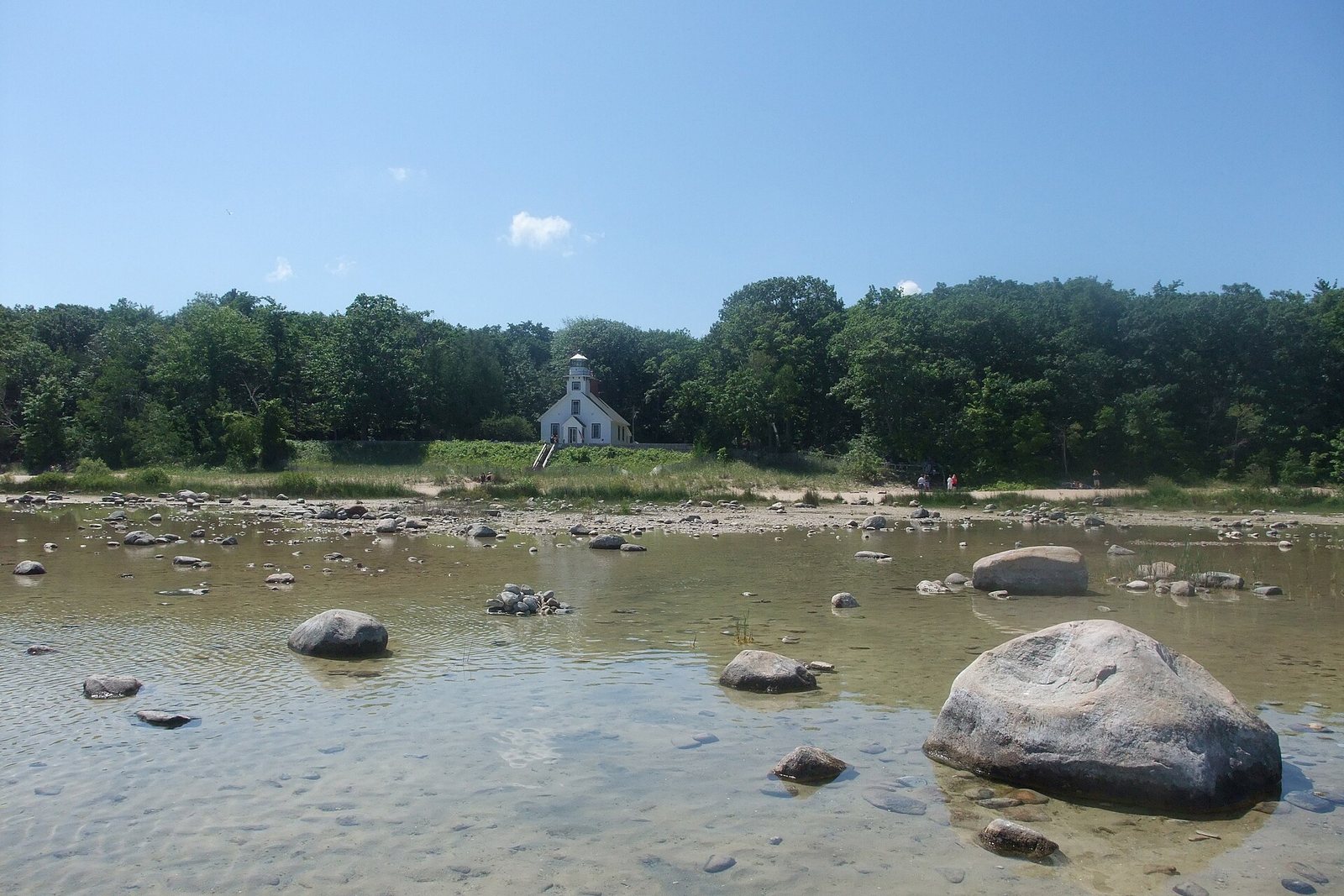
In 2025, Cherry Capital Airport handled 935,816 passengers, a record and 19% more than the year before, for a city of about 15,700 people. That ratio says most of what you need to know about Traverse City: it’s a small city at the foot of Grand Traverse Bay that works as the base camp for northern Michigan’s summer, with Sleeping Bear Dunes less than an hour to the west, two wine-country peninsulas on its doorstep and a downtown that stays busy long after the beaches empty.
The short answer: Traverse City is worth visiting for a beach-and-food trip from late June to early September, a quieter harvest trip in September and October, or a ski-and-snowshoe weekend in winter. Give it three days to see the town and Sleeping Bear, five to add the peninsulas and Torch Lake. It’s about 4 hours from Detroit, 2 hours 15 minutes from Grand Rapids and 5 hours from Chicago, and you can fly in nonstop from several hub airports.
The details below were checked September 23, 2026 against the operators’ and agencies’ own websites, including the 2027 National Cherry Festival dates and this fall’s trail detours.
On this page: At a glance · Is it worth visiting? · What it’s known for · Getting there · Where to stay · When to go · Things to do · Winter · Getting around without a car · Day trips · Torch Lake and Interlochen · Traverse City vs. Door County · Itineraries · Budget and practical tips · What to skip · FAQ
Traverse City at a glance
| What you need to know | Details (checked September 23, 2026) |
|---|---|
| Where | Northwest Lower Peninsula, at the head of Grand Traverse Bay, an arm of Lake Michigan; county seat of Grand Traverse County |
| Population | 15,678 (2020 census) |
| Known for | Cherries and the National Cherry Festival, bay beaches, the gateway to Sleeping Bear Dunes, wine country on the Old Mission and Leelanau peninsulas |
| Drive time | Detroit about 4 h; Grand Rapids about 2 h 15 min; Chicago about 5 h; Toronto about 7 h |
| Fly in | Cherry Capital Airport (TVC): record 935,816 passengers in 2025, nonstop to hubs including Detroit and Chicago, with more routes in summer |
| Peak season | Late June through August; the National Cherry Festival runs July 3-10, 2027 |
| Best value | September and early October; winter midweek |
| Days needed | 3 for the town and Sleeping Bear; 5 to add the peninsulas and Torch Lake |
| Room taxes | 6% Michigan sales tax plus a 5% lodging assessment on overnight stays |
| Nearby park fees | Sleeping Bear Dunes: $25 per private vehicle for 7 days, card only (2026); Michigan state parks: Recreation Passport, $42 a year or $12 a day for non-residents (2026) |
| Without a car | Walkable downtown, a free Bayline bus along the bays and a 100-plus-mile trail network |
Is Traverse City worth visiting?
For most people planning a northern Michigan trip, yes, because it solves the hardest part: where to sleep. Traverse City has more hotels, restaurants and flights than anywhere else up north, and it puts the region’s big draws within an hour’s drive. What it isn’t is a secluded getaway. In July it’s busy, the beaches are full and dinner reservations matter.
Beach and family trips: yes. Calm bay beaches right in town, with the big Lake Michigan dunes a short drive west.
Food and drink: yes. The strongest restaurant, bakery and brewery scene in northern Michigan, with farm markets and orchards on the edge of town.
Wine country base: yes. The Old Mission and Leelanau peninsulas start at the city limits, so you can stay in town and tour by day.
Sleeping Bear Dunes: yes, as a base. Stay in Traverse City for more choice, or in Glen Arbor or Empire to be closer to the dunes.
Quiet nature escape: not in July. For solitude, go in September, pick a cottage on one of the inland lakes, or head for the Upper Peninsula.
Budget trip in peak summer: hard. Rooms are priced for demand from late June to August. Come in the shoulder season, or stay inland and drive in.
What is Traverse City known for?
Traverse City calls itself the Cherry Capital of the World, and the National Cherry Festival has been backing up the claim since the 1920s; 2026 marked its 100th year, and the 2027 festival runs July 3-10. The cherries in question are mostly tart cherries, the kind that end up in pies, juice and dried fruit, and Michigan grows most of the country’s supply: 109 million pounds in 2025, or 57% of U.S. production.
There’s a catch worth knowing before you plan a cherry-picking trip. Spring frosts hit northwest Michigan hard in 2025, and the region’s tart cherry crop fell to 34 million pounds, down from 101 million in 2024. Crops recover, but u-pick seasons are short and weather-dependent, so call the farm before you drive out, and don’t build a whole trip around picking.
The other things Traverse City is known for are easier to count on. Grand Traverse Bay wraps around the city in two arms, West Bay and East Bay, divided by the long, narrow Old Mission Peninsula; the Leelanau Peninsula forms the far side of West Bay. The bay beaches are right downtown. Sleeping Bear Dunes National Lakeshore, with its 450-foot bluffs over open Lake Michigan, is a short drive west. And the town has built a food, wine and craft-beer reputation that draws people who have no interest in sand at all.
Getting to Traverse City: flights and drive times
Flying into Cherry Capital Airport (TVC)
Traverse City is one of the few places in northern Michigan you can fly into easily. Cherry Capital Airport (TVC), a short drive from downtown, set a record in 2025 with 935,816 passengers, up 19% from 787,114 in 2024. It has nonstop flights to hub airports including Detroit and Chicago, which connect to almost anywhere, and a longer list of seasonal routes in summer; Delta added a daily nonstop to Boston in May 2026. Check the airport’s route map for the season you’re traveling, since summer and winter schedules differ.
Flying makes the most sense from outside the Midwest or for a short trip. Rental cars are at the airport, and you’ll want one if Sleeping Bear or the peninsulas are on your list. Book it early for July; the fleet is finite, and the whole region wants cars that month.
Driving
| From | Distance | Typical drive |
|---|---|---|
| Grand Rapids | 142 miles | about 2 h 15 min |
| Detroit | 257 miles | about 4 h |
| Chicago | 320 miles | about 5 h |
| Indianapolis | 405 miles | about 6 h 25 min |
| Cleveland | 408 miles | about 6 h 20 min |
| Columbus, Ohio | 430 miles | about 6 h 50 min |
| Toronto | 439 miles | about 7 h, plus the border |
These are free-flowing times. On summer Fridays northbound and Sundays southbound, the two-lane stretches into Traverse City slow to a crawl and can add 30 minutes or more; leaving before 7 a.m. or after 7 p.m. avoids the worst of it. From Detroit the usual route is I-75 north to Grayling, then west on M-72. From Grand Rapids and Chicago, US-131 north is the main line. There’s no passenger train to Traverse City.
From Ontario, most drivers cross at Sarnia and Port Huron or at Windsor and Detroit, then head north on I-69 and I-75 or US-127. Everyone in the car needs a passport, NEXUS card or other accepted border document. The Gordie Howe International Bridge between Windsor and Detroit has been open since July 27, 2026, alongside the older crossings. Build in time for the border, and for an overnight: at about seven hours from Toronto, Traverse City is a two-day drive for most families.
Where to stay in Traverse City: which part of the bay
The biggest lodging decision isn’t the hotel; it’s the area. Traverse City splits into four bases, and each suits a different trip.
| Area | What it’s like | Best for | Trade-offs |
|---|---|---|---|
| Downtown and West Bay | Walkable streets, restaurants, the in-town beaches and marina, the trail network at your door | First-timers, couples, anyone without a car | Priciest in summer; limited parking on busy nights |
| East Bay resort strip | A row of beachfront hotels and motels along US-31 on East Bay, near Traverse City State Park | Families who want a beach outside the door | Busy highway frontage; you’ll drive or bus downtown |
| Old Mission Peninsula | Inns, rentals and farm stays among orchards and vineyards between the two bays, with water views on both sides and dark, quiet nights | Quiet stays, wine touring, sunsets | Few restaurants; everything is a drive |
| Acme and the east side | A large resort and golf complex, plus rentals along East Bay’s east shore | Golf, resort pools, groups | Farther from downtown; a car is essential |
West Bay or East Bay?
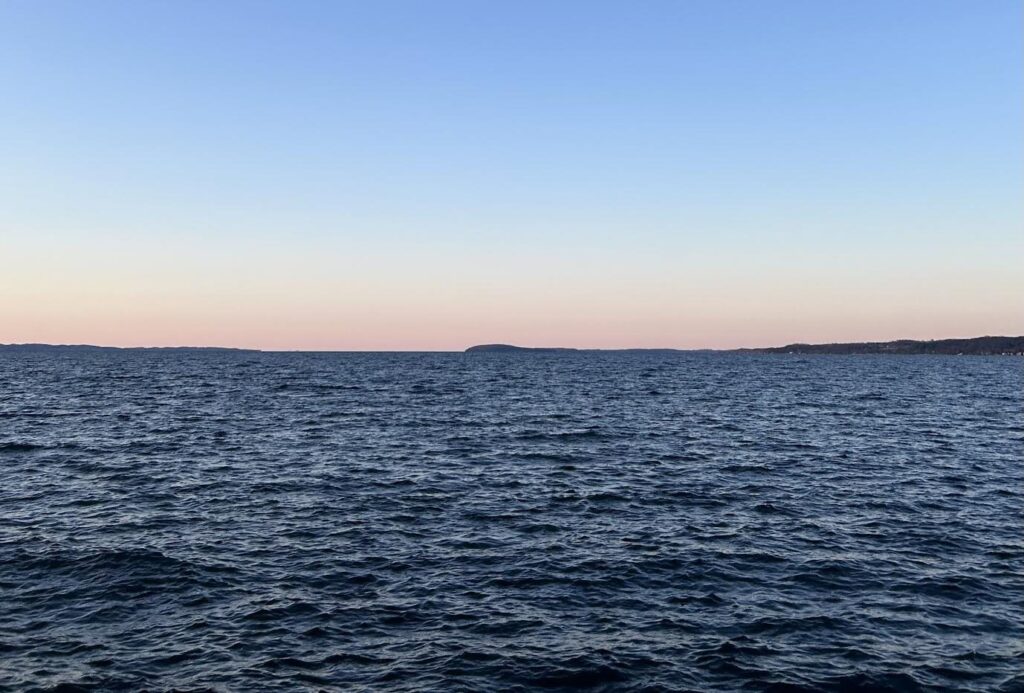
West Bay is the downtown bay. Its shoreline in town is the marina, Clinch Park, the open lawns along the waterfront and West End Beach, and it’s the side to stay on if you want to walk to dinner. The best sunset views over it come from the Old Mission side. East Bay is the beach-hotel bay: a long run of sandy frontage along US-31 with Traverse City State Park and East Bay Park, and shallow water that suits small children. Families who want to step from the room onto the sand usually pick East Bay; couples and anyone without a car usually pick downtown.
When to stay at Sleeping Bear or on the Leelanau instead
If the dunes are the main event and you plan to spend three or more days at the lakeshore, consider staying in Glen Arbor, Empire or one of the Leelanau villages instead. You’ll trade Traverse City’s restaurant choice and flights for no commute and quieter evenings. A good compromise for a week-long trip is to split it: three nights in Traverse City, then three or four near the dunes.
Camping
Campers have three good options within an hour. Traverse City State Park, across US-31 from East Bay, puts you in town but with highway noise; Interlochen State Park, between two lakes to the southwest, is quieter; and Sleeping Bear Dunes has nine campgrounds with 357 sites in all. State park campgrounds need a Recreation Passport on top of the camping fee, and summer weekends book up months ahead, so reserve as early as the booking window allows.
Prices and booking
Room rates follow the bay’s temperature. They climb from late June, peak around the Fourth of July and National Cherry Festival week, stay high through August and fall back after Labor Day, with a smaller bump for fall color weekends in mid-October. Winter is the cheapest season outside ski weekends. Budget for 6% sales tax and a 5% lodging assessment on top of the nightly rate, and read the fine print on resort fees and minimum stays, which are common in July.
For July and August, book in winter or early spring; the best-located rooms go first. If you’re booking late, look inland or toward Acme and Interlochen, try Sunday-to-Thursday stays, or consider a rental on one of the inland lakes. Cottages and vacation rentals often run Saturday to Saturday in peak summer.
When to go: Traverse City season by season
| Season | What’s happening | Crowds | Price pressure |
|---|---|---|---|
| Late June to August | Beach season, warm-enough bay water, the National Cherry Festival (July 3-10, 2027), the Fourth of July, farm stands at their best | Heavy, especially weekends | Highest of the year |
| September | Warm days, cool nights, harvest on the peninsulas, the water still swimmable early in the month | Moderate, easing after Labor Day | Falling |
| October | Fall color, usually at its best in mid-October around the bay; apples, pumpkins and cider | Busy on color weekends | A second, smaller peak |
| November | Bare trees, gray skies and the quietest weeks of the year | Light | Low |
| December to March | Lake-effect snow, cross-country and downhill skiing, snowshoeing at Sleeping Bear, a cozy downtown | Light, busier on ski weekends | Low |
| April to May | Cherry blossoms on the peninsulas in May, spring festivals, cool water | Light | Low to moderate |
Month by month
- January and February: deep winter. Snow cover, cross-country skiing and snowshoeing, the quietest hotels of the year, and ice on the bays in cold winters.
- March: the thaw, and the least scenic month. Low prices, slushy trails and not much reason to go.
- April: quiet and cool, with the first spring events; the new Traverse City edition of the Fresh Coast Film Festival ran April 30 to May 3 in 2026.
- May: cherry blossoms on the Old Mission and Leelanau peninsulas, fresh green in the woods and shoulder-season rates. The water is still cold.
- June: a sleeper month. Long days, fewer crowds before the Fourth of July, strawberries late in the month, and sunsets after 9:30 p.m. around the solstice, because Traverse City sits near the western edge of the Eastern time zone. The bay is bracing until late June.
- July: peak everything: the Fourth of July, the National Cherry Festival (July 3-10, 2027), cherry harvest, full beaches and the highest rates.
- August: the warmest water of the year, peaches and blueberries at the farm stands, and crowds that ease toward the end of the month.
- September: the best balance: warm days, harvest, apples and thinner crowds after Labor Day.
- October: fall color, usually best around mid-month, plus cider and pumpkins.
- November: gray and quiet, with some seasonal businesses closed.
- December: holiday lights downtown and the start of ski season.
The best time for most trips
If you want to swim, go between late June and late August, and accept the crowds. If you want the town at its most comfortable, go in September: the water is still warm enough for a quick swim early in the month, the harvest is in full swing, the traffic has thinned and prices have come down. Mid-October brings the color. Search interest in Traverse City peaks in the week of about July 5-11, right around Cherry Festival, which is exactly when the town is at its most crowded.
Traverse City in the fall
Fall is the season locals recommend and visitors underrate. September keeps summer’s warmth without its crowds, and the peninsulas switch from cherries to apples, pumpkins and grape harvest. Color usually peaks around the bay in mid-October, a little later along the Lake Michigan shore than inland, and the drives up Old Mission and along M-22 are the obvious ways to see it. Color weekends bring a second, smaller rush of visitors, so book October Saturdays ahead. By November, many seasonal businesses on the peninsulas cut their hours or close for the winter, so check before you drive out.
National Cherry Festival 2027
The festival takes over the downtown waterfront for eight days, July 3-10, 2027, with parades, concerts, air shows, carnival rides and cherry everything. It’s the busiest week of the Traverse City year. UpNorthLive has reported that the Navy’s Blue Angels are expected for the 2027 festival, which would make the air show days even busier. If the festival is the reason for your trip, book rooms as soon as you can and plan to walk or bus downtown. If it isn’t, plan around it; the rest of July is busy enough.
Top things to do in Traverse City
The best Traverse City trips mix three things: the bay, the trails and the table. Here’s how the main attractions fit together.
Downtown and the Warehouse District
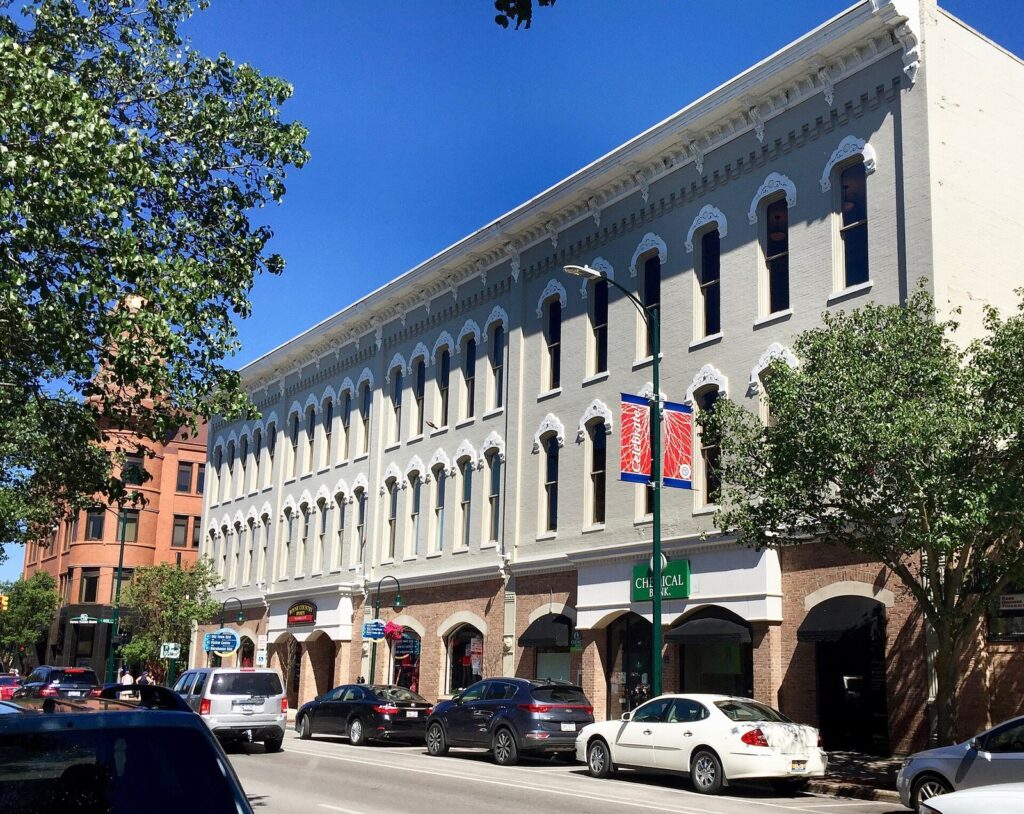
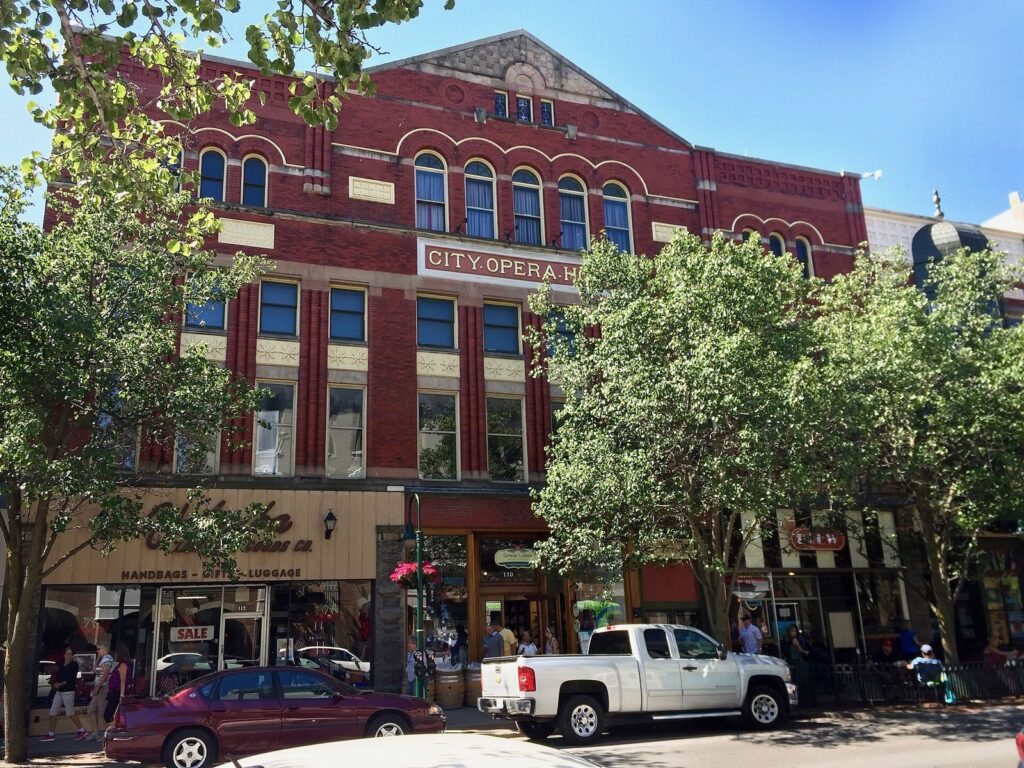
Downtown runs along Front Street and the streets around it, a few blocks back from West Bay and the Boardman River. It’s a walkable grid of restored 19th-century buildings, including the red-brick City Opera House, filled with restaurants, bakeries, bookstores, galleries and outdoor gear shops. The Warehouse District on the west side of downtown has more of the breweries and newer restaurants. In summer, the evening walk from dinner to the waterfront is half the point.
The bay beaches
Traverse City has beaches right in town, which is rarer than it sounds. On West Bay, Clinch Park sits at the foot of downtown next to the marina, and West End Beach and Bryant Park are a short walk or bike ride along the shore. On East Bay, East Bay Park and Traverse City State Park have long, shallow sandy beaches that suit small children; the state park needs a Recreation Passport. The bay water is warmer and calmer than the open Lake Michigan shore at Sleeping Bear, but it’s still Great Lakes water: cool into early July, and wavy when the wind picks up. Check the beach flags where they’re posted, keep an eye on children in the water, and remember that rip currents can form on any Great Lakes beach when the waves build.
The TART trails
The TART trail network covers more than 100 miles, and it’s one of the best reasons to stay in town without a car. The main TART Trail runs along the bay through downtown; the Boardman Lake Loop circles the lake just south of the center; the Leelanau Trail heads north to Suttons Bay through farm country; the Acme Connector, also called the Nakwema Trailway, links toward Acme on East Bay; and the Vasa Pathway, southeast of town, is the local favorite for mountain biking in summer and cross-country skiing in winter. TART’s network also takes in the Sleeping Bear Heritage Trail inside the national lakeshore. One current note: work on the Leo Creek crossing of the Leelanau Trail began September 14, 2026, with a temporary detour in place.
Old Mission Peninsula, beyond the wine
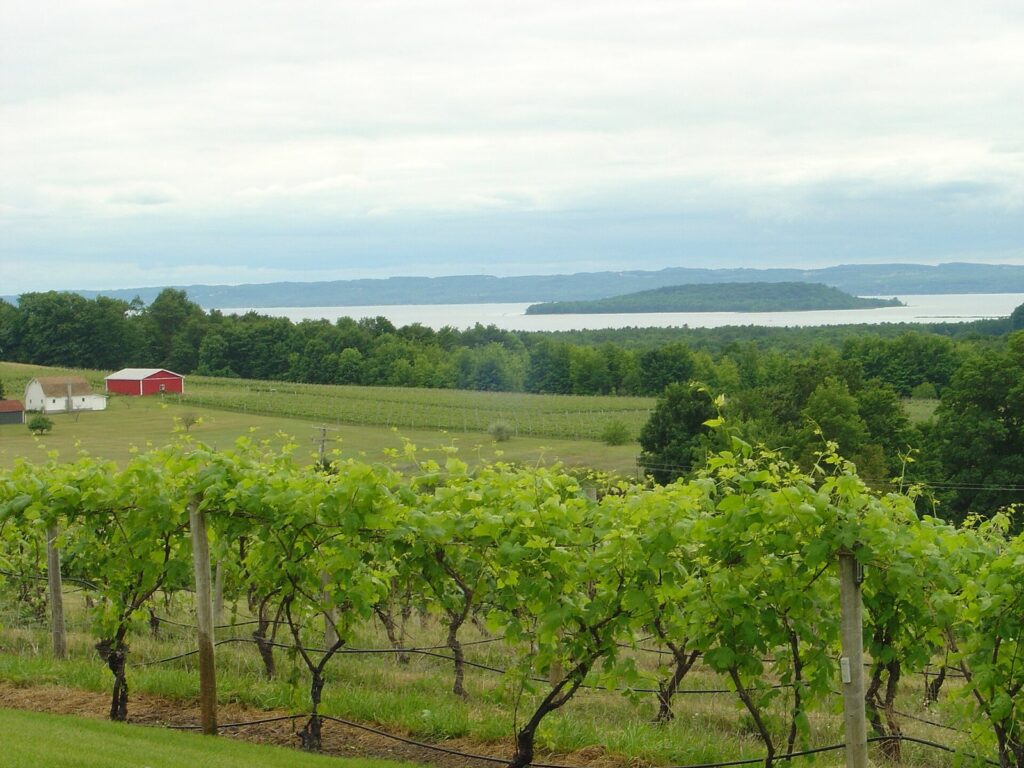
The peninsula that divides the bay is best known for its wineries, which are a subject of their own. But Old Mission is worth a drive even if you don’t drink. M-37 runs up the spine past cherry orchards, farm stands and vineyards, with water on both sides, to Mission Point Lighthouse and the beach and trails around it near the tip. Go in the late afternoon for the light, stop at a farm market on the way back, and watch the sunset over West Bay.
The Grand Traverse Commons
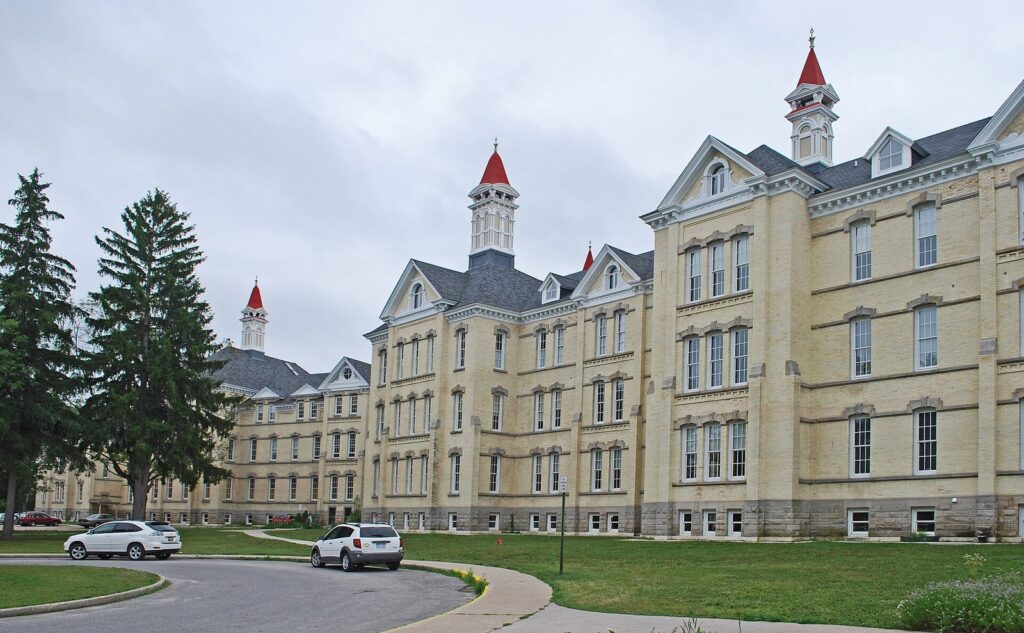
On the west side of town, the Grand Traverse Commons is one of the more unusual redevelopments in the Midwest: a sprawling former state psychiatric hospital, all yellow brick and red-roofed cupolas, converted into shops, restaurants, offices and homes. Walk the halls, eat in the old basement corridors, and take the trails behind it into the hills. It’s also a good rainy-day stop.
On the water
You don’t need to own a boat to spend a day on the bay. Sailing trips, sunset cruises, kayak and paddleboard rentals, and fishing charters all operate from Traverse City in summer, and the calm mornings on West Bay are ideal for a first paddle. Book sunset cruises a few days ahead in July. On the inland lakes and rivers, the Boardman River and the Chain of Lakes make good half-day paddles.
Farm markets and orchards
Traverse City sits in the middle of one of Michigan’s richest fruit regions, and the easiest way to taste it is at a farm stand. The downtown farmers market runs through the growing season near the Boardman River, and roadside stands along M-37 on Old Mission and M-22 on the Leelanau sell whatever is ripe that week: strawberries in late June, cherries in July, peaches and blueberries in August, apples from September. Given the 2025 frost, don’t count on cherries every year; whatever else is in season will be good.
Museums, baseball and rainy days
When the weather turns, Traverse City has more to fall back on than most northern towns. The Dennos Museum Center at Northwestern Michigan College is known for its collection of Inuit art and rotating exhibitions. The Grand Traverse Commons fills an afternoon of browsing and eating. In summer, the Traverse City Pit Spitters play summer-collegiate baseball in the Northwoods League, a cheap and cheerful night out with kids. And downtown’s bookstores, bakeries and taprooms were made for a wet afternoon.
Hiking near town
The best hikes are at Sleeping Bear, where the Empire Bluff and Pyramid Point trails lead to high overlooks of Lake Michigan. Closer to town, the trails in the hills behind the Grand Traverse Commons and the Brown Bridge Quiet Area on the Boardman River offer quiet woods within a short drive, and the Vasa Pathway loops through forest southeast of the city. For flat, easy miles, the TART trails along the bay and around Boardman Lake are hard to beat.
Food, wine and beer
Eating well is one of the main things to do here. Expect farm-driven restaurants, good bakeries, cherry products in every possible form and a deep bench of breweries and cideries. Wineries on the Old Mission and Leelanau peninsulas are a trip of their own; the key planning point is simple: pick a driver or book a tour, because the tasting rooms are spread out along rural roads.
Beyond the cherries, look for Great Lakes whitefish on menus, smoked fish at markets, farm-to-table restaurants that change their menus with the season, and pies, jams and dried fruit to take home. Both peninsulas are federally designated wine regions, the Old Mission Peninsula and Leelanau Peninsula American Viticultural Areas, and their wineries lean toward cool-climate whites like Riesling. Reserve dinner in July and August, especially on weekends; walk-in waits downtown can run long at peak times. Bars stop serving at 2 a.m. and close by 2:30 a.m.
With kids
Traverse City is an easy family base: bay beaches with shallow water, playgrounds at the downtown waterfront, flat paved trails for bikes and strollers, the Dune Climb at Sleeping Bear, and ice cream at the end of every day. Plan the Sleeping Bear day for the morning, before the sand heats up, and keep the afternoons for the beach.
A few kid-specific tips: at the Dune Climb, bring water and shoes, because the sand gets hot by midday and the climb back up is harder than it looks from the bottom. For a rainy day, the Dennos Museum and a Pit Spitters game in summer are good fallbacks. For bikes, the flat TART trail along the bay is the easiest ride in the region for young riders, with ice cream and beaches along the way.
A festival note
If older guides send you to the Traverse City Film Festival, note that it ended in 2023. A Traverse City edition of Marquette’s Fresh Coast Film Festival held its first event April 30 to May 3, 2026.
Winter in Traverse City
Winter is Traverse City’s most underrated season, and its cheapest. Lake-effect snow off Lake Michigan usually gives the area a reliable snow cover, and the town doesn’t shut down: downtown restaurants and shops stay open, and the pace slows to something more local.
- Cross-country skiing and snowshoeing: the Vasa Pathway is the classic local trail, and the TART network runs a winter grooming program. At Sleeping Bear, the snow turns the dunes and forest trails into snowshoe territory.
- Downhill skiing: a small local hill sits near town, and the region’s big resorts, including Crystal Mountain to the southwest, are within an hour’s drive.
- Downtown: shopping, dinners and brewery taprooms without the summer lines.
- Ice: the bays sometimes freeze in cold winters. Never walk out on bay or lake ice unless local conditions are confirmed safe; Great Lakes ice shifts with wind and current and can break without warning.
Not everything stays open. Downtown restaurants, shops and taprooms keep going through the winter, but some farm stands, tasting rooms and seasonal businesses on the peninsulas and around Sleeping Bear shorten their hours or close until spring, and the Pierce Stocking Scenic Drive at Sleeping Bear closes to cars for the winter. If a particular stop matters to you, check its winter hours before you go.
Plan winter drives around the weather. Lake-effect squalls can drop visibility quickly on US-131 and M-72, so keep your schedule flexible and book rooms you can cancel.
Getting around Traverse City without a car
You can do a good Traverse City trip without a car if you stay downtown and accept that the peninsulas and Sleeping Bear take planning.
- Walk: downtown, the West Bay beaches, the Warehouse District and the marina are all within a few blocks of each other.
- Bike: the TART trails connect downtown with East Bay, Boardman Lake, the Commons and the Leelanau Trail to Suttons Bay. Bike rentals are easy to find in summer.
- Bus: BATA, the regional transit authority, runs the Bayline, free along the bays; it’s temporarily running every 30 minutes, rather than every 15, because of staffing. City Loop routes cover the rest of town, Village Loop buses serve Grand Traverse and Leelanau county villages, and Link provides on-demand rides. BATA also lists airport and hotel service and a seasonal Bike-n-Ride.
- Taxi and rideshare: available, but expect waits on summer weekend nights and after big festival events.
Where a car becomes necessary is Sleeping Bear Dunes, the far end of Old Mission and the Leelanau villages on a schedule that suits you. If you’re flying in, one option is to go car-free for the town days and rent a car for one or two day trips.
Day trips from Traverse City
| Destination | Drive from downtown | Why go | Know before you go |
|---|---|---|---|
| Sleeping Bear Dunes National Lakeshore | Under an hour to Empire and Glen Arbor | The Dune Climb, the Pierce Stocking Scenic Drive, Lake Michigan beaches | $25 per private vehicle for 7 days, card only (2026); the Manitou Islands are closed for 2026 |
| Leelanau Peninsula villages | About 30 minutes to Suttons Bay, a little longer to Leland and Northport | Harbor towns, Leland’s Fishtown, orchards, a lighthouse at the tip | Summer weekends are busy; go early |
| Old Mission Peninsula | Starts at the city limits; about 30 minutes to the tip | Orchards, farm stands, Mission Point Lighthouse, sunsets | Few places to eat; bring a picnic |
| Torch Lake and the Chain of Lakes | Under an hour northeast | Clear turquoise water, sandbars, paddling | Public access is limited; plan where you’ll park |
| Interlochen | About 30 minutes southwest | Summer concerts and performances at the arts academy | Check the performance calendar |
| Charlevoix | About an hour north | Harbor town between Lake Michigan and Round Lake | Pair it with Petoskey |
| Petoskey and Harbor Springs | About 1.5 hours northeast | Little Traverse Bay, Petoskey stones, the Tunnel of Trees | Two sections of the Tunnel of Trees (M-119) are closed to through traffic in fall 2026 |
| Mackinac Island | About 2 hours 20 minutes to the Mackinaw City ferry docks | A car-free island, fudge, Fort Mackinac | A long day; better as an overnight |
Sleeping Bear Dunes
This is the day trip nearly every Traverse City visitor takes, and the one worth getting right. Sleeping Bear Dunes National Lakeshore had 1.6 million recreation visits in 2025, and 72% came in June, July and August, so summer mornings are the time to go: the Dune Climb and the Pierce Stocking Scenic Drive overlooks get crowded by midday, and parking fills. The park’s entrance fee is $25 per private vehicle for seven days (2026), paid by card only at in-park locations, and it covers the scenic drive, the Dune Climb and the rest of the lakeshore. Glen Arbor and Empire are the closest towns for lunch. The Manitou Islands, usually reached by ferry from Leland, are closed for all of 2026.
The Leelanau Peninsula
The peninsula that forms the west side of West Bay is Traverse City’s quieter neighbor: Suttons Bay and its main street, Leland’s weathered fishing shanties at Fishtown, Northport and the lighthouse at the tip, and orchards, farm stands and wineries in between. A loop from Traverse City up the bay side and back through the middle makes a full, easy day. You can also bike to Suttons Bay on the Leelanau Trail; check the Leo Creek detour first.
Frankfort, Crystal Lake and the Benzie shore
South of the dunes, about an hour from Traverse City, Frankfort’s harbor and lighthouse and the clear water of Crystal Lake make a quieter alternative to a July day at Sleeping Bear. Pair them with the southern end of the national lakeshore, around the Platte River, for a loop that avoids the busiest overlooks.
Charlevoix, Petoskey and Mackinac
Heading north, Charlevoix sits about an hour away on the channel between Lake Michigan and Round Lake, and Petoskey and Harbor Springs are about an hour and a half away on Little Traverse Bay. Both work as long day trips, but they’re better as an overnight, especially if you want the Tunnel of Trees north of Harbor Springs, where two sections are closed to through traffic in fall 2026. Mackinac Island is about 2 hours 20 minutes to the Mackinaw City ferry docks; it’s possible as a very long day, but it deserves at least a night.
Torch Lake, the Chain of Lakes and Interlochen
Three add-ons within an hour’s drive round out a longer stay.
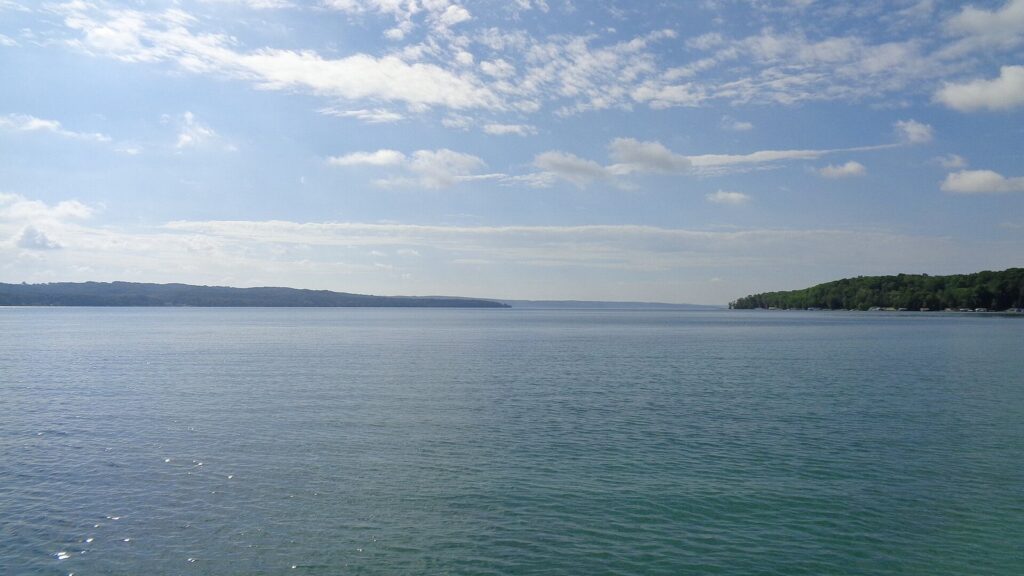
Torch Lake, northeast of Traverse City in Antrim County, is Michigan’s longest inland lake, known for clear turquoise water that looks more Caribbean than Midwestern on a sunny day. The sandbar at the south end is a famous summer party spot, especially around the Fourth of July; if that’s not your scene, go on a weekday. Most of the shoreline is private, so the easiest way to enjoy the lake is from a rental cottage, a boat or a paddle from a public access site.
The Chain of Lakes links Torch Lake with a string of smaller lakes and rivers through Antrim County, and it’s one of the best paddling areas in the Lower Peninsula: a water trail through small towns like Bellaire and Elk Rapids, with calm connecting rivers between the lakes.
Interlochen, southwest of Traverse City, is home to the Interlochen Center for the Arts, whose summer arts camp fills the woods between two lakes with young musicians, dancers and actors. Its summer performances and concerts are one of the region’s cultural highlights; check the calendar before you go, and pair a concert with an afternoon at Interlochen State Park, which needs a Recreation Passport.
Traverse City vs. Door County: which one?
For Midwest drivers, the two big “cherry country on the water” getaways are Traverse City in Michigan and Door County, the peninsula in northeast Wisconsin between Green Bay and Lake Michigan. They’re often compared, and they’re less alike than they look.
Pick Door County if: you’re driving from Chicago or Milwaukee and want the shorter trip, you prefer a string of small villages and state parks to a town with a real downtown, and your ideal evening is a fish boil and a sunset over the water rather than a restaurant reservation.
Pick Traverse City if: you’re coming from Detroit, Ohio or Ontario, for whom Door County is a long drive around the lake; you want big dunes (Door County has nothing on the scale of Sleeping Bear); you care about restaurants, breweries and bike trails; or you want to fly in nonstop.
For wine and cherries: both deliver. Traverse City’s two peninsulas have the bigger wine scene; both regions depend on the same fickle cherry weather.
Our verdict: for a first trip from anywhere east of Lake Michigan, Traverse City; for a Chicago family weekend with small kids and no appetite for five hours in the car, Door County.
Traverse City itineraries: 2, 3 and 5 days
Two days: the town and the dunes
- Day 1: morning on the TART trail along the bay, lunch downtown, an afternoon at Clinch Park or West End Beach, and dinner on Front Street or in the Warehouse District.
- Day 2: early start for Sleeping Bear: the Dune Climb before 10 a.m., the Pierce Stocking Scenic Drive, lunch in Glen Arbor, a Lake Michigan beach in the afternoon, and back to town for dinner.
Three days: add a peninsula
- Days 1 and 2: as above.
- Day 3: Old Mission Peninsula: farm stands and orchards up M-37, Mission Point Lighthouse and its beach, a late lunch, and sunset over West Bay on the drive back. Or swap in the Leelanau loop through Suttons Bay, Northport and Leland.
Five days: the full northwest
- Day 1: downtown, the bay beaches and the Grand Traverse Commons.
- Day 2: Sleeping Bear Dunes, north end: the Dune Climb, Glen Arbor and a beach.
- Day 3: the Leelanau Peninsula: Suttons Bay, Northport, Leland’s Fishtown.
- Day 4: Old Mission Peninsula in the morning, a paddle or sail on the bay in the afternoon.
- Day 5: Torch Lake and the Chain of Lakes, or an Interlochen concert if the calendar lines up; in fall, a color drive.
A fall weekend
- Day 1: a color drive up Old Mission Peninsula, with a farm-stand stop for apples and cider, and dinner downtown.
- Day 2: Sleeping Bear in the morning, when the overlooks are quiet in October, then back along M-22 through the Leelanau for the afternoon.
A winter weekend
- Day 1: cross-country skiing or snowshoeing on the Vasa Pathway, then a long lunch and an afternoon downtown.
- Day 2: downhill skiing at one of the region’s resorts, or snowshoeing at Sleeping Bear if conditions allow, with a brewery or bakery stop on the way home.
For a longer trip, add Charlevoix and Petoskey as an overnight rather than a day trip, and continue north to Mackinac Island if you have the time.
Traverse City on a budget, plus practical tips
Saving money
Traverse City in July is expensive, but a lot of the best of it is free or cheap. The city beaches cost nothing, the TART trails are free, the Old Mission drive costs only gas, and the Bayline bus along the bays is free. A single $25 Sleeping Bear vehicle pass covers seven days (2026), so one purchase handles a week of dune days. Picnic lunches from a farm stand or bakery beat a sit-down lunch in both price and view.
The biggest savings come from timing and location. Shift a July trip to June or late August, or come in September, and room rates fall. Stay Sunday to Thursday rather than over a weekend. Look at rooms inland or toward Acme and Interlochen rather than on the water. Families on longer stays often do best with a rental cottage and a kitchen. And remember that the lodging assessment and sales tax add about 11% to any room rate.
Practical notes
- Parking: downtown fills on summer evenings and festival days. Use the parking decks, or walk, bike or take the Bayline in from your hotel.
- Beaches: check posted beach flags where they’re used, and stay out of the water when waves are high; rip currents can form on any Great Lakes beach. The open Lake Michigan shore at Sleeping Bear is rougher than the bay.
- Sun and sand: the Dune Climb and the dune trails have no shade. Bring water, sun protection and closed shoes in summer.
- Time zone: Traverse City is on Eastern time, the same as Detroit.
- Visitor information: Traverse City Tourism’s visitor center is at 101 West Grandview Parkway, on the waterfront.
What to skip
Skip Cherry Festival week unless the festival is the point. July 3-10, 2027 brings the highest rates and the biggest crowds of the year. The weeks on either side offer the same beaches.
Skip planning a trip around u-pick cherries. The 2025 northwest crop fell to a third of 2024’s after spring frosts. Call the farm first, and treat picking as a bonus.
Skip the Manitou Islands in 2026. They’re closed all season. Spend the day on the mainland dunes instead.
Skip the midday Dune Climb in July. Go before 10 a.m. or after 5 p.m., when the sand is cooler and the lot has space.
Skip driving between wineries yourself. Book a tour or a designated driver.
Skip Friday-afternoon arrivals in July. Leave early in the morning or after dinner.
Skip November. Gray, bare and between seasons. Come in October for color or December for snow.
Skip a same-day Mackinac Island round trip. At about 2 hours 20 minutes each way to the ferry docks, plus the crossing, it’s a rushed day. Stay a night in Mackinaw City or on the island instead.
Skip the rental car on a downtown-only stay. Between the walkable center, the trails and the free Bayline, you won’t miss it until you head for the dunes.
Frequently asked questions
Is Traverse City worth visiting?
Yes, especially as a base for northern Michigan. It has the region’s best choice of hotels, restaurants and flights, beaches right downtown, and Sleeping Bear Dunes, Old Mission and the Leelanau Peninsula within an hour. It’s crowded and pricey in July, so September is the sweet spot for many travelers, with warm days, harvest season and lower rates.
How many days do you need in Traverse City?
Three days covers downtown, the bay beaches, a day at Sleeping Bear Dunes and a drive up Old Mission Peninsula. Five days lets you add the Leelanau Peninsula, Torch Lake and a slower pace. A weekend works for a food-and-beach trip in town, but you’ll have to choose between the dunes and the peninsulas.
What is Traverse City best known for?
Cherries first: Traverse City calls itself the Cherry Capital of the World and hosts the National Cherry Festival every July, with the 2027 festival set for July 3-10. It’s also known for Grand Traverse Bay’s beaches, as the gateway to Sleeping Bear Dunes, for wine country on the Old Mission and Leelanau peninsulas, and for northern Michigan’s strongest food and craft-beer scene.
When is the best time to go to Traverse City?
Late June through August for beaches and warm water, accepting peak prices and crowds, especially during Cherry Festival week in early July. September is the best balance: warm days, harvest, thinner crowds and lower rates. Mid-October brings fall color, and winter suits skiers and bargain hunters. November is the one month to skip.
How far is Traverse City from Detroit?
About 257 miles, or roughly 4 hours, usually via I-75 north to Grayling and then west on M-72. Summer Fridays northbound and Sundays southbound can add 30 minutes or more. From Grand Rapids it’s about 2 hours 15 minutes, and from Chicago about 5 hours.
Can you fly into Traverse City?
Yes. Cherry Capital Airport (TVC), a short drive from downtown, handled a record 935,816 passengers in 2025. It has nonstop flights to hub airports including Detroit and Chicago, extra seasonal routes in summer, and a daily Delta nonstop to Boston added in May 2026. Rent a car at the airport if Sleeping Bear or the peninsulas are on your list.
Is Traverse City walkable?
Downtown is very walkable: Front Street, the Warehouse District, the marina and the West Bay beaches are all within a few blocks. The 100-plus-mile TART trail network and BATA’s free Bayline bus along the bays extend your range. You’ll still want a car for Sleeping Bear Dunes and to explore the Old Mission and Leelanau peninsulas at your own pace.
Is Traverse City on Lake Michigan?
Yes, on Grand Traverse Bay, a large arm of Lake Michigan. The bay splits into West Bay and East Bay around Old Mission Peninsula, and the in-town beaches face those sheltered arms. The open Lake Michigan shoreline, with bigger waves and the Sleeping Bear dunes, is on the far side of the Leelanau Peninsula, under an hour west.
Sources and verification
Everything on this page was checked on September 23, 2026 against the organizations listed below. The guide is compiled from their published information and claims no first-hand visits.
- Traverse City Tourism (visitor information, lodging taxes, the 2027 National Cherry Festival listing)
- National Park Service: Sleeping Bear Dunes fees (2026 entrance fees and payment rules)
- Bay Area Transportation Authority (BATA) (routes, the free Bayline and its current frequency)
- TART Trails (trail network and the 2026 Leelanau Trail detour)
We also used the Cherry Capital Airport’s 2025 passenger record as reported by the Traverse Ticker, 9&10 News on the 2026 Boston route, 2025 crop figures for Michigan tart cherries, NPS visitor statistics for Sleeping Bear, the 2020 census, the Michigan DNR for Recreation Passport prices and UpNorthLive on the 2027 festival and the Tunnel of Trees.
Michigan Tourism Guide is an independent publication. It is not affiliated with Pure Michigan or any agency or business named here.
Photo credits
- Mission Point Lighthouse (featured image): photo by NOAA Great Lakes Environmental Research Laboratory, Wikimedia Commons (CC BY-SA 2.0)
- Grand Traverse Bay from Clinch Marina: photo by Phoenix-Five, Wikimedia Commons (CC BY-SA 4.0)
- Front Street: photo by w_lemay, Wikimedia Commons (CC0)
- City Opera House: photo by w_lemay, Wikimedia Commons (CC0)
- Old Mission Peninsula: photo by stanthejeep, Wikimedia Commons (CC BY-SA 2.5)
- Grand Traverse Commons: photo by Andrew Jameson, Wikimedia Commons (CC BY-SA 3.0)
- Torch Lake: photo by Notorious4life (talk) (Uploads), Wikimedia Commons (CC0)