Holland sits where Lake Macatawa meets Lake Michigan, about 30 miles from Grand Rapids, and for ten days each spring it becomes the most Dutch place in America: millions of tulips, parades of dancers in wooden shoes, and a working windmill brought over from the Netherlands in 1964. The rest of the year, a Holland Michigan trip is about a sugar-sand state park beach, a red lighthouse everyone photographs, a lively downtown whose sidewalks melt their own snow, and an easy base for the Lake Michigan shore.
The short answer: Holland is worth a day trip or a weekend, and it’s at its best during Tulip Time (April 30 to May 9, 2027), in summer for Holland State Park and Big Red, and in December for the Christmas market on its snow-free streets. It’s about 2 hours 30 minutes from Chicago (plus an hour for the time change), 35 minutes from Grand Rapids and 2 hours 45 minutes from Detroit.
The details below were checked September 23, 2026 against the operators’ and agencies’ own websites, including Windmill Island’s 2026 season and prices and the 2027 Tulip Time dates.
On this page: At a glance · What it’s known for · Is it worth visiting? · Tulip Time and the tulips · Windmill Island · Holland State Park and Big Red · Downtown and the heated sidewalks · Dutch attractions · Things to do · Itineraries · Where to stay · Food and drink · Month by month · Getting there · Holland vs. Saugatuck · Day trips · What to skip · FAQ
Holland Michigan at a glance
| What you need to know | Details (checked September 23, 2026) |
|---|---|
| Where | West Michigan, on Lake Macatawa just inland from Lake Michigan; split between Ottawa and Allegan counties, with downtown in Ottawa |
| Population | 34,378 (2020 census) |
| Founded | 1847, by Dutch Calvinist settlers |
| Known for | Tulip Time, the De Zwaan windmill, Holland State Park and Big Red, Hope College, downtown’s heated streets and sidewalks |
| Tulip Time | April 30 to May 9, 2027 |
| Windmill Island Gardens (2026) | Open April 13 to October 4; $13 adults, $6 ages 3-15, 2 and under free; $15 and $7 during Tulip Time |
| Holland State Park (2026) | Recreation Passport required: $15 for Michigan residents at plate renewal; $12 a day or $42 a year for non-residents |
| Drive time | Grand Rapids about 35 min; Chicago about 2 h 30 min (plus one hour, since Holland is on Eastern time); Detroit about 2 h 45 min |
| By train | Amtrak’s Pere Marquette, between Chicago and Grand Rapids, stops in Holland |
| Time needed | One full day; a weekend with the beach, Windmill Island and downtown |
What is Holland, Michigan known for?
Holland was founded in 1847 by a group of Dutch Calvinist settlers led by the Reverend Albertus Van Raalte, who left the Netherlands over religious differences with the state church and hard times at home. They settled on the shores of what is now Lake Macatawa, and the town has held on to its Dutch identity ever since: in its churches and surnames, its bakeries, the De Zwaan windmill and, above all, in Tulip Time, the spring festival that has run since 1929.
A short history
The first settlers arrived in the winter of 1847 and had a brutal start: they cleared forest by hand, and illness took a heavy toll in the first years. The colony survived, neighboring Dutch settlements such as Zeeland grew up alongside it, and by 1866 the community had founded Hope College. Then, on the night of October 8, 1871, the same night as the Great Chicago Fire, fire swept through Holland and destroyed much of the town. The brick downtown you walk through today largely dates from the rebuilding that followed.
The Dutch identity that visitors see now was partly rediscovered in the 20th century. In 1927 a local teacher, Lida Rogers, suggested that Holland plant tulips as a civic symbol; the city did, and the first Tulip Time followed in 1929. In 1964, the city brought De Zwaan over from the Netherlands, at a time when the Dutch were moving to protect their surviving historic windmills, and it became the centerpiece of Windmill Island. And in 1988, the downtown snowmelt system turned 8th Street into a year-round place to walk.
Five things put Holland on the map for visitors:
- Tulips. Millions of them, planted in parks, gardens and along “tulip lanes” all over town, peaking around the Tulip Time festival in early May.
- Dutch heritage. De Zwaan, the authentic Dutch windmill at Windmill Island Gardens, plus Nelis’ Dutch Village, the Holland Museum and a streak of Dutch food and tradition that runs through the town.
- Lake Michigan. Holland State Park’s wide sandy beach, the channel between Lake Macatawa and Lake Michigan, and Big Red, the bright red lighthouse at its mouth.
- Hope College. The liberal arts college, founded in 1866, sits beside downtown and gives the town a campus feel, from its chapel to its theater and concerts.
- Heated streets. Downtown’s snowmelt system, running since 1988, keeps 8th Street’s sidewalks and streets clear of snow all winter, one of the largest systems of its kind.
How Dutch is Holland, really?
Holland’s Dutchness is a mix of the real and the revived. The real part is in the town’s roots: the Reformed churches that anchor many neighborhoods, the Dutch surnames on storefronts and mailboxes, and food traditions like banket that are passed down in families. The revived part dates mostly from the 20th century, when the city leaned into its heritage with Tulip Time, De Zwaan and Dutch-style touches downtown, and when attractions like Nelis’ Dutch Village added costumed dancers and wooden shoes for visitors. Neither is fake; they’re different layers of the same story. Come for the tulips and the windmill, and stay long enough to notice the older layer underneath.
Is Holland, Michigan worth visiting?
Yes, for the right trip. Holland is a comfortable, walkable small city with a real beach, a famous festival and a downtown that’s busy year-round. It isn’t a wild or remote place, and outside Tulip Time and summer weekends it’s relaxed rather than buzzing.
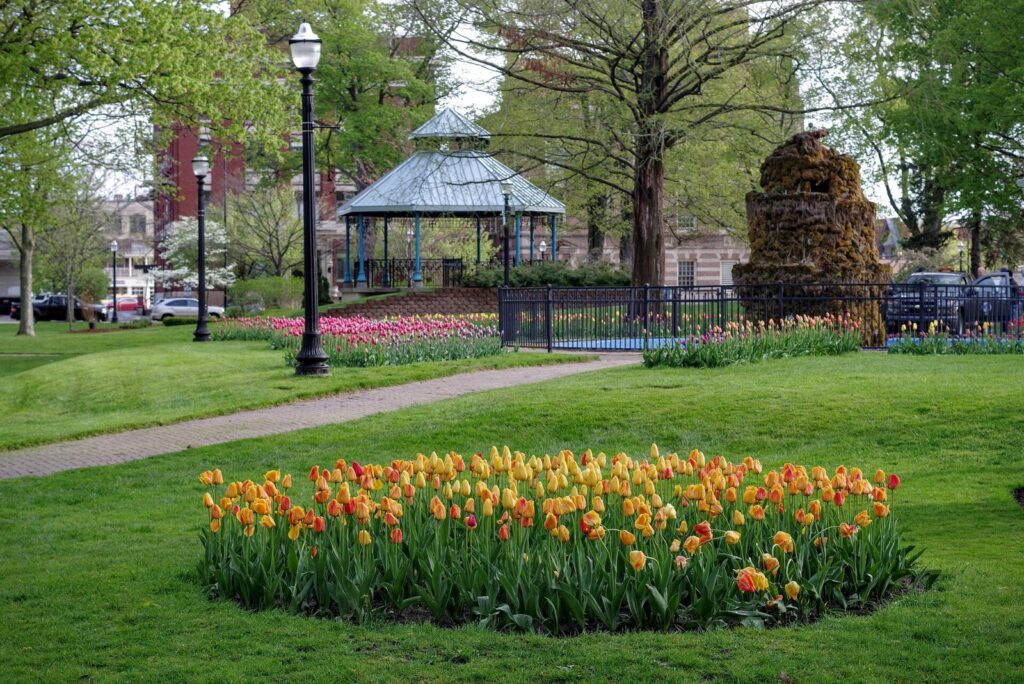
Tulip lovers: absolutely. Tulip Time is one of the Midwest’s great spring festivals, and the tulips are worth the trip even if you skip the parades.
Beach trips: yes. Holland State Park’s beach and Big Red are among the best-known sights on the Lake Michigan shore, and the county parks nearby are quieter.
Families: yes. Windmill Island, Nelis’ Dutch Village, the beach and easy logistics make it a low-stress family weekend.
A winter getaway: surprisingly, yes. The heated sidewalks, the Christmas market and cozy downtown make December a good time for a short visit.
Nightlife or an art-colony vibe: pick Saugatuck. The village 10 miles south is smaller, artsier and livelier at night; many visitors do both.
Tulip Time 2027 and when the tulips bloom
Tulip Time is Holland’s defining event. The 2027 festival runs April 30 to May 9, 2027 (in 2026 it ran May 1 to 10). Over ten days the town fills with tulips, visitors and Dutch tradition: three parades, Dutch dancing in costume and wooden shoes, concerts, markets, and the famous street scrubbing, when townspeople in traditional dress scrub the streets before the parade.
When do the tulips bloom in Holland, Michigan?
Holland’s tulips usually bloom from late April through mid-May, with the peak most often falling in early May. The festival is timed for it, and the city plants early, mid-season and late varieties so that something is in flower throughout Tulip Time. The weather still has the final say: a warm April brings the early tulips on ahead of the festival, and a cold spring holds them back. If you have flexibility, watch the festival’s bloom updates in the weeks before and aim for the middle of the festival, when early and late varieties usually overlap.
Where to see the tulips
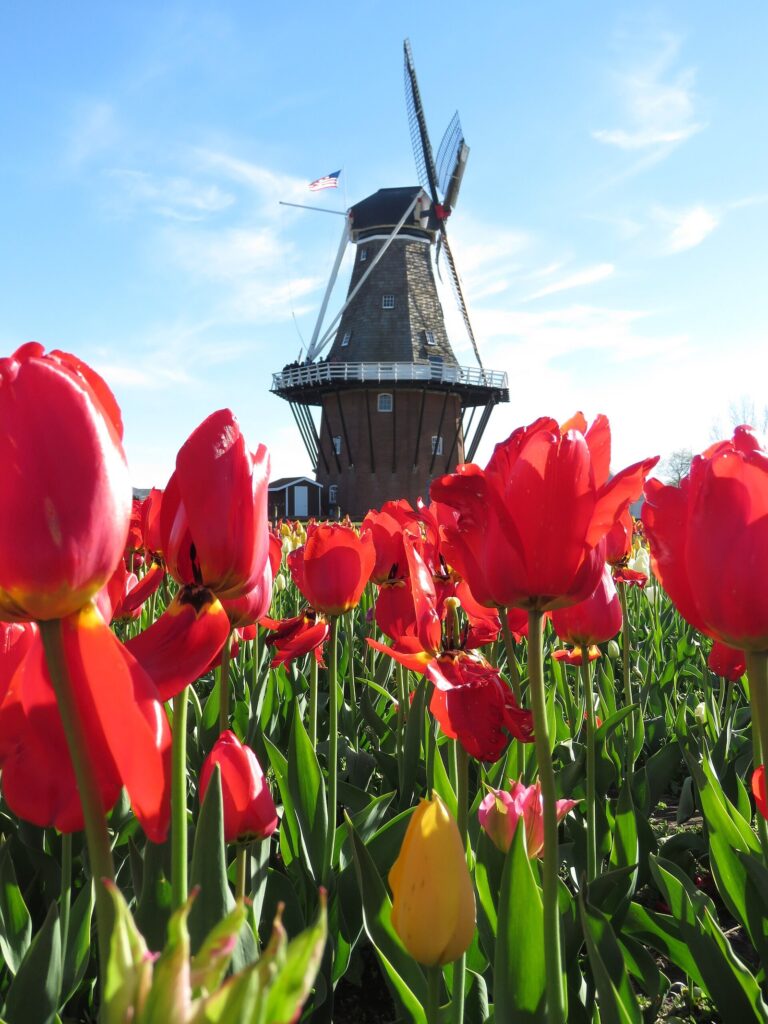
- Windmill Island Gardens: formal tulip beds around the De Zwaan windmill, the classic Tulip Time photo.
- Centennial Park and downtown: beds in the park and along 8th Street, walkable from the shops and restaurants.
- Window on the Waterfront: tulips along Lake Macatawa on the edge of downtown.
- The tulip lanes: residential streets lined with tulip beds, best seen on a slow drive or bike ride.
- Nelis’ Dutch Village: tulip gardens with a Dutch theme park and farm, good with young kids.
The parades and events
Tulip Time’s three parades are the Kinderparade, a children’s parade; the Volksparade, the people’s parade that begins with the street scrubbing; and the Muziekparade, a parade of marching bands. Dutch dance performances, with dancers in traditional costumes and wooden shoes, run throughout the festival. Many events are free to watch; some performances, tours and special events are ticketed, so check the festival’s schedule when it’s published.
The people behind the festival
Tulip Time’s flowers are a civic project. City crews and volunteers plant millions of bulbs each fall in parks, medians and along the tulip lanes, choosing varieties that open at different times to stretch the display across the festival. The dancers are a civic project too: the Dutch dance performances are danced by hundreds of local performers, many of them high school students, in costumes based on the traditional dress of Dutch provinces, clattering through their routines in wooden shoes. The street scrubbing that opens the Volksparade, with brooms and buckets of water, nods to the Dutch habit of scrubbing sidewalks and steps clean.
If you miss the festival
The tulips don’t vanish on the last day of Tulip Time. In many years, beds keep blooming for a week or so after the festival ends, depending on the weather, and the parks are far quieter. Late April, before the festival, can bring the first early varieties. Windmill Island and the downtown parks are the best places to check, and the drive or bike ride along the tulip lanes is free any day of the bloom.
Planning around Tulip Time
- Book lodging early. Tulip Time is Holland’s busiest stretch of the year; rooms in town book up months ahead, and prices climb. Grand Rapids, Saugatuck and the US-31 corridor are the overflow.
- Go midweek. Weekday crowds are thinner, and the tulips are the same.
- Plan parking. Downtown fills on parade days; check the festival’s parking and shuttle information, and arrive early.
- Buy Windmill Island tickets knowing the festival price. In 2026, admission rose during Tulip Time to $15 for adults and $7 for ages 3 to 15, with extended hours.
- Bring layers. Early May on Lake Michigan can be sunny and warm or raw and windy, sometimes on the same day.
A Tulip Time day, step by step
- Early morning: Windmill Island opens at 9 a.m. during Tulip Time; go first thing for the tulip beds and a windmill tour before the crowds.
- Mid-morning: head downtown for a parade or a Dutch dance performance, checking the festival schedule for the day’s times.
- Lunch: eat early, before noon, or late, after 1:30 p.m.; lines are long at peak times.
- Afternoon: ride or drive the tulip lanes, then visit Nelis’ Dutch Village if you have kids, or the Holland Museum if you don’t.
- Evening: dinner downtown (reserve ahead) and a sunset walk at Holland State Park, where the crowds thin out after the day-trippers leave.
For photographs, the best tulip light is in the early morning and late afternoon, when the colors glow and the parks are emptier. Overcast days are good too: soft light keeps the reds and pinks from blowing out.
Windmill Island Gardens and De Zwaan
Windmill Island Gardens, a city-run park on the edge of downtown, is home to De Zwaan, an authentic Dutch windmill that the city acquired from the Netherlands in 1964. It’s billed as the only authentic Dutch windmill operating in the United States, and it still turns and grinds grain into flour. Guided tours climb five floors inside the mill, and the surrounding gardens are planted with tulips in spring and flowers through the summer, with a Dutch-style carousel and gift shops on the grounds.
| Windmill Island Gardens (2026) | Details |
|---|---|
| Season | April 13 to October 4, 2026 |
| Hours | Daily from 9:30 a.m.; last admission 5 p.m.; closes 6 p.m. (during Tulip Time, 9 a.m. with last admission at 6 p.m.) |
| Admission | $13 adults, $6 ages 3-15, 2 and under free |
| Tulip Time admission | $15 adults, $7 ages 3-15 (May 1-10, 2026) |
| Time needed | About 1.5 to 2 hours, including a windmill tour |
What you’ll see on the island
The park is set among waterways on the edge of downtown, and the visit follows a loose loop: through the formal gardens and tulip beds, past the Dutch-style buildings and the carousel, and up into De Zwaan itself. The windmill tour is the highlight: guides explain how the mill works and take you up through its floors, and on the right days you can watch the stones grind grain into flour. Allow extra time in spring for the tulip beds, which are the most photographed in town, and bring a zoom lens if you want the windmill’s sails against the sky without crowds in the frame. Stroller users should know that the windmill’s interior involves steep stairs; the gardens themselves are easy going.
The 2026 season ends October 4, so if you’re reading this in fall 2026, you have days, not weeks. The 2027 season should open again in April, ahead of Tulip Time; check the park’s site for dates and any price changes. Go early in the day during Tulip Time, when the gardens are at their most crowded, and allow time for the windmill tour, which is the part people remember.
Holland State Park and Big Red
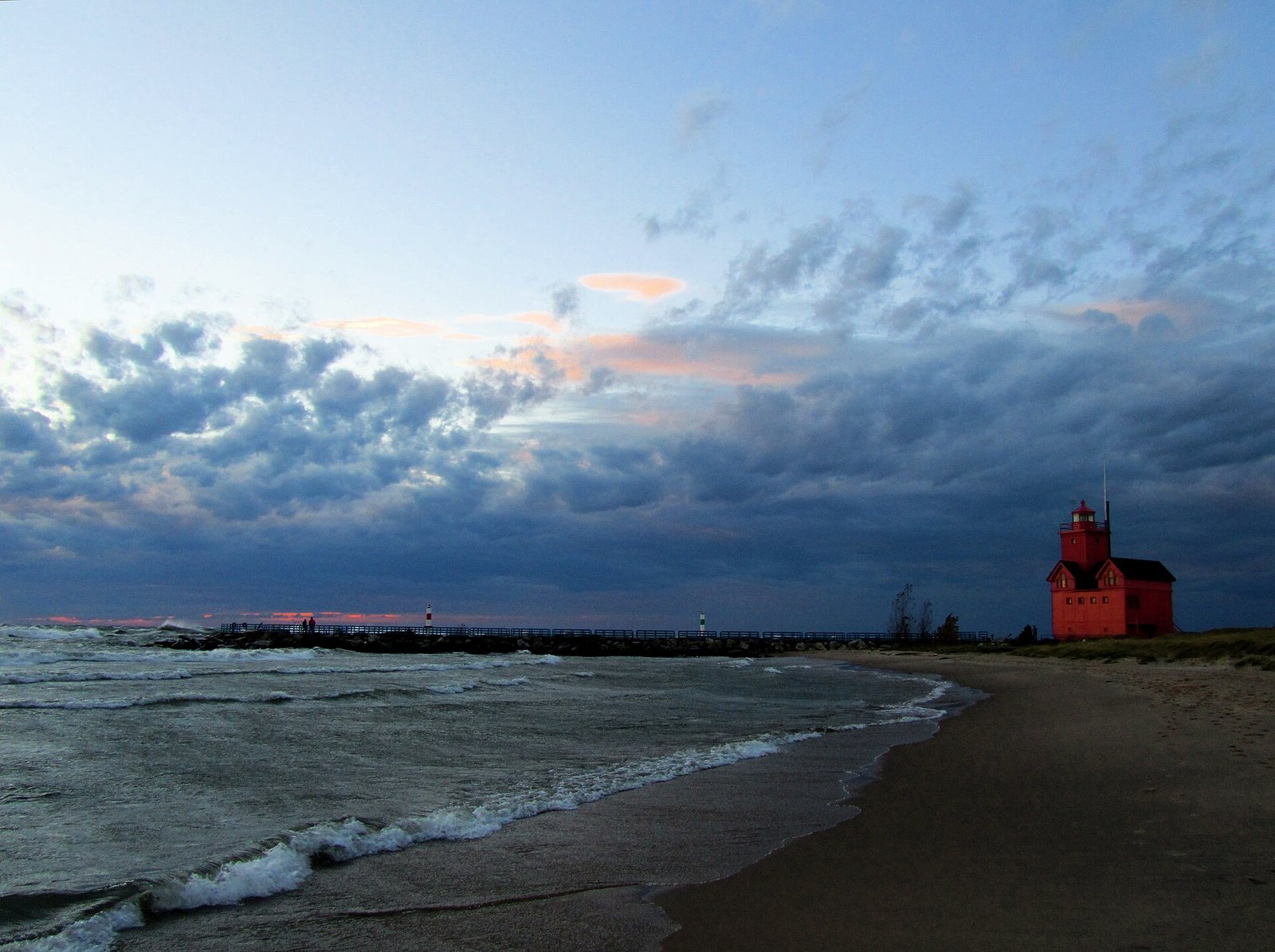
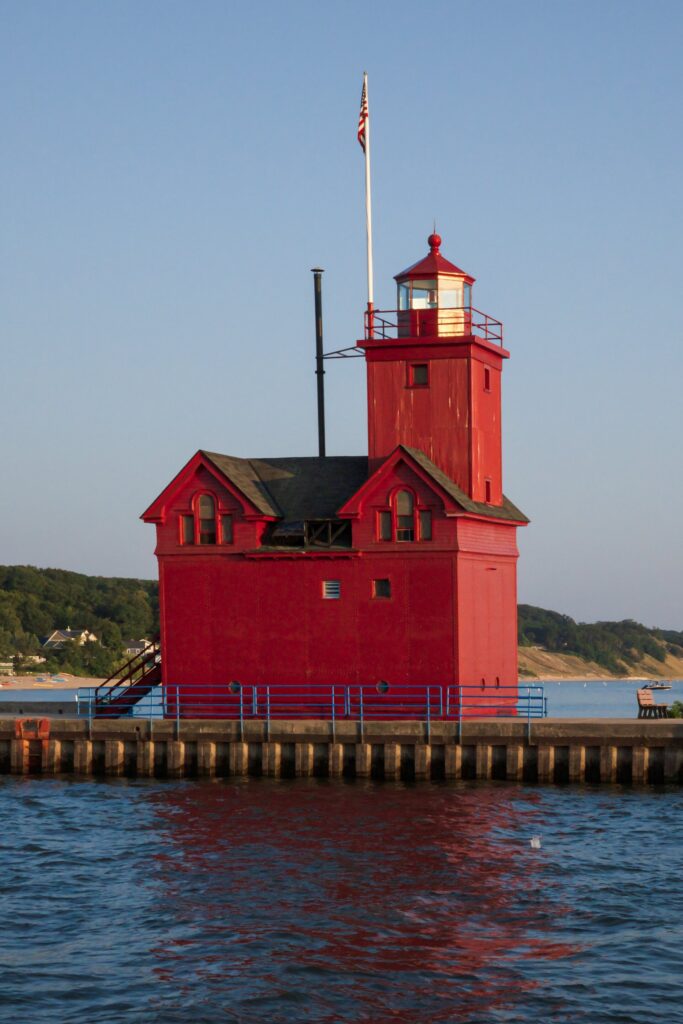
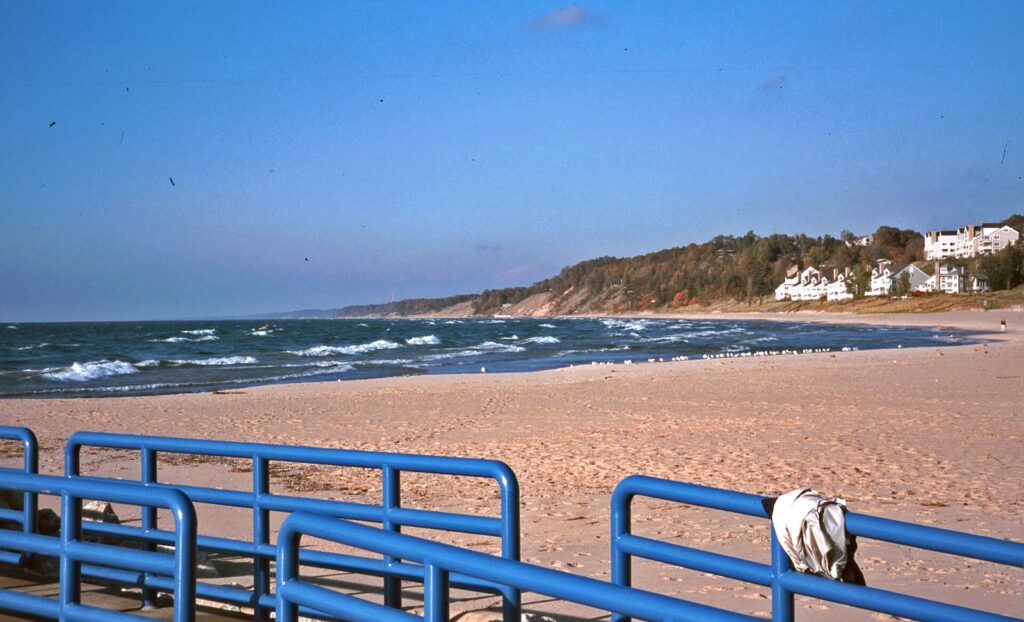
Holland State Park, west of town where Lake Macatawa’s channel meets Lake Michigan, is one of Michigan’s busiest state parks, and it’s easy to see why: a wide, soft sand beach on Lake Michigan, a campground on the calmer Lake Macatawa side, and a front-row view of Big Red, the Holland Harbor Light, the bright red lighthouse at the mouth of the channel.
- Entry: vehicles need a Recreation Passport. In 2026, Michigan residents pay $15 at plate renewal; non-residents pay $12 a day or $42 for the year.
- Seeing Big Red: the lighthouse stands on the south side of the channel. Most visitors see and photograph it from the state park on the north side, looking across the water, which is also the best view.
- Sunsets: the beach faces west over Lake Michigan, and summer sunsets draw a crowd.
- Camping: the park has campgrounds on both the Lake Michigan and Lake Macatawa sides; summer dates book up well ahead.
- Parking: on summer weekends the lots can fill by late morning. Come early, come late in the afternoon for sunset, or visit midweek.
Big Red: the story and the photos
Big Red’s official name is the Holland Harbor Light, and it marks the entrance to the channel between Lake Michigan and Lake Macatawa. The structure you see dates from the early 1900s, and it earned its color, and its nickname, when the Coast Guard painted it red in the mid-1950s. By the 1970s it was in danger of being abandoned, and a local preservation effort formed to save it; today it’s among the most photographed lighthouses on the Great Lakes.
Because it stands on the south side of the channel, beyond private land, the classic view is from Holland State Park on the north side. Late afternoon light warms the red paint, sunset puts color in the sky behind it, and after a winter storm the whole structure can be glazed in ice. Stay off the pier when the waves are up; no photo is worth it.
Swimming safety
Lake Michigan builds big waves when the wind blows onshore, and the currents along the channel and pier are dangerous. Check the beach flags posted at the park, stay out of the water when waves are high, keep well away from the channel and the pier in rough weather, and keep children within reach. If you’re caught in a rip current, swim parallel to shore before heading in.
What to bring for a beach day
Holland State Park’s sand is soft and deep, so a folding wagon beats a rolling cooler, and a windbreak or umbrella helps on breezy afternoons. Bring more water and sunscreen than you think, sandals for hot sand at midday, a layer for the evening, when the lake breeze turns cool even in July, and something warm for a sunset walk on the pier path. Families should pack beach toys and a snack plan, because the walk back to the car is long with tired kids.
Other beaches nearby
If the state park is packed, Ottawa County’s lakeshore parks north of the channel are quieter options. Tunnel Park is known for the tunnel that runs through a dune to the beach, a favorite with kids, and Kirk Park offers a quieter stretch of sand backed by woods and dunes. Check parking fees and rules at each, since county parks set their own.
Downtown Holland: 8th Street, the heated sidewalks and Kerstmarkt
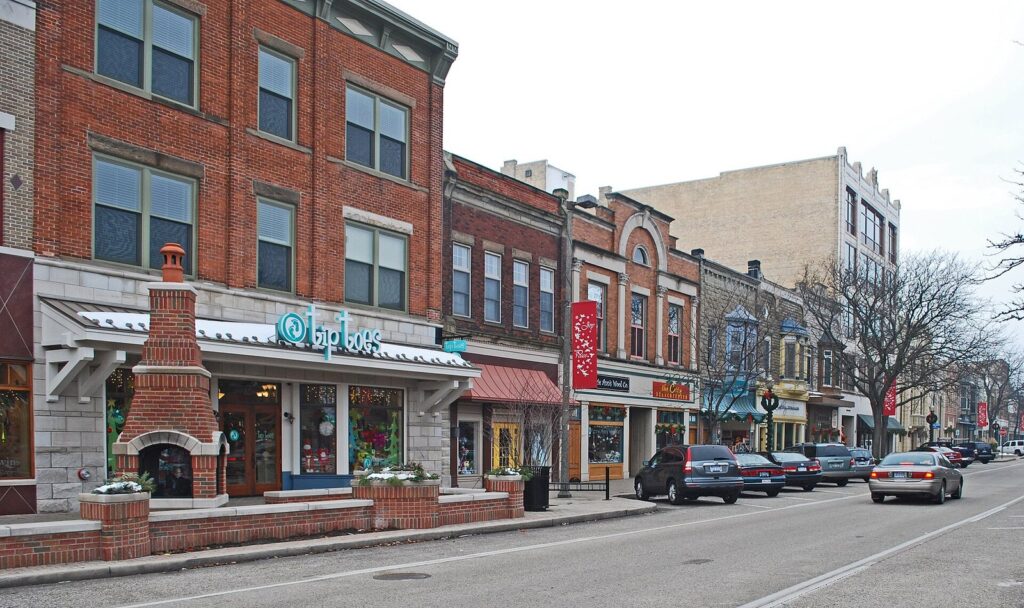
Downtown Holland centers on 8th Street, a few blocks of restored brick storefronts with independent shops, restaurants, coffee shops and brewpubs, a short walk from Hope College and Lake Macatawa. It’s lively most evenings, and it’s the town’s living room during Tulip Time and the holidays.
Why are the sidewalks heated in Holland, Michigan?
Downtown Holland’s snowmelt system, first installed in 1988, circulates warm water through tubing under the streets and sidewalks, so snow melts as it lands. The water is warmed by waste heat from power generation, from the city’s power plant and now the Holland Energy Park, which makes the system cheap to run, and it covers about 860,000 square feet of public streets and sidewalks, plus private sidewalks connected to it. The visitors bureau bills it as the largest municipal snowmelt system in the country, and says it can melt about an inch of snow an hour at 20 degrees with a 10 mph wind. The result is a downtown you can walk in January in ordinary shoes, which is a big reason Holland’s winter shopping season works.
Kerstmarkt and the holidays
Holland’s Christmas market, Kerstmarkt, borrows from the European tradition, with vendors selling gifts, food and warm drinks at downtown’s outdoor market space on weekends from late November into December. Add the holiday lights, the heated sidewalks and the town’s Dutch Christmas traditions, and December is one of the best times for a short visit. Check the downtown calendar for this year’s market days and the holiday parade.
The farmers market
From spring into late fall, the Holland Farmers Market fills the downtown marketplace a couple of mornings a week with growers from West Michigan’s fruit and vegetable country: strawberries in June, blueberries and peaches in summer, apples in the fall. It’s a good first stop on a Saturday.
Hope College
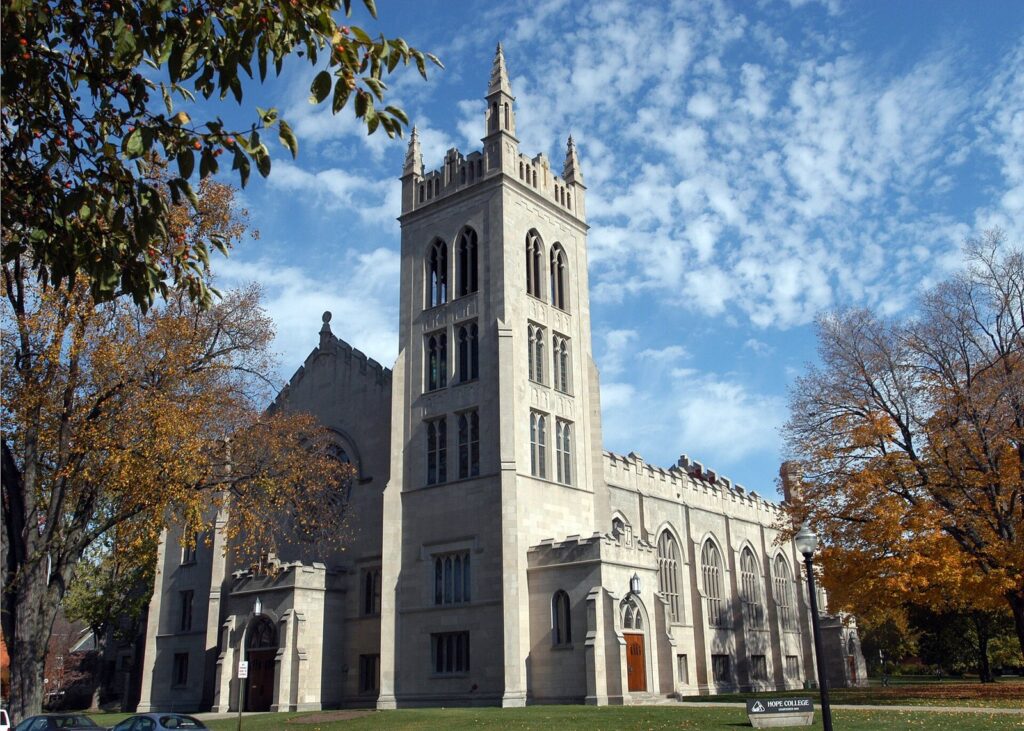
Hope College, founded in 1866, borders downtown to the south and east, and its campus makes a pleasant walk, with the gothic-style Dimnent Memorial Chapel at its heart. The college’s concerts, theater and art exhibitions add to Holland’s cultural calendar, especially during the school year.
Dutch attractions beyond the windmill
Nelis’ Dutch Village
Nelis’ Dutch Village, on James Street north of downtown, is a family-run Dutch theme park that blends a small amusement park with gardens, a petting farm, Dutch dancing, cheese and wooden-shoe shops and a cafe. It opened for the 2026 season on April 17 and is generally open April through September, from 9:30 a.m. to 5 p.m. on weekdays and 9:30 a.m. to 6 p.m. on weekends, with the theme park open daily from late April to Labor Day. A new Tulip Tower ride arrived in 2026. Children 2 and under get in free, and ticket sales stop an hour before closing. It’s aimed squarely at families with young children; adults on their own will likely prefer Windmill Island.
The Holland Museum
The Holland Museum, downtown in the city’s former post office on 10th Street, tells the story of the Dutch settlers and the town they built, with collections of Dutch art and objects alongside local history. It’s the best place to understand why Holland is Dutch in the first place, and a good rainy-day stop. Check its site for current hours, admission and the historic houses it operates.
Dutch food and treats
Holland’s bakeries, markets and Dutch-themed shops sell the classics: almond-filled banket pastry, often shaped into letters for the holidays; pigs in a blanket, the Dutch version wrapped in pastry; stroopwafels; poffertjes, the small puffed pancakes that turn up at festivals; and Dutch cheeses. Tulip Time is the easiest time to find them all at once.
Things to do in Holland: the short list
- See the tulips during Tulip Time, or any time from late April to mid-May.
- Tour De Zwaan at Windmill Island Gardens (mid-April to early October).
- Spend an afternoon at Holland State Park and watch the sunset behind Big Red.
- Walk 8th Street for shops, coffee and dinner, and come back in December for Kerstmarkt.
- Visit Nelis’ Dutch Village with young children.
- Learn the backstory at the Holland Museum.
- Get on Lake Macatawa in a kayak or on a paddleboard in summer.
- Try the county beaches at Tunnel Park and Kirk Park.
- Browse the farmers market on a summer or fall morning.
- Day-trip to Saugatuck and Douglas, 10 miles south, for galleries and dunes.
Biking and paddling
Holland is an easy town to see by bike. Paved paths link downtown with the neighborhoods, the waterfront parks and the lakeshore, including routes out toward Holland State Park, so a ride can take in the tulip lanes in spring and the beach in summer. On the water, Lake Macatawa is sheltered and good for kayaks and paddleboards on calm mornings, while the open Lake Michigan shore is for experienced paddlers only, and only on calm days.
Holland in the fall
Fall is Holland’s quiet season, and one of its nicest. September keeps summer’s warmth with far fewer people at the beach, the farmers market is full of apples and squash, and the orchards of the surrounding fruit country hold their harvest weekends. Color usually peaks in the second half of October, when the woods around Lake Macatawa and the dunes along the lakeshore turn. Windmill Island closes for the season in early October, so go in September if it’s on your list.
Family picks
With kids, the natural Holland day is a morning at Nelis’ Dutch Village or Windmill Island, lunch downtown, an afternoon at Holland State Park or Tunnel Park, and ice cream on 8th Street. In spring, the Kinderparade during Tulip Time is the children’s own parade. On a rainy day, the Holland Museum and the downtown shops fill a few hours.
Holland itineraries: one day and a weekend
One day in Holland
- 9:30 a.m.: Windmill Island Gardens when it opens (mid-April to early October), with a tour of De Zwaan.
- Noon: lunch on 8th Street, then a walk through downtown, Centennial Park and the Hope College campus.
- 2 p.m.: the Holland Museum, or Nelis’ Dutch Village if you’re traveling with young children.
- 4 p.m.: drive or bike out to Holland State Park for the beach and Big Red.
- Sunset: stay for the sunset over Lake Michigan, then head back downtown for dinner.
A weekend in Holland
- Day 1: the one-day plan above.
- Day 2: a morning at the farmers market (in season), a bike ride along the lakeshore or a beach morning at Tunnel Park, then an afternoon in Saugatuck and Douglas, 10 miles south, for galleries, shops and dinner.
A winter weekend
- Day 1: an afternoon on 8th Street’s heated sidewalks, Kerstmarkt if it’s a market weekend in December, and dinner downtown.
- Day 2: the Holland Museum in the morning, a bracing walk at Holland State Park to see Big Red and the shelf ice from the beach, and hot drinks back in town.
What a Holland trip costs
Holland is a moderately priced destination outside Tulip Time. Many of its best sights are free or nearly so: downtown, the waterfront parks, the tulip lanes, the farmers market and the Hope College campus cost nothing, and the Holland State Park beach needs only a Recreation Passport ($12 a day for non-residents or $15 for Michigan residents at plate renewal, 2026). Windmill Island is $13 for adults and $6 for ages 3 to 15 in the regular 2026 season. The big variable is lodging, which is priced for demand during Tulip Time and on summer weekends and falls sharply in winter.
Holland for couples
For couples, Holland works best as a slow weekend: a room downtown so you can walk to dinner, a sunset at Holland State Park, a bike ride along the lakeshore, a morning at the farmers market and an afternoon in Saugatuck’s galleries. Tulip Time is lovely but crowded; midweek during the festival, or the days just after it, gives you the tulips with more room. In December, the heated sidewalks, Kerstmarkt and cozy restaurants make a winter getaway easy.
Holland on a rainy day
Rain doesn’t have to sink a Holland trip. The Holland Museum explains the town’s Dutch roots, the Hope College campus has art and performance spaces, and 8th Street’s shops, coffee shops and brewpubs are made for a wet afternoon. De Zwaan’s indoor tour works in a light drizzle. For bigger indoor options, Grand Rapids’ museums are about 35 minutes away.
Holland with grandparents and grandkids
Holland is an easy trip for three generations: flat, compact, full of places to sit and mostly free outside a few paid attractions. Grandparents can enjoy Windmill Island’s gardens and the downtown shops while the kids burn energy at the beach or at Nelis’ Dutch Village, and in winter the heated sidewalks take ice out of the equation.
Where to stay in Holland
| Area | Best for | Trade-offs |
|---|---|---|
| Downtown | Walking to restaurants, 8th Street, Hope College and Tulip Time events | Highest prices during Tulip Time and summer weekends |
| Lakefront: Lake Macatawa and Park Township | Beach days, sunsets and cottage stays near the state park | You’ll drive into town; rentals often have minimum stays in summer |
| US-31 corridor | Chain hotels, easy parking, lower rates | No walkable charm; a short drive to everything |
| Holland State Park campgrounds | Camping steps from the beach | Summer dates book far ahead; Recreation Passport needed |
| Saugatuck-Douglas base | An artsier village atmosphere, 10 miles south | Fewer rooms and higher prices in summer; drive in for Holland sights |
Room rates follow Holland’s calendar. They peak during Tulip Time, stay high on summer weekends, rise again for Hope College’s big weekends, and fall to their lowest from January to March outside holiday weekends. For Tulip Time, book as soon as the dates are fixed; for summer, a Sunday-to-Thursday stay usually saves money. Grand Rapids, 35 minutes away, is the fallback when Holland is full.
Downtown or the lake?
The choice comes down to what you’ll do most. If Tulip Time, dinners out and walking are the point, stay downtown: you can leave the car at the hotel, stroll to the parades and restaurants, and get to Windmill Island on foot or by a short drive. If the beach is the point, a cottage or rental near Lake Macatawa or in Park Township puts you minutes from Holland State Park and the county beaches, with sunsets on your doorstep, but you’ll drive into town for dinner. Families on a longer summer stay often do best with a rental and a kitchen; couples on a short weekend usually prefer downtown.
Booking for Tulip Time
Tulip Time is the one week when Holland’s lodging genuinely runs short. Book as soon as you know your dates; many regulars book the next year’s stay as they check out. Expect minimum stays at some properties and the year’s highest rates. If Holland is full, look at the chain hotels along US-31, at Zeeland next door, at Saugatuck and Douglas to the south, or at Grand Rapids, 35 minutes away, and plan to drive in early to beat the parking crunch. A Sunday-to-Thursday stay during the festival is easier to find and cheaper than the weekends.
Food and drink in Holland
Holland eats better than its size suggests. Downtown’s restaurants run from casual lunch spots and coffee shops to farm-driven dinner menus, many sourcing from the orchards and farms of the surrounding Lakeshore. Beer is a big part of the scene: Holland is home to some of West Michigan’s best-known craft brewing, with brewpubs and taprooms within walking distance of 8th Street. Add the Dutch bakeries, the farmers market and the fruit stands along the back roads in summer, and it’s easy to plan a trip around eating. Reserve dinner during Tulip Time and on summer weekends.
West Michigan’s farms show up on the plate. Michigan is one of the country’s biggest blueberry growers, and the fields around Holland are part of its heartland, so July and August bring blueberries to the farmers market, to bakery counters and to the roadside stands on the back roads. Lake Michigan fish, especially whitefish and perch, turns up on many menus, and the fruit belt’s peaches and apples follow in late summer and fall. For a quick treat, an ice cream cone on 8th Street after dinner is practically a local ritual on summer evenings.
Best time to visit Holland: month by month
| Month | What’s happening | Crowds |
|---|---|---|
| January to February | Snow everywhere but downtown’s heated streets; quiet shopping and dining | Light |
| March | Late winter, the quietest month | Light |
| April | Windmill Island opens mid-month; the first tulips toward the end of the month | Building |
| May | Tulip Time (April 30 to May 9, 2027) and peak bloom | Heaviest of the year during the festival |
| June to August | Beach season at Holland State Park; farmers market in full swing; boating on Lake Macatawa | Heavy on weekends |
| September | Warm days, emptier beaches, harvest at the market | Moderate |
| October | Fall color, usually in the second half of the month; Windmill Island closes early in the month (October 4 in 2026) | Moderate |
| November to December | Kerstmarkt, holiday lights and the holiday parade downtown | Busy on market weekends |
The best time for most visitors is Tulip Time if you love flowers and don’t mind crowds, or June through early September for the beach. September is the sweet spot for a quieter summer-style trip, and December is the surprise: the heated sidewalks make a winter visit far more pleasant than you’d expect.
Holland in summer
Summer is Holland’s other peak season. Holland State Park’s beach fills on hot weekends, Lake Macatawa fills with boats, the farmers market is at its best and downtown’s restaurants spill onto the sidewalks. Evenings are long, and sunsets over Lake Michigan come late, after 9 p.m. in June and July, because Holland sits near the western edge of the Eastern time zone. Book summer weekends early, and plan beach time for mornings and evenings to dodge the midday crowds and the full parking lots.
Events beyond Tulip Time
Holland’s calendar doesn’t stop after May. Through the summer, downtown hosts outdoor events and markets, Hope College runs concerts and theater during the school year, and the holidays bring Kerstmarkt and a holiday parade downtown. For current dates, check the downtown and visitors bureau calendars before you go.
Holland in winter
Winter strips Holland back to its downtown, and that’s no bad thing. The snowmelt system keeps 8th Street clear, the shops and restaurants stay open, and Kerstmarkt fills December weekends. Holland State Park is stark and beautiful in winter, with Big Red iced over after storms and shelf ice building along the shore. Admire it from the beach: never walk out onto Lake Michigan shelf ice, which hides holes and breaks off without warning.
Winter is also Holland’s bargain season. Room rates drop to their lowest from January to March, outside holiday weekends, and the downtown restaurants that are packed in July have tables to spare. Pair a winter night with a Grand Rapids museum day and you have a cheap, easy weekend.
Getting to Holland and getting around
| From | Distance | Typical drive |
|---|---|---|
| Grand Rapids | 29 miles | about 35 min |
| Chicago | 152 miles | about 2 h 30 min, plus the time change |
| Detroit | 181 miles | about 2 h 45 min |
| Indianapolis | 237 miles | about 3 h 50 min |
| Cleveland | 312 miles | about 4 h 55 min |
| Columbus, Ohio | 317 miles | about 5 h 30 min |
| Toronto | 384 miles | about 6 h 5 min, plus the border |
Chicago drivers should remember the time zone: Holland is on Eastern time, an hour ahead of Chicago, so a 2.5-hour drive leaving at 9 a.m. arrives around 12:30 p.m. local time, and the hour comes back on the way home. Summer weekend traffic around the south end of Lake Michigan and on I-196 can add time.
Without a car, Amtrak’s Pere Marquette, the daily train between Chicago and Grand Rapids, stops in Holland, and the nearest major airport is Gerald R. Ford International in Grand Rapids, under an hour away. Downtown, Hope College, Windmill Island and the waterfront parks are walkable or bikeable from one another, and the local bus system, the Macatawa Area Express, covers the city. You’ll want a car, a bike or a ride for Holland State Park, which is several miles west of downtown.
Arriving by boat
Holland is also a boating town. The channel at Holland State Park connects Lake Michigan with Lake Macatawa, which is lined with marinas, and summer boaters cruising the Lake Michigan shore often stop here. If you’re arriving by water, check transient slip availability with the marinas well ahead of summer weekends and Tulip Time, and watch the channel conditions, which can be rough when the wind is onshore.
Parking
Downtown Holland has street parking and public lots and ramps within a block or two of 8th Street, which work fine most of the year. The pressure points are Tulip Time parade days, summer Saturdays and December market weekends, when it pays to arrive early or park a little farther out and walk. At Holland State Park, the lots can fill on hot summer weekends by late morning; the county beach parks have their own lots and rules.
Is Holland or Saugatuck better to visit?
They’re neighbors, 10 miles apart, and they suit different moods.
Pick Holland for: tulips and Dutch heritage, the big state park beach and Big Red, a larger downtown with more restaurants, easier parking and more hotel choice, and a family-friendly pace.
Pick Saugatuck and Douglas for: an art-colony village with galleries and boutiques, dunes and a walk-up beach, a livelier evening scene and smaller inns and bed-and-breakfasts.
Our verdict: for a first visit in May, Holland; for a summer couples’ weekend, Saugatuck. For a long weekend, stay in one and spend a day in the other.
The two are an easy pairing: the drive between them takes about 15 to 20 minutes on the Blue Star Highway or I-196. Holland usually has more rooms and better availability, especially on summer weekends, so a common plan is to sleep in Holland and spend an evening in Saugatuck and Douglas, or the reverse if you want the village atmosphere at night and Holland’s attractions by day.
Day trips from Holland
- Saugatuck and Douglas: about 10 miles south, the lakeshore’s art-colony villages, with galleries, boutiques, dunes and a walkable waterfront. The obvious half-day or evening trip.
- Grand Haven: north along the lakeshore, known for its boardwalk, its pier lighthouses and a big state park beach. Check the pier conditions before walking out; the same wave and current warnings apply.
- Grand Rapids: about 35 minutes east, Michigan’s second-largest city, with museums, breweries and a busy downtown, a good rainy-day alternative.
- Zeeland: Holland’s Dutch-founded neighbor just to the east, quieter and smaller, with its own historic downtown.
What to skip
Skip Tulip Time weekends if crowds ruin your day. Go midweek during the festival, when the tulips are the same and the streets are calmer.
Skip planning around a fixed bloom date. Tulips follow the weather. Watch the bloom updates and stay flexible.
Skip a late-October Windmill Island visit. The 2026 season ends October 4, and the park doesn’t reopen until April.
Skip the pier on rough days. The channel and pier at Holland State Park are dangerous in high waves.
Skip the midday state park lot in July. Come early, come for sunset, or use a county park beach instead.
Skip winter shelf ice. Look at it from the beach; never walk out on it.
Frequently asked questions
What is Holland, Michigan known for?
Holland is known for its Dutch heritage, dating to its founding by Dutch settlers in 1847; for Tulip Time, the spring festival that brings millions of tulips and wooden-shoe dancers each May; for De Zwaan, the authentic Dutch windmill at Windmill Island Gardens; for Holland State Park and the red Big Red lighthouse; for Hope College; and for downtown’s heated sidewalks.
Is Holland, Michigan worth visiting?
Yes, especially during Tulip Time in early May, in summer for Holland State Park and Big Red, and in December for the Christmas market on the heated downtown streets. It works as a day trip from Grand Rapids or a weekend from Chicago and Detroit, and it pairs well with Saugatuck, 10 miles south.
When do the tulips bloom in Holland, Michigan?
Usually from late April through mid-May, with the peak most often in early May, which is why Tulip Time runs April 30 to May 9 in 2027. The city plants early, mid-season and late varieties to stretch the display, but weather shifts the timing each year, so check the festival’s bloom updates before you go.
Is Holland, Michigan on Lake Michigan?
Almost. The city sits on Lake Macatawa, which connects to Lake Michigan through a short channel a few miles west of downtown. Holland State Park straddles that channel, with a big sandy beach on Lake Michigan and the Big Red lighthouse at the channel’s mouth, so the Lake Michigan shore is a short drive or bike ride away.
How far is Holland, Michigan from Chicago?
About 152 miles, or roughly 2 hours 30 minutes by car around the south end of Lake Michigan, plus one hour on the clock because Holland is on Eastern time. Amtrak’s Pere Marquette also runs a daily train between Chicago and Grand Rapids that stops in Holland.
Why are the sidewalks heated in Holland, Michigan?
To keep downtown walkable and open for business all winter. Since 1988, a snowmelt system has pumped water warmed by waste heat from power generation through tubing under about 860,000 square feet of downtown streets and sidewalks. Because the heat would otherwise be wasted, it’s cheap to run, and snow melts as it falls on 8th Street.
Is Holland or Saugatuck better to visit?
Holland is better for tulips, Dutch heritage, the big state park beach and Big Red, and families who want easy logistics. Saugatuck and Douglas, 10 miles south, are better for galleries, boutiques, dunes and a livelier evening scene. For a long weekend, stay in one and day-trip to the other.
Sources and verification
Everything on this page was checked on September 23, 2026 against the organizations listed below. The guide is compiled from their published information and claims no first-hand visits.
- Windmill Island Gardens: plan your visit (2026 season, hours and admission)
- Holland Area Visitors Bureau: Snow-Free Holland (the snowmelt system)
- Nelis’ Dutch Village: hours and prices (2026 season and hours)
- Michigan Department of Natural Resources (Recreation Passport and Holland State Park)
We also used the Tulip Time festival’s published 2026 and 2027 dates, the City of Holland, the 2020 census and a routing service for drive times.
Michigan Tourism Guide is an independent publication. It is not affiliated with Pure Michigan or any agency or business named here.
Photo credits
- Big Red at dusk (featured image): photo by Kramer from Grandville, MI, United States, Wikimedia Commons (CC BY 2.0)
- Tulips in Centennial Park: photo by Leo Herzog, Wikimedia Commons (CC BY-SA 3.0)
- De Zwaan windmill: photo by Astridmigu7, Wikimedia Commons (CC BY-SA 4.0)
- Holland Harbor Light (Big Red): photo by WMrapids, Wikimedia Commons (CC0)
- Lake Michigan beach near Holland: photo by qwesy qwesy, Wikimedia Commons (CC BY 3.0)
- 8th Street, downtown Holland: photo by Andrew Jameson, Wikimedia Commons (CC BY-SA 3.0)
- Dimnent Memorial Chapel: photo by Trenner1945, Wikimedia Commons (CC BY-SA 3.0)