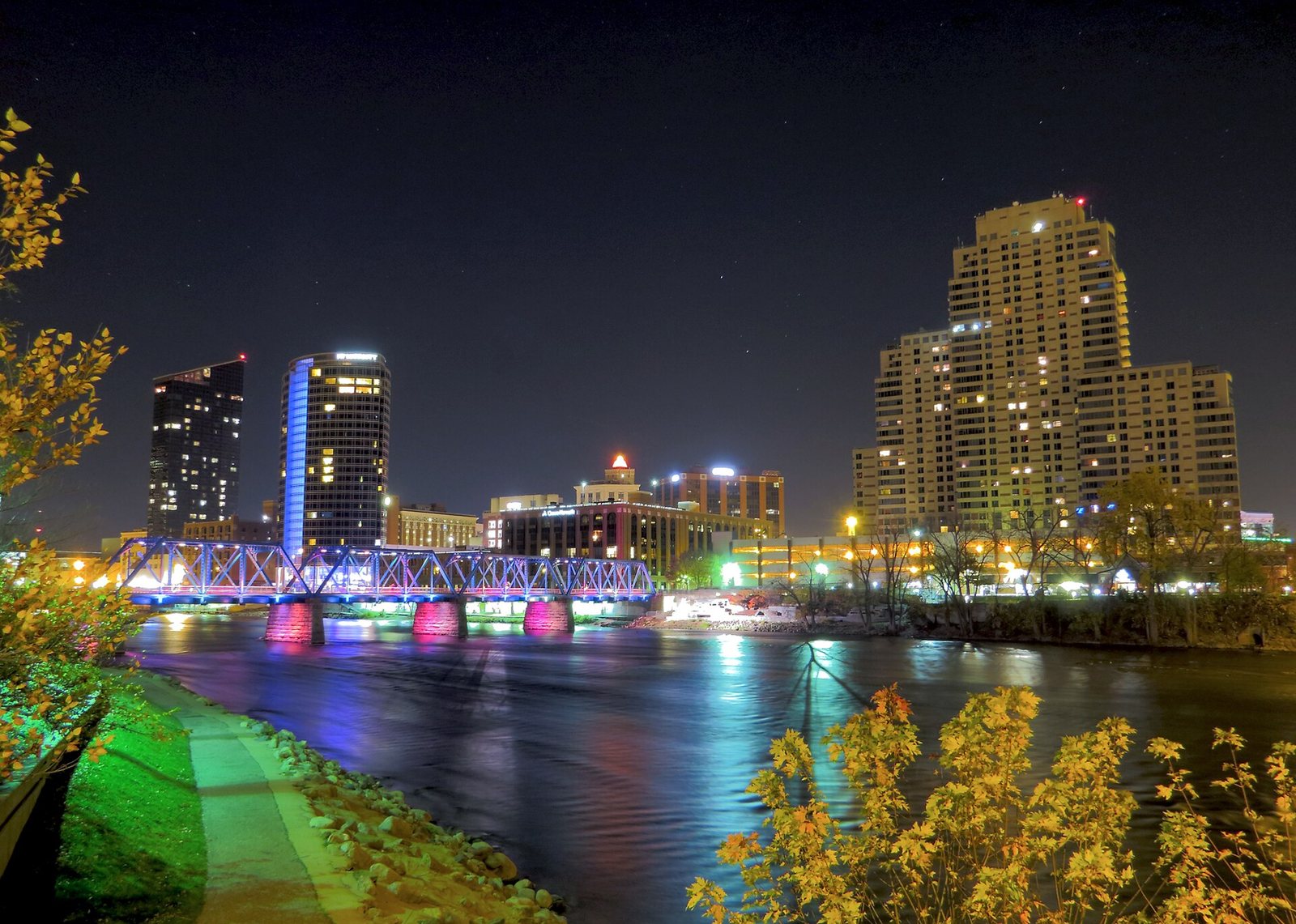
Grand Rapids is Michigan’s second-largest city, and it wears it lightly. The Grand River runs through the middle of downtown past a presidential museum, a public museum with a 1928 carousel in its glass rotunda and a blue railroad bridge turned footbridge, while breweries fill the old warehouses on either bank. Forty minutes west is Lake Michigan. That mix, a compact city with big-city museums and a beach within reach, is why the list of things to do in Grand Rapids keeps getting longer: one of the country’s great sculpture gardens, a beer scene that won the city the Beer City USA title, and ArtPrize, the art competition that takes over downtown each fall.
The short answer: spend a morning at Frederik Meijer Gardens & Sculpture Park ($25 adults in 2026), an afternoon downtown at the Gerald R. Ford Presidential Museum and the Grand Rapids Public Museum, and an evening on the Beer City Ale Trail. A weekend covers the city well; add a third day for Lake Michigan at Holland or Grand Haven, 35 minutes away, or for Kalamazoo, 50 minutes south.
Prices, hours and dates below were checked on September 23, 2026 against the attractions’ and agencies’ own websites. Admission prices change, and several attractions sell tickets online, so confirm before you go.
On this page: At a glance · In brief · The 12 best · Beer City · ArtPrize · Neighborhoods · Events by season · With kids · Rainy days and winter · For couples · Free and cheap · Itineraries · Where to stay · Getting there · Lakeshore day trips · Kalamazoo · First-visit tips · Is it worth it? · What to skip · FAQ
Grand Rapids at a glance
| Attraction | What it is | 2026 price | Hours or season | Time needed |
|---|---|---|---|---|
| Frederik Meijer Gardens & Sculpture Park | Botanic garden, conservatory and sculpture park | Adults $25; seniors $20; students $19; children 3-13 $14 | Year-round | 3 to 4 hours |
| Gerald R. Ford Presidential Museum | Museum of the 38th president on the riverfront | Tickets sold online; check current prices | Mon-Sat 10-5, Sun noon-5; last entry 4 p.m. | 2 hours |
| Grand Rapids Public Museum | History and science museum with a 1928 carousel and a planetarium | Adults $14; seniors $10; ages 3-17 $5 (Kent County kids free); carousel $3; planetarium $4 add-on | Year-round, daily | 2 to 3 hours |
| John Ball Zoo | Zoo of 2,000+ animals on a wooded hillside | Adults $22.95; ages 3-12 and 62+ $16.95 | March 20 to November 22, 2026 | 3 hours |
| Beer City Ale Trail | 35+ craft breweries across the city | Pay as you drink | Year-round | An evening or a weekend |
| Downtown riverfront, Blue Bridge, fish ladder | Walks along the Grand River | Free | Always open | 1 to 2 hours |
| Heritage Hill | Historic district of 1,300+ houses | Free to walk | Always open | 1 hour |
| ArtPrize | Citywide art competition | Free to view | 2026: September 18 to October 3; 2027 dates not yet announced | A day or more |
| Acrisure Amphitheater | New 12,000-seat outdoor concert venue on the river | By show | Opened May 15, 2026; summer and fall concerts | An evening |
Grand Rapids in brief: from Furniture City to Beer City
Grand Rapids started as a fur-trading post: Louis Campau, a French trader, set one up beside the rapids in 1826, and the town grew on lumber floated down the Grand River. By the late 1800s it was the Furniture City, famous for fine furniture sold across the country, and the office-furniture companies that followed still shape its skyline and its design scene. The 20th century added Gerald Ford, who grew up here, and a handful of homegrown companies, Amway, Meijer and Steelcase among them, whose founding families’ names are now on the arena, the convention center, the gardens and half the museums in town.
That money and civic pride built most of what visitors come for: Meijer Gardens, the riverfront museums, Van Andel Arena and ArtPrize, which a member of the DeVos family founded in 2009. The city of about 200,000 has grown into the center of a metro area of more than a million, with a medical district on the hill east of downtown, four colleges in or near the city center and a food and beer scene that punches well above its size. It’s still a practical, unshowy place, and that’s part of the appeal: prices are lower and crowds thinner than in Chicago or Detroit.
The 12 best things to do in Grand Rapids
Ranked for a first visit, weighing how good each one is and how hard it would be to find anything like it elsewhere in Michigan.
1. Frederik Meijer Gardens & Sculpture Park
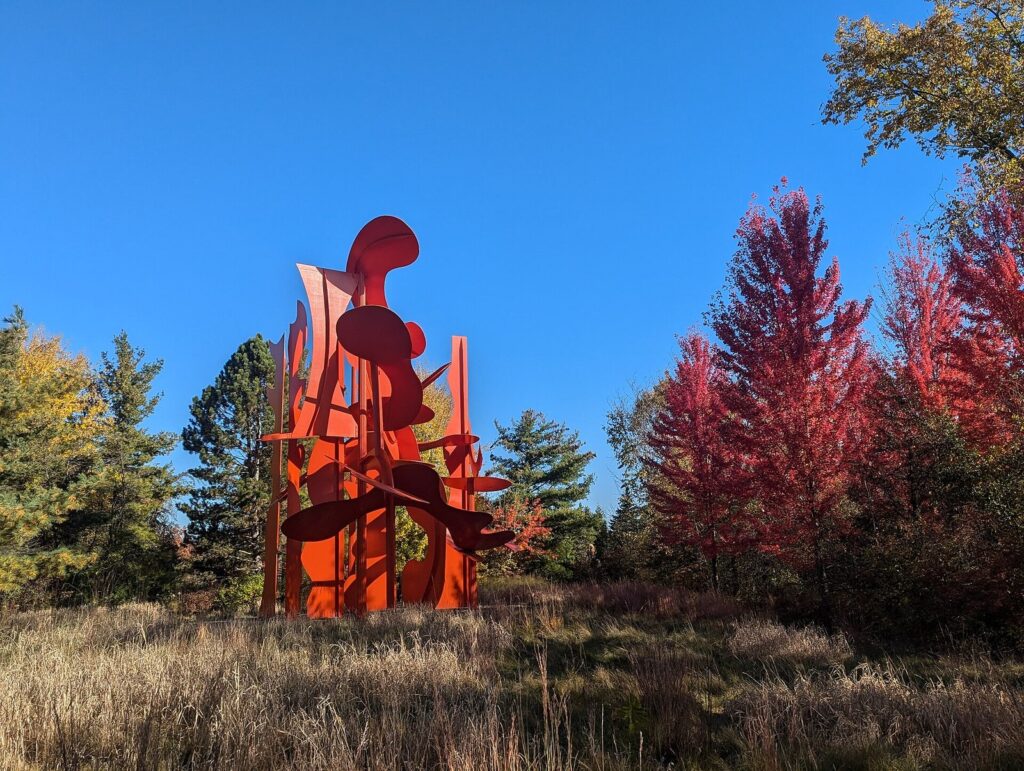
If you do one thing in Grand Rapids, do this. Meijer Gardens, on the northeast side about 15 minutes from downtown, combines a botanic garden with one of the country’s major sculpture parks: outdoor galleries of modern and contemporary sculpture set among meadows, woods and ponds, a large Japanese garden, a five-story tropical conservatory, and The American Horse, a 24-foot bronze based on Leonardo da Vinci’s designs. There’s a children’s garden, indoor galleries with changing exhibitions and, in summer, an outdoor concert series in the amphitheater. In 2026 admission is $25 for adults (14-64), $20 for seniors, $19 for students and $14 for children 3-13. Allow half a day, and go on a weekday morning in spring, when the gardens are at their peak and the tram tours are less crowded. The winter holiday displays and the spring butterfly exhibition in the conservatory are the other peaks.
2. Gerald R. Ford Presidential Museum
Gerald Ford grew up in Grand Rapids and represented it in Congress for 25 years before he became the 38th president, and his museum sits on the west bank of the Grand River, across from downtown. The exhibits cover his life, his unexpected presidency after Watergate and the Ford family, and he and Betty Ford are buried on the museum grounds. It’s open Monday to Saturday from 10 a.m. to 5 p.m. and Sunday from noon to 5 p.m., with last entry at 4; tickets are sold online. Two hours is enough. Pair it with a walk across the Blue Bridge and along the riverfront.
3. The Beer City Ale Trail
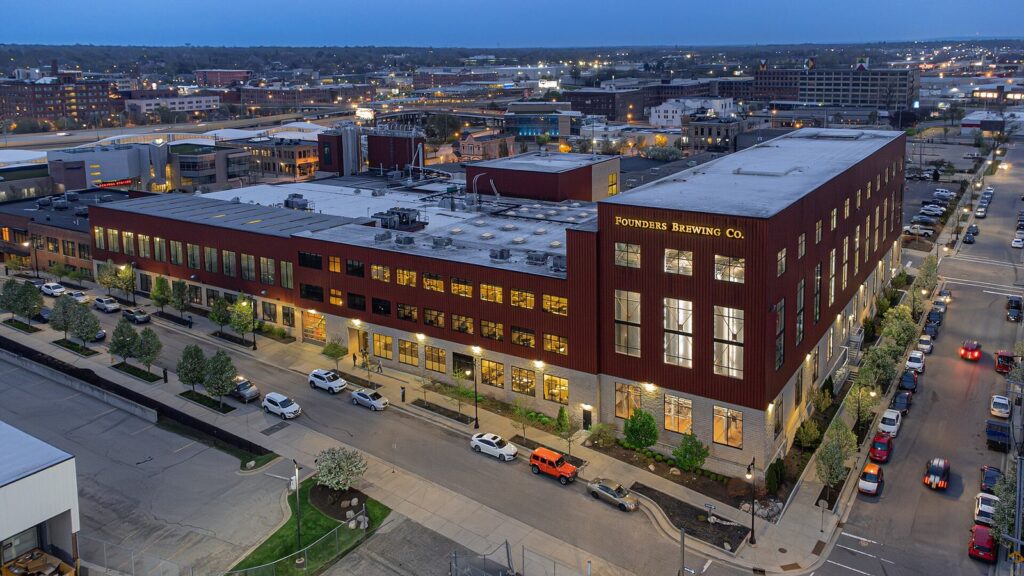
Grand Rapids won the Beer City USA title in a national vote in 2012 and has taken USA Today’s readers’ poll for best beer city every year from 2021 to 2025, and the city runs with it. The Beer City Ale Trail, organized by Experience Grand Rapids, links 35-plus craft breweries across town; Founders Brewing, which opened in 1997 and grew into one of the country’s best-known craft brewers, anchors it, and Brewery Vivant, with Belgian- and French-style beers, is another favorite. Check in at eight breweries on the trail’s app to earn a free T-shirt as a “Brewsader.” The brewery section below explains how to plan a crawl by neighborhood.
4. Grand Rapids Public Museum
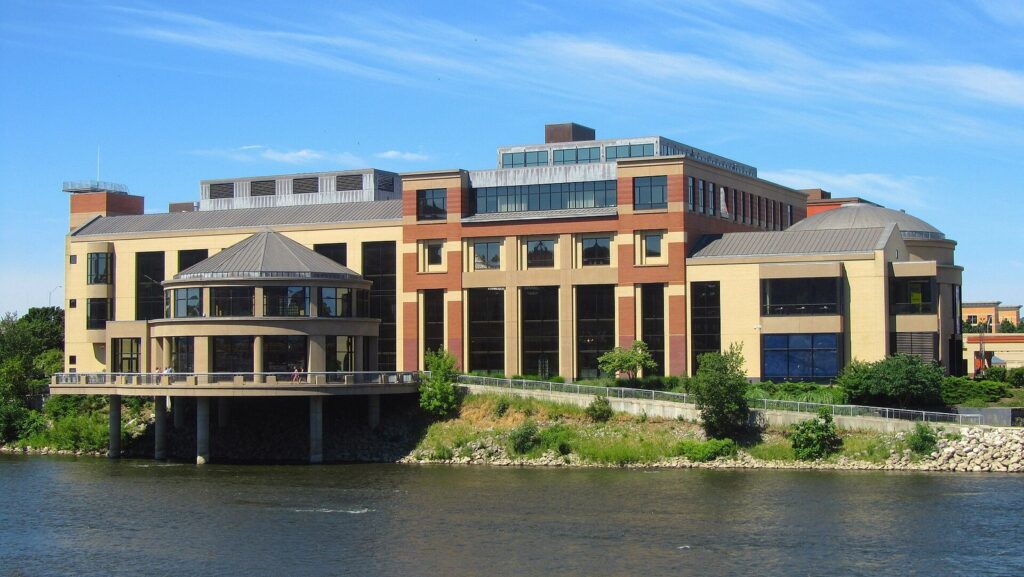
The Public Museum, on the west bank of the river next door to the Ford Museum, is the city’s best rainy-day stop. Its highlights are the re-created 1890s Streets of Old Grand Rapids, a section of the Berlin Wall, natural history galleries, the Roger B. Chaffee Planetarium (named for the Grand Rapids astronaut who died in the Apollo 1 fire) and the 1928 Spillman Carousel in a glass pavilion overlooking the river. In 2026 general admission is $14 for adults, $10 for seniors 62 and older, and $5 for children 3-17 and students; Kent County residents pay less, and Kent County children get in free. Carousel rides are $3, running every 20 minutes until 4 p.m., and the planetarium is $4 on top of admission. The museum is open every day.
5. John Ball Zoo
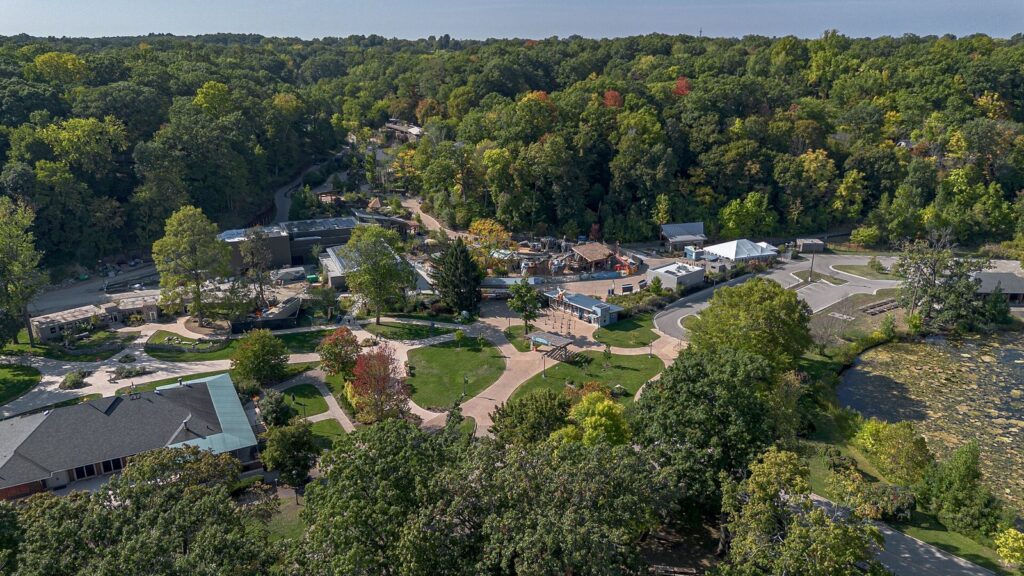
John Ball Zoo climbs a wooded hillside on the West Side, a few minutes from downtown, with more than 2,000 animals, a funicular up the hill, a tiger exhibit and a range of hands-on animal encounters. The 2026 season runs from March 20 to November 22, from 9 a.m. to 5 p.m. in spring and fall and until 6 p.m. from May 24 to September 7. Admission is $22.95 for adults 13-61 and $16.95 for children 3-12 and seniors 62 and older; children 2 and under are free, and households with a Michigan EBT Bridge card or out-of-state SNAP card pay $4 a person for up to four people. Go early on summer weekends; the hill is steep with a stroller.
6. The Grand River: Blue Bridge, fish ladder and riverwalk
The city takes its name from the rapids on the Grand River, and the river is still the best free thing to do downtown. The Blue Bridge, a former railroad bridge now used by walkers and cyclists, crosses from the Ford Museum and the Public Museum to downtown and lights up at night. A mile or so upstream, the fish ladder at Sixth Street Park, a concrete sculpture built in the 1970s beside the dam, lets salmon and steelhead climb past it; in fall you can watch fish jumping. Paved riverwalk paths link it all, and on a summer evening the river edge is where half the city seems to be walking.
7. Calder Plaza, the art museum and downtown art
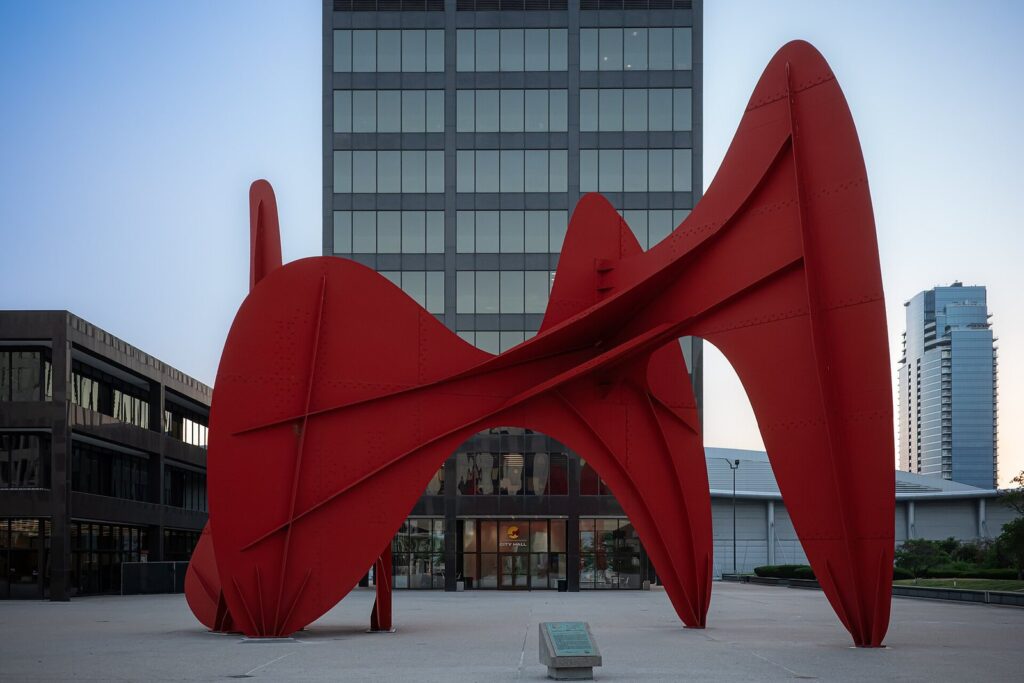
Alexander Calder’s La Grande Vitesse, a huge red steel stabile, stands on Calder Plaza in front of city hall; unveiled in 1969, it was the first public artwork funded by the National Endowment for the Arts’ Art in Public Places program, and its outline turns up on city signs and trucks. The Grand Rapids Art Museum, a few blocks away, has a strong permanent collection and touring exhibitions in a light-filled modern building. Between them, downtown is dotted with public art, a legacy of ArtPrize.
8. Heritage Hill
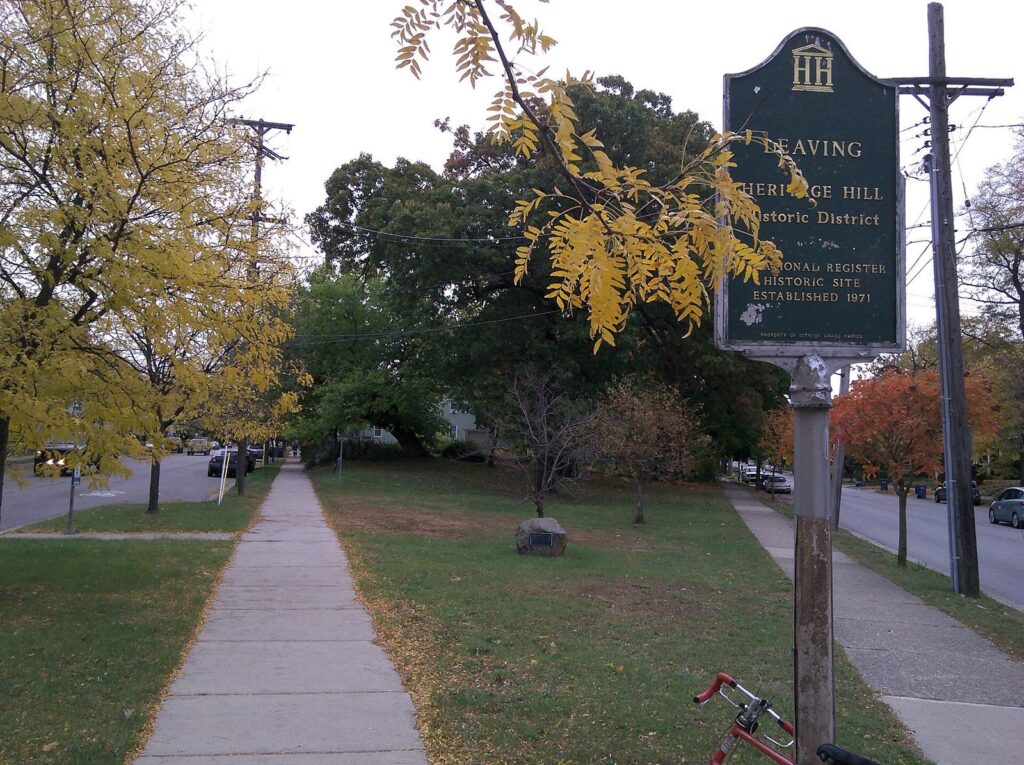
Just up the hill east of downtown, Heritage Hill is one of the largest urban historic districts in the country: more than 1,300 houses built from the 1840s to the 1920s in some 60 architectural styles, from Greek Revival and Italianate to Prairie School. The Meyer May House, designed by Frank Lloyd Wright, is the star. It’s a pleasant, free hour’s walk, especially in fall, and the neighborhood’s historic inns make it a good base for a quiet weekend.
9. The Downtown Market and the food scene
The Downtown Market, an indoor market hall south of downtown, gathers food vendors, restaurants and places to eat under one roof, and it’s an easy lunch stop between museums. The Fulton Street Farmers Market, a city institution since the 1920s, runs on the east side, and it’s at its best on summer Saturday mornings. Beyond those, Grand Rapids eats well for its size: Bridge Street on the West Side, East Hills and Eastown are the neighborhoods to wander for dinner, and many breweries serve serious food alongside the beer.
What to eat: the brewpubs set the tone, with serious burgers, sandwiches and bar food alongside the beer. Grandville Avenue, south of downtown, has the city’s best cluster of taquerias in the Roosevelt Park neighborhood; the West Side still has old-school Polish bakeries and bars; and East Hills and Eastown have most of the city’s independent restaurants, from farm-to-table dining to casual cafes. Book ahead for Friday and Saturday dinners, especially during conventions and ArtPrize.
10. A show: Acrisure Amphitheater, Van Andel Arena or a game
The new Acrisure Amphitheater, a 12,000-capacity outdoor venue on the river south of downtown, opened on May 15, 2026 and brings summer and fall tours to the city. Downtown, Van Andel Arena hosts big concerts and the Grand Rapids Griffins, the city’s minor-league hockey team, from fall through spring, and DeVos Performance Hall has Broadway tours and the Grand Rapids Symphony. In summer, the West Michigan Whitecaps play minor-league baseball in Comstock Park, just north of the city.
11. ArtPrize (late September to early October)
For about two weeks each fall, ArtPrize turns downtown into a gallery, with work in museums, hotel lobbies, bars, parks and the river itself. The 2026 edition ran from September 18 to October 3, with more than 1,000 entries by more than 1,300 artists at more than 150 venues, and it’s free to walk around and look. If your dates are flexible, this is the most interesting time to visit. More detail is in the ArtPrize section below.
12. Parks, trails and lakes
Grand Rapids is greener than its size suggests. Millennium Park, a big Kent County park on the southwest side, has a swimming beach, a splash pad and miles of trails; Blandford Nature Center, on the West Side, has free trails and a working farm; and Reeds Lake in East Grand Rapids is the place for a sunset walk. The Fred Meijer White Pine Trail, a long rail-trail, runs north from Comstock Park for cyclists, and Lake Michigan’s beaches are 35 to 45 minutes west.
Beer City: how to plan a brewery crawl
Why is Grand Rapids called Beer City? Because it won the title in a national online vote in 2012 and has kept earning the reputation since, with dozens of breweries in and around the city, a brewing culture that runs from tiny taprooms to national brands, and USA Today reader-poll wins every year from 2021 to 2025. Experience Grand Rapids’ Beer City Ale Trail lists 35-plus breweries, and its Brewsader program rewards check-ins at 8 breweries with a free T-shirt and names you an Ultimate Brewsader at 40.
The easiest way to plan is by neighborhood, so you can walk between stops:
- Downtown and the Grandville Avenue edge: Founders’ big taproom and a cluster of brewpubs within walking distance of the hotels.
- The West Side (Bridge Street): a lively strip of breweries, bars and restaurants across the river, a short walk over the bridges from downtown.
- East Hills and Eastown: neighborhood taprooms, including Brewery Vivant, among cafes and restaurants on the east side.
- Outside the city: taprooms in Comstock Park, Rockford and the suburbs, and cider and wine farther afield, better done with a designated driver or a tour.
Practicalities: many taprooms serve food and welcome families during the day, most offer flights so you can taste without overdoing it, and rideshares are easy downtown. Michigan’s legal driving limit is 0.08, so leave the car at the hotel.
Beyond beer
The drinks scene doesn’t stop at beer. There are craft cideries and distilleries in and around the city, many breweries pour a cider or a seltzer for non-beer drinkers, and Michigan wine is an easy add-on, with tasting rooms along the Lake Michigan Shore south of Kalamazoo and on the Leelanau and Old Mission peninsulas up north. For coffee, the Uptown neighborhoods, East Hills and Eastown especially, have the city’s best independent cafes and roasters.
ArtPrize: what it is and when it happens
ArtPrize is a citywide art competition, open to any artist who finds a venue, that takes over downtown Grand Rapids each fall. Work appears everywhere, from the major museums to hotel lobbies, storefronts, parks, bridges and the Grand River, and the public votes alongside juries. It’s free to walk around and look, and the crowds, food trucks and street life make it the city’s liveliest few weeks.
The 2026 edition ran from September 18 to October 3, with more than 1,000 entries from more than 1,300 artists at over 150 venues. ArtPrize is annual again after some changes to its format in recent years, but check artprize.org for the 2027 dates. If you plan to come, book rooms early, wear walking shoes, and start at the hubs downtown, where you can pick up maps.
How to see ArtPrize
ArtPrize is big enough that it pays to plan. Start at the central hubs downtown, where the major venues cluster and you can pick up a map, then work outward on foot; the museums, DeVos Place and the riverfront hold many of the large installations. Weekday mornings are the calmest time, weekend afternoons the busiest, and downtown parking fills early on Saturdays, so park once and walk or use the DASH. Wear comfortable shoes, carry water and a layer for the evening, and leave time for the food trucks and street performers that come with the crowds.
Grand Rapids neighborhoods to explore
Most of what you’ll want is in or near a handful of walkable districts. Here’s how they differ.
- Downtown: the museums, Van Andel Arena, DeVos Place, Rosa Parks Circle and most of the big hotels, on the east bank of the Grand River. Monroe Center is the pedestrian-friendly spine.
- The West Side: across the river, with the Ford Museum and the Public Museum on the bank, Grand Valley State University’s downtown campus, and Bridge Street’s run of restaurants, breweries and bars. It grew up as a working-class Polish and Dutch neighborhood, and some of that character survives a few blocks off the main streets.
- Heritage Hill: the historic-house district just east of downtown, up the hill, with the Frank Lloyd Wright-designed Meyer May House.
- East Hills and Eastown: the city’s favorite neighborhoods for eating out, with independent restaurants, coffee shops, bookstores and taprooms around Cherry Street, Wealthy Street and Lake Drive. Together with Midtown and the Fulton Street district, they’re promoted as “Uptown.”
- The Medical Mile: the hospitals and research institutes along Michigan Street on the hill above downtown, a sign of how much the city has changed.
- East Grand Rapids: a separate small city on the east side around Reeds Lake, with the Gaslight Village shops and a lakeside path.
- Creston and the north side: a quieter, local strip of restaurants and breweries on Plainfield Avenue.
Grand Rapids by season
| Season | What’s on |
|---|---|
| Spring (March to May) | Meijer Gardens’ butterfly exhibition and spring bloom; John Ball Zoo reopens March 20 (2026); Tulip Time in Holland, 35 minutes away (April 30 to May 9, 2027) |
| Summer (June to August) | Festival of the Arts downtown in early June; Meijer Gardens’ outdoor concerts; Acrisure Amphitheater shows; Whitecaps baseball; Lake Michigan beaches |
| Fall (September to October) | ArtPrize; salmon at the fish ladder; fall color at Meijer Gardens and Heritage Hill; cider mills and orchards |
| Winter (November to March) | Meijer Gardens’ holiday displays; Griffins hockey; outdoor skating at Rosa Parks Circle; skiing at Cannonsburg, north of the city |
July is the busiest month for visits, when weekend hotel rates are at their highest; spring at Meijer Gardens and the ArtPrize weeks draw their own crowds. November to March is the cheapest time to visit, and the museums, breweries and restaurants carry the city through winter.
Spring
Spring is Meijer Gardens’ season. The conservatory’s butterfly exhibition fills the tropical house with free-flying butterflies each March and April, and the outdoor gardens peak with tulips, flowering trees and the Japanese garden’s blossoms in May. John Ball Zoo reopened for 2026 on March 20, and 35 minutes west, Holland’s Tulip Time runs April 30 to May 9 in 2027, with rooms around the lakeshore booked far ahead.
Summer
Summer is the busiest season. The Festival of the Arts, a volunteer-run downtown festival of music, food and art, kicks it off in early June; Meijer Gardens’ outdoor concert series and the new Acrisure Amphitheater bring tours all summer; and the Whitecaps play baseball in Comstock Park. Weekends are the time to head to Lake Michigan, and July is the peak for hotel rates, so book ahead.
Fall
Fall is the most interesting season to visit. ArtPrize takes over downtown from late September into early October, salmon run past the fish ladder, and the orchards and cider mills on the Fruit Ridge north and west of the city are at their best. Meijer Gardens’ sculpture park and the trees of Heritage Hill turn color in October.
Winter
Winter is quieter and cheaper. Meijer Gardens’ holiday displays run through the season, the Griffins play hockey at Van Andel Arena, Rosa Parks Circle usually turns into an outdoor skating rink, and Cannonsburg’s ski hill is north of town. It’s a good time for a museum-and-brewery weekend at lower hotel rates.
Grand Rapids with kids
Grand Rapids is an easy city with children because the big attractions are close together and built for them. Start with John Ball Zoo, then the Public Museum, where the carousel and planetarium are separate small tickets and Kent County children get in free. The Grand Rapids Children’s Museum, downtown, is aimed at younger kids. Meijer Gardens has a large children’s garden with water play, a treehouse and a log cabin, and it’s worth planning a visit around. In summer, Millennium Park’s beach and splash pad are the local favorites, and the lakeshore beaches at Holland and Grand Haven are 35 minutes away. Many breweries welcome families during the day, and some have kids’ menus.
Accessibility
Most of the main attractions are accessible. Meijer Gardens has paved paths through much of the sculpture park and gardens and a seasonal tram; the Ford and Public museums are modern, accessible buildings; the riverwalk and the Blue Bridge are flat and paved; and John Ball Zoo’s funicular carries visitors up the steepest part of its hill. Check each attraction’s website for wheelchair and stroller availability before you go.
What to do in Grand Rapids when it’s raining, or in winter
Rain doesn’t sink a Grand Rapids trip. The Public Museum, the Ford Museum, the Grand Rapids Art Museum and the Children’s Museum are all downtown and within a short walk or drive of one another, and Meijer Gardens’ conservatory and indoor galleries hold up well in bad weather. The Downtown Market is a good covered lunch stop, and the breweries were built for gray afternoons.
Winter is long here, and the city leans into it. Meijer Gardens runs its holiday displays through the season, the Griffins play at Van Andel Arena, and Rosa Parks Circle downtown, a public square designed by Maya Lin, usually becomes an outdoor ice rink. Cannonsburg Ski Area, a small hill north of the city, is the closest downhill skiing, and snowshoers and cross-country skiers use the county parks when there’s snow. Roads are well plowed, but lake-effect snow can make the drive in from the lakeshore slow.
Fun things to do in Grand Rapids for couples
For a couples’ weekend, stay downtown or in a Heritage Hill inn and build the days around walks, food and a show. Spend a morning at Meijer Gardens, or an evening at one of its summer concerts in the amphitheater. Walk the riverfront and cross the Blue Bridge at night, when it’s lit up. Do a small brewery crawl on the West Side or in East Hills, with dinner on Bridge Street. Catch a concert at the new Acrisure Amphitheater or the symphony at DeVos Hall. And save one evening for the lakeshore: Grand Haven’s pier and boardwalk at sunset are 35 minutes away.
Free and cheap things to do in Grand Rapids
Grand Rapids is easy on a budget. These cost little or nothing:
- The riverfront: the Blue Bridge, the riverwalk paths and the fish ladder at Sixth Street Park, where you can watch salmon jump in fall.
- Public art: Calder’s La Grande Vitesse on Calder Plaza and the sculptures scattered around downtown, many of them left over from past ArtPrizes.
- ArtPrize itself, free to walk around each fall, and the Festival of the Arts in early June.
- Heritage Hill: a free walking tour of 1,300-plus historic houses; the Meyer May House has long offered free guided tours on a limited weekly schedule, so check before you go.
- Parks: Blandford Nature Center’s trails, Reeds Lake’s path and the county’s big Millennium Park.
- The Fulton Street Farmers Market on a Saturday morning.
- Discounts: Kent County children get into the Public Museum free, and John Ball Zoo charges $4 a person for households using a Michigan EBT Bridge card or an out-of-state SNAP card.
How many days do you need in Grand Rapids?
Two days covers the city; three lets you add the lake or Kalamazoo. Here’s how to use them.
One day
Start at Meijer Gardens when it opens and give it three hours. Head downtown for lunch at the Downtown Market, then spend the afternoon at the Ford Museum and walk across the Blue Bridge to the Public Museum for the carousel. Finish with dinner and a brewery or two on the West Side or near Founders.
A weekend
Day one: the one-day plan above. Day two: John Ball Zoo or the Grand Rapids Art Museum in the morning, a walk through Heritage Hill, lunch in East Hills or Eastown, then an afternoon on the river trails or at Millennium Park. Save the evening for a show at Van Andel Arena, DeVos Hall or the Acrisure Amphitheater.
Three days, with a lakeshore day
Add a day on Lake Michigan. Drive to Holland (about 35 minutes) for the downtown, the beach at Holland State Park and Big Red, or to Grand Haven (about 35 minutes) for the state park beach and the pier, and stay for sunset. Or head south to Kalamazoo (about 50 minutes) for Bell’s Eccentric Cafe, the Air Zoo and the Kalamazoo Institute of Arts.
A winter weekend
In winter, flip the plan indoors. Spend Saturday morning at the Public Museum and the Ford Museum, lunch at the Downtown Market, and the afternoon in Meijer Gardens’ conservatory and holiday displays. Skate at Rosa Parks Circle before dinner if the rink is open, then catch a Griffins game at Van Andel Arena. On Sunday, do the Grand Rapids Art Museum and a slow brewery lunch in East Hills, or drive to Cannonsburg for a few runs if there’s snow.
Where to stay in Grand Rapids
| Area | Good for | Price level |
|---|---|---|
| Downtown | Walking to the museums, the river, the arena and the breweries; the big convention hotels and newer boutique hotels | Mid to high; highest during conventions and ArtPrize |
| West Side | Bridge Street’s bars and restaurants, John Ball Zoo; a few newer small hotels | Mid |
| Heritage Hill and East Hills | Historic inns and B&Bs near downtown; quiet streets | Mid to high |
| 28th Street and the airport area | Chain hotels with free parking, easy highway access to the lakeshore and Kalamazoo | Lower to mid |
We don’t list nightly rates, since they swing with conventions and events, but the pattern holds: downtown costs the most on summer weekends, during ArtPrize and during big conventions, while the suburban hotels near the airport and along 28th Street are the value choice, with free parking. Downtown hotels charge for parking, so factor that in. For ArtPrize, Tulip Time weekends and the peak of summer, book two to three months ahead.
Getting to Grand Rapids and getting around
Grand Rapids sits in West Michigan, about 2 hours 25 minutes west of Detroit on I-96 and just under 3 hours from Chicago by I-94 and I-196. Chicago drivers should remember the time change: Chicago runs on Central time and Michigan on Eastern, so you lose an hour driving east and gain it back on the way home.
| From | Drive to Grand Rapids |
|---|---|
| Detroit | About 2 h 25 (158 mi) |
| Chicago | About 2 h 55 (180 mi), plus the time change |
| Lansing | About 1 h 05 (65 mi) |
| Indianapolis | About 4 h 15 (265 mi) |
| Toronto | About 5 h 40 (361 mi), plus the border |
Gerald R. Ford International Airport (GRR), southeast of the city, handled a record 4,303,696 passengers in 2025 and has nonstop flights to many major hubs; it’s roughly half an hour to downtown. Amtrak’s Pere Marquette runs daily between Chicago and Grand Rapids. Downtown is walkable, and The Rapid runs the city’s buses, including the DASH downtown circulator. For Meijer Gardens, the zoo, the lakeshore and Kalamazoo, you’ll want a car.
Getting around: parking, buses and rideshares
Downtown and the West Side are compact enough to walk: the Ford Museum, the Public Museum, the Blue Bridge, Calder Plaza and the arena are all within about 15 minutes on foot of one another. Downtown has city parking ramps and metered street parking, and most downtown hotels charge for parking. The Rapid’s buses cover the city, and its DASH shuttle loops downtown. Rideshares are the easiest way to link the brewery districts at night. For Meijer Gardens, the zoo and anything outside the city you’ll want a car, and in winter, allow extra time: lake-effect snow bands can close in quickly on I-96 and US-131.
Day trips to the Lake Michigan shore
Grand Rapids’ secret weapon is that Lake Michigan is so close. These are the easiest beach towns from the city, with free-flow drive times:
- Holland (about 35 minutes). Dutch heritage, a walkable downtown, Holland State Park’s beach and Big Red, the lighthouse at the channel. Our guide to Holland, Michigan covers Tulip Time, Windmill Island and the beaches.
- Grand Haven (about 35 minutes). The classic Lake Michigan beach town, with a state park beach, a boardwalk and the red pier lights.
- Saugatuck and Douglas (about 40 minutes). Galleries, restaurants and Oval Beach below the dunes.
- Muskegon (about 50 minutes). Pere Marquette Park’s big city beach and the state parks on either side of the channel.
- South Haven (about 55 minutes). Blueberries, beaches on both sides of the channel and the red pier light.
On summer weekends, leave early: the beaches fill by late morning, and traffic back into Grand Rapids on Sunday evenings is slow. For a longer stay, split the trip between the city and a night on the lakeshore. The one spring exception is Holland’s Tulip Time (April 30 to May 9, 2027), when the lakeshore is busier than on most summer weekends.
Kalamazoo: the add-on to the south
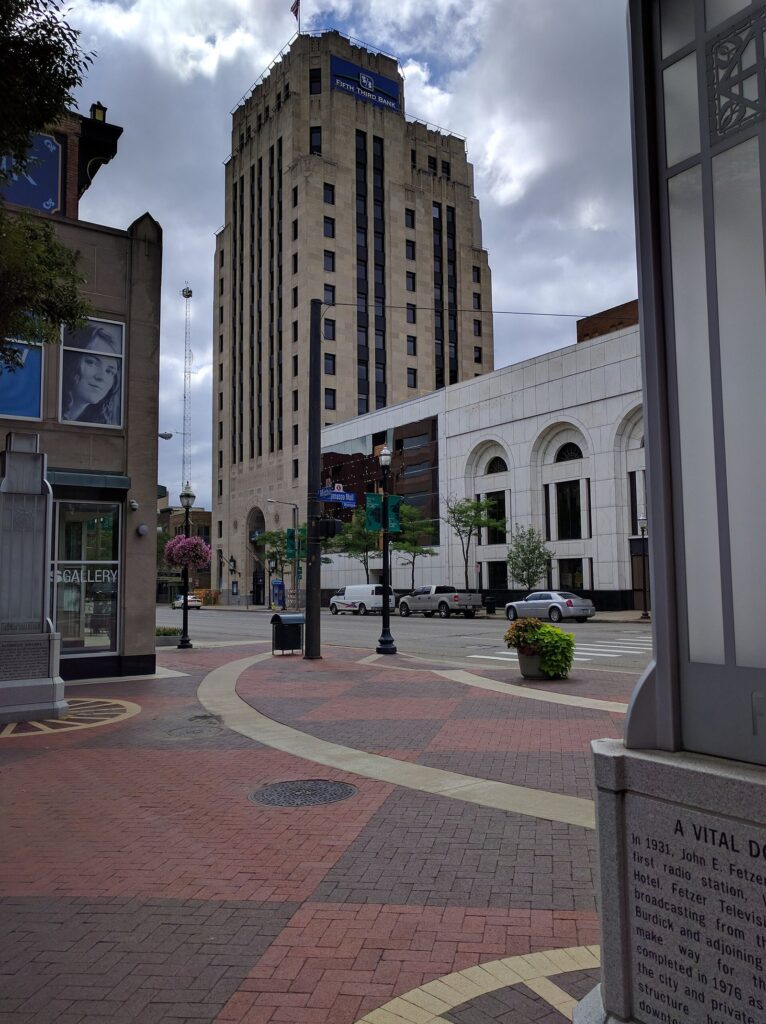
Kalamazoo, about 50 minutes south of Grand Rapids and about 2 hours 10 minutes from Detroit or 2 hours 30 minutes from Chicago, is a college town (Western Michigan University and Kalamazoo College) with enough to fill a day. Bell’s Brewery, one of Michigan’s pioneering craft brewers, runs the Eccentric Cafe downtown. The Kalamazoo Mall was the country’s first outdoor pedestrian shopping street, and the Kalamazoo Institute of Arts is a strong regional museum.
Two attractions make Kalamazoo worth a detour for families and car or plane fans. The Air Zoo Aerospace & Science Museum, in Portage just off I-94 about 15 minutes from downtown Kalamazoo, has more than 100 air and space artifacts, full-motion flight simulators and indoor rides, and generally opens Monday to Saturday 9 a.m. to 5 p.m. and Sunday from noon, with seasonal changes. The Gilmore Car Museum, in Hickory Corners about 27 minutes northeast of Kalamazoo (an hour from Grand Rapids), is one of the largest auto museums in North America, spread across a campus of historic barns and garages. Check both attractions’ sites for current admission.
For a Kalamazoo day, start downtown on the Kalamazoo Mall and around Bronson Park, have lunch and a beer at Bell’s Eccentric Cafe, spend the afternoon at the Kalamazoo Institute of Arts, and stay for dinner. With children, swap in the Air Zoo; with car fans, the Gilmore. Battle Creek, the cereal city, is about half an hour east of Kalamazoo on I-94, with Binder Park Zoo on its south side, if you want to stretch the day or break a drive to Detroit.
Tips for a first visit
- Buy tickets online for the Ford Museum and for Meijer Gardens’ summer concerts, which sell out, and check the Public Museum’s Kent County discounts if you live locally.
- Go to Meijer Gardens early on a weekday; weekend afternoons in spring and summer are the busiest time.
- Watch the calendar. ArtPrize, big conventions and Tulip Time in nearby Holland push hotel prices up; a weekend just before or after is much cheaper.
- Chicago drivers: set your watch forward an hour when you cross into Michigan.
- Dress for the lake. Summer evenings on the Lake Michigan shore are cooler than in the city, and winter storms off the lake can bring heavy snow with little warning.
- Plan a brewery night by neighborhood, and leave the car at the hotel.
Is Grand Rapids worth visiting?
Yes, for a weekend. Meijer Gardens alone is worth the trip, the downtown museums and riverfront fill a day, and the brewery scene and restaurants make the evenings. It’s an easy, affordable city to visit, and it’s close to the best stretch of Lake Michigan beaches.
Especially if you like art and gardens, beer, a city you can walk, or you can come during ArtPrize.
Less so if you want big-city nightlife or major-league sports; Detroit and Chicago do those better. Treat Grand Rapids as a base for West Michigan rather than a week-long destination on its own.
Best timing: May for Meijer Gardens in bloom, late September for ArtPrize, or any summer weekend paired with a beach day on Lake Michigan.
What to skip, and what to do instead
Skip Meijer Gardens on a summer Saturday afternoon if you can; go on a weekday morning, or in spring and fall.
Skip driving between breweries. Pick a neighborhood and walk, or use a rideshare.
Skip the lakeshore on a Sunday afternoon in July unless you like traffic; go early on Saturday or midweek.
Skip downtown hotels during ArtPrize or a big convention if you’re on a budget; the suburban hotels are a 15-minute drive away and much cheaper.
Skip rushing Kalamazoo in half a day. Give it a full day, or save it for the drive between Chicago or Detroit and Grand Rapids.
Frequently asked questions
What is Grand Rapids best known for?
Grand Rapids is best known as Beer City USA, for its craft breweries; for Frederik Meijer Gardens & Sculpture Park; for ArtPrize, the citywide art competition each fall; and as the hometown of President Gerald Ford, whose presidential museum is on the Grand River. Historically it was the Furniture City, and it’s also a big medical and design center, home to the Medical Mile hospitals and research institutes on the hill above downtown.
Is Grand Rapids worth visiting?
Yes, especially for a weekend. Meijer Gardens is one of the best sculpture gardens in the country, the downtown museums and riverfront are easy to walk, and the brewery and food scenes are strong for a city its size. Lake Michigan’s beaches at Holland and Grand Haven are 35 minutes away, which makes Grand Rapids a good base for West Michigan. Hotels are generally cheaper than in Chicago or Detroit.
What is there to do in Grand Rapids this weekend?
For events on specific dates, check Experience Grand Rapids’ weekend calendar. Reliable weekend plans: Meijer Gardens, the Ford Museum and the Public Museum’s carousel, John Ball Zoo (open March 20 to November 22 in 2026), a brewery crawl on the West Side, and a concert at Van Andel Arena or the new Acrisure Amphitheater. In late September, ArtPrize takes over downtown.
What are fun things to do in Grand Rapids for couples?
A morning at Meijer Gardens or an evening at its summer concerts, a walk across the lit-up Blue Bridge after dark, a small brewery crawl and dinner on Bridge Street, a show at the Acrisure Amphitheater or DeVos Hall, and a sunset drive to Grand Haven, 35 minutes away. A historic inn in Heritage Hill makes a good base, and the East Hills restaurants are a short walk or ride away.
What is there to do in Grand Rapids when it’s raining?
Head indoors downtown: the Grand Rapids Public Museum, with its carousel and planetarium; the Ford Presidential Museum; the Grand Rapids Art Museum; and, with children, the Grand Rapids Children’s Museum. Meijer Gardens’ conservatory and indoor galleries work in the rain, the Downtown Market is a covered lunch stop, and the breweries are made for gray afternoons. In winter, add a Griffins hockey game at Van Andel Arena.
How many days do you need in Grand Rapids?
Two days covers the main sights: Meijer Gardens, the Ford and Public museums, the riverfront, a brewery crawl and a show. Add a third day for a Lake Michigan beach town such as Holland or Grand Haven, 35 minutes away, or for Kalamazoo, 50 minutes south, with Bell’s, the Air Zoo and the Gilmore Car Museum nearby. A long weekend with one lakeshore night is the best balance.
Why is Grand Rapids called Beer City?
Grand Rapids won the Beer City USA title in a national online vote in 2012, and the name stuck. The city has dozens of breweries, from Founders, which started in 1997, to small neighborhood taprooms, and USA Today’s readers voted it the best beer city every year from 2021 to 2025. The Beer City Ale Trail links more than 35 of them, and its Brewsader program rewards visitors who check in at eight or more.
Sources and verification
Everything on this page was checked on September 23, 2026 against the organizations listed here. This guide is compiled from those sources; it doesn’t claim first-hand visits.
- Frederik Meijer Gardens & Sculpture Park: hours and admission
- Gerald R. Ford Presidential Museum: visit
- Grand Rapids Public Museum: admission, plus its planetarium and carousel pages
- John Ball Zoo: tickets and times
- Experience Grand Rapids: Beer City, plus its things-to-do and events pages
- ArtPrize
Also checked: Discover Kalamazoo and the Air Zoo; Gerald R. Ford International Airport’s 2025 passenger figures; the Acrisure Amphitheater’s opening; and drive times from a routing service.
Michigan Tourism Guide is an independent publication. It is not affiliated with Pure Michigan or any agency or business named here.
Photo credits
- Grand Rapids skyline and the Blue Bridge (featured image): photo by Russell Sekeet, Wikimedia Commons (CC BY 2.0)
- Meijer Gardens sculpture park in autumn: photo by MSwierenga, Wikimedia Commons (CC BY 4.0)
- Founders Brewing Company: photo by WMrapids, Wikimedia Commons (CC0)
- Grand Rapids Public Museum: photo by John Eisenschenk, Wikimedia Commons (CC BY 2.0)
- John Ball Zoo: photo by WMrapids, Wikimedia Commons (CC0)
- La Grande Vitesse, Calder Plaza: photo by Image: WMrapidsSculpture: Alexander Calder, Wikimedia Commons (public domain)
- Heritage Hill: photo by Gpwitteveen, Wikimedia Commons (CC BY-SA 3.0)
- Kalamazoo Mall: photo by sf-dvs, Wikimedia Commons (CC BY 2.0)