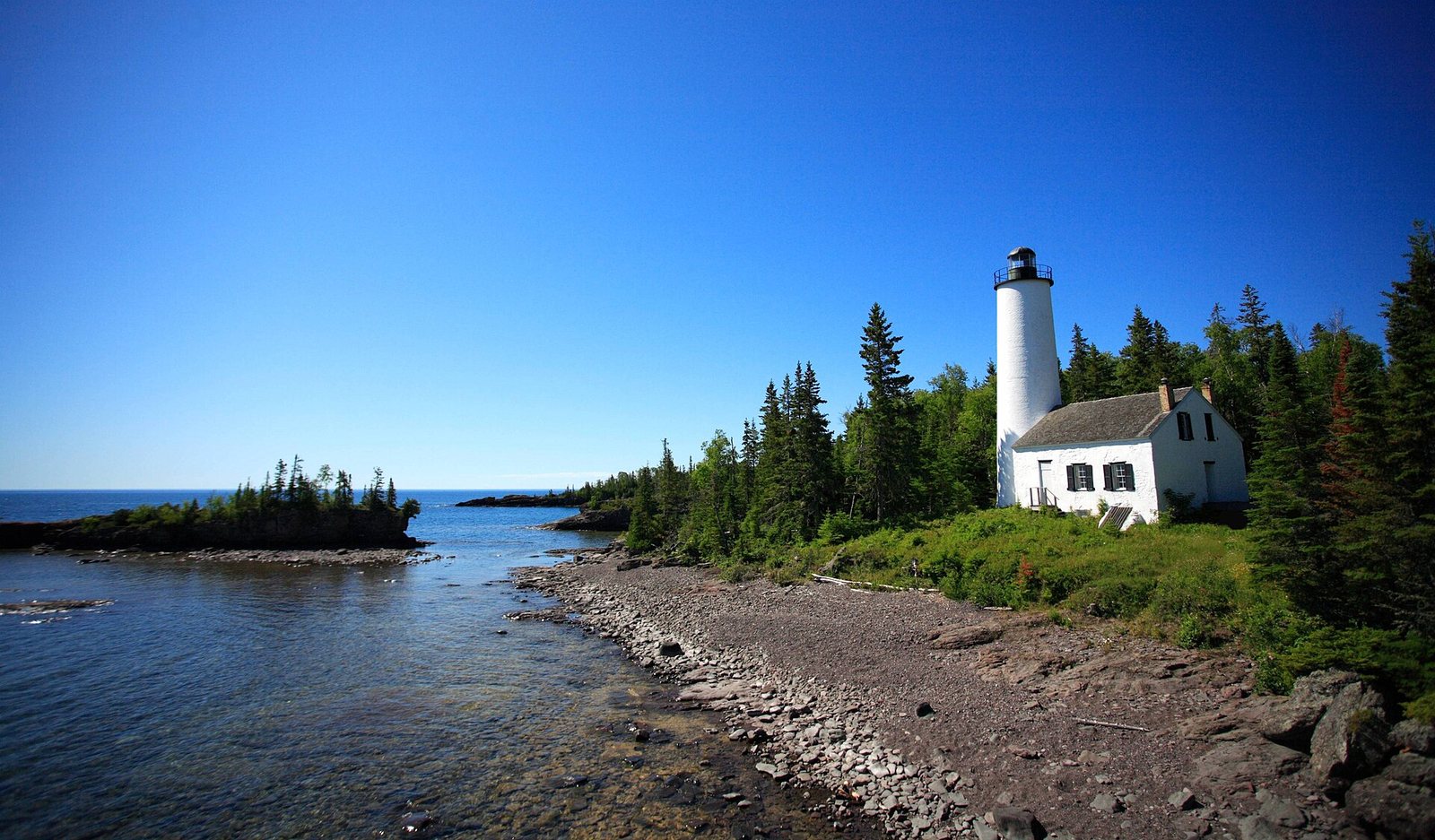
There are no roads to Isle Royale, no cars on it and, from November 1 to April 15, no visitors at all. You arrive by boat or floatplane across Lake Superior, carry what you need, and share an island about 45 miles long with a few dozen wolves and a shrinking herd of moose. Isle Royale National Park recorded 29,091 recreation visits in 2025, making it one of the least-visited national parks in the country, and the people who do come tend to stay: the average visit lasts about three and a half days, against a few hours at a typical national park.
The short answer: get there on the Ranger III from Houghton (about 6 hours, $80 one way for adults in 2026), the Isle Royale Queen IV from Copper Harbor (about 3.5 hours, $175 round trip), the boats from Grand Portage, Minnesota (1.5 to 2 hours to Windigo), or a seaplane from Hubbell (about 40 minutes, $289 one way). Boats run mid-May through September, the park charges $7 per person per day, and the best time to go is late August into early September, after the worst of the bugs.
The details below were checked September 23, 2026 against the operators’ and agencies’ own websites, including 2026 ferry and seaplane fares, National Park Service fees and schedules, and Michigan Tech’s 2026 wolf and moose survey.
On this page: At a glance · Is it worth it? · Getting there · When it’s open · Costs and fees · Where to stay · Day trip, lodge or backcountry · Day hikes · Backpacking · Paddling · Wolves and moose · History · Rules · The ports · Safety · What to pack · Booking timeline · What to skip · FAQ
Isle Royale at a glance
| What you need to know | Details (checked September 23, 2026) |
|---|---|
| What it is | A wilderness island national park in northwest Lake Superior, established in 1940; about 850 square miles including water, with 132,018 acres of designated wilderness |
| Open | April 16 to October 31; closed to all visitors November 1 to April 15 |
| Boats and planes | Mid-May to September; seaplane day trips June 6 to September 12 in 2026 |
| Ways in (2026) | Ranger III from Houghton, 6 h, $80 adult one way; Queen IV from Copper Harbor, 3.5 h, $175 adult round trip; Voyageur II and Sea Hunter III from Grand Portage, Minnesota; seaplanes from Hubbell, about 40 min, $289 one way |
| Entrance fee (2026) | $7 per person per day (15 and under free); $60 Isle Royale Season Pass (holder plus three adults); America the Beautiful passes accepted |
| Lodging | Rock Harbor Lodge rooms and housekeeping cottages; Windigo camper cabins; 36 campgrounds |
| Trails | About 165 miles, including the Greenstone Ridge Trail along the island’s spine |
| Visitors | 29,091 recreation visits in 2025; 82% in June, July and August |
| Wildlife (2026) | About 37 wolves in three packs; about 524 moose |
| Best time | Late August to early September |
| Pets | Not allowed on the island or in park waters |
Is Isle Royale National Park worth visiting?
Yes, if you want what it offers: silence, distance and real wilderness. Isle Royale is not a drive-through park. There are no scenic roads or overlooks from a car, few buildings, spotty or no cell service across most of the island and a lot of Lake Superior between you and the mainland. In return you get rocky harbors, old lighthouses and fishing camps, long ridge-top trails, moose browsing in the shallows, loons calling at night, and a solitude that’s rare in any national park.
Backpackers: absolutely. The Greenstone Ridge and Minong Ridge trails make one of the classic wilderness treks in the Midwest.
Paddlers: yes. Protected harbors and inland lakes connected by portages make superb canoe and kayak trips, for people with the skills for Lake Superior’s weather.
Non-backpackers: yes, at Rock Harbor. The lodge, day hikes, boat tours and rentals make a comfortable three-day visit without a tent.
Day-trippers: it’s a taste. A few hours on the island is memorable, but the travel time and cost are high for what you’ll see.
Families with young children: think hard. Long crossings, cold water and limited facilities suit older, outdoorsy kids better.
Anyone wanting comfort and convenience: skip it. Choose Pictured Rocks or the Keweenaw instead.
How do you get to Isle Royale? The four ways in
Isle Royale is reached only by boat or seaplane, and every option carries people, not cars. The choice comes down to where you’re starting, how much time you have, how much you want to spend and how well you handle big water.
| Option | From | Time | 2026 cost | Lands at | Best for |
|---|---|---|---|---|---|
| Ranger III (National Park Service) | Houghton, Michigan | About 6 h (9 a.m. to 3 p.m. ET) | $80 adult one way; $40 child 1-15; canoe or kayak $35 | Rock Harbor | The traditional crossing; carrying boats and heavy gear |
| Isle Royale Queen IV | Copper Harbor, Michigan | About 3.5 h (8 a.m. to 11:30 a.m. ET) | $175 adult round trip; $125 child; one way half price; parking $10 a night | Rock Harbor | The shortest boat ride from Michigan; day trips |
| Voyageur II and Sea Hunter III | Grand Portage, Minnesota | 1.5-2 h to Windigo; about 5 h to Rock Harbor on the Voyageur II | Check the operator’s rates | Windigo (and Rock Harbor on some trips) | Minnesota travelers; the west end of the island |
| Isle Royale Seaplanes | Hubbell, Michigan | About 40 min | $289 one way; $420 round trip or day trip | Rock Harbor or Windigo | Short trips, the seasick-prone and time-pressed |
Ranger III from Houghton
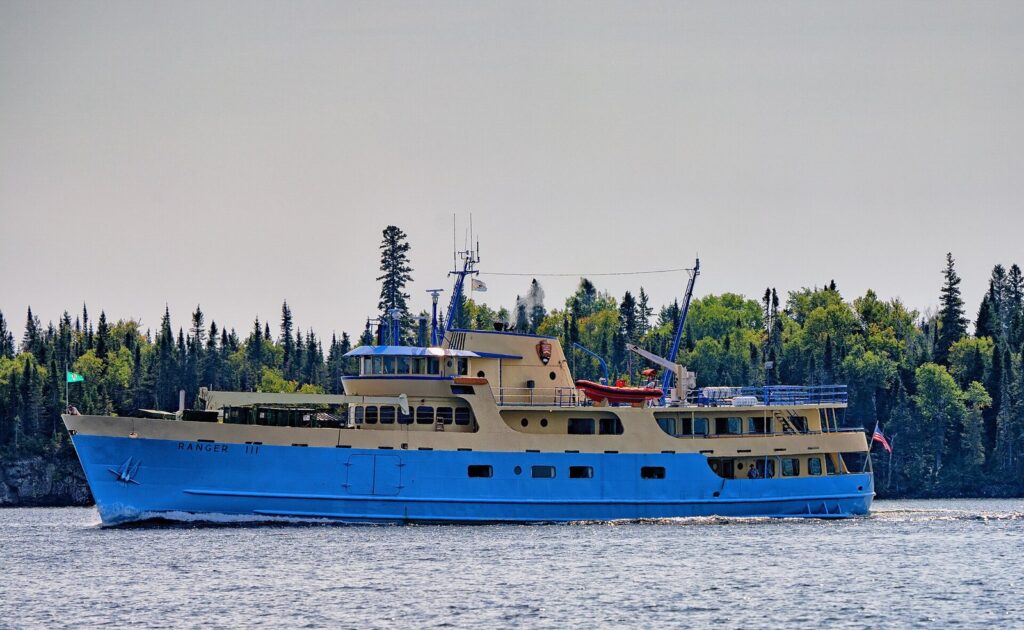
The Ranger III, run by the National Park Service itself, is the park’s floating front door: a large ship that leaves Houghton at 9 a.m. Eastern time and reaches Rock Harbor around 3 p.m., from mid-May through September. The adult fare is $80 each way in 2026, children 1 to 15 pay $40, and a canoe or kayak costs $35. The six-hour crossing is long, but the ship is big enough to feel steady in moderate seas, it carries canoes, kayaks and backpacking gear with ease, and rangers use the trip to brief visitors on the park, so you arrive with your permit questions answered. Check the park’s reservation availability page early, because summer sailings fill.
Isle Royale Queen IV from Copper Harbor
From Copper Harbor at the tip of the Keweenaw Peninsula, the Isle Royale Queen IV makes the shortest boat crossing from Michigan, leaving at 8 a.m. Eastern and arriving at Rock Harbor around 11:30 a.m. In 2026, a round trip costs $175 for adults and $125 for children, one way is half price, and parking in Copper Harbor is $10 a night. Because it arrives before noon, it’s the Michigan boat that makes a day trip possible. It’s a smaller vessel than the Ranger III, so it can be a rougher ride when Lake Superior is up; take seasickness precautions if you’re prone to it.
The boats from Grand Portage, Minnesota
From Grand Portage, on Minnesota’s North Shore about 150 miles north of Duluth, the Grand Portage Isle Royale Transportation Line runs two boats. The Sea Hunter III reaches Windigo, at the island’s west end, in about an hour and a half, and the Voyageur II takes about two hours to Windigo and continues around the island to Rock Harbor, about five hours from Grand Portage. That route also makes Grand Portage the practical choice for backpackers starting or finishing a traverse at Windigo, or for anyone coming from Minnesota. Note that Grand Portage runs on Central time, while the park runs on Eastern. The line opens 2027 reservations in late November 2026.
Isle Royale Seaplanes from Hubbell
Isle Royale Seaplanes flies from Hubbell, on the Keweenaw’s Torch Lake near Houghton, to Rock Harbor or Windigo in about 40 minutes. In 2026 the fares, including taxes and fees, are $289 per person one way, $420 round trip, $420 for a “three-way” trip that drops you at one end of the island and picks you up at the other, and $420 for a day trip. Day trips run to Windigo from June 6 to September 6 and to Rock Harbor from June 6 to September 12. Flights are weather-dependent and carry strict luggage weight limits, so ask when you book, and pack light.
By private boat
Experienced boaters can cross in their own vessels, and many sailors and powerboaters do. Isle Royale’s waters are remote and cold, the crossing is exposed to Lake Superior’s full weather, and the park has its own boating rules and permits. Read the park’s boating information carefully and file a float plan before you go.
What the crossing is like
However you go, the crossing is part of the trip. On the boats, you’ll check in early, hand over larger packs and gear to be stowed, and settle in for hours of open Lake Superior, with the Keweenaw or the Minnesota shore fading behind you and the island rising ahead as a long, dark ridge. On a calm day it’s peaceful; on a rough one it’s a test. If you’re prone to seasickness, take medication before you board, sit low and near the middle of the boat, keep your eyes on the horizon and stay out in the fresh air when you can. Dress warmly even in August, because the wind on deck is cold, and keep a snack and water handy. On arrival, you’ll get the park’s orientation on rules, water treatment and wildlife before you set off.
How long is the ferry to Isle Royale?
About 3.5 hours from Copper Harbor on the Queen IV, about 6 hours from Houghton on the Ranger III, and about 1.5 to 2 hours from Grand Portage to Windigo. The seaplane takes about 40 minutes. All of them depend on Lake Superior’s weather, and delays and cancellations happen, so build a spare day into your plans at both ends.
When is Isle Royale open?
Isle Royale is the only U.S. national park that closes completely in winter. It’s closed to all visitors from November 1 to April 15, and the scheduled boats and seaplanes run only from mid-May through September. In practice, the visiting season is roughly late May through mid-September, and 82% of the park’s visits come in June, July and August.
| Month | What it’s like | Watch for |
|---|---|---|
| Mid-May to early June | Cold nights, bare trees leafing out, few people, boats starting their seasons | Chilly weather and possible snow; limited services early on |
| Mid-June to July | Long days, wildflowers, the lodge and boats in full operation | Mosquitoes and black flies at their worst; fog on the lake |
| August | The warmest weather, thimbleberries along the trails, the busiest weeks | Full campgrounds at popular sites; book transport early |
| Late August to early September | The sweet spot: fewer bugs, clear days, cooler nights, thinning crowds | Services start winding down; last boats and flights in September |
| Mid to late September | Early fall color, crisp nights, very quiet trails | Moose are in the rut and can be aggressive; the final scheduled trips |
| October | Open, but with no scheduled transportation | Only for private boaters; weather turns stormy |
The best time for most visitors is the last week of August and the first week or two of September. The bugs have faded, the weather is usually still pleasant, and the island is quieter than in midsummer. Lake Superior itself never really warms up, so plan on cold water whenever you go.
Weather on the island
Lake Superior controls Isle Royale’s weather. Summers are cool compared with the mainland, with pleasant days often in the 60s or low 70s and cold nights, even in July and August. Fog can roll in without warning, especially in early summer, and wind and rain can arrive quickly. Spring comes late and fall comes early; by mid-September, frost is possible at night. Pack for all of it, because a sunny morning can turn into a raw, wet afternoon, and the weather also decides whether the boats and seaplanes run on time.
How much does it cost to go to Isle Royale?
Entrance fees
Isle Royale charges $7 per person per day in 2026; children 15 and under are exempt. For longer stays or groups, the Isle Royale Season Pass costs $60 and covers the pass holder plus three adults. The federal America the Beautiful pass, $80 a year for U.S. residents or $250 for non-residents, also covers entry. Fees are separate from transportation, lodging and camping.
Three worked examples (2026 prices)
| Trip | Transport | Park fees | Other costs | Transport and fees, per adult |
|---|---|---|---|---|
| Day trip from Copper Harbor on the Queen IV | $175 round trip | $7 | Parking $10 | About $192 |
| Three nights at Rock Harbor Lodge, via the Ranger III | $160 round trip | $28 (4 days at $7) | Lodging and meals at the lodge | About $188, plus lodging and meals |
| Seven nights backpacking, via the Queen IV | $175 round trip | $56 (8 days at $7) | Parking $70 (7 nights at $10); food and gear | About $301, plus food and gear |
Families save on park fees, since children 15 and under are free, and groups of four adults on longer trips come out ahead with the $60 season pass. A seaplane day trip costs $420 per person plus the $7 fee. The biggest variable for lodge visitors is the room and meals, which are priced by the concessioner; book early, because rooms for peak weeks go quickly.
Ways to save
Isle Royale is never cheap, but a few choices make a real difference. The Ranger III is the cheapest way across per person, and it carries a canoe or kayak for $35 instead of a rental. Children 15 and under pay no park fee. Camping costs far less than the lodge. And for groups, the math favors the season pass: four adults staying three days would pay $84 in daily fees, against $60 for the Isle Royale Season Pass, which covers the holder plus three adults (2026 prices).
Where to stay on Isle Royale
Can you stay overnight on Isle Royale?
Yes, in three ways: at Rock Harbor Lodge on the island’s east end, in camper cabins at Windigo on the west end, or in one of the park’s 36 campgrounds.
- Rock Harbor Lodge: the island’s only lodge, with lodge rooms and housekeeping cottages on the harbor, the Greenstone Grill and the Lighthouse Restaurant, a dockside store, fishing charters, boat, canoe and kayak rentals, water taxi service and sightseeing tours on the boat Sandy. Reservations for 2027 are already open, and the best-located rooms book early.
- Windigo camper cabins: simple cabins at Washington Harbor on the west end, run by the same concessioner, with the Washington Harbor Store nearby. Bring your own bedding and cooking gear.
- Campgrounds: 36 campgrounds spread across the island and along its shores, many with tent sites and some with three-sided shelters. Overnight stays require a backcountry permit, and campers must follow the park’s rules for group size, stays and food storage.
Rock Harbor or Windigo?
The island has two hubs, at opposite ends. Rock Harbor, on the northeast end, is the main one: the lodge and its restaurants, the visitor center, the Ranger III and Queen IV docks, the boat tours on the Sandy, rentals, and a cluster of excellent short hikes. It feels like a small, quiet harbor village. Windigo, at Washington Harbor on the southwest end, is smaller and more remote, with the camper cabins, a store, a ranger station and the Grand Portage boat dock. It’s the gateway for backpackers starting the Greenstone Ridge from the west, a good base for moose watching, and close to some of the island’s best-known shipwrecks. If you’re coming from Michigan for a short stay, choose Rock Harbor; if you’re coming from Minnesota or want the quietest possible base, choose Windigo.
Most first-time visitors who don’t backpack stay at Rock Harbor, which puts the lodge, the Ranger III and Queen IV docks, the visitor center, the best short hikes and the boat tours within easy reach. Windigo is quieter and suits paddlers, anglers and anyone arriving from Grand Portage.
Can you do Isle Royale in a day? Choosing your trip length
A day trip
Yes, you can visit in a day, and a day trip is a good way to see whether you’d like to come back for longer. The options are the Queen IV from Copper Harbor, which gives you a few hours at Rock Harbor before the return trip; a seaplane day trip from Hubbell to Rock Harbor or Windigo ($420 in 2026); or a day trip from Grand Portage to Windigo. With a few hours, walk the Stoll Trail out toward Scoville Point, visit the Rock Harbor visitor center and look for moose along the shore. Remember that the boats run on a fixed schedule, and missing the return is not an option you want.
Three days at Rock Harbor
- Day 1: arrive on the Queen IV or Ranger III, check in at the lodge, and walk the loop to Scoville Point along the rocky shore.
- Day 2: take a sightseeing boat on the Sandy to one of the historic sites across Rock Harbor, such as the Edisen Fishery and the Rock Harbor Lighthouse, or rent a canoe to paddle the sheltered harbors. Hike to Suzy’s Cave in the afternoon.
- Day 3: hike to a ridge-top viewpoint, such as Lookout Louise, reachable with a boat ride and short hike, or Mount Franklin on the Greenstone Ridge, and catch the boat home.
What a day at Rock Harbor looks like
A lodge-based day on Isle Royale moves at the island’s pace. Mornings start early and quiet, with mist on the harbor and loons calling across the water; breakfast at the lodge, then a hike along the shore or a boat ride to one of the historic sites across the harbor. Afternoons are for a longer walk, a paddle in a rented canoe or kayak on a calm day, or a book on a rock in the sun. Evenings bring dinner, a walk to watch the light change over Lake Superior, maybe a moose in the shallows, and a sky full of stars. There’s no traffic, very little noise and, for most visitors, not much cell signal, which is exactly the point.
A week in the backcountry
A week lets you cross the island. The classic route is the Greenstone Ridge, from Windigo in the west to Rock Harbor in the east, or the reverse, with nights at campgrounds along the way and side trips to harbors on the shore. Start from Grand Portage or fly to Windigo, finish at Rock Harbor and take the Ranger III or Queen IV home, or fly both ways with a “three-way” seaplane ticket.
The best day hikes
You don’t need to backpack to hike well on Isle Royale. These are the classic day hikes from the two hubs, with approximate round-trip distances; check the park’s trail information for current conditions.
- Scoville Point (Rock Harbor): about 4 miles as a loop on the Stoll Trail, along rocky shoreline to a point looking out over Lake Superior, with interpretive signs about the island’s history. The best first hike.
- Suzy’s Cave (Rock Harbor): about 4 miles round trip to a sea arch left high and dry when Lake Superior’s water level was higher, along the Rock Harbor shore.
- Lookout Louise (east end): a short but steep hike of about 2 miles round trip from the Hidden Lake dock, reached by boat or water taxi, to one of the island’s best viewpoints, looking north to Canada.
- Mount Franklin (Rock Harbor): a longer day of roughly 10 miles round trip to the Greenstone Ridge, with sweeping views over the island’s interior and the Canadian shore.
- Windigo Nature Walk and Huginnin Cove (Windigo): an easy short walk near the Windigo dock, and a longer loop of about 9 miles to a rocky cove on the north shore.
For all of them, carry water, a rain layer and insect repellent, and keep an eye on the time if you have a boat to catch.
Backpacking and the Greenstone Ridge
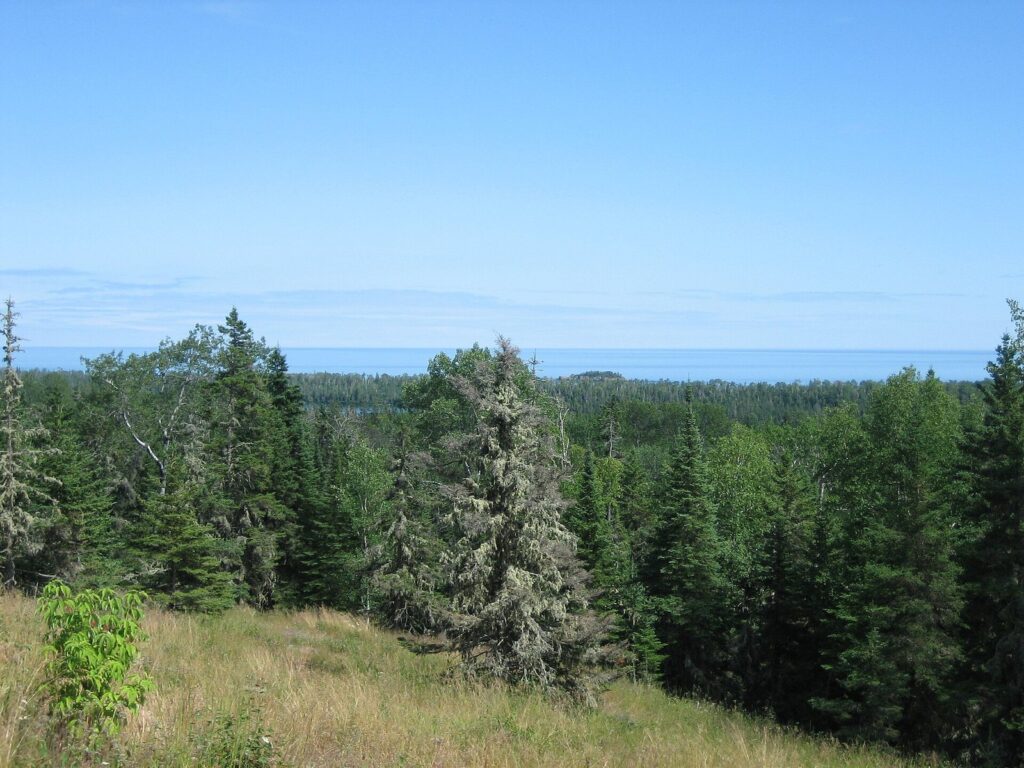
Isle Royale’s trail network covers about 165 miles, and most of it is backpacking country. The Greenstone Ridge Trail runs along the island’s spine for about 40 miles, from the Windigo area in the west to Lookout Louise near the east end, over open rock and through boreal forest, with long views over Lake Superior to Canada. The Minong Ridge Trail, along the north side, is rougher, rockier and more remote, for experienced hikers only. Shorter loops, like the Feldtmann Loop near Windigo, suit a few days.
- Permits: get a backcountry permit for any overnight stay, and plan your campground-by-campground itinerary with the park.
- Water: treat all water from lakes and streams. The park asks visitors to filter or boil water to remove parasites, including tapeworm eggs; chemical treatment alone isn’t enough. Check the park’s current water guidance for the filter size it specifies.
- Campfires: fires are restricted to a small number of campgrounds with fire rings; plan to cook on a stove.
- Food: store food securely from foxes and other animals; follow the park’s current food-storage rules.
- Distances: the terrain is rugged, with steep ups and downs, roots and rock; plan shorter days than the mileage suggests.
- Leave No Trace: pack out everything, stay on trails, and camp only in designated sites.
Paddling Isle Royale
Canoe and kayak trips are one of the best ways to see Isle Royale, but they demand skill. The island’s long, sheltered harbors and chains of inland lakes, linked by portage trails, make excellent routes, and the Ranger III carries canoes and kayaks for $35 each way in 2026. Rentals are available at Rock Harbor and Windigo. Open Lake Superior is another matter: the water is dangerously cold, fog and wind come up quickly, and landing spots can be far apart along exposed shores. Stay in protected water unless you’re an experienced sea kayaker with cold-water gear, wait out bad weather, and always wear a life jacket.
Fishing
Anglers come for lake trout in Lake Superior’s cold waters and for pike, walleye and perch in the island’s inland lakes. A Michigan fishing license is required to fish Lake Superior, and the park has its own rules for inland waters, so check them before you cast. Fishing charters run from Rock Harbor for those without their own boat.
Diving the shipwrecks
Isle Royale’s reefs have wrecked ships for well over a century, and Lake Superior’s cold, fresh water has preserved many of them remarkably well. Among the best known are the passenger steamer America, which sank near Washington Harbor in 1928, and the Algoma and the Kamloops. They attract experienced cold-water divers each summer. Diving here is for trained, well-equipped divers only; the water is very cold and some wrecks are deep, and the park requires divers to follow its registration rules.
Dark skies
With no towns and almost no artificial light, Isle Royale has some of the darkest night skies in the Midwest. On clear nights the Milky Way stretches from horizon to horizon, and the northern lights sometimes flicker over Lake Superior, especially in late summer and fall. Step away from the lodge or campground lights, give your eyes a few minutes to adjust, and bring a warm layer.
Are there wolves on Isle Royale? The wolves and moose
Yes, and they’re the reason Isle Royale is famous among scientists. Moose arrived on the island in the early 1900s, and wolves followed around 1949, crossing an ice bridge from Canada. Researchers have tracked both populations every winter since 1958 in what is now the longest-running study of a predator and its prey anywhere in the world.
The story has swung wildly. Inbreeding and disease drove the wolves down to just two animals by 2018, while moose multiplied and stripped the island’s forests. The National Park Service responded by bringing wolves from the mainland to the island in 2018 and 2019. The 2026 Winter Study by Michigan Tech, carried out from January 22 to March 3, counted about 37 wolves in three packs, the most since the late 1970s, while the moose population fell 75%, to about 524, from around 2,000 in 2019. For the first time since the study began, researchers saw no moose calves during the winter survey. During the unusually cold winter, an ice bridge even formed between the island and the mainland for a time.
Seeing wildlife
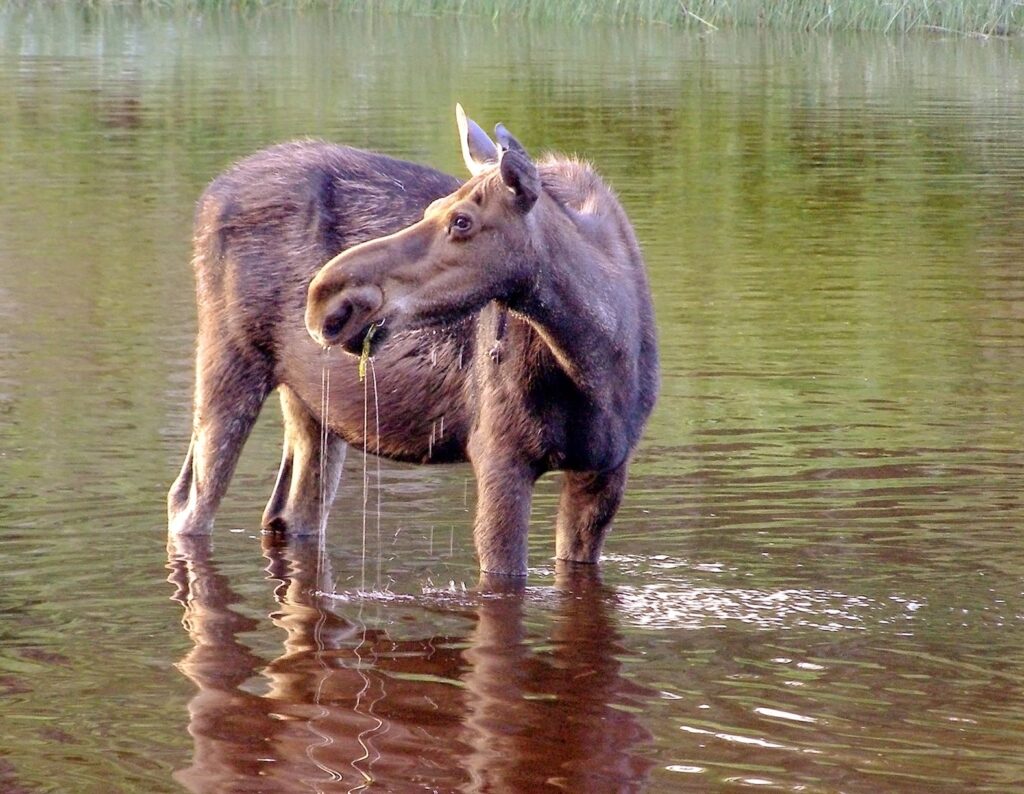
You’re far more likely to see a moose than a wolf. Moose feed in shallow bays, marshes and inland lakes, especially early and late in the day; wolves are wary and rarely seen, though you may find their tracks and scat on trails. Give moose plenty of room, never approach them, and never get between a cow and her calf. In September, bulls in the rut can charge. Foxes, loons, beavers and otters are all common, and the island has no bears, deer or raccoons.
A short history of Isle Royale
People have been coming to Isle Royale for thousands of years. Indigenous peoples mined copper here long before Europeans arrived, digging pits into the island’s copper-bearing rock with stone hammers; the Ojibwe name for the island, Minong, survives in the Minong Ridge. In the 1800s, American mining companies tried their luck, and the remains of their mines and settlements can still be found along the trails.
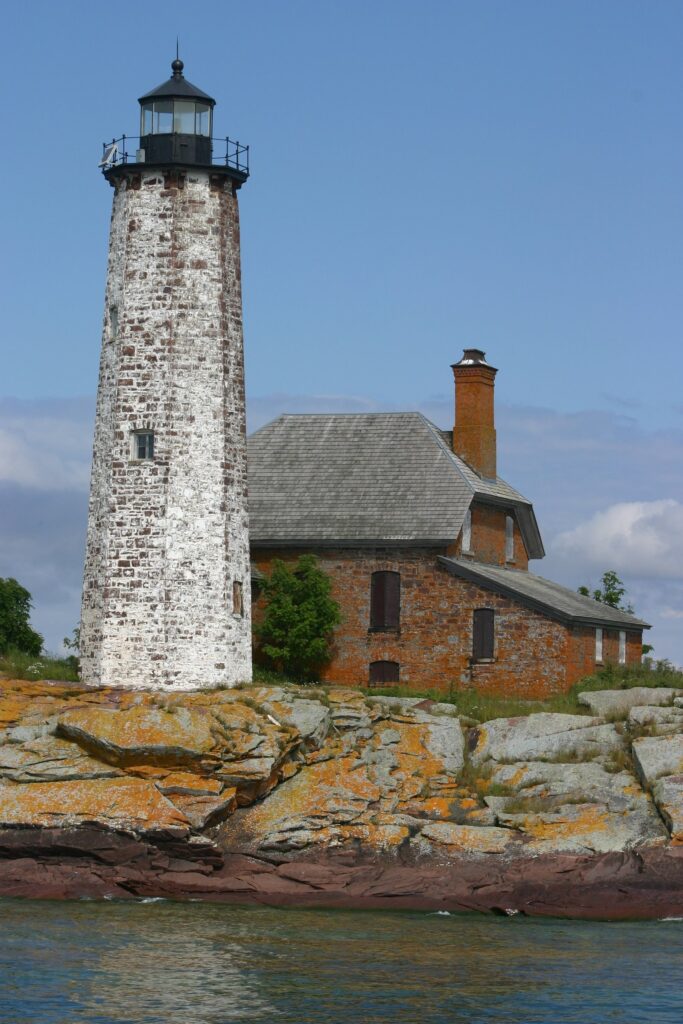
Commercial fishing families, many of them Scandinavian, worked the island’s harbors from the late 1800s into the 20th century, and their camps, like the Edisen Fishery near Rock Harbor, are preserved today. Lighthouses went up to guide ships through the dangerous waters around the island, including the Rock Harbor Lighthouse, the Isle Royale Light on Menagerie Island and the Rock of Ages Light off the west end. Resorts and summer cottages followed in the early 1900s.
Congress authorized a national park in 1931, and it was established in 1940. In 1976 most of the island was designated wilderness, and in 1980 it became an International Biosphere Reserve. Today, about 132,018 acres are protected as wilderness, which is why there are no roads, few buildings and so much quiet.
Rules to know before you go
- No pets: dogs, cats and other pets are not allowed on Isle Royale or in the park’s waters, which extend several miles out into Lake Superior, because domestic animals can carry diseases that threaten the wolves. Service animals are covered by separate rules; contact the park in advance.
- Treat all water: filter or boil it as the park directs.
- Permits: get a backcountry permit for overnight camping, and follow the rules for boats in park waters.
- Fishing: a Michigan fishing license is required to fish in Lake Superior; check the park’s current rules for inland lakes and streams.
- Drones: launching drones is prohibited in national park units, including Isle Royale.
- Leave No Trace: pack out trash, stay on trails and camp only in designated sites.
Leave No Trace in practice
On an island this small and this wild, every visitor’s habits add up. Camp only in designated campgrounds and use the tent pads and shelters provided. Use the outhouses at campgrounds, and away from them follow the park’s guidance on human waste. Wash dishes and yourself well away from lakes and streams, and never put soap, even biodegradable soap, into the water. Pack out all trash, including food scraps, and leave rocks, plants, antlers and historic artifacts where you find them. Don’t feed the foxes or any other animals; fed animals lose their fear of people and become a problem.
Staying in touch
Plan on being mostly off the grid. Cell service is limited to a few spots, if any, and it’s unreliable across most of the island. Tell someone at home your itinerary and your boat or flight times, and consider a satellite messenger for backcountry trips. At Rock Harbor and Windigo, rangers and the concessioner can help in an emergency, and the park posts alerts and conditions online before you go.
Getting to the ports: Houghton, Copper Harbor and Grand Portage
The trip to Isle Royale starts with a long drive. Houghton and Copper Harbor are at the top of Michigan’s Keweenaw Peninsula; Grand Portage is at the far northeast tip of Minnesota.
| Port | From Detroit | From Grand Rapids | From Chicago |
|---|---|---|---|
| Houghton (Ranger III; Hubbell seaplanes nearby) | about 9 h | about 8 h 20 min | about 7 h 20 min |
| Copper Harbor (Queen IV) | about 9 h 50 min | about 9 h 10 min | about 8 h 10 min |
Grand Portage is about 150 miles northeast of Duluth along Minnesota’s North Shore, and it’s the closest port for travelers from the Twin Cities and the rest of Minnesota. Because morning departures are early, plan to spend the night before in Houghton, Copper Harbor or Grand Portage. Remember the time zones: the boats from Houghton and Copper Harbor run on Eastern time, Grand Portage is on Central, and the park keeps Eastern time. Chicago drivers lose an hour driving to Houghton or Copper Harbor.
Isle Royale with kids and for visitors with limited mobility
Isle Royale can be a wonderful trip for older, outdoorsy children who can handle long boat rides, cool weather and hiking. Base at Rock Harbor, choose short hikes like Scoville Point and Suzy’s Cave, take a boat tour on the Sandy, rent a canoe on a calm day, and look for moose in the shallows. Ask at the visitor center about the Junior Ranger program. Children 15 and under pay no park fee, which helps the budget, though transport still costs. For young children, the long crossing, cold water and limited facilities make it a tougher trip.
For visitors with limited mobility, the island’s rugged terrain limits options, but Rock Harbor has lodging, dining and some paths close to the docks, and the boat tours offer a way to see the island’s harbors and historic sites from the water. Contact the park and the concessioner before booking to discuss specific needs.
Staying safe on Isle Royale
- Cold water: Lake Superior stays cold all summer. A fall from a boat or a dock can lead to cold shock and hypothermia within minutes. Wear a life jacket on the water.
- Weather delays: fog, wind and waves can delay or cancel boats and flights. Carry extra food and build a buffer day into your plans.
- Remoteness: medical help can be hours away. Carry a first-aid kit, know how to use it, and consider a satellite messenger for backcountry trips, since cell coverage is limited.
- Moose: keep your distance, especially from cows with calves and from bulls during the September rut.
- Terrain: trails are rocky and rooty, with steep sections and wet ground. Wear sturdy boots and watch your footing.
- Bugs: mosquitoes and black flies are intense in June and July; bring repellent and a head net.
What to pack for Isle Royale
Pack for cold, wet and windy weather even in August: a warm insulating layer, a waterproof jacket and pants, a hat and gloves for the crossing and cool evenings, and sturdy, broken-in hiking boots. Add insect repellent and a head net in June and July, a water filter that meets the park’s specifications, a stove and fuel for backcountry cooking, and a few days of extra food in case the boats are delayed. Lodge guests can travel lighter but should still bring rain gear, layers and good walking shoes. Keep weight down if you’re flying, because the seaplanes have strict limits, and remember that everything you bring out to the island, you’ll carry back.
When to book: a planning timeline
- A year or more ahead: book Rock Harbor Lodge or the Windigo camper cabins if you want a room in peak season; 2027 dates are already open.
- Winter and early spring: reserve your boat or seaplane as soon as schedules open. The Grand Portage line opens its 2027 reservations in late November 2026, and summer sailings on the Ranger III and Queen IV fill.
- Spring: plan your backcountry itinerary and permit, and book the night before your crossing in Houghton, Copper Harbor or Grand Portage.
- A week before: check the park’s alerts and conditions, the marine forecast and any schedule changes.
- The day before: pack a buffer day’s worth of food and confirm your departure time and time zone.
What to skip
Skip a trip without a buffer day. Lake Superior sets the schedule. Leave room for a delayed boat or flight.
Skip June and July if bugs ruin your trip. Go in late August or early September instead.
Skip bringing the dog. Pets aren’t allowed on the island or in park waters.
Skip open-water paddling without experience. Stick to protected harbors and inland lakes unless you’re a skilled sea kayaker.
Skip a day trip if you can stay longer. The crossing time and cost are high for a few hours on the island; the park rewards nights.
Skip planning an October visit on scheduled transportation. The boats and seaplanes stop in September.
Frequently asked questions
How do you get to Isle Royale National Park?
Only by boat or seaplane. The Ranger III sails from Houghton (about 6 hours), the Isle Royale Queen IV from Copper Harbor (about 3.5 hours), and the Voyageur II and Sea Hunter III from Grand Portage, Minnesota (1.5 to 2 hours to Windigo). Isle Royale Seaplanes flies from Hubbell in about 40 minutes. Boats and flights run from mid-May through September.
How much does it cost to go to Isle Royale?
In 2026, the park fee is $7 per person per day (15 and under free). Transport costs $80 each way on the Ranger III, $175 round trip on the Queen IV, and $289 one way or $420 round trip by seaplane. A day trip from Copper Harbor runs about $192 per adult with parking; a week of backpacking via the Queen IV is about $301 before food and gear.
Can you stay overnight on Isle Royale?
Yes. Rock Harbor Lodge on the east end offers lodge rooms and housekeeping cottages, Windigo on the west end has camper cabins, and the park has 36 campgrounds for backpackers, paddlers and boaters. Overnight campers need a backcountry permit. Lodge reservations for the next season open well in advance, and peak weeks book early.
When is Isle Royale open?
The park is open from April 16 to October 31 and closed to all visitors from November 1 to April 15. Scheduled boats and seaplanes run from mid-May through September, so the practical season is late May to mid-September. Most visits come in June, July and August; late August and early September are the best time for fewer bugs and crowds.
Is Isle Royale worth visiting?
Yes, for anyone who wants real wilderness. It’s one of the least-visited national parks, with no roads or cars, 165 miles of trails, rocky harbors, lighthouses, moose and wolves. It takes time and money to reach, so it rewards stays of three days or more, whether at Rock Harbor Lodge or in the backcountry.
How long is the ferry to Isle Royale?
About 3.5 hours from Copper Harbor on the Isle Royale Queen IV, about 6 hours from Houghton on the Ranger III, and about 1.5 to 2 hours from Grand Portage, Minnesota, to Windigo. The seaplane from Hubbell takes about 40 minutes. Weather can delay any crossing, so leave a buffer day.
Can you do Isle Royale in a day?
Yes. The Queen IV from Copper Harbor allows a few hours at Rock Harbor, seaplane day trips run to Rock Harbor and Windigo in summer ($420 in 2026), and boats from Grand Portage offer day trips to Windigo. A day trip is a good taste, but the island is best experienced with at least one night.
Are there wolves on Isle Royale?
Yes. Michigan Tech’s 2026 Winter Study counted about 37 wolves in three packs, the most since the late 1970s, after the park service brought new wolves to the island in 2018 and 2019. Moose numbers fell to about 524. Wolves are rarely seen by visitors, but moose sightings are common.
Sources and verification
Everything on this page was checked on September 23, 2026 against the organizations listed below. The guide is compiled from their published information and claims no first-hand visits.
- National Park Service: getting to Isle Royale (routes, crossing times, season and closure dates)
- National Park Service: Isle Royale fees (2026 daily fee and season pass)
- Isle Royale Seaplanes (2026 fares and day-trip dates)
- Rock Harbor Lodge (lodging, dining and services)
- Michigan Tech: 2026 Isle Royale Winter Study (wolf and moose counts)
We also used the National Park Service’s Ranger III fares, the Isle Royale Queen IV’s published 2026 fares, the Grand Portage Isle Royale Transportation Line, NPS visitor statistics and the National Park Foundation.
Michigan Tourism Guide is an independent publication. It is not affiliated with Pure Michigan or any agency or business named here.
Photo credits
- Rock Harbor Lighthouse (featured image): photo by Ray Dumas, Wikimedia Commons (CC BY-SA 2.0)
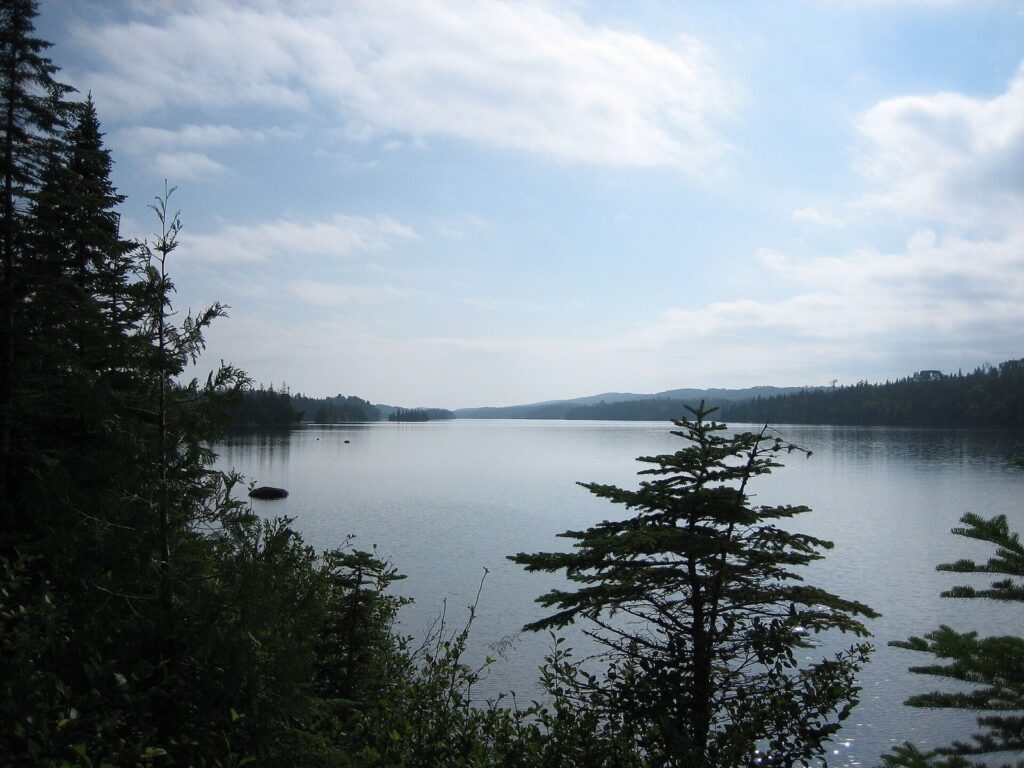
- Tobin Harbor: photo by Ben+Sam, Wikimedia Commons (CC BY-SA 2.0)
- Ranger III: photo by Tony Webster from United States, Wikimedia Commons (CC BY 2.0)
- Isle Royale Light: photo by Cwbash, Wikimedia Commons (CC BY 3.0)
- Greenstone Ridge Trail: photo by Ben+Sam, Wikimedia Commons (CC BY-SA 2.0)
- Moose: photo by Todd VerBeek, Wikimedia Commons (CC BY-SA 4.0)